How Authenticated Rolex Watches Protect Value
Published August 10, 2026 · Last updated October 17, 2026 · By Lume Wrist Watches Editorial Team
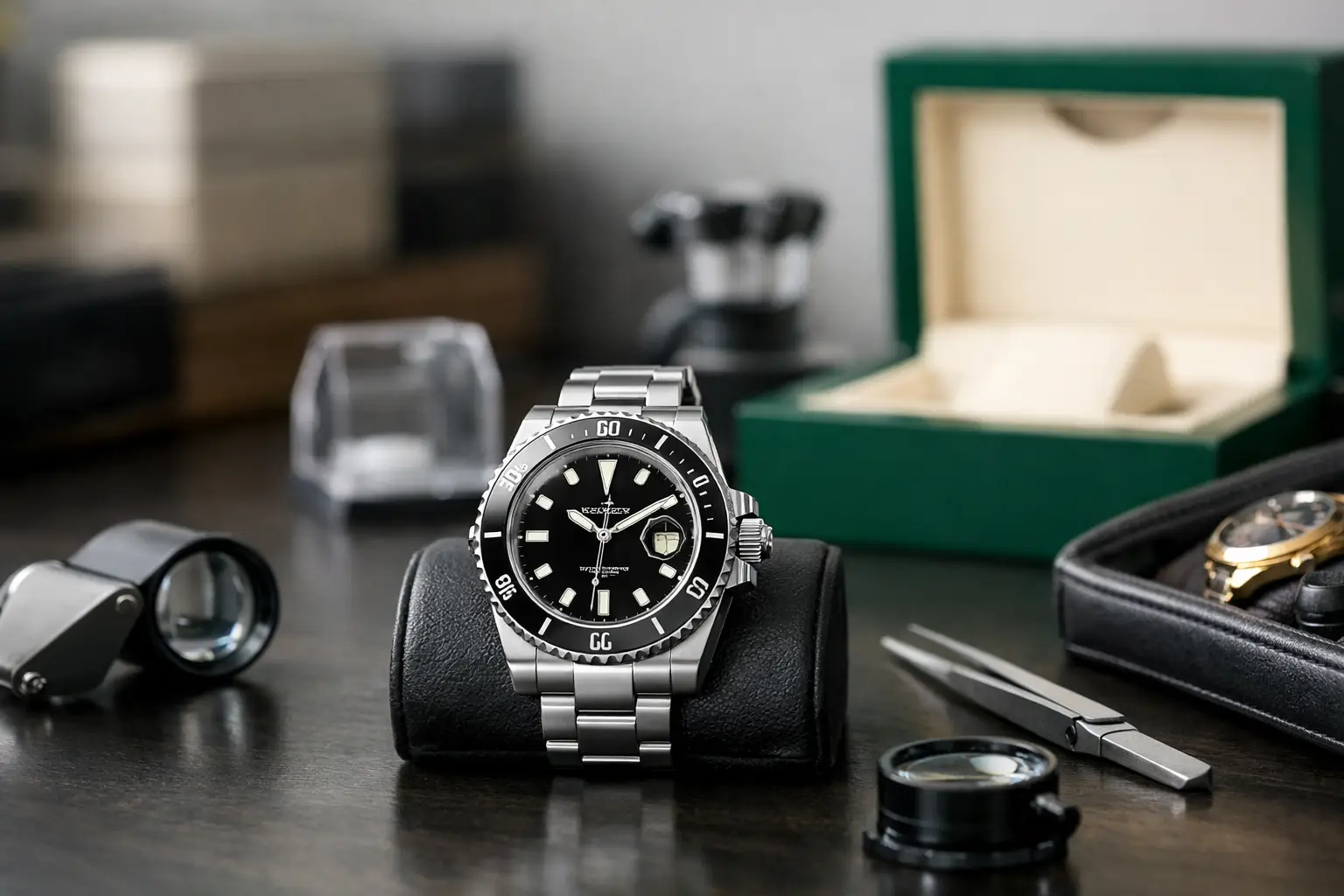
A Rolex purchase can involve five figures, a long wait at an authorized dealer, or a secondary-market listing that appears convincing until it is examined closely. That is why authenticated Rolex watches are not simply a preference for cautious buyers. They are the proper starting point for anyone who expects the watch to retain its mechanical integrity, collectible appeal, and resale credibility.
Rolex is among the most recognized names in luxury, and its most desirable references are also among the most frequently misrepresented. A professional authentication process, accurate condition reporting, and clear purchase protections turn a high-value transaction into a decision supported by evidence rather than assumption.
What Authenticated Rolex Watches Should Mean
Authentication should establish that the watch is genuine and that its key components align with the represented model and era. That includes more than identifying a correct Rolex dial or a familiar case shape. A credible review considers the reference and serial information, movement, case, bracelet, clasp, bezel, crystal, dial, hands, and other details that determine whether a watch is consistent with its stated configuration.
The standard matters because Rolex watches are complex objects with layered value. A genuine Rolex fitted with a later service dial, replacement hands, an incorrect bracelet, or excessive refinishing may still be a wearable watch. It may not, however, carry the same collector value as an example with period-correct components and a well-preserved case. The right purchase depends on your priorities, but those distinctions must be disclosed before you commit.
In-house certification provides accountability that is absent from a peer-to-peer listing. Rather than relying solely on photographs, a seller's personal assurances, or a screenshot of prior service paperwork, the buyer receives a watch that has been professionally evaluated before it is offered for sale.
Authentication and Condition Are Different Questions
A Rolex can be authentic and still be a poor fit for a particular buyer. Authentication answers whether the watch is what it is represented to be. Condition answers how well it has survived, how it presents, and what may affect its future desirability.
For a modern Submariner, GMT-Master II, or Datejust intended for regular wear, light signs of use may be entirely reasonable. A buyer may prioritize a clean bracelet, reliable timing, and the confidence to wear the watch without treating it as a museum piece. For a vintage Daytona, Explorer, or early Sea-Dweller, original surface condition and correct period details can carry much greater weight.
Ask for a straightforward description of the case, bracelet stretch where applicable, bezel condition, dial and handset originality, crystal, and service history when available. Polishing is especially worth discussing. Careful refinishing can improve appearance, but repeated or aggressive polishing can soften case edges, alter lug profiles, and reduce the sharpness collectors expect from an important reference.
A professional retailer should describe these facts clearly instead of using broad phrases such as “excellent condition” without context. High-resolution images are useful, but they do not replace an informed condition assessment.
The Details That Support Rolex Value
Rolex value is driven by a combination of model demand, production era, condition, originality, and completeness. Not every buyer needs a full set, and not every watch without its original box and papers is a concern. Still, original accessories can matter, particularly for collectible references and watches where future resale is part of the decision.
A complete set may include the original presentation box, warranty card or certificate, manuals, booklets, tags, and other period materials. These items support provenance, but they should not substitute for authentication. Papers can be lost, altered, or paired with the wrong watch. The watch itself must stand on its own under examination.
Service records can also be valuable. They may establish maintenance history and offer context for replacement components. Yet service documentation should be read carefully. Rolex service can introduce modern replacement parts, which may be beneficial for durability but less desirable to a collector seeking strict originality. There is no universal answer here. The best choice depends on whether you are acquiring a daily wearer, a modern collectible, or a historically significant vintage piece.
Why the Selling Environment Matters
The secondary watch market offers access to references that may be discontinued, difficult to source, or unavailable through traditional retail channels. It also varies widely in standards. Informal marketplace transactions can place the burden of authentication, payment security, shipping, and post-sale resolution almost entirely on the buyer.
That risk is not limited to obvious counterfeits. A watch may have an undisclosed aftermarket dial, a bracelet assembled from mixed components, a mismatched serial range, or condition issues hidden by poor photography. A private seller may be honest and still lack the expertise or resources to identify those concerns.
A structured retail purchase should address the transaction as well as the watch. Free insured US shipping reduces exposure during delivery. A 30-day return window provides time to inspect the piece in person and confirm it meets your expectations. A two-year warranty adds meaningful protection if an eligible mechanical issue emerges after purchase. These safeguards do not eliminate the need to buy thoughtfully, but they create recourse that private transactions rarely provide.
Questions to Ask Before You Buy
Before selecting a Rolex, start with the reference rather than the headline. “Rolex Submariner” can describe decades of watches with different case proportions, movements, bezel materials, dial configurations, and market values. A reference number gives the conversation precision.
Then ask whether the watch has been authenticated in house, how its condition is described, and whether notable replacement or aftermarket components are present. Confirm what is included with the sale, particularly original papers, box, links, and service records when these are relevant to your decision. If the watch has been serviced, ask whether the service history is known and whether any parts were replaced.
It is also prudent to clarify the commercial terms before payment. Confirm insured shipping, the return period and its condition requirements, warranty duration and coverage, and the retailer's process if a concern arises. Luxury watches are emotional purchases, but the transaction should remain disciplined.
Choosing the Right Rolex for Your Purpose
The strongest Rolex purchase is not always the rarest or most expensive one. It is the reference that fits your use case and is represented accurately. A current-generation Datejust may offer the versatility an executive wants for daily wear. A GMT-Master II may appeal to frequent travelers and collectors who value its recognizable design. A vintage reference may reward deep knowledge and patience, but it can also require greater tolerance for originality trade-offs and service limitations.
Price should be evaluated in context. A lower asking price can reflect missing accessories, wear, replacement parts, a less desirable configuration, or a seller who is passing verification risk to the buyer. Conversely, a premium may be justified for exceptional preservation, a complete set, compelling provenance, or a secure purchase package. The objective is not to chase the lowest number. It is to understand precisely what that number represents.
At Lume Wrist Watches, each offered timepiece is in-house certified, with free insured US shipping, a 30-day return window, and a two-year warranty designed to support a more secure ownership experience. Those protections are particularly valuable when a watch is both a personal object and a substantial asset.
A Rolex should earn confidence before it earns wrist time. Choose the reference you will enjoy, insist on a clear account of authenticity and condition, and buy through a process that remains accountable after the package is delivered.