Best Investment Watches: What Holds Value?
Published September 12, 2026 · Last updated October 17, 2026 · By Lume Wrist Watches Editorial Team
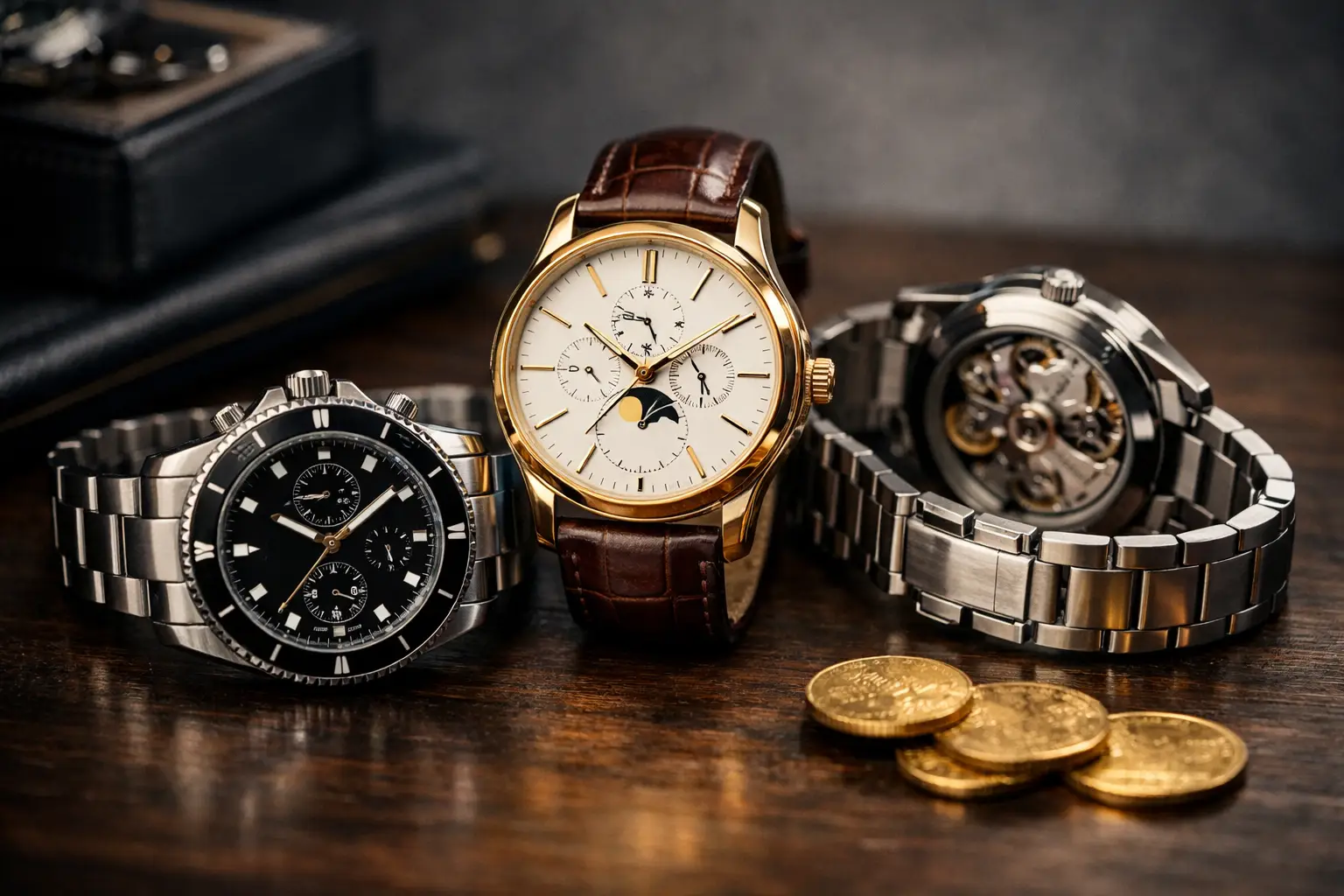
A watch’s investment potential can be affected by details that are easy to overlook at first glance: the exact reference, dial configuration, bracelet originality, service history, and whether its documentation supports the story. The best investment watches are not simply the most expensive or hardest to find. They are established references with sustained collector demand, recognizable design, documented authenticity, and condition that holds up under close inspection.
For a buyer building a collection with financial durability in mind, the goal is not to predict a guaranteed return. Luxury watches are subject to changing tastes, production decisions, economic conditions, and market supply. The more practical objective is to select a watch whose underlying appeal is likely to remain clear to serious collectors - and to buy it with the verification and protections a high-value purchase deserves.
What Makes a Watch Investment-Grade?
Investment-grade watches tend to share a few characteristics. First is a strong and enduring identity. A watch should be recognizable without relying on a short-lived trend: think of the profile of a Rolex Submariner, the integrated bracelet of an Audemars Piguet Royal Oak, or the balanced design language of a Patek Philippe Nautilus.
Second is a credible collector market. Longstanding demand creates liquidity, meaning there is a deeper group of informed buyers if you later decide to sell or trade. This does not mean every popular model will appreciate. It means a recognized reference with a substantial collector base generally has a more established market than an obscure or heavily trend-driven piece.
Third is scarcity in the form collectors value. Limited production alone is not enough. A rare watch with limited historical relevance, uncertain originality, or weak buyer interest may be difficult to place. The most compelling scarcity is usually tied to a significant reference, an important era, a discontinued configuration, or a dial and metal combination that experienced collectors actively pursue.
Finally, the watch must be right. A highly desirable reference with replacement parts, excessive polishing, or unclear provenance may not command the same interest as a well-preserved example. In this category, condition is not a footnote. It is part of the watch’s identity and value proposition.
Best Investment Watches by Collector Category
Rolex sports references
Rolex remains a central consideration for buyers seeking established demand and broad recognition. The Daytona, Submariner, GMT-Master II, and certain Datejust configurations have decades of collector interest behind them. Their appeal is not limited to watch enthusiasts: these references are recognizable, wearable, and supported by a large global market.
The exact configuration matters. Bezel type, dial variant, case material, bracelet, production period, and completeness of the set can all influence desirability. A modern steel sports model may offer everyday versatility and wide market recognition, while a vintage reference can carry greater nuance around originality, wear, and period-correct components. Neither is automatically the better choice. The right decision depends on whether you value daily use, historical character, or a particular reference’s collector following.
Patek Philippe icons and complications
Patek Philippe occupies a distinct position because of its heritage, finishing, and importance within high horology. The Nautilus and Aquanaut are often the first models buyers consider because their sport-luxury format has developed a devoted collector audience. Yet dress references and complications can also deserve careful attention when they combine a compelling case, desirable dial, and clear provenance.
A Patek Philippe purchase should reward patience. Case condition, service documentation, accompanying papers, and correct accessories can carry particular weight. For vintage examples, buyers should look closely at dial originality and whether the watch retains the character that makes the reference significant. A smaller or more formal watch may have a narrower audience than a steel sport model, but it can be a more distinctive addition to a collection when chosen for its intrinsic horological merit.
Audemars Piguet Royal Oak
The Royal Oak remains one of the defining luxury sports watches. Its Gerald Genta design, integrated bracelet, and technical finishing have helped it maintain strong collector attention across multiple generations. The model’s popularity also makes execution especially important: reference number, case size, metal, dial color, and bracelet condition should all be evaluated carefully.
The bracelet deserves more than a quick glance. Stretch, over-polishing, sharpness of the links, and the integrity of the clasp affect both appearance and collectibility. A Royal Oak should feel like a complete, coherent object, not simply a desirable dial attached to a compromised bracelet. Buyers considering pre-owned examples should also confirm that the watch’s configuration aligns with the stated reference.
Omega Speedmaster and historically significant models
Omega offers a different kind of collector appeal. The Speedmaster Professional is rooted in an enduring design and a documented place in spaceflight history, making it a natural entry point for enthusiasts who value heritage as much as market recognition. Earlier references, special editions, and well-preserved examples can bring additional collector interest, though vintage Speedmasters require close attention to parts originality and dial condition.
Not every compelling watch needs to be a high-demand steel sports model. A historically important Omega can be a thoughtful choice when the buyer understands the reference and prioritizes a watch with a clear story, correct configuration, and strong physical condition.
Condition and Completeness Can Change the Equation
Two watches carrying the same reference number can be materially different purchases. A sharp case with defined factory lines generally presents differently from one that has been aggressively polished. An original dial may be more meaningful to collectors than a later replacement, even if the replacement appears cleaner. A matching bracelet, correct clasp code where relevant, original box, papers, booklets, and service records can further support a watch’s provenance.
Completeness should not be treated as an absolute rule. An exceptional vintage watch without its original box may still be more compelling than a complete example with a damaged dial or compromised case. What matters is that the condition, accessories, and history are represented accurately, with no assumptions left for the buyer to discover after delivery.
For modern watches, the practical questions are straightforward: Is the bracelet original to the watch? Are the functions operating properly? Is there meaningful stretch, damage, or refinishing? Does the set include its original papers and accessories? For vintage watches, the questions become more specialized, often involving dial, hands, bezel, movement, and period-correct components.
How to Buy the Best Investment Watches With Confidence
The purchase channel is part of the decision. A watch with desirable specifications is only as secure as the confidence behind its authenticity, condition description, and delivery process. Informal listings can leave buyers responsible for resolving questions about originality, shipping loss, undisclosed repairs, or a watch that does not match its description.
Before committing, request a clear explanation of the watch’s condition and included accessories. Confirm the exact reference and evaluate detailed images of the case, bracelet, dial, clasp, and movement where appropriate. Ask whether the watch has been serviced, and distinguish documented service from an unsupported statement. For a meaningful purchase, precise information is more useful than broad claims about rarity or value.
An established retailer should also provide safeguards that match the level of the transaction. At Lume Wrist Watches, timepieces are in-house certified, with free insured US shipping, a 30-day return window, and a two-year warranty. Those protections matter because a collector should be able to assess the watch in person and retain recourse after the sale.
Build a Collection Before Chasing a Market
The strongest purchase is often the watch you would be satisfied to own through a flat or changing market. Start with a reference you understand and would wear, then evaluate its collector demand, condition, originality, and supporting documentation. Avoid buying solely because a model has recently attracted attention. Momentum can change, while a well-chosen watch with genuine design and historical substance has a more durable reason to remain desirable.
Select the watch that is correct for your collection, inspect the details that preserve its integrity, and make the purchase through a process built to protect it. That discipline is as valuable as any reference number on the dial.