Certified Dealer Versus Private Seller Explained
Published August 25, 2026 · Last updated October 17, 2026 · By Lume Wrist Watches Editorial Team
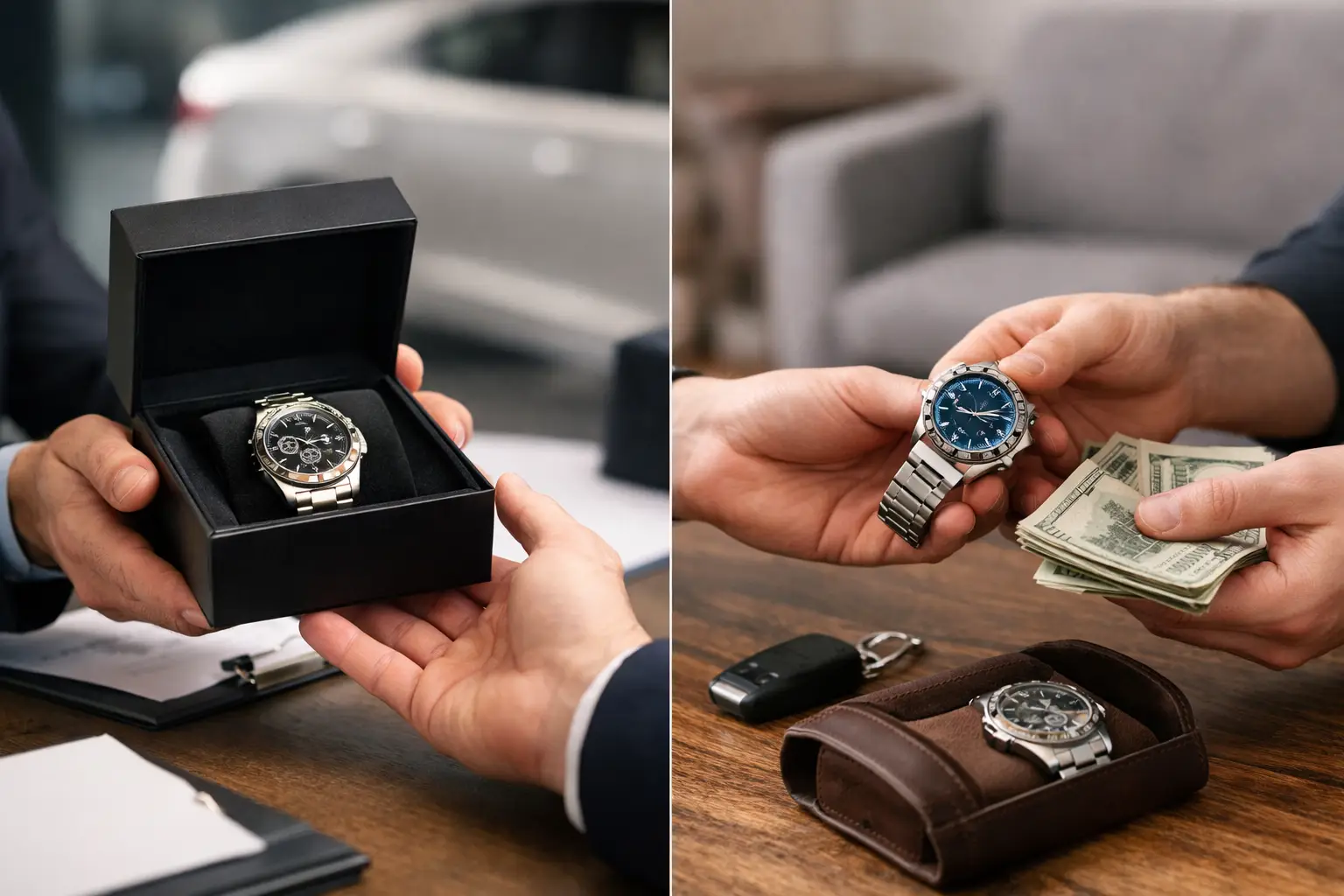
A luxury watch can look correct in a handful of photos and still carry questions that matter after the payment clears. In the certified dealer versus private seller decision, the real difference is not simply where you buy. It is who stands behind the watch’s authenticity, stated condition, delivery, and post-purchase support.
For a Rolex, Patek Philippe, Audemars Piguet, Omega, or another established luxury reference, those details can materially affect your ownership experience. A private transaction may offer direct access to a particular watch. A qualified dealer relationship, however, can provide a defined process for the parts of the purchase that are hardest to assess from a listing alone.
Certified Dealer Versus Private Seller: The Core Difference
A private seller is usually an individual selling a watch from a personal collection. They may be knowledgeable, careful, and completely sincere. But the transaction typically depends on the buyer’s ability to evaluate the watch, confirm its history, arrange secure payment, and resolve any issue that arises afterward.
A certified dealer operates differently. The dealer should inspect and authenticate the watch before listing it, document its condition, and establish clear purchase terms. Certification is meaningful when it reflects an actual in-house review rather than a vague label. Ask how the watch was examined, what components and identifiers were checked, and whether the seller will stand behind the findings in writing.
This distinction does not mean every private seller is a poor choice or that every business using the word “certified” has earned immediate trust. It means the burden of verification shifts. With a private seller, more of that burden sits with you. With a dealer, the seller should accept greater accountability for the product and the transaction.
Authentication Is More Than a Serial Number
Authentication is the first concern for most secondary-market watch buyers, and rightly so. Modern luxury watches are complex objects. A proper review considers the case, dial, hands, movement, bracelet, clasp, reference details, engravings, and the relationship between those components. Documentation can be helpful, but a box and papers alone do not establish that every part of the watch is correct or that the watch is in the condition represented.
A private seller may provide close-up images, a reference number, service paperwork, and a compelling ownership story. Those are useful starting points, not a substitute for professional evaluation. Unless you have the expertise and access to inspect the watch yourself, you are relying on the seller’s knowledge and disclosure.
With an in-house certified dealer, ask for a clear condition description and specific details about what is included. Is the watch accompanied by its original box or papers? Has it been serviced? Are there notable marks, stretch in the bracelet, polish history, or replacement components that affect collectibility? A credible answer should be direct and watch-specific.
For collectible references, originality deserves special attention. A dial, bezel, bracelet, or handset can influence both desirability and value. The goal is not to assume that every replacement part is unacceptable. Service components can be entirely appropriate. The goal is to understand exactly what you are buying before you commit.
Condition Descriptions Need Accountability
Condition language can be subjective. One seller’s “excellent” may mean a watch with visible wear under direct light. Another may describe a recently refinished case without explaining the extent of the work. Photos help, but lighting, angles, and image editing can obscure fine scratches, softened case edges, dial imperfections, and bracelet wear.
A dealer should provide a disciplined assessment because its reputation and warranty obligations are tied to that description. Look for plain language that distinguishes normal handling marks from notable issues. If the condition is central to your decision, request additional information before paying rather than assuming a broad adjective answers every question.
Private sellers can also be transparent, especially experienced collectors who know their watches well. The trade-off is recourse. If the watch arrives materially different from the description, resolving the issue may depend on the seller’s willingness to cooperate. A dealer’s return policy creates a more defined path when a purchase does not meet reasonable expectations.
Payment and Shipping Change the Risk Profile
The mechanics of a high-value transaction deserve as much attention as the watch itself. Private transactions can involve bank wires, cash meetings, third-party payment platforms, or shipments arranged between two individuals. Each approach requires careful judgment, particularly when the buyer and seller have no established relationship.
A professional dealer should offer a structured checkout process, clear order confirmation, and documented shipping terms. Insured shipping is not a minor convenience when a timepiece is traveling across the country. It is part of protecting the purchase from the moment it leaves the seller’s possession until it reaches yours.
For US buyers, Lume Wrist Watches provides free insured shipping, which places responsibility for secure delivery within a defined retail process. International fulfillment may be available by request, but shipping arrangements, timing, and applicable charges should be confirmed before purchase.
If you are considering a private seller, verify the shipping method, insurance coverage, signature requirements, and who bears the risk if a package is delayed, damaged, or lost. Do not assume these details will be handled consistently simply because a seller has completed prior transactions.
Returns and Warranties Are Practical Protections
A return window gives you time to inspect a watch in person, compare it with the description, and decide whether it is right for your collection. That is especially valuable for first-time buyers of a particular reference, where case proportions, dial color, bracelet feel, and overall condition can be difficult to judge online.
Private sales are commonly final. A seller may agree to a return in advance, but the terms should be explicit: the inspection period, required condition for return, refund timing, and who is responsible for shipping and insurance. Without that agreement, your options can be limited once funds have changed hands.
A dealer warranty addresses a different question: what happens if a covered mechanical issue emerges after purchase? Read the terms carefully. Warranty coverage should state its duration, what is covered, exclusions related to damage or misuse, and how a claim is handled. It should not be confused with a manufacturer warranty unless the seller expressly identifies one.
Lume Wrist Watches offers a 30-day return window and a two-year warranty on its certified timepieces. Those protections give buyers a defined point of contact after delivery, rather than leaving the transaction entirely to a private arrangement.
When a Private Seller May Still Make Sense
There are legitimate reasons to buy privately. A collector may be offering a scarce configuration with a well-documented history. You may know the seller personally, have dealt with them before, or have the ability to inspect the watch with an independent watchmaker before completing the purchase. In these situations, a direct sale can be appropriate.
The key is to match the transaction to your level of confidence and your ability to absorb uncertainty. A seasoned collector who recognizes a specific vintage reference may assess a private offering differently than a buyer making a first significant watch purchase. Neither approach is universally right.
A private purchase deserves extra caution when the seller resists detailed questions, rushes payment, will not provide consistent photographs, or cannot explain the watch’s configuration and service history. A desirable brand name does not remove the need for verification.
Questions Worth Asking Before You Buy
Whether you are working with a dealer or an individual, ask what has been done to authenticate the watch, what is included in the sale, and how condition was determined. Confirm the return policy before payment, not after delivery. Ask how the watch will be shipped, whether it is fully insured, and what warranty support is available.
For a dealer, also ask whether certification is performed in-house and whether the warranty terms are available in writing. For a private seller, ask whether an in-person inspection or independent evaluation can be arranged. Straightforward answers are often as informative as the answers themselves.
The right seller should make a high-consideration purchase feel clear, not hurried. Choose the level of verification, documentation, and post-purchase protection that lets you wear the watch with confidence long after the transaction is complete.