Dealer Versus Watch Auction for Collectors
Published September 22, 2026 · Last updated October 17, 2026 · By Lume Wrist Watches Editorial Team
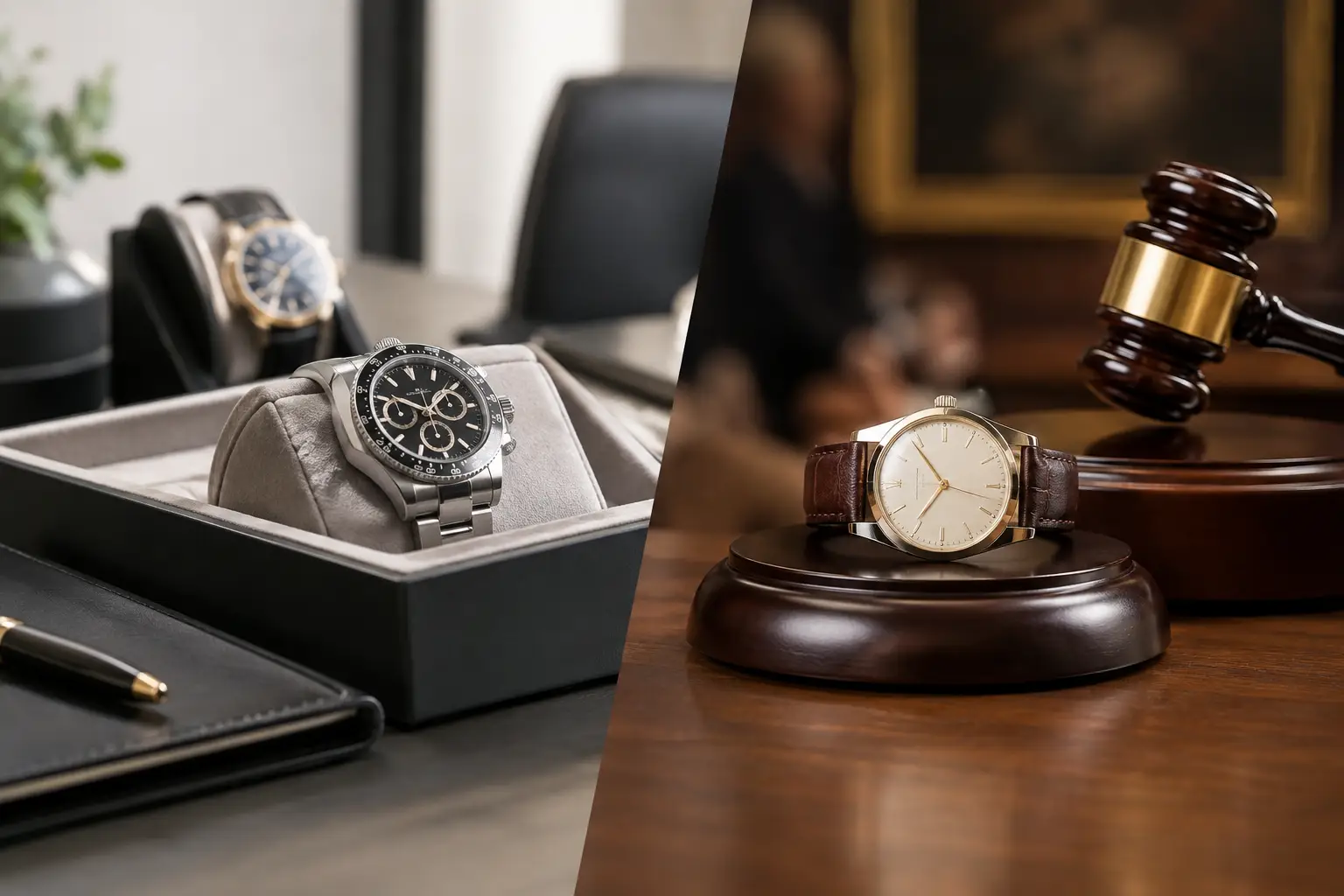
A desirable Rolex, Patek Philippe, Audemars Piguet, or Omega can appear in a dealer’s inventory and in an auction catalog within the same week. The dealer versus watch auction decision is not simply about where a watch might sell for less. It is about how much certainty, time, and post-purchase protection you want attached to a significant acquisition.
For some collectors, an auction is the right venue for a rare dial, an unusual configuration, or a reference that rarely reaches retail channels. For many buyers, particularly when purchasing a modern luxury watch for regular wear, an established dealer offers a clearer path from evaluation to ownership. The distinction becomes more meaningful when condition, originality, fees, and recourse are considered together.
Dealer versus watch auction: the central difference
A dealer sells a watch at an established asking price. You can review the piece, ask specific questions, assess the stated condition, and decide whether to proceed without competing bids or a fixed closing deadline. The transaction is designed to be direct: the watch, its documentation, the dealer’s policies, and the final purchase terms should be clear before payment.
An auction sells opportunity as much as it sells a watch. The catalog estimate is not necessarily the amount you will pay, and the winning bid is typically not the final total. Buyer premiums, applicable taxes, shipping, and possibly service needs should all be considered before a bid is placed. The auction format can reward preparation and patience, but it also introduces pressure that a direct purchase does not.
Neither route is automatically superior. The appropriate choice depends on the particular reference and on your tolerance for uncertainty after the hammer falls.
What you are actually buying: condition and originality
Condition is not a minor detail in collectible watches. A polished case may have softened original edges. A replacement dial, handset, bezel insert, bracelet link, or service component can materially affect collector appeal. Even when a watch is authentic, the question remains whether its configuration aligns with what a discerning buyer expects for that reference and era.
A reputable dealer should be prepared to describe condition in practical terms. That includes case wear, bracelet stretch where applicable, dial and lume condition, timing performance, visible marks, included accessories, and known service history. High-resolution photography matters, but it does not replace a precise written assessment or the ability to ask follow-up questions.
Auction listings can offer excellent scholarship, especially for unusual vintage pieces. They can also use concise catalog language that leaves room for interpretation. Phrases such as “in overall attractive condition,” “appears to be,” or “consigned by the family of the original owner” may be relevant context, but they are not a substitute for a full condition report and independent evaluation.
The limits of a catalog description
An auction house has a duty to represent a lot responsibly, yet catalog descriptions often include assumptions and qualifications. Small details can be difficult to assess from images alone: whether a dial has been refinished, whether a bracelet is period-correct, whether a case was heavily restored, or whether a movement contains later service parts.
Before bidding, request the available condition report and study every image. Ask direct questions about originality, service history, movement condition, and whether any components are later replacements. If the watch is sufficiently important, arranging a qualified pre-purchase inspection may be appropriate when the auction’s policies and timing allow it.
Authentication is only the starting point
A watch can be genuine while still being a poor fit for a collector’s expectations. Authentication confirms that the watch is what it claims to be at a fundamental level. It does not, by itself, resolve questions around originality, restoration quality, condition grading, or future service requirements.
This is where an in-house certified dealer model can offer practical value. The buyer is not only relying on a catalog entry or a seller’s statement. The dealer has evaluated the watch before offering it for sale and has an ongoing commercial relationship with the buyer after the transaction.
At Lume Wrist Watches, timepieces are authenticated and in-house certified before sale. That structure is intended to give buyers a more defined basis for their decision, particularly when evaluating high-value modern and collectible references. It does not eliminate the need to choose carefully, but it creates clearer accountability than an anonymous or limited-recourse transaction.
Fees can change the apparent auction result
Auction estimates attract attention because they create a visible range. The number that matters, however, is the complete cost of ownership at checkout. A bidder should understand the buyer premium, applicable taxes, shipping and insurance charges, payment deadlines, and any costs associated with collection or delivery.
The premium is particularly important because it is generally added to the hammer price. A bidder who focuses only on the maximum bid can exceed the intended budget before shipping or tax is considered. Set a firm all-in limit before the auction begins, then treat it as a boundary rather than a negotiating point with yourself.
A dealer transaction is usually easier to evaluate from a total-cost perspective. The listed price and purchase terms are available before commitment, and there is no competitive bidding cycle that can push a buyer into a quick decision. That transparency is valuable when comparing several examples of the same reference.
Returns and warranty change the risk profile
Many auction sales are final. This is not necessarily a problem for an experienced collector who has inspected the lot, understands the auction terms, and accepts the possibility of service or condition surprises. It is a very different proposition for a buyer who is purchasing remotely or selecting a first significant watch.
A dealer’s return policy can provide a meaningful evaluation period after delivery. It gives the buyer time to inspect the watch in person, confirm that it wears as expected, and determine whether the condition aligns with the listing and conversation that preceded the purchase. The policy terms still matter, including eligibility requirements and return deadlines, so they should be reviewed before buying.
Warranty coverage is another practical distinction. Mechanical watches are durable but intricate instruments, and even a well-maintained piece may require attention. A two-year warranty provides a defined source of support should a covered issue arise after purchase. Auction buyers should assume that any needed servicing may become their responsibility unless the auction terms state otherwise.
For US buyers, free insured shipping and a 30-day return window can make a direct purchase more manageable, particularly when the watch cannot be viewed in person. Those safeguards are not substitutes for research, but they reduce the consequences of a decision made from photographs and specifications.
Timing and selection favor different buyers
Auctions reward patience. If your target is an uncommon vintage reference, a special metal configuration, or a piece with exceptional provenance, waiting for the right lot may be worthwhile. You also need to be ready to act within the auction schedule, complete payment promptly, and accept that another bidder may set the final outcome.
Dealers favor buyers who have identified what they want and prefer to complete the purchase on their own schedule. Inventory changes, of course, but the buying process is usually more controlled. You can compare condition among available examples, ask questions without a countdown, and move forward when the watch meets your criteria.
The same principle applies to collectors building a focused collection. A buyer pursuing a specific Rolex sports reference may prioritize condition, bracelet integrity, and service confidence over the excitement of a competitive bid. A collector seeking a scarce Patek Philippe with distinctive provenance may reasonably accept more auction complexity in exchange for access to a less common opportunity.
When an auction makes sense
An auction may be the appropriate choice when the watch is genuinely scarce, its provenance is unusually strong, or the catalog provides enough detail for you to evaluate the lot with confidence. It can also suit experienced buyers who understand the reference, have reviewed the condition report, and have accounted for every fee before placing a bid.
The discipline is simple, even if it is not always easy: decide your all-in maximum in advance, investigate the specific watch rather than the headline estimate, and avoid treating a competitive room or online bidding screen as proof of value. Interest from other bidders may reflect rarity, emotion, or incomplete information. It is not a condition report.
When a dealer is the stronger choice
A dealer is often the stronger choice when certainty matters as much as access. That is especially true for buyers who want professional authentication, clear condition communication, insured delivery, a return option, and warranty support after the watch arrives.
It is also a practical route when purchasing a watch intended for regular use. A collectible watch should still be enjoyable to own, and a direct dealer relationship makes it easier to ask about wearability, servicing, fit, and what is included before committing.
The best purchase is not the one that creates the most excitement at the moment of bidding. It is the watch you can examine, understand, and wear with confidence long after the transaction is complete.