How to Buy Pre-Owned Watches With Confidence
Published September 26, 2026 · Last updated October 17, 2026 · By Lume Wrist Watches Editorial Team
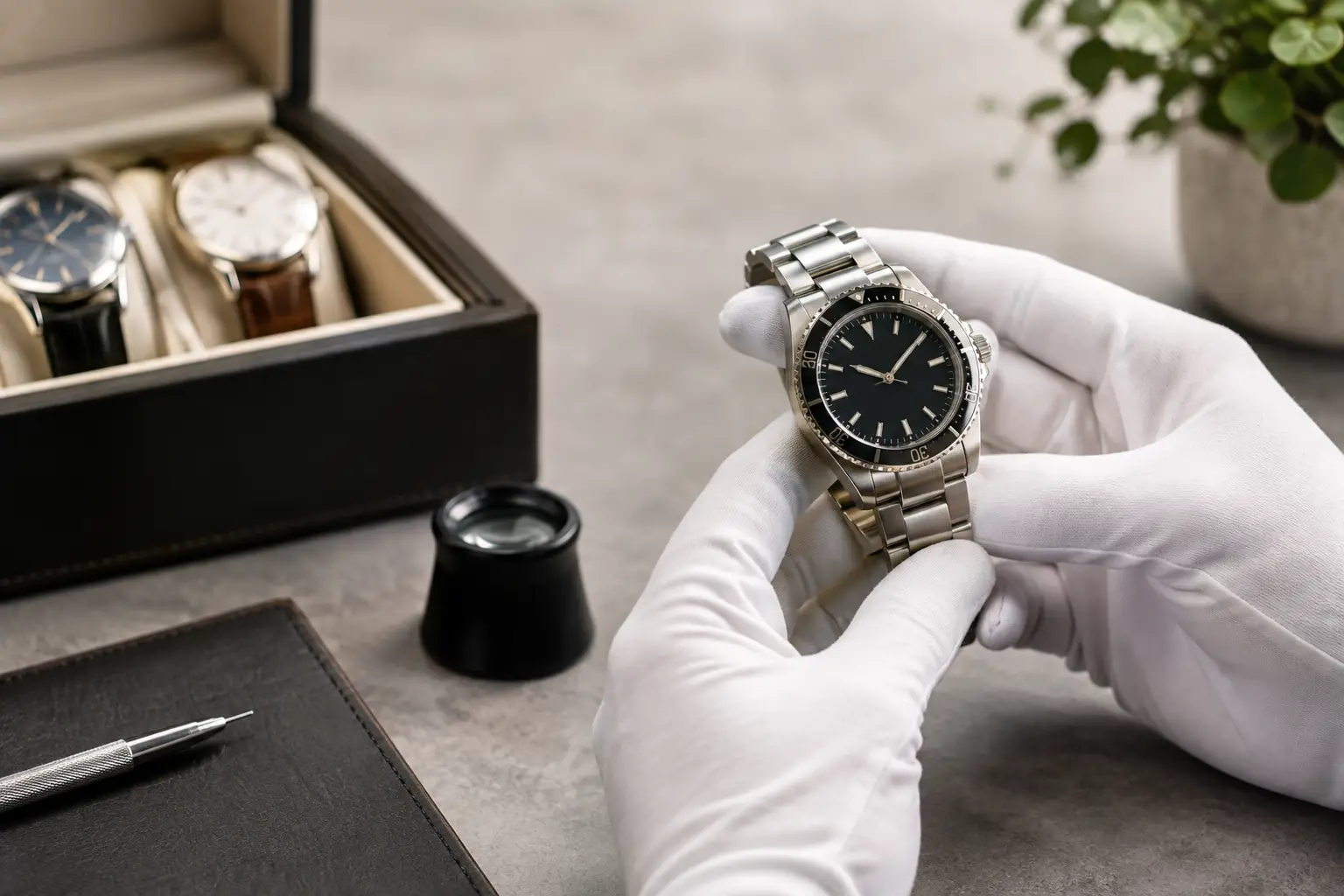
A luxury watch can look correct in photographs and still raise costly questions once it reaches your wrist. For buyers learning how to buy pre-owned watches, the real work is not simply choosing a Rolex, Patek Philippe, Audemars Piguet, or Omega. It is verifying exactly what is being sold, how it has been cared for, and what protection remains after payment clears.
The pre-owned market gives buyers access to discontinued references, collectible configurations, and watches with established ownership history. It also requires more discipline than a typical retail purchase. Condition, originality, service history, provenance, and seller accountability can materially affect both the ownership experience and future desirability.
Start With the Exact Watch You Want
Begin with the reference, not a broad brand search. A reference number identifies a specific model family and often narrows down the case material, dial layout, movement, bezel, bracelet, and production era. Two watches carrying the same collection name can have substantially different dimensions, movements, wear patterns, and market appeal.
Before you buy, decide what matters most: a modern daily-wear piece, a discontinued reference, a highly original vintage example, or a complicated watch for a focused collection. This determines how much condition variation is acceptable. A current-production steel sports watch may be judged largely on sharpness, bracelet condition, and completeness. With an older watch, an untouched dial or correct period components may matter more than a perfectly polished case.
Also confirm the practical details that photographs can obscure. Review case diameter, thickness, lug-to-lug measurement, bracelet fit, water-resistance expectations, and complication use. A watch that is desirable on paper should still suit your wrist and how you intend to wear it.
How to Buy Pre-Owned Watches From a Verified Source
Authentication is the foundation of a pre-owned luxury-watch purchase. The seller should be prepared to state clearly that the watch has been inspected and authenticated, rather than relying on vague language such as “believed authentic” or “looks genuine.” At this level, confidence should be supported by a defined process and a seller willing to stand behind the result.
Ask what the inspection includes. A meaningful evaluation commonly considers the movement, case, dial, hands, bracelet or strap, serial and reference details where applicable, and overall correspondence to the watch’s expected configuration. The goal is not merely to identify a recognizable brand name. It is to establish whether the watch is authentic, correctly represented, and appropriate to its reference and era.
An established retailer also provides an accountable transaction structure. Confirm the return window, warranty terms, insured shipping method, and point of contact if a question arises after delivery. These safeguards matter because a watch can be technically authentic yet still arrive with condition concerns or mechanical issues that were not evident before purchase.
Lume Wrist Watches offers in-house certified timepieces, free insured US shipping, a 30-day return window, and a two-year warranty. For a high-consideration purchase, protections like these are part of the product, not an afterthought.
Read the Condition Description Like a Collector
“Excellent condition” is not a complete description. A careful listing should explain the specific condition of the case, crystal, dial, bezel, bracelet, clasp, and movement. Look for clear, current photographs from multiple angles, including close views of the case sides, lugs, clasp, bracelet stretch where relevant, and any visible marks.
Polishing deserves particular attention. Professional refinishing can be appropriate, especially for a watch intended for regular wear. But excessive polishing can soften the original edges and alter the geometry that gives a case its character. On certain collectible references, well-preserved case lines may carry more weight than a uniformly glossy surface.
Ask whether the dial, hands, bezel insert, bracelet, crystal, or other visible components are original to the watch and consistent with its production period. This does not mean every pre-owned watch must be untouched to be desirable. Service components may be appropriate and beneficial, particularly for a modern watch. The key is accurate disclosure so you understand what you are buying.
Condition also involves functionality. Confirm that the crown operates correctly, the date changes properly if applicable, chronograph functions reset as intended, and the bracelet or clasp is secure. For mechanical watches, a recent service can be useful, but the presence of service history does not replace a clear warranty.
Review Box, Papers, and Provenance in Context
Original box and papers can add confidence and collector appeal, but their importance depends on the watch. For a recent Rolex, Patek Philippe, Audemars Piguet, or Omega, original documentation is often a meaningful part of the complete ownership package. For a vintage piece, surviving papers may be uncommon, and the watch itself must carry the evaluation through its condition, configuration, and documented history.
Do not treat a box or card as a substitute for authentication. Documentation should align with the watch where relevant, but paper alone does not establish that every component is correct or that the watch is in the stated condition. Conversely, a watch sold without its original accessories is not automatically a poor purchase if it has been thoroughly inspected, accurately described, and protected by a credible return and warranty policy.
Provenance is most useful when it answers real questions: Where did the watch come from? Has it been serviced? Are notable components original? Is there a documented chain of ownership or service record? A seller should not invent a story around a watch, but should communicate the history that can be responsibly supported.
Understand What the Warranty Covers
A warranty distinguishes a professionally supported purchase from a transaction that ends at delivery. Read the terms before completing the order. Determine the warranty duration, what mechanical issues are covered, whether accidental damage is excluded, and what steps are required if the watch needs attention.
Water resistance is an area where buyers should be especially precise. A watch may be described as water resistant according to its specification, but seals can age and prior service history can be unknown. If you plan to swim or expose the watch to water, ask whether it has been pressure tested recently and whether that use is appropriate for the individual piece. For many vintage watches, avoiding water exposure is the prudent choice.
A return policy is equally valuable. It gives you time to inspect the watch in person, evaluate fit, and ensure the purchase aligns with the description. Follow the return conditions carefully, including time limits and requirements to preserve the watch and its included materials in the same condition.
Pay and Ship With Protection in Place
High-value watches should travel through an insured, trackable shipping process with clear delivery procedures. Before the watch ships, confirm the recipient name, delivery address, signature requirements, and how the package is insured. For US buyers, free insured shipping removes one common point of uncertainty, but you should still plan to receive the package securely rather than leaving it unattended.
Use a payment method and purchase channel that provide clear records of the transaction. Keep the invoice, certification materials, warranty information, condition description, and any correspondence about the watch. These records are useful for service, insurance discussions, and future resale or collection management.
When the watch arrives, inspect it promptly. Compare the reference, visible condition, accessories, and included documentation with the listing. Test basic functions carefully and contact the seller quickly if anything differs from what was represented. Avoid wearing the watch extensively or removing protective materials until you are satisfied that it meets your expectations and understand the return terms.
Buy the Watch, Not the Hype
A pre-owned luxury watch should earn your confidence through evidence: a correct and complete description, credible authentication, honest condition reporting, secure delivery, a defined return policy, and warranty support. Popularity may help you identify models worth considering, but it should never replace due diligence.
The right purchase is the one you can explain clearly after it is on your wrist: why this reference, why this condition, and why this seller. That clarity is what makes a pre-owned watch feel considered rather than merely acquired.