How to Evaluate a Vintage Cartier Watch Before You Buy
Published September 4, 2026 · Last updated October 20, 2026 · By Lume Wrist Watches
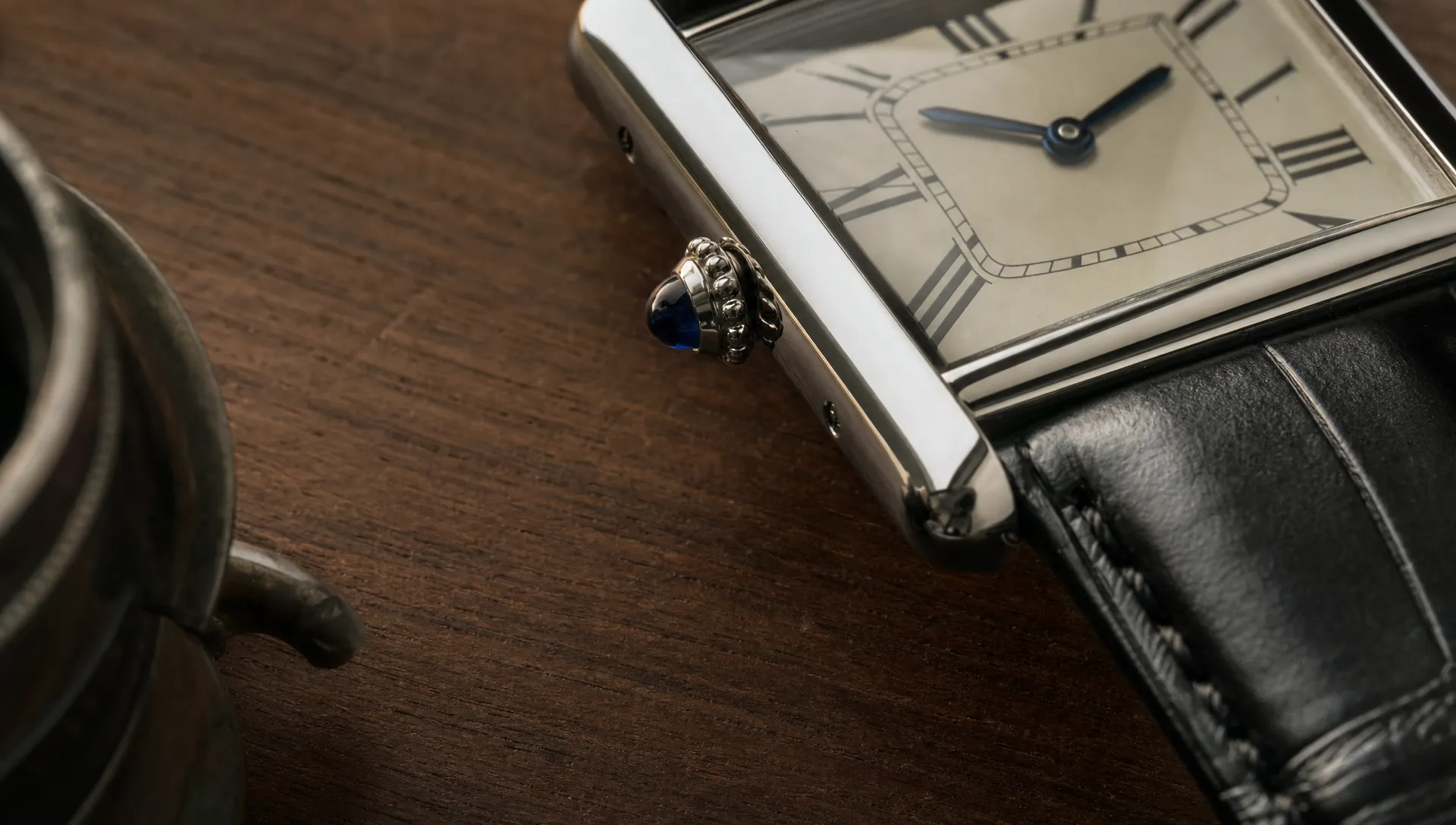
Evaluate a vintage Cartier watch by confirming the exact reference, case material, dial originality, movement type, service history and seller protections before you compare price. A beautiful Cartier with the wrong dial, softened case or unclear provenance can cost more to own than a cleaner example with fewer accessories.
Vintage Cartier buying is not only about age. It is about design integrity. Cartier watches are often small, thin and deceptively simple, so the details carry more weight than they do on many sports watches. A polished bezel, incorrect crown or refinished dial can change the character of the watch.
For first-time buyers, the goal is to avoid an expensive mistake. For collectors, the goal is to separate an honest watch from one that has been made more saleable. Both require the same discipline: identify the watch first, then evaluate condition, then decide whether the seller and price make sense.
Start With the Exact Cartier Family and Reference
Do not begin with “vintage Cartier Tank” or “old Cartier Santos” as a buying category. Begin with the reference number, case size, metal, movement and approximate production period. Cartier made many watches with similar shapes across different decades, materials and markets.
A Tank Must in vermeil is not evaluated the same way as a Tank Louis in solid gold. A Santos Galbée with an integrated bracelet has different wear points than a Tank on a strap. A Pasha with a screw-down crown cap brings different checks than a rectangular dress watch.
| Cartier family | Common vintage or neo-vintage buying angle | Key details to verify | Main condition concern |
|---|---|---|---|
| --- | --- | --- | --- |
| Tank Must | Entry point into classic rectangular Cartier design | Vermeil case, dial variant, quartz or manual movement | Gold-plating wear, dial aging, caseback engraving |
| Tank Louis | Dress Cartier with precious metal cases | Case hallmarks, dial originality, manual movement | Over-polished case and soft brancards |
| Santos / Santos Galbée | Sportier Cartier with bracelet integration | Bracelet fit, bezel screws, case size, movement | Bracelet stretch and polished bezel edges |
| Panthère | Jewelry-led bracelet watch | Bracelet condition, clasp, case size | Stretch and loss of bracelet definition |
| Pasha | Round Cartier with distinctive crown cap | Crown cap, chain, caseback and dial layout | Missing parts and water-entry history |
If you are choosing between Cartier’s two most recognizable shapes, Lume’s Cartier Santos vs. Tank comparison guide gives useful context on design, wearability and model character before you narrow down a reference.
Confirm What “Vintage” Means for the Watch in Front of You
There is no single legal definition of a vintage Cartier watch. Many collectors use “vintage” for watches roughly 25 to 30 years old or older. In practice, Cartier buyers often include 1980s, 1990s and early 2000s pieces in the broader vintage and neo-vintage conversation because the designs, proportions and production details differ from current retail models.
That distinction matters. A 1970s Must de Cartier Tank can have a vermeil case, lacquer dial and manual or quartz movement depending on the version. A 1990s Tank Américaine may feel contemporary in size but still belong to an earlier Cartier era. A 2000s Pasha Seatimer is not vintage in the strictest sense, but it can be relevant for buyers who want a discontinued Cartier design with stronger wrist presence.
If you want a classic rectangular Cartier but prefer a more recent ownership profile, compare vintage options with a modern or later pre-owned Tank. Lume’s guide to why the Cartier Tank Must remains a practical first Cartier explains why many buyers choose the Tank Must format for daily wear.
Examine the Case Before the Dial
The case tells you how the watch has lived. Cartier cases often have crisp geometry. On a Tank, the brancards should retain their shape. On a Santos, the bezel should not look melted around the screws. On a Panthère, the bracelet and case should still show definition rather than a uniform rounded shine.
For vermeil Cartier watches, look closely at the edges and lugs. Vermeil is gold over sterling silver, so wear-through can expose the underlying silver tone. A small amount of age can be acceptable on an honest vintage piece. Heavy wear at the corners, deep dents or uneven plating can reduce desirability and may be difficult to correct without compromising originality.
For solid gold Cartier watches, inspect hallmarks and caseback engravings. The marks should be consistent with the reference and period. They should not look freshly cut, shallow from heavy polishing or mismatched across the case and caseback. A case can be authentic and still be over-polished, so do not stop at authenticity.
Signs of an over-polished Cartier case
- Rounded case edges where the design should be flat or sharply defined
- Thin or shallow engravings on the caseback
- Bezel screws sitting unevenly or looking distorted at the edges
- Lugs that look asymmetrical from side to side
- A bracelet that has lost its original transitions between polished and brushed surfaces
Over-polishing is not always a deal-breaker. It depends on price, rarity and your tolerance for condition. For a common reference, wait for a better case. For a rare dial or hard-to-find size, some case wear may be acceptable if it is disclosed and priced accordingly.
Study the Dial, Hands and Crown as a Set
Cartier dials look simple, but they are not generic. The printing, minute track, Roman numerals, signature placement and “Swiss” or “Swiss Made” text must fit the period and reference. Some vintage Cartier dials have aged beautifully. Others have been refinished.
A refinished dial is not automatically worthless, but it should be disclosed. Collectors usually prefer original dials, even with light patina, over redone dials with heavy printing or incorrect fonts. On a Tank or Must de Cartier, pay close attention to the thickness of the Roman numerals and the alignment of the minute track. On a Santos, inspect the dial for moisture marks around the edges and date window if present.
The hands should match the watch’s style and age. Cartier’s blued hands are a defining feature on many references, but replacements exist. Look for correct length, shape and color. A hand set that appears too bright on an otherwise aged watch deserves closer review.
The crown is another key detail. Many Cartier watches use a cabochon-style crown, often blue. The material and shape vary by model and era, so do not authenticate a watch by the crown stone alone. Check whether the crown profile, stem fit and winding feel are consistent with the reference.
Verify the Movement and Service History
Vintage Cartier watches can be mechanical or quartz. Neither is automatically better. The right movement depends on the model, your collecting goals and how you plan to wear the watch.
Many Tank Must watches were sold with quartz movements, especially later examples. Some earlier or more collectible versions use manual-wind movements. Santos, Pasha and other Cartier families can be found with quartz or automatic movements depending on reference and period.
Ask for movement photos when appropriate, especially on higher-value pieces. The movement should match the reference. Look for signs of corrosion, tool damage or incorrect replacement parts. A clean movement matters more than a romantic story about the watch’s age.
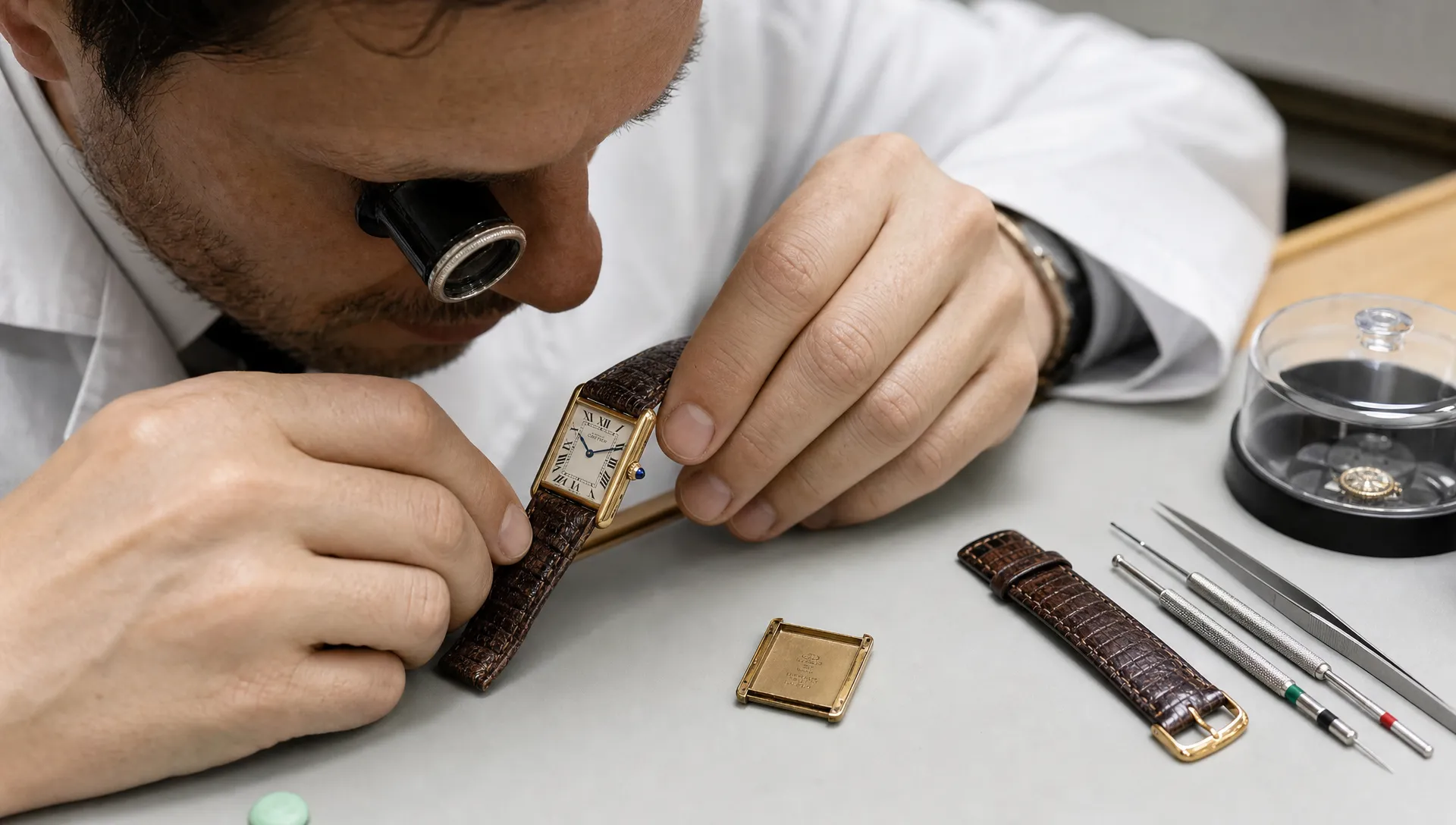
Service history should be specific. “Recently serviced” is not enough. Ask who performed the service, what was done and whether water-resistance was tested if the model is designed for it. On older Cartier dress watches, water-resistance should be treated conservatively, even if the watch had a rating when new. Gaskets age. Cases wear. Crowns can lose integrity.
Check Size on the Wrist, Not Just on Paper
Cartier sizing can surprise buyers who are used to modern sports watches. A 23mm x 30mm rectangular Tank can wear larger than the width suggests because the case is elongated. A 29mm Santos can feel more present because the bracelet and bezel visually extend the watch.
Vintage Cartier proportions are part of the appeal. Do not reject a watch only because the millimeter number looks small. At the same time, do not assume every Cartier will suit every wrist. A dress Cartier should look intentional, not undersized by accident.
| --- | ---: | ---: | --- |
|---|---|---|---|
| Tank Must small | 20mm x 28mm | 0.79 in x 1.10 in | Best for smaller wrists or a jewelry-like fit |
| Tank Must large | 23mm x 30mm | 0.91 in x 1.18 in | Classic unisex Cartier proportion |
| Tank Américaine | Varies widely by reference | Varies by reference | Curved case wears longer than a flat Tank |
| Santos Galbée midsize | Around 29mm | Around 1.14 in | Bracelet adds wrist presence |
| Pasha | Often 35mm to 38mm | 1.38 in to 1.50 in | Round case feels more contemporary |
These are broad guidelines. Always verify the exact measurements for the reference being offered. For example, a Cartier Tank Américaine 1713 should be evaluated differently from a smaller Tank Must because the curved Américaine case changes both wrist presence and condition checks.
Treat Box and Papers as Support, Not Proof
Original box and papers can make a vintage Cartier more complete. They may also help confirm sale date, reference and original configuration. But papers do not replace watch authentication. Boxes can be paired later. Papers can be incomplete. A watch can also be fully authentic without its original accessories.
For older Cartier watches, missing box and papers are common. Condition and correctness usually matter more than packaging. A clean watch with a correct dial, strong case and documented service can be more attractive than a tired example with accessories.
If papers are present, check that the reference, serial and model description align with the watch. Look for signs that the documents belong to another piece. The dates should also make sense for the production era and model family.
Compare Price by Reference, Condition and Completeness
Do not compare a vintage Cartier watch only by model name. Compare it by reference, case metal, size, movement, dial, bracelet or strap, service history, accessories and seller terms. Two watches that look similar in a search result can be far apart in quality.
Public listing platforms such as Chrono24 can help you see asking prices, but asking prices are not confirmed sale prices. Treat them as reference points, not market value. A dealer’s warranty, authentication process, return policy and service work can also affect the total cost of ownership.
| ---: | --- | --- |
|---|---|---|
| Under $3,000 | Honest condition, correct reference, clear seller photos | Heavy vermeil wear, unclear movement status, no return option |
| $3,000 to $8,000 | Cleaner examples, better case definition, stronger provenance | Paying a premium for accessories while ignoring condition |
| $8,000 to $15,000 | Precious metal, rarer variants, documented service | Vague descriptions on dial originality or polishing |
| $15,000 and above | Reference-level accuracy, case strength, provenance and completeness | Any mismatch between seller claims and visible details |
These are buying frameworks, not value guarantees. Cartier prices move with condition, taste, supply and broader demand. Buy the watch you understand.
Evaluate the Seller as Carefully as the Watch
A vintage Cartier purchase depends on the seller’s process. You want clear photos, transparent condition notes, a defined return policy, insured shipping and a warranty that is written plainly. If the seller cannot explain the reference, movement or condition, slow down.
Ask direct questions before payment. Has the watch been opened and inspected? Are all parts believed to be correct for the reference? Has the watch been serviced? Is the case polished? Are returns accepted? How is the shipment insured?
Every watch is inspected at our New York office before dispatch, and each listing shows its own condition grade. Lume is an independent retailer, not an authorized dealer for Cartier or any other brand. Buyers receive free insured shipping within the United States, with international shipping available on request and quote, plus 30-day returns (customer-paid return shipping, 15% restocking fee unless due to our error) and 2-year warranty coverage.
If you are open to Cartier models beyond strict vintage pieces, a discontinued round option such as the Cartier Pasha Seatimer 2790 can be useful for comparing how Cartier’s sportier case designs age against Tank and Santos references.
Red Flags That Should Slow the Purchase
Some issues require more diligence before you proceed. None automatically proves a watch is fake, but each should change how you evaluate risk.
Be careful with listings that show only stock photos or low-resolution images. Avoid sellers who refuse caseback or movement photos on higher-value watches. Treat “custom dial,” “aftermarket diamonds” or “refinished” as major disclosures that affect collectibility. Be cautious with watches described as “unpolished” when the case clearly has rounded edges.
Payment terms matter too. Bank wire transfer is common in high-value watch transactions, but it requires trust in the seller. Understand the terms before you send funds.
A Simple Pre-Purchase Checklist
Before buying a vintage Cartier watch, make sure you can answer these questions in plain language:
- What is the exact reference and approximate production era?
- Is the case vermeil, steel, two-tone or solid precious metal?
- Does the dial appear original, refinished or replaced?
- Does the movement type match the reference?
- Are the crown, hands, bracelet, buckle and caseback correct?
- Has the watch been serviced, and is there documentation?
- What are the return, warranty and shipping terms?
If any answer is unclear, ask before buying. A good seller will not be offended by careful questions.
Frequently Asked Questions
Is a vintage Cartier watch a good first luxury watch? Yes, if you choose a well-documented example from a seller with authentication, return terms and service support. A Tank Must, Santos or Panthère can be approachable, but condition matters more than the logo on the dial.
Should I avoid quartz vintage Cartier watches? No. Cartier made many desirable quartz watches, especially in slim dress formats. Quartz can be practical and historically correct. The key is confirming that the movement is appropriate for the reference and functioning properly.
Do box and papers make a vintage Cartier authentic? No. Box and papers support provenance, but they do not replace inspection of the watch. The case, dial, movement, serial information and seller process still need to make sense.
How much does polishing affect a vintage Cartier watch? Polishing can soften the geometry that makes Cartier cases attractive. Light professional refinishing may be acceptable on some watches, but heavy polishing can reduce collector appeal, especially on Tank, Santos and precious-metal cases.
What is the safest way to buy a vintage Cartier online? Buy from a specialist that provides authentication, detailed photos, written condition information, insured shipping, a return policy and warranty coverage. Avoid rushed private sales unless you can inspect the watch independently.
Next Step
A vintage Cartier watch rewards patience. Confirm the reference, study the case and dial, understand the movement and buy from a seller whose protections are clear in writing.
If you want a vetted starting point, browse Lume’s current authenticated luxury watch selection, including Cartier pieces when available. For a classic Cartier dress option with a vintage feel, the Cartier Must Vermeil is the type of watch that shows why condition, case material and seller documentation matter before you buy.
## Part of the series This article belongs to our complete guide: Cartier Watches: Complete 2026 Buying Guide to Shaped Cases.\n