Budgeting Luxury Watch Servicing Costs and Care
Published August 9, 2026 · Last updated October 21, 2026 · By Lume Wrist Watches
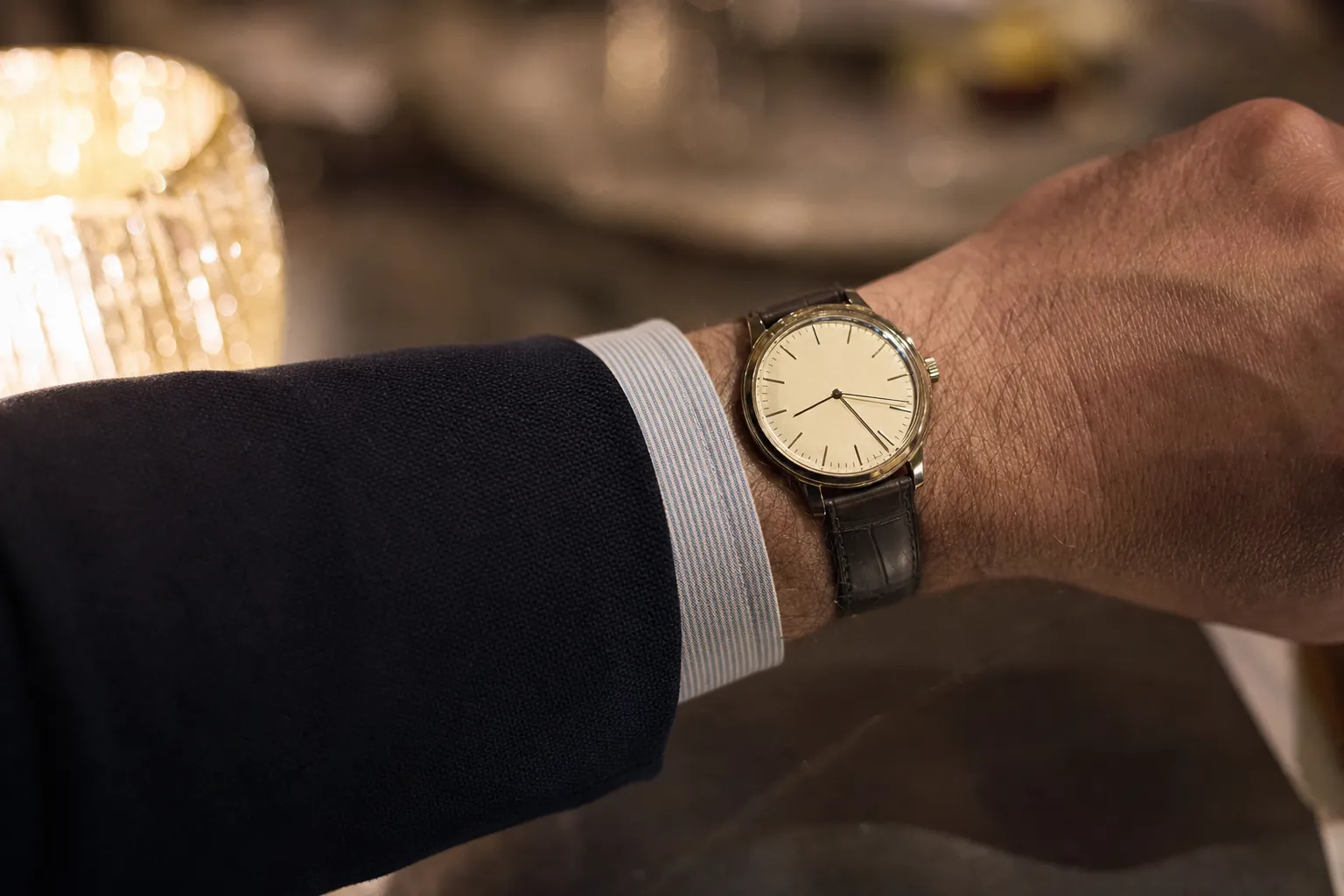
Acquiring a fine mechanical timepiece represents a commitment that extends far beyond the initial transaction. Mechanical movements rely on precision-machined tolerances, micro-engineered gear trains, and specialized synthetic lubricants that degrade inevitably with friction and age. Factoring ongoing luxury watch servicing costs into your long-term ownership plan ensures that your timepieces maintain mechanical reliability and chronometric performance throughout decades of wear.
Factory Service Centers versus Independent Horologists
Deciding where to allocate maintenance capital depends largely on the balance between brand certification and custom mechanical preservation. Factory authorized service centers operate under rigid, standardized protocols established by parent manufactures. When a watch enters a factory facility, technicians follow an exhaustive factory-mandated disassembly, ultrasonic cleaning, and parts replacement sequence. This process routinely incorporates the mandatory replacement of functional components like mainsprings, reversing wheels, and crown stems, backed by an official brand service guarantee.
Factory networks offer seamless access to proprietary tooling, bespoke diagnostic machines, and factory-trained technicians specialized in brand-specific calibers. However, their strict protocols can present drawbacks for collectors prioritizing historical originality. Factory centers often insist on aesthetic overhauls, which may involve case polishing, hands replacements, or dial swaps that diminish the original character of an older reference. Furthermore, their operational bureaucracy often translates into multi-month turnarounds and fixed pricing tiers that leave little room for nuanced technical requests.
Independent horologists, particularly those credentialed through the Watchmakers of Switzerland Training and Educational Program (WOSTEP) or the American Watchmakers-Clockmakers Institute (CW21), provide a tailored alternative. An independent workshop allows for direct communication with the artisan working on your caliber. You can instruct an independent watchmaker to service the movement mechanics completely while leaving the case unpolished and retaining the original tritium handset.
The operational overhead of an independent workshop is typically leaner, which often yields a more favorable labor rate. Turnaround times are frequently faster because the watch is not queued behind international corporate logistics. Nonetheless, choosing the independent route requires diligent research. You must verify that the workshop maintains the specialized micro-mechanical tooling, timing calibration machines, and authorized parts accounts required for your specific movement.
Authorized Service Centers: Standardization and Access
Authorized centers shine when dealing with modern, highly integrated luxury calibers. If a modern manufacture caliber requires firmware updates for electronic diagnostic equipment or proprietary software to calibrate balance regulation, the factory environment is indispensable. Brands like Rolex, Patek Philippe, and Audemars Piguet tightly restrict their diagnostic software and specialized escapement tools to authorized entities.
The primary advantage here is definitive accountability. An overhaul performed by a factory network yields a signed service card that updates the serial number's official archive history. For owners managing contemporary collections, this institutional paper trail provides comprehensive documentation of ongoing mechanical care.
Independent Specialists: Tailored Care and Flexibility
Independent workshops excel in offering mechanical preservation without corporate dogmatism. When servicing an early Rolex Submariner reference 1680 or an Omega Speedmaster Professional powered by the caliber 861, an experienced independent horologist will focus on renewing the movement's mechanical health while zealously guarding its external patina.
They will source original new-old-stock components or fabricate obsolete pivots rather than replacing an entire bridge assembly with modern parts. For enthusiasts building a balanced rotation through a comprehensive buying guide, establishing a working relationship with an independent watchmaker offers flexibility and personalized mechanical care.
Caliber Complexity and Its Impact on Maintenance Budgets
Movement architecture directly dictates the labor hours, diagnostic rigor, and component costs required during a service overhaul. As component counts multiply and mechanical interactions grow denser, luxury watch servicing costs scale accordingly. Understanding the structural differences among movement architectures allows you to anticipate realistic ownership expenses across your collection.
``` +------------------------------------+------------------+---------------------+--------------------+ | Caliber Architecture | Component Count | Bench Labor Required| Relative Budget Tier| +------------------------------------+------------------+---------------------+--------------------+ | Manual-Wind Time-Only (e.g., ETA 7001) | ~100 – 130 parts | Low (3 – 5 hours) | Base Tier | | Automatic Date (e.g., Rolex 3135) | ~180 – 220 parts | Moderate (5 – 7 hrs)| Intermediate Tier | | Modular Chronograph (e.g., DD 2020) | ~320 – 380 parts | High (8 – 12 hours) | Elevated Tier | | Integrated Chrono (e.g., El Primero) | ~280 – 350 parts | High (8 – 11 hours) | Elevated Tier | | Perpetual Calendar / Tourbillon | 400+ parts | Very High (15+ hrs) | Top Tier | +------------------------------------+------------------+---------------------+--------------------+ ```
Standard Manual and Automatic Calibers
Base-tier architectures include robust, time-only calibers or simple three-hand configurations with a date disc. Workhorses like the ETA 2824-2, Sellita SW200-1, or in-house baselines such as the Rolex caliber 3135 feature straightforward geartrains, a single mainspring barrel, and a relatively low total part count.
Disassembly, inspection, cleaning, reassembly, and lubrication with standard oils like Moebius 9010 and HP 1300 can be executed systematically by any competent watchmaker. The predictable architecture keeps labor requirements modest, making these calibers the most economical to maintain over decades of regular use.
Integrated and Modular Chronographs
Chronographs introduce a dramatic leap in mechanical complexity. An integrated chronograph, such as the Zenith El Primero 400 or the Rolex caliber 4130, combines timekeeping and elapsed-time tracking onto a unified mainplate. Adjusting column wheels, lateral clutches, or vertical clutches demands extreme dexterity and meticulous depth-engagement checks to prevent tooth shearing.
Modular chronographs—where an auxiliary chronograph module (such as a Dubois Dépraz plate) is sandwiched atop a base movement—present even steeper challenges. Many independent watchmakers decline to overhaul modular chronograph plates due to their microscopic component density and friction-fit assemblies. Often, these modules must be replaced in their entirety rather than disassembled, which inflates the maintenance budget considerably.
High Complications and Grand Complications
Perpetual calendars, minute repeaters, and split-seconds chronographs reside at the pinnacle of servicing commitments. Calibers like the IWC Kurt Klaus perpetual calendar mechanism or Patek Philippe's caliber 240 Q contain hundreds of delicately hand-finished components operating under tight spatial constraints.
A single misaligned jumper spring or incorrect oil viscosity applied to a calendar star can cause the entire mechanism to seize during midnight transitions. Overhauling these micro-mechanical masterworks commands dozens of hours of high-concentration bench labor, frequently requiring repatriation to the brand's headquarters in Switzerland.
Evaluating Past Overhaul Records in Pre-Owned Transactions
When analyzing pre-owned luxury watches on the secondary market, service documentation is one of the most practical risk-mitigation tools at your disposal. A complete overhaul history confirms whether previous owners treated the watch with mechanical diligence or neglected it until performance failed.
Begin by auditing the documentation's provenance. An invoice or guarantee card issued directly by a brand service center will state the specific reference number, movement caliber, serial number, and exact date of completion. These documents typically confirm that the watch received a fresh factory warranty covering the mechanical overhaul for a period of one to two years.
Invoices from independent watchmakers should be reviewed with an analytical eye. Look for detailed line items that specify the procedures performed: Ultrasonic cleaning of all dismantled components Replacement of the mainspring and barrel arbor Installation of fresh case back, crown, and crystal gaskets Complete re-lubrication using specific horological oils Dynamic regulation across multiple positions (dial up, dial down, pendant up) Dry and wet pressure testing results
A vague receipt reading merely "cleaning and oiling" or "movement repair" without itemized parts or diagnostic metrics indicates superficial work. If you are comparing references across an online inventory while searching to shop pre-owned luxury watches, look for verifiable documentation that lists the actual bench tests conducted.
Demand to see timegrapher readouts if recent maintenance is claimed. A freshly serviced movement should demonstrate an amplitude between 270° and 310° at full wind, a beat error below 0.5 milliseconds, and minimal positional delta. If an invoice shows a recent overhaul but timing prints reveal an amplitude lingering under 240°, the caliber was either improperly lubricated, fitted with a fatigued mainspring, or never fully stripped down.
Physical Indicators That Signal an Urgent Movement Overhaul
Even in the absence of written records, the physical operation of a mechanical watch reveals its internal health. Conducting basic tactile and visual checks alerts you to an impending maintenance requirement before micro-mechanical damage occurs.
- Crown Resistance and Winding Feedback: When manually winding the movement via the crown, rotation should feel silky, continuous, and uniformly resistant. Excessive friction, coarse grating, or resistance that causes the crown to slip from your fingers points to dry barrel arbor pivots or gummed-up winding pinion teeth. In an automatic caliber, if the winding rotor spins rapidly inside the case while you wind manually, the reversing wheels have failed and require immediate replacement.
- Date Wheel Transitions and Hand Setting: Setting the time should produce a smooth, controlled glide of the hands without play or backlash. If the hands feel exceedingly loose, the cannon pinion has lost its friction fit and needs tightening. Date complications should jump crisply at midnight or progress steadily without stalling halfway through the window aperture.
- Acoustic and Rotor Signatures: Swiveling an automatic watch gently near your ear should reveal the quiet, balanced spin of the oscillating weight. A harsh scraping or metallic rattle indicates that the rotor axle, rotor bearing, or jewel has worn down, allowing the oscillating weight to drag against the movement bridges or the inner surface of the case back. This friction sheds brass and steel shavings across the movement plates.
- Chronograph Actuation Crispness: Depressing the start, stop, and reset pushers should produce a crisp, distinct mechanical snap. Mushy pusher resistance, sluggish chronograph seconds hands, or an elapsed minute counter that fails to advance indicates oxidized lubricants and misaligned engagement springs.
Spare Parts Availability and Proprietary Component Policies
A critical consideration in long-term ownership budgeting is whether your chosen watchmaker can source genuine spare parts. Over the past two decades, luxury watch conglomerates have drastically restricted the distribution of movement components. Major groups and independent giants have progressively shuttered spare-parts accounts for uncertified independent watchmakers, centralizing repairs within their own networks.
This shift impacts how you budget for maintenance. If an independent watchmaker encounters a cracked jewel, a damaged escapement wheel, or a worn balance staff in a proprietary movement, they may be unable to order that component directly from the manufacturer. They must either acquire parts through secondary market channels at a premium, scavenge components from donor movements, or turn the repair away.
Conversely, standard calibers based on open-architecture designs—such as those derived from ETA, Sellita, or classic Valjoux platforms—enjoy universal parts accessibility. Components for an ETA 2892-A2 or Valjoux 7750 remain widely distributed and readily available. When purchasing watches housing proprietary or high-grade in-house calibers, recognize that parts access policies may eventually necessitate factory-level servicing, locking you into authorized service center rates and procedures.
Water Resistance Maintenance: Gaskets and Pressure Testing
Mechanical calibers are acutely vulnerable to moisture and dust ingress. A microscopic drop of water inside the case transforms into acidic rust, destroying polished pinions, balance springs, and balance pivots within days. While a full movement overhaul is recommended every five to ten years, water resistance maintenance must be addressed on a much shorter cycle.
Water tightness relies entirely on synthetic elastomeric seals—typically nitrile (NBR), neoprene, or fluorocarbon (FKM) gaskets—located at the case back, crystal perimeter, crown tube, and chronograph pushers. Over time, these polymers dry out, flatten, and crack due to temperature swings, UV exposure, perspiration, and exposure to chlorinated or salt water. Gaskets can degrade and compromise an enclosure long before the movement's lubricants break down.
Preserving case integrity requires an annual pressure test. Horological workshops utilize two main testing configurations: 1. Dry Pressure Testing: The watch is placed in an airtight chamber where sensors measure microscopic deflections in the case crystal under air pressure or vacuum. If the crystal does not deform as expected, air has leaked into the case, signifying seal failure without exposing the movement to moisture. 2. Wet Testing: Reserved for deep-rated dive watches, this test submerges the cased watch in water under pressurized conditions to confirm depth ratings defined by standards such as ISO 22810 or ISO 6425.
Replacing gaskets during an annual pressure check is a fast, straightforward operation that requires nominal workshop time. Budgeting for this routine checkup shields you from the immense expenses associated with emergency water-damage restorations, which often necessitate replacing the entire dial, handset, and mechanical geartrain.
Frequently Asked Questions
### How do independent watchmaker rates compare to factory service centers? Independent watchmakers generally charge less than authorized factory service centers due to lower operational overhead and flexible labor models. While factory centers operate on fixed corporate pricing tiers that include standardized parts replacement, independents often charge based on the specific time and repairs required. However, for complex high complications requiring proprietary parts, independent rates can approach factory figures due to the sourcing difficulty involved.
### How can a buyer verify that a pre-owned watch was genuinely serviced? A buyer can verify past service by requesting itemized workshop invoices, official factory service warranty cards, or diagnostic timegrapher printouts confirming strong amplitude and minimal beat error. The documentation should explicitly state the watch's serial number, reference number, work completed, and date of completion. Without written documentation or diagnostic proof, any claim that a pre-owned watch was recently overhauled should be treated with skepticism.
### Why do chronograph movements require higher maintenance budgets than time-only calibers? Chronographs require higher maintenance allocations because their movements contain nearly double the components of a time-only caliber, including lateral or vertical clutches, column wheels, and reset hammers. Disassembling, cleaning, assembling, and regulating these intricate mechanisms requires extensive technical labor and precise adjustment of spring tensions. The additional components and specialized lubricants directly translate to longer bench times and elevated servicing expenses.
### How often should case gaskets be replaced to maintain water resistance? Case gaskets should ideally be inspected and pressure tested once a year, particularly if the watch is regularly exposed to water, sweat, or extreme temperatures. Complete replacement of the case back, crown, and pusher gaskets is standard during a full movement overhaul every five to eight years. However, any dry or wet pressure test failure demands immediate gasket replacement regardless of when the watch was last serviced.
### Can independent watchmakers source genuine replacement components for major Swiss brands? Independent watchmakers can only source genuine replacement components if they hold an active, brand-certified parts account, which requires specific brand tooling and facility inspections. Many major luxury conglomerates have severely curtailed parts distribution to unaffiliated workshops in recent years. If an independent does not possess an authorized account, they must rely on existing old stock, secondary market suppliers, or donor movements to obtain genuine components.