Omega Co-Axial & Master Chronometer Explained: The Ultimate Guide
Published September 15, 2026 · Last updated October 20, 2026 · By Lume Wrist Watches
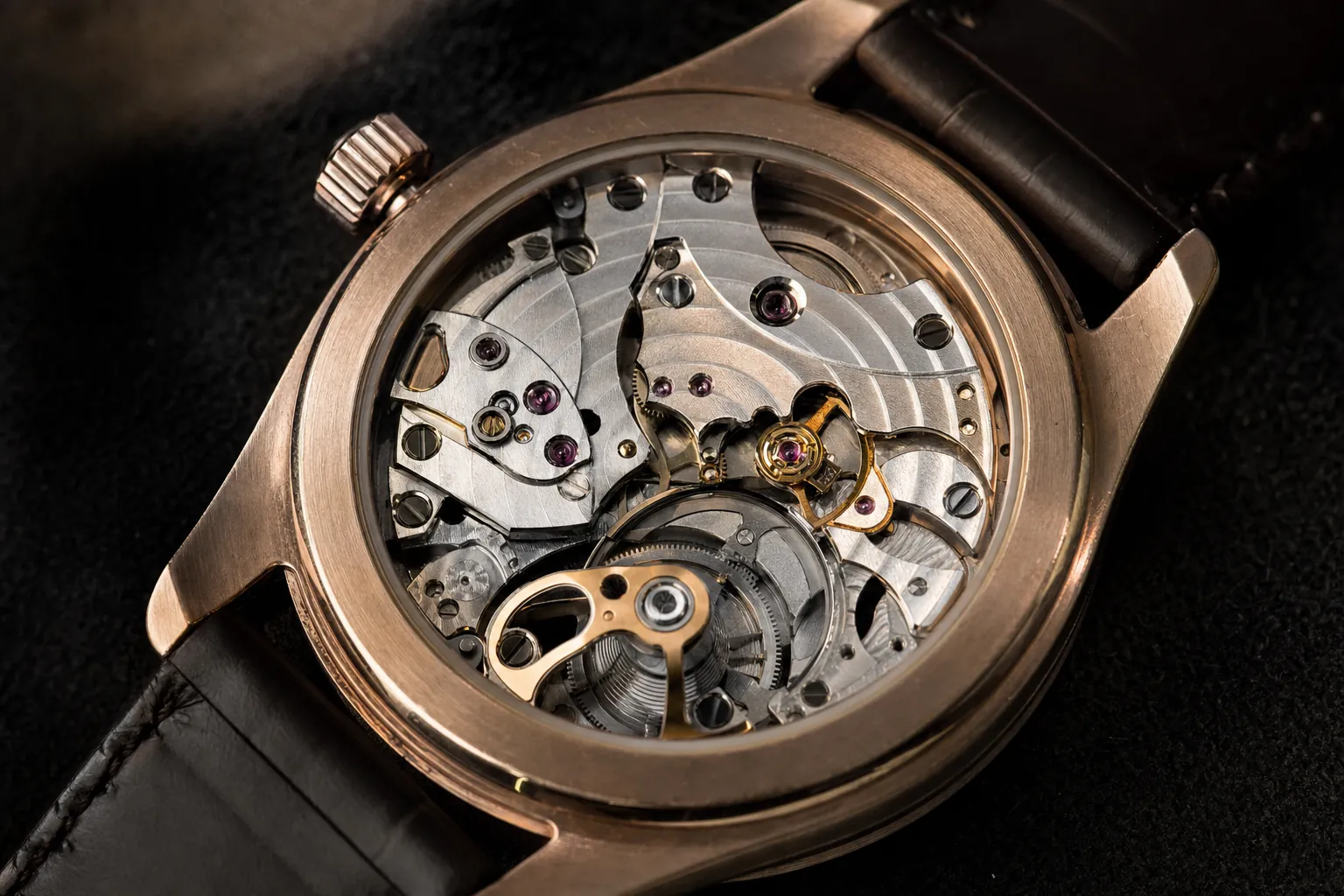
Omega's Co-Axial escapement and Master Chronometer certification represent the pinnacle of modern mechanical watchmaking, offering unparalleled precision, reliability, and resistance to magnetic fields. These innovations are not mere marketing buzzwords; they are foundational technologies that have redefined performance standards across Omega's diverse collections, from the robust Omega Seamaster Diver 300M to the elegant Omega De Ville, ensuring your timepiece stands the test of time and environmental challenges.
The Innovation at a Glance: Production, Function, and Impact
The Omega Co-Axial escapement, initially commercialized by Omega in 1999, is a revolutionary design by independent British watchmaker George Daniels. It dramatically reduces friction in the escapement—the heart of the watch that regulates timekeeping—leading to greater long-term stability and reduced servicing needs. Paired with this, Omega introduced the Master Chronometer certification in 2015, a rigorous standard developed in conjunction with the Swiss Federal Institute of Metrology (METAS). This certification goes far beyond traditional chronometer testing (like COSC), evaluating the watch as a complete unit for precision in varying conditions, water resistance, power reserve, and crucially, resistance to magnetic fields exceeding 15,000 gauss.
This dual approach ensures that modern Omega movements, such as the Caliber 8800 or 9900 series, provide exceptional timekeeping accuracy of 0 to +5 seconds per day, remain unaffected by common magnetic interference, and maintain their robust performance under diverse conditions. These technologies are now central to nearly all contemporary Omega models, elevating them to a distinct tier of horological excellence.
Full Specification Table: Co-Axial & Master Chronometer Attributes
This table outlines the key performance metrics and characteristics that define an Omega Master Chronometer movement incorporating the Co-Axial escapement.
| Feature | Co-Axial Escapement | Master Chronometer Certification (METAS) |
|---|---|---|
| --------------------------- | -------------------------------------------------------- | ------------------------------------------------------------------------- |
| Core Principle | Reduced friction, improved mechanical efficiency | Comprehensive performance testing for entire watch |
| Key Inventor | George Daniels | Omega & METAS (Swiss Federal Institute of Metrology) |
| Year Introduced (Omega) | 1999 | 2015 |
| Accuracy Standard | Inherent design for stability | 0 to +5 seconds per day (after movement is cased) |
| Anti-Magnetism | Indirect benefit of materials | Certified to >15,000 Gauss (1.5 Tesla) |
| Power Reserve Test | — | Tested to advertised power reserve |
| Water Resistance Test | — | Tested to advertised water resistance |
| Performance Variation | — | Tested under varying temperatures and positions |
| Servicing Interval | Potentially longer due to reduced friction | Not directly specified, but improved stability may contribute |
| Application | Nearly all modern Omega automatic calibers | Applied to nearly all modern Omega automatic & some manual-wind calibers |
| Material Innovation | Silicon balance spring, non-ferrous components | Non-ferrous materials throughout movement (e.g., Nivagauss) |
Production Timeline and Evolution
Omega's journey with the Co-Axial escapement and its subsequent Master Chronometer certification has been a carefully executed, multi-decade endeavor:
- 1970s: George Daniels invents the Co-Axial escapement, seeking to improve upon the traditional Swiss lever escapement's lubrication dependency and friction issues.
- 1999: Omega launches its first series-produced watch with the Co-Axial escapement, the De Ville Co-Axial, featuring the Caliber 2500. This marked a significant shift in mass-produced luxury watch movements.
- Early 2000s: Omega progressively integrates the Co-Axial escapement into more calibers, evolving the design to three-level and then four-level architectures to optimize performance and reliability.
- 2007: Omega introduces its first entirely in-house Co-Axial caliber, the Caliber 8500/8501, signifying complete control over its groundbreaking technology. These calibers also featured twin barrels for extended power reserve and a free-sprung balance for increased stability.
- 2013: Omega unveils the Seamaster Aqua Terra > 15,000 Gauss, the world's first fully anti-magnetic watch, using non-ferrous materials for critical movement components rather than an inner soft-iron cage. This was a direct precursor to the Master Chronometer standard.
- 2015: The Master Chronometer certification is formally introduced in collaboration with METAS. This marked a new industry benchmark, combining COSC's precision tests with rigorous anti-magnetism, water resistance, and power reserve evaluations for the entire watch, not just the movement.
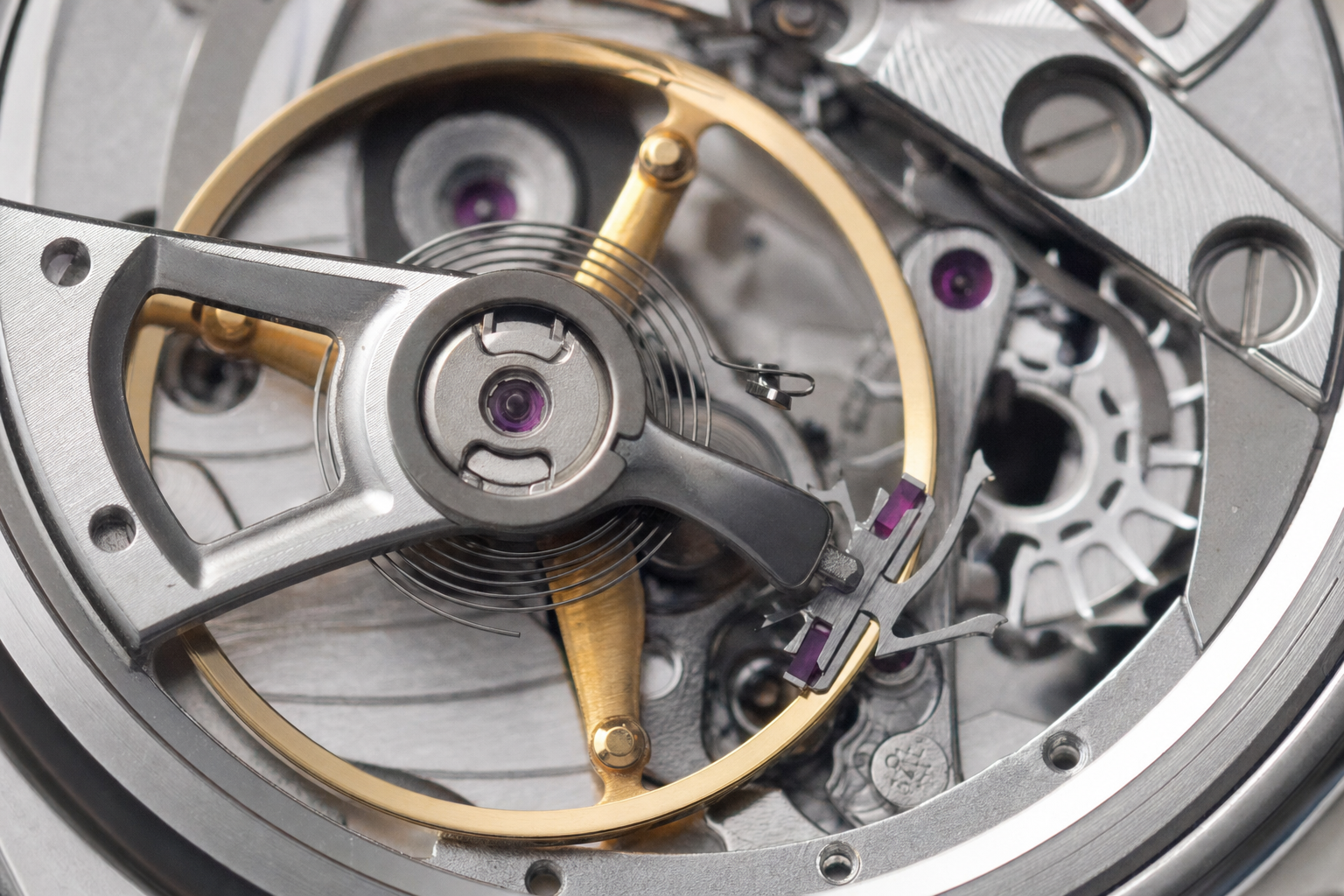
- 2016-Present: Nearly all new Omega mechanical movements are developed to meet Master Chronometer standards. This includes popular calibers like the Caliber 8800 (used in many Omega Seamaster Diver 300M models) and the Caliber 9900/9901 (found in many Speedmaster chronographs like the Omega Speedmaster ‘Dark Side of the Moon’ (311.92.44.51.01.003)). This universal adoption underlines Omega's commitment to delivering top-tier performance across its entire Omega collection.
Wearing Experience and Practical Benefits
The wearing experience of an Omega Co-Axial Master Chronometer watch translates directly into superior daily performance and peace of mind. Here’s what sets it apart:
- Exceptional Accuracy: With a guaranteed rate of 0 to +5 seconds per day, these watches are among the most accurate mechanical timepieces available. This precision is maintained even after the movement is cased, a key differentiator from COSC-only certifications.
- Unrivaled Anti-Magnetism: In an increasingly electronic world, magnetic fields are ubiquitous (smartphones, tablets, speakers, MRI machines). A Master Chronometer's resistance to fields over 15,000 gauss means you don't have to worry about your watch's timekeeping being adversely affected, a common issue for traditional mechanical watches.
- Durability and Longevity: The reduced friction in the Co-Axial escapement theoretically extends the service intervals, as fewer components wear out as quickly. While Omega still recommends regular servicing, the inherent design promises a robust and reliable engine for decades.
- Consistent Performance: The METAS testing protocol ensures that the watch performs consistently under varying real-world conditions—different temperatures, power reserve levels (from full to nearly empty), and positions. This means your watch will keep accurate time whether it's on your wrist all day or left on your nightstand.
- Transparency: Each Master Chronometer watch comes with a unique card that allows owners to access specific performance test results for their individual timepiece online via Omega's website, providing an unprecedented level of transparency and verification.
For buyers considering a luxury watch for everyday wear, the practical advantages of these technologies are profound. They ensure that an Omega watch, such as an Omega Seamaster Aqua Terra, is not just a beautiful accessory, but a highly dependable instrument.
Market Pricing and Value Proposition
While the Co-Axial escapement and Master Chronometer certification are standard features in most current Omega mechanical watches, their presence significantly contributes to the overall value proposition. These advanced technologies are baked into the price of new Omega watches, positioning them competitively against other luxury brands offering similar levels of precision and innovation.
When evaluating pre-owned Omega watches, the presence of these technologies becomes a key factor influencing price and desirability. Generally, Co-Axial movements (Caliber 2500 and above) and especially Master Chronometer certified models (generally post-2015) tend to command higher prices compared to earlier Omega models with non-Co-Axial or pre-METAS movements.
| Technology Tier | Era (Approx.) | Price Impact (New) | Price Impact (Pre-Owned) | Key Examples (Calibers) |
|---|---|---|---|---|
| ----------------------------------- | ----------------- | --------------------------------------------------- | -------------------------------------------------------------- | ------------------------- |
| Traditional ETA-based | Pre-1999 | Lower entry point | Accessible, but less technologically advanced | Cal. 1120, 1152 |
| Early Co-Axial (Cal. 2500) | 1999-~2007 | Premium over ETA | Moderate premium, solid value | Cal. 2500 |
| In-House Co-Axial (8x00/9x00) | ~2007-2015 | Significant premium over 2500, competitive with peers | Strong premium, excellent long-term reliability | Cal. 8500, 9300 |
| Master Chronometer | 2015-Present | Standard for most models, reflects advanced R&D | Commands highest prices in pre-owned market, strong demand | Cal. 8800, 9900 |
The additional investment in a Master Chronometer watch is justified by its superior performance metrics, particularly its anti-magnetic properties and guaranteed accuracy. For collectors and enthusiasts seeking the absolute best in modern mechanical watchmaking, a Master Chronometer offers significant peace of mind and enhanced daily wearability. While specific models and their condition will always dictate market value, the underlying technology reinforces Omega's strong standing in the luxury watch market, especially when compared to rivals in states like New York or California.
Authentication Checklist for Co-Axial & Master Chronometer
Authenticating an Omega with these technologies primarily involves verifying the movement itself and the associated documentation. For any significant purchase, especially from the pre-owned market, we recommend purchasing through reputable dealers like Lume Wrist Watches, where our inspection process process is rigorously applied. However, here are key points to observe:
- Movement Identification: For Co-Axial movements, look for the "Co-Axial" engraving on the rotor or movement bridges visible through the case back. For Master Chronometer models, you should see "Master Chronometer" or "METAS Certified" on the movement and potentially on the dial itself (though less common).
- Serial Numbers: Every Omega watch has a unique serial number, typically engraved on the case back or movement. Verify this number against accompanying papers and Omega's records if possible.
- METAS Card: Master Chronometer watches are typically accompanied by a red METAS certification card, in addition to the traditional COSC chronometer certificate (white card) and warranty cards. This card will have the watch's unique serial number and can be used to look up its specific test results online.
- Dial Details: While not always present, some Master Chronometer models feature discreet "Master Chronometer" or ">15'000 Gauss" text on the dial, often at 6 o'clock. Absence of this text does not mean it's not a Master Chronometer, but its presence is a good sign.
- Finishing Quality: Omega Co-Axial movements, especially the in-house Calibers 8500/9300 and subsequent Master Chronometer movements, feature exquisite finishing. Look for Geneva waves (Côtes de Genève in Arabesque), polished bevels, and blued screws. Any signs of crude finishing or machine marks in areas that should be hand-finished are red flags.
- Functionality: Test all functions: time setting, date change (if applicable), chronograph operation (if applicable), and ensure the watch winds smoothly. While not a definitive authentication step, any functional anomaly warrants further inspection.
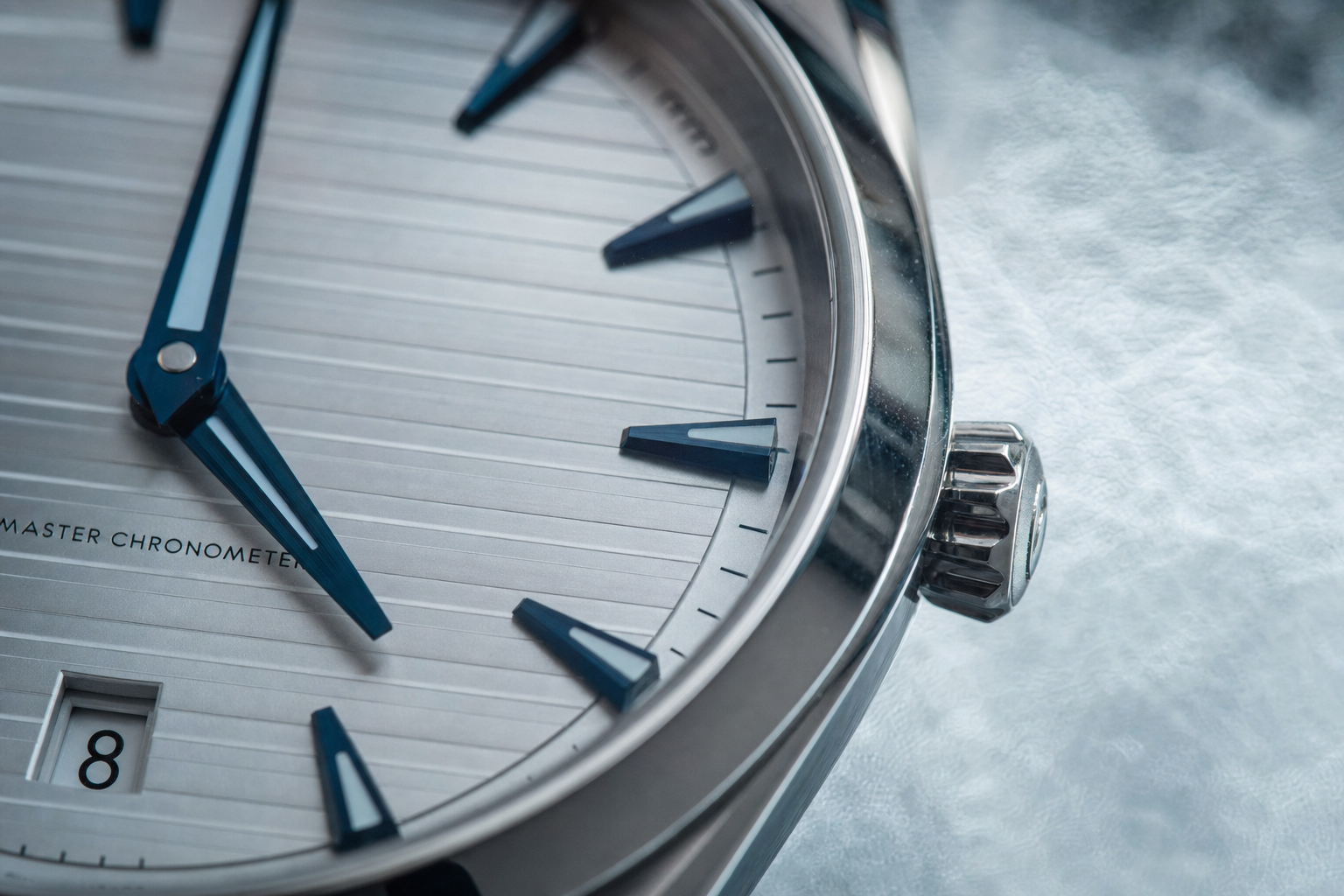
When in doubt, always consult an expert. At Lume Wrist Watches, we ensure every timepiece, including those from our extensive Omega collection, passes stringent authentication before it reaches our customers. Consider our private viewing appointments for a closer inspection.
Frequently Asked Questions
What is the primary difference between a COSC certified chronometer and an Omega Master Chronometer?
While COSC certifies only the movement's precision in laboratory conditions, a Master Chronometer certification tests the entire watch (cased movement) for precision (0 to +5 seconds/day), anti-magnetism (>15,000 gauss), water resistance, and power reserve under various real-world conditions. It's a significantly more comprehensive and demanding standard.
Does the Co-Axial escapement really reduce the need for servicing?
The Co-Axial escapement's design significantly reduces friction and sliding contact compared to the traditional Swiss lever escapement, theoretically extending the periods between recommended service intervals due to less wear and tear on components and reduced reliance on lubricants. While Omega still advises regular maintenance, the Co-Axial design contributes to greater long-term stability and reliability.
Are all new Omega mechanical watches Master Chronometer certified?
Nearly all new mechanical Omega watches are indeed Master Chronometer certified. There may be a few specific manual-wind or historic re-edition models that do not carry the certification, but the vast majority of current production automatic movements meet this rigorous standard.
Can my older Omega watch be upgraded to a Master Chronometer movement?
No, you cannot upgrade an older Omega watch with a non-Master Chronometer movement to meet Master Chronometer standards. The certification requires specific movement architecture, materials (like anti-magnetic components), and comprehensive testing of the cased watch, which cannot be retrofitted to older calibers.
How does Omega achieve its exceptional anti-magnetic properties in Master Chronometer watches?
Omega achieves anti-magnetism primarily by using non-ferrous materials for critical movement components, such as a silicon balance spring, Nivagauss balance staff, and other components made from anti-magnetic alloys. This approach eliminates the need for a soft-iron inner cage, allowing for display case backs and slimmer profiles, unlike many other brands that rely on shielding.
Contact Lume Wrist Watches
For more information on Omega Co-Axial Master Chronometer watches or to explore our curated selection, please don't hesitate to reach out to our team of experts. We are here to assist you with everything from specific product inquiries to our concierge sourcing service for rare pieces.
- Email: sales@lumewrist.com
- Phone: +1 (332) 285-2190
- Office (by appointment): 18 East 48th Street, Suite 1503, New York, NY 10017
- Hours: Mon–Fri 9:00 AM – 7:00 PM EST · Closed Saturday & Sunday
Visit our contact page for more ways to connect, or head straight to our shop to browse our current inventory.
Final Thoughts
Omega's Co-Axial escapement and Master Chronometer certification are more than just technical specifications; they are a testament to the brand's relentless pursuit of horological excellence and its commitment to real-world performance. These innovations provide a compelling reason to choose an Omega, offering peace of mind through superior accuracy, anti-magnetism, and reliability that few other brands can match. Whether you're considering a robust tool watch like the Seamaster, a sophisticated dress watch like the De Ville Prestige, or a legendary chronograph such as the Omega Omega Speedmaster ‘Dark Side of the Moon’ (311.92.44.51.01.003), understanding these core technologies will deepen your appreciation for the craftsmanship on your wrist. Explore these exceptional timepieces and more in our authenticated collection, and discover why an Omega Co-Axial Master Chronometer is an investment in lasting precision and horological ingenuity. We also feature fantastic pre-owned options like the Omega Steel Omega De Ville Prestige Silver Roman Dial and the unique Omega Omega Constellation Red Diamond Dial, ensuring a perfect fit for any discerning collector across the nation, from those looking for luxury watches in Florida to luxury watches in Texas.
## Part of the series This article belongs to our complete guide: Omega Watches: Complete 2026 Buying Guide.\n