Piaget Altiplano Sizing and Buying Guide
Published August 22, 2026 · Last updated October 21, 2026 · By Lume Wrist Watches
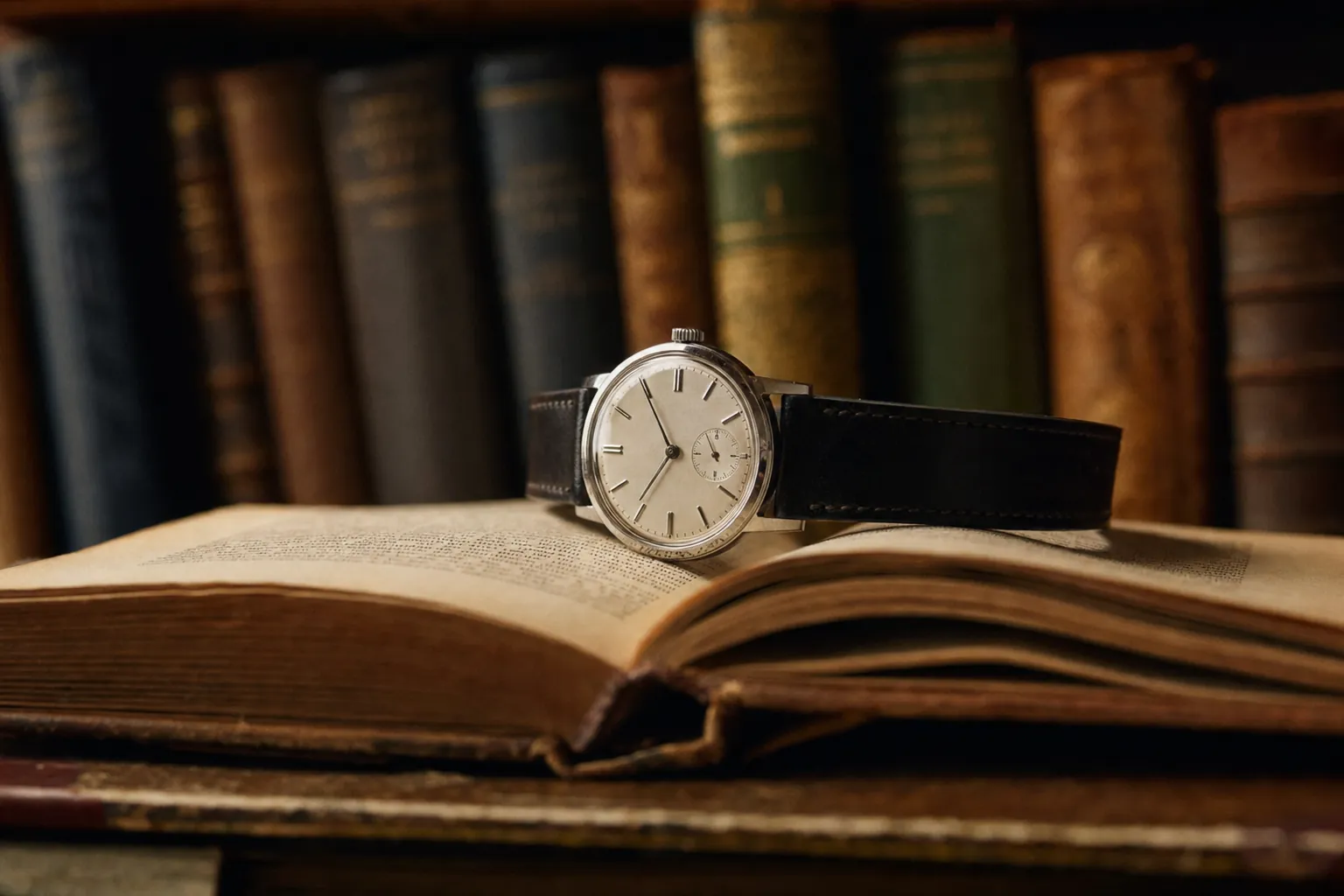
Selecting a Piaget Altiplano requires a fundamentally different mindset than shopping for conventional sports watches or traditional dress pieces. Because ultra-thin watchmaking strips away extraneous mass, every millimeter of case diameter and fraction of a millimeter in thickness drastically alters the watch’s visual footprint and wrist dynamics. This comprehensive piaget altiplano buying guide cuts through the aesthetic minimalism to explore the physical reality of wearing, evaluating, and acquiring these slender horological achievements on the secondary market.
Manual-Wind vs Micro-Rotor Automatic References
The choice between a manual-wind Altiplano and a micro-rotor automatic sits at the core of your buying decision. It dictates not only the cadence of your daily interaction with the watch, but also its case architecture, weight distribution, and tactile feedback.
The Manual-Wind Experience: Caliber 430P
The manual-wind references represent the purest execution of the Altiplano philosophy. Chief among these is the manufacture Caliber 430P, a direct conceptual descendant of Piaget's historic ultra-thin movements. Measuring a scant 2.1mm in height, the 430P allows the finished case to sit between 5.3mm and 6.0mm overall, depending on whether you choose a solid or sapphire display back.
Winding a 430P reference requires intentionality. Because the mainspring barrel is extremely compact, the torque curve is precise, delivering roughly 43 hours of power reserve. The absence of a winding rotor means the movement bridges remain completely visible through an exhibition caseback. You get an unhindered view of the circular Côtes de Genève, beveled bridges, and blued screws. For purists who prioritize the absolute flattest profile under a French cuff, the manual-wind references remain without equal.
The Engineering of Micro-Rotor Automatics: Caliber 1200P and 1208P
If you prefer the mechanical autonomy of a self-winding watch, Piaget solved the thickness penalty through micro-rotor engineering. Introduced to celebrate half a century of ultra-thin development, Calibers 1200P (hours and minutes) and 1208P (featuring a decentralized small seconds at 4:30) measure just 2.35mm thick.
Piaget achieved this by sinking an off-centered micro-rotor directly into the movement plane rather than mounting a full-width oscillating weight on top of the bridges. Made from 22k gold to ensure sufficient mass and rotational inertia, the rotor winds the mainspring efficiently despite its diminished diameter.
Cases housing the 1200P and 1208P measure roughly 5.25mm to 6.4mm thick in total, which remains thinner than most manual-wind dress watches from competing manufactures. When exploring our buying guide resources on modern dress watches, you will find few automatic calibers that match this engineering efficiency. The trade-off is an asymmetrical dial layout on models with sub-seconds, along with a slightly heavier case feel due to the dense gold micro-rotor.
Understanding Case Diameters from 38mm to 43mm
Modern Altiplano references span a surprisingly broad range of case sizes. Choosing the right diameter is crucial because ultra-flat watches wear substantially wider than standard timepieces of the same numerical dimensions.
``` +---------------+-----------------+------------------+---------------------+ | Case Diameter | Typical Caliber | Movement Type | Average Case Height | +---------------+-----------------+------------------+---------------------+ | 38mm | Caliber 430P | Manual-Wind | 5.3mm - 6.0mm | | 40mm | Caliber 1200P | Micro-Rotor Auto | 5.25mm - 6.4mm | | 40mm | Caliber 1208P | Micro-Rotor Auto | 5.25mm - 6.4mm | | 43mm | Caliber 1200P | Micro-Rotor Auto | 5.25mm - 6.6mm | +---------------+-----------------+------------------+---------------------+ ```
The Classic 38mm and 40mm Sweet Spot
The 38mm Altiplano is widely regarded as the most universally balanced reference in the catalog. It pays homage to mid-century proportions without feeling archaic. On wrists measuring 6.5 to 7.25 inches, a 38mm Altiplano maintains ideal spatial equilibrium: the lugs sit well within the wrist boundaries, and the negative space on the dial does not overwhelm the delicate baton hands.
The 40mm variant represents the modern bridge. Often paired with the automatic Caliber 1200P or 1208P, the 40mm case offers a touch more wrist surface for collectors accustomed to modern sports watches. The small-seconds subdial on the 1208P models helps break up the dial real estate, preventing the expanse of dial lacquer from appearing overly sparse.
Contemporary Proportions: 43mm and Beyond
Piaget also produced 43mm variations of the Altiplano, such as the limited and production runs powered by the 1200P. A 43mm dress watch is a bold statement. Because the bezel on an Altiplano is exceptionally narrow, a 43mm case creates an enormous dial aperture.
Unless your wrist measures 7.5 inches or larger, a 43mm Altiplano can easily overpower your wrist profile. The flat caseback cannot curve around smaller wrists, causing the straight, short lugs to hover rather than settle naturally. If you browse through curated watches in our pre-owned shop, be careful to verify whether a piece is a 38mm, 40mm, or 43mm model, as photographs rarely convey how dramatically different they look in person.
Wrist Presence and the Ultra-Flat Profile
The defining characteristic of the Altiplano is how it interacts with the plane of your forearm. Unlike a diver or chronograph that establishes presence through vertical bulk, an Altiplano commands attention through sheer visual dissonance: it looks like a full-sized watch, yet possesses the profile of a coin.
The "Dinner Plate" Illusion of Slim Bezels
In conventional watch design, the bezel consumes a sizable percentage of the total case diameter. A 40mm dive watch might feature a dial opening of just 30mm. An Altiplano, by contrast, uses a razor-thin bezel that maximizes the visible dial glass.
A 40mm Altiplano can have a dial diameter exceeding 35mm. Consequently, the visual center of the watch dominates the wrist, an effect collectors sometimes call the "dinner plate" illusion. If you typically wear a 41mm sports watch, dropping to a 38mm Altiplano will feel visually equivalent in terms of sheer dial surface, but without the accompanying vertical height.
Lug Geometry and Cuff Clearance
The lugs of the Altiplano are short, sharp, and minimally curved. Because there is so little case wall thickness to anchor the lugs, Piaget engineered them to project almost straight out from the mid-case.
- Frictionless Cuff Entry: Because most references sit between 5.0mm and 6.5mm off the wrist, the watch slides effortlessly beneath the tightest tailored shirt cuff without catching.
- Wrist Surface Contact: The completely flat caseback distributes the watch's featherweight mass evenly across the arm, eliminating the top-heavy wobbling typical of thick sports watches.
- Strap Drop Angle: Due to the shallow lug drop, the strap turns downward immediately at the spring bar. On smaller wrists, this ensures that the leather hugs the wrist rather than bowing outward.
Inspecting Pre-Owned Altiplano Case Integrity
Ultra-thin watches operate under narrow structural tolerances. When inspecting an Altiplano on the secondary market, you must scrutinize structural points that you might take for granted on standard timepieces.
Checking for Structural Warping and Torsion
The primary concern with any ultra-thin precious metal watch is case distortion. Gold and platinum are inherently malleable materials. In a sports watch, structural rigidity comes from thick case walls and a beefy screw-down caseback. In an Altiplano, the case walls are exceptionally thin.
Examine the watch edge-on against a straight edge or a flat surface. Look for any bowing along the mid-case or uneven gaps between the caseback, mid-case, and bezel. An Altiplano that has endured an accidental impact or heavy compression can develop micro-warping. Even minor distortion can compromise water resistance—which is already modest at 20 to 30 meters—and put undue friction on the ultra-thin gear train inside.
Evaluating Bevels, Hallmarks, and Over-Polishing
Because there is minimal metal to work with, Altiplano cases suffer severely from aggressive refinishing. A collector must look for sharp, factory-correct transitions:
- Step-Bezel Definition: Many Altiplano references feature a subtle step between the bezel and the mid-case. Over-polishing rounds this distinct edge into an indistinct slope.
- Precious Metal Hallmarks: Piaget places deep, crisp Swiss hallmarks on the case flank, lug backs, or caseback rim. If the St. Bernard dog head or balance scale mark looks soft, faint, or partially polished away, the watch has lost valuable metal mass.
- Caseback Screws: The Altiplano caseback is secured by minute perimeter screws rather than a screw-down thread. Inspect each screw head under a 10x loupe. Stripped, burred, or mismatched screws indicate poor-quality servicing by technicians lacking the correct miniature tooling.
Handling and Setting Ultra-Thin Winding Stems
The crown and winding mechanism of an Altiplano are miracles of miniaturization, but they require delicate, thoughtful handling from their owners.
The Fragility of Micro-Sized Crowns
To preserve the seamless profile of the case, Piaget fits the Altiplano with a flush, low-profile crown. The winding stem attached to this crown has a tiny cross-sectional diameter. Applying brute force or off-axis pressure can easily bend or snap the stem inside the keyless works.
Never wind or set an Altiplano while it is strapped to your wrist. Doing so inevitably creates an upward levering force on the crown stem. Always remove the watch, rest it comfortably in your hand, and pull the crown out gently with your fingernails, pulling directly outward in line with the stem.
Safe Winding and Time-Setting Practices
When winding a manual-wind Caliber 430P, turn the crown slowly between your thumb and forefinger. As you near the end of the 43-hour power reserve, the mainspring tension will ramp up noticeably.
Stop winding immediately at the first sign of solid resistance. Forcing the crown past this stop point will shear the bridle or snap the mainspring arbor. When setting the time, move the hands forward deliberately. Avoid rapid, jerky movements that could strain the minuscule teeth of the ultra-thin center wheel and cannon pinion.
Factory Leather Straps and Clasp Ergonomics
The strap system on an Altiplano is not just an accessory; it is an active component of the watch's ergonomic design.
Piaget supplies these references with ultra-thin alligator leather straps that feature minimal padding. If you install a bulky aftermarket strap with thick, padded padding near the spring bars, it will overwhelm the case, creating an awkward, top-heavy mismatch. The strap must taper both in width and thickness to preserve the watch’s flat silhouette.
You will encounter two clasp styles on pre-owned references: the traditional pin buckle and the double-folding deployant clasp. While the deployant clasp protects the leather from creasing, it adds several millimeters of metal beneath the bottom of your wrist. For many collectors, this undermines the minimalist ethos of ultra-thin watchmaking.
The traditional Piaget pin buckle—often shaped like the house's signature "P" or an understated precious metal buckle—keeps the underside of your wrist as flat as the top, allowing your hand to rest comfortably on a desk or laptop without clattering.
Frequently Asked Questions
### Should I choose a manual or automatic Piaget Altiplano? Choose the manual-wind Caliber 430P if your goal is the absolute slimmest profile and an unobstructed view of the decorated movement bridges through the sapphire caseback. Choose the micro-rotor Caliber 1200P or 1208P if you prefer the daily convenience of self-winding mechanisms and appreciate complex micro-engineering. Both options offer exceptional horological pedigree, so let your preference for routine winding guide your decision.
### What is the most versatile case diameter for an Altiplano? The 38mm or 40mm case sizes are the most versatile for modern wrists. Because the Altiplano features a nearly nonexistent bezel, the dial opening is unusually expansive, causing these cases to wear larger than standard watches of identical diameter. The 43mm reference often wears too wide on wrists under 7.5 inches, making 38mm to 40mm the ideal sweet spot for balanced proportions.
### How delicate are ultra-thin Piaget Altiplano cases? While the high-grade white, rose, or yellow gold cases are sturdy enough for regular dress wear, they lack the structural mass of standard luxury timepieces. They are susceptible to torsional stress, heavy impact dents, and case warping if subjected to rough handling or external pressure. Treat the Altiplano as a precision instrument, avoiding contact sports, rough physical tasks, and water exposure.
### How should an ultra-thin manual-wind Altiplano be wound? Always take the watch off your wrist before winding to ensure you pull the crown straight out without exerting lateral or bending force on the slender winding stem. Turn the low-profile crown between your fingertips in smooth, slow rotations until you feel firm mechanical resistance. Never force the crown past this stopping point, as doing so can damage the mainspring or internal wheel train.