Guide to Buying Independent Luxury Watches
Published August 16, 2026 · Last updated October 21, 2026 · By Lume Wrist Watches
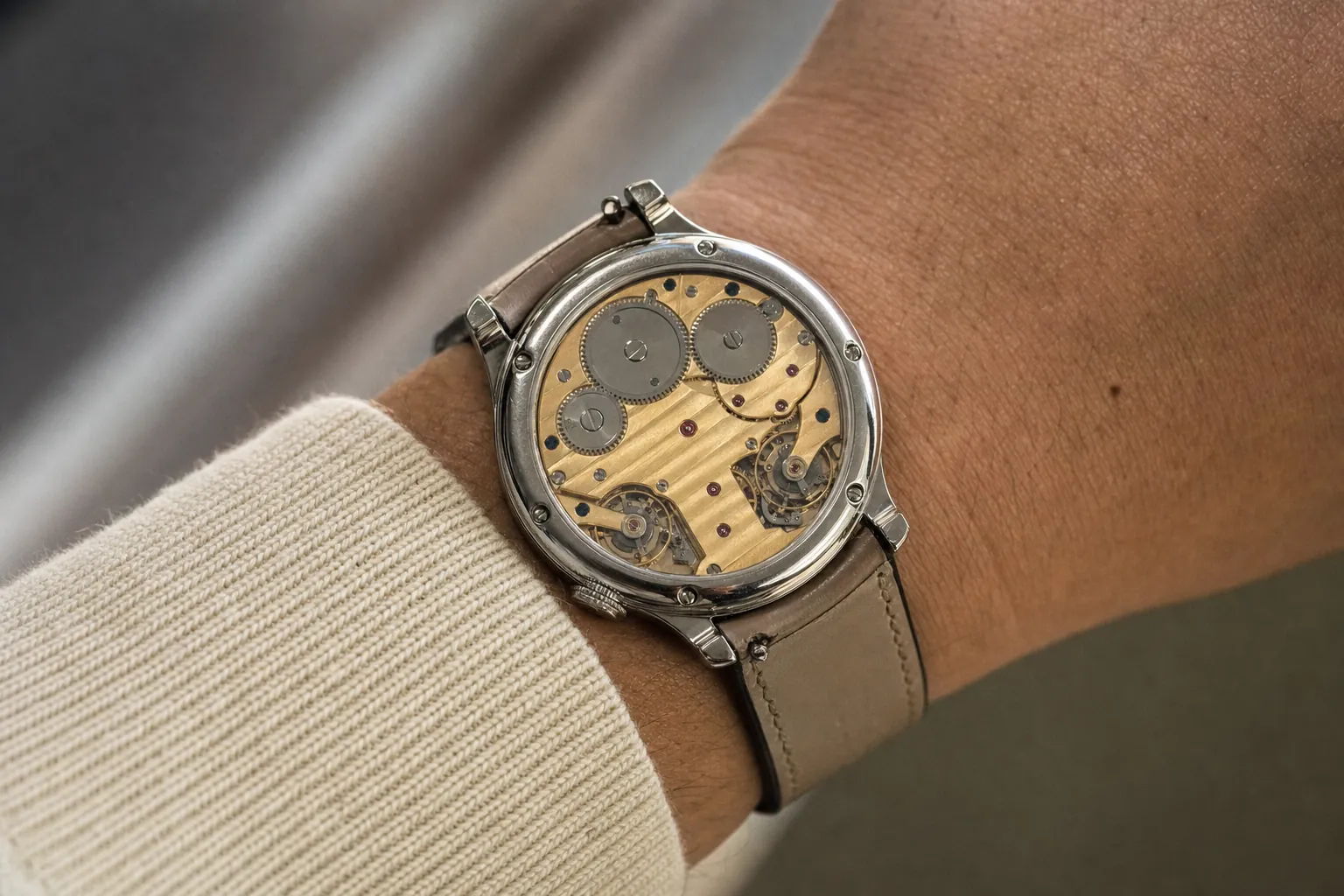
Venturing into the sphere of buying independent luxury watches marks a transformative stage in any collector’s journey, prioritizing artisanal vision and mechanical ingenuity over mass-market familiarity. Unlike conglomerate-backed brands that rely on industrialized manufacture and global boutique chains, independent watchmakers work within intimate production frameworks, driven by personal philosophy and uncompromised bench work. Navigating this sector demands specialized knowledge regarding commission protocols, artisanal movement finishing, secondary sourcing channels, and long-term mechanical maintenance.
Categorizing the Spectrum of Independent Ateliers
The independent watchmaking landscape is far from monolithic. It encompasses a broad range of production methodologies, design languages, and operational scales. To understand the acquisition pathways available, collectors must first differentiate between the three distinct tiers that comprise modern independent horology.
### Mid-Scale Independent Manufactures These ateliers produce between several hundred and a few thousand timepieces annually. While they maintain complete operational independence from global luxury conglomerates, they possess substantial manufacturing facilities, proprietary movement foundries, and structured distribution networks.
Makers like H. Moser & Cie. and Parmigiani Fleurier exemplify this category. They develop their own escapements and hairsprings in-house, creating mechanically sophisticated watches with distinctive aesthetic codes while maintaining an accessible international retail and service footprint.
### Boutique Conceptual Ateliers Boutique ateliers typically limit annual output to between 100 and 400 pieces. These operations often forgo traditional classicism in favor of architectural innovation, avant-garde kinetic displays, or radical reinterpretations of classical complications.
Brands such as MB&F, URWERK, and De Bethune define this tier. MB&F collaborates with independent master watchmakers to build three-dimensional "Horological Machines," URWERK champions satellite wandering-hour indications, and De Bethune pairs heat-blued titanium with patented floating lugs and spherical moon phases. Direct acquisition here involves boutique partnerships or close contact with the brand's founders.
### Artisan Bench Watchmakers At the pinnacle of classical handcraft are solitary masters and micro-ateliers producing fewer than 50 pieces per year—sometimes as few as 10 to 15. At this level, virtually every balance bridge, pinion, and dial is shaped, assembled, and finished by hand using traditional hand-turned lathes, files, and wooden polishing pegs.
Prominent figures in this discipline include Philippe Dufour, Roger W. Smith, and Kari Voutilainen. Working out of regional workshops in the Jura mountains or the Isle of Man, these watchmakers represent pure horological artisanship, where client commissions are discussed one-on-one and delivery schedules can span a decade.
| :--- | :--- | :--- | :--- |
|---|---|---|---|
| Mid-Scale Manufactures | 1,500 – 3,500 pieces | Proprietary calibers, modern engineering | Authorized retailers, established secondary market |
| Boutique Conceptual Ateliers | 100 – 400 pieces | Kinetic displays, avant-garde architecture | Atelier salons, specialist dealers, auction houses |
| Artisan Bench Watchmakers | 5 – 50 pieces | Hand-turned components, peerless finissage | Direct commission, curated secondary specialists |
Navigating Waitlists and Direct Atelier Commissions
Securing an allocation directly from an independent atelier differs fundamentally from entering a standard corporate retail boutique. Traditional retail relies on store purchase histories, whereas independent commission books are driven by personal alignment, horological fluency, and deliberate patron relationships.
### The Mechanics of Direct Commissioning When commissioning an artisan piece, collectors often interface directly with the master watchmaker or the atelier's head of operations. The process typically begins with an exploratory dialogue, followed by the review of a formal technical brief.
Once the commission parameters are set, the atelier requests a series of milestone deposits. A customary structure involves a non-refundable deposit upon contract signing to secure production slot allocation, a second deposit when component fabrication commences, and a final balance payment upon completion and timing regulation. Because production runs are small, lead times are susceptible to delays caused by component fabrication bottlenecks, specialized dial enameling, or extended chronometric testing.
### Cultivating Atelier Relationships Independent watchmakers naturally prioritize patrons who show a genuine commitment to their creative trajectory. Collectors frequently attend horological exhibitions like Geneva Watch Days, visit the workshops directly in Switzerland or Germany, and build familiarity with the master’s unique technical architecture. Demonstrating an informed passion for a maker’s specific escapement design or case philosophy carries far more weight in securing an allocation than sheer transactional persistence.
Evaluating Movement Finishing and Hand Craftsmanship
A primary motivation for buying independent luxury watches is securing a degree of decorative handcraft that corporate conglomerates cannot replicate on industrial production lines. Evaluating these pieces requires an educated eye and high-magnification scrutiny.
``` Key Visual Markers of Haute Horlogerie Hand Finishing: ├── Sharp Internal Angles (Angles Rentrants) │ └── Clean, unified corner points unachievable with automated CNC milling ├── Black Polish (Poli Noir / Specular Polish) │ └── Distortion-free, mirror finish reflecting light in a single direction ├── Hand-Chamfered Sinks │ └── Symmetrical, diamond-polished bevels surrounding jewel and screw holes └── Straight Graining (Traits Tirés) └── Parallel, uniform brushed striations along steel levers and case flanks ```
### The Art of Anglage and Internal Angles Automated CNC machines and five-axis mills can easily create rounded outer bevels, but they cannot form crisp, sharp interior angles (angles rentrants). An internal angle where two bevels converge at a single, razor-sharp point requires human handiwork using manual files, wooden pegs, and diamond pastes.
When examining movements from ateliers like Romain Gauthier or Philippe Dufour, look closely at the balance cock and bridge perimeters. The presence of multiple clean internal angles confirms that an artisan spent hours hand-finishing a single component.
### Black Polish and Traditional Surface Decoration Poli noir—also called specular or black polish—is one of the most demanding finishing techniques in watchmaking. The watchmaker rubs flat steel parts, such as tourbillon bridges, balance caps, or screw heads, against a zinc plate coated with micro-fine diamond paste until the surface becomes perfectly flat and smooth. When viewed straight-on, the surface reflects light so uniformly that it appears deep black; viewed at an angle, it turns into a spotless silver mirror.
Beyond black polish, evaluate the execution of côtes de Genève, perlage (circular graining) on the mainplate, and traits tirés on steel levers. Hand-executed finishes exhibit crisp depth and reflection without the shallow, uniform dullness left by automated stamping machines.
Sourcing Independent Timepieces on the Secondary Market
Due to multi-year atelier waitlists and closed order books, collectors frequently turn to the pre-owned market to acquire independent timepieces. Successfully navigating this realm requires rigorous vetting of originality, complete ownership provenance, and the integrity of specialized components.
When browsing a curated luxury watch shop, always prioritize complete sets that include original atelier documentation, timing certificates, and presentation boxes. Independent watches are produced in limited batches, so missing delivery certificates or individualized warranty booklets signed by the watchmaker can limit an archive's trace back to the original workshop. To deepen your understanding of vetting critical mechanical features before purchase, review our comprehensive pre-owned buying guide.
Scrutinize the watch's exterior for over-polishing. Independent timepieces often feature complex case architecture—such as De Bethune’s hollowed floating lugs, Laurent Ferrier’s pebble-shaped silhouettes, or Kari Voutilainen’s tear-drop lugs. Aggressive secondary polishing can permanently soften these hand-finished surfaces, dulling the transitions between brushed and polished planes.
``` Secondary Market Inspection Checklist: [ ] Verify matching serial numbers across movement, case, and atelier papers. [ ] Examine lug profiles and case bevels for preservation of original geometric lines. [ ] Check screw heads under a loupe for marring caused by non-specialist screwdrivers. [ ] Inspect proprietary dial work (guilloché, grand feu enamel) for fractures or discoloration. [ ] Ensure all proprietary accessories (bespoke push-pins, custom deployant clasps) are present. ```
Specialized Servicing and Long-Term Ownership Realities
Owning an independent timepiece carries a unique set of logistical considerations that distinguish it from mainstream luxury watch ownership. Independent movements often lack universal design architecture, requiring distinct care strategies.
### Component Architecture and Tooling Mainstream corporate watches generally rely on standard calibers or components that independent regional watchmakers can easily access and service. In contrast, an independent atelier might utilize proprietary balances, unique hairspring terminal curves, non-standard wheel tooth profiles, or entirely custom escapements.
If a pivot breaks or an escapement wheel is damaged, standard supply houses cannot provide replacement parts. The watch must either return to the original atelier or be handled by a master restorer capable of fabricating the necessary component from raw carbon steel or brass using a watchmaker's lathe.
### Service Turnaround and Succession Logistics Because independent workshops operate with lean bench crews, routine maintenance overhauls can take anywhere from three months to over a year, depending on the complexity of the caliber and the workshop's order volume.
A thoughtful collector must also consider atelier longevity. Boutique firms with institutional investors typically establish clear succession plans and multi-watchmaker engineering teams. Conversely, when acquiring the work of a solitary bench master, recognize that maintenance is intimately tied to that individual's career span, though specialized independent restoration guilds can assist if the original artisan retires.
Key Considerations Before Choosing Your First Piece
- Determine Your Visual and Mechanical Priorities: Decide whether your collection leans toward traditional, classical hand-finishing (such as a Philippe Dufour Simplicity or Laurent Ferrier Galet Classic) or kinetic, architectural display horology (such as an MB&F Legacy Machine or URWERK UR-100).
- Assess Case Ergonomics and Real-World Wear: While independent designs look stunning in photos, their physical architecture—especially deep three-dimensional movements and domed sapphire crystals—often requires substantial wrist presence. Review physical dimensions, including lug-to-lug spans and total case heights, to ensure everyday comfort.
- Budget for Specialized Maintenance: Prepare for longer servicing turnaround times and specialized maintenance procedures. Independent calibers should only be handled by dedicated master watchmakers who understand their specific tolerances and oiling requirements.
- Engage with the Community: Connect with fellow patrons through specialized collectors' circles, watchmaking salons, and independent exhibitions. Speaking with experienced owners provides clear, unvarnished insight into real-world ownership realities and atelier responsiveness.
Frequently Asked Questions
### How long do commission waitlists typically take for independent watchmakers? Direct commissions for low-volume independent ateliers typically require anywhere from two to five years, with waitlists for certain solitary bench masters extending beyond a decade. Timing depends on the watchmaker's annual output, the complexity of the commissioned movement, and any bespoke modifications requested for the dial, hands, or movement bridges.
### Can independent luxury watches be serviced by traditional service centers? No, independent luxury timepieces should not be entrusted to commercial, multi-brand service centers. These watches routinely incorporate proprietary escapements, custom-shaped springs, and unique hand finishes that demand direct atelier servicing or the attention of an independent master watchmaker with component fabrication tools.
### What distinguishes an independent haute horlogerie atelier from a microbrand? An independent haute horlogerie atelier designs, fabricates, and hand-finishes its own proprietary movements or complex modules with bench-level handcraft, producing watches in strictly limited quantities. In contrast, microbrands generally source mass-produced base movements from third-party industrial suppliers and focus primarily on external case design and direct-to-consumer assembly.
### What documentation should accompany a pre-owned independent timepiece? A pre-owned independent watch should ideally retain its original certificate of origin, signed warranty papers, chronometer performance sheets, and dedicated instruction manuals. Given the bespoke nature of these ateliers, paperwork documenting factory service records, archive extracts, and historical correspondence with the watchmaker adds significant clarity to its ownership trail.
### Which complications are most characteristic of modern independent horology? Modern independent watchmakers are known for creating proprietary constant-force mechanisms, dual-impulse natural escapements, and acoustic complications such as chiming jump-hour displays. They also excel at unusual visual architectures, including spherical three-dimensional moon phases, wandering satellite hours, and resonance clutches that couple dual balance wheels.