Rolex Explorer II Expert Technical Reference Guide
Published July 31, 2026 · Last updated October 21, 2026 · By Lume Wrist Watches
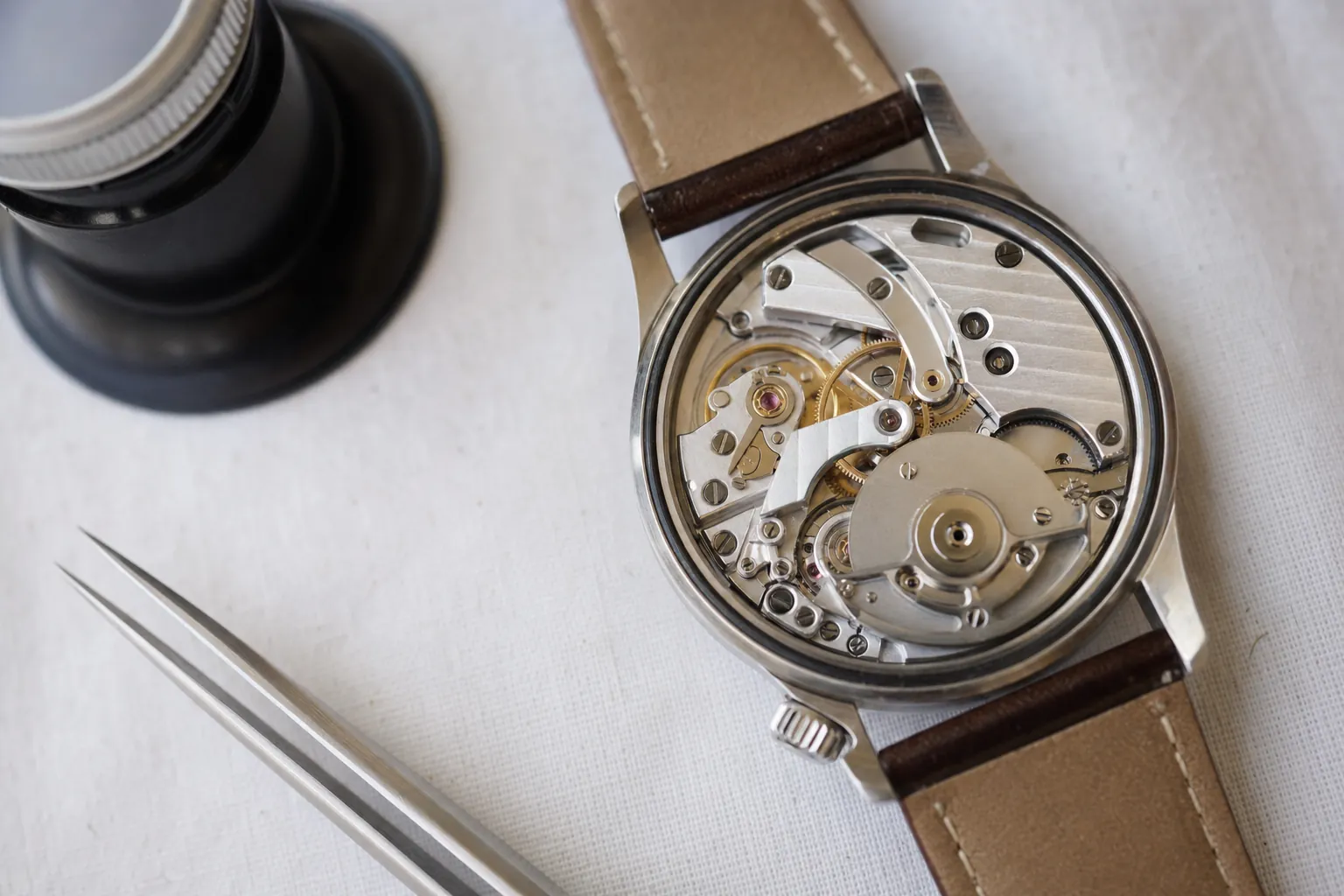
The Rolex Explorer II has undergone an extraordinary mechanical and aesthetic evolution since its introduction in 1971. Engineered originally for speleologists and polar explorers operating in environments without daylight cues, the model has balanced utilitarian tool-watch functionality with progressive chronometric innovation. Exploring the Rolex Explorer II technical variations across movements, dials, hands, and bezels provides collectors and technical enthusiasts with a clear map of Rolex’s continuous engineering refinements.
Movement Architecture: From Caliber 1575 to Caliber 3285
The internal mechanics of the Explorer II demonstrate Rolex’s philosophy of iterative mechanical improvement. Over five decades, five primary movement calibers have powered the collection, each introducing structural enhancements to winding efficiency, escapement design, and shock resistance.
``` +------------+-------------+-----------+----------------+---------------+-----------------------+ | Reference | Caliber | Beat Rate | Power Reserve | Hairspring | Shock Absorber | +------------+-------------+-----------+----------------+---------------+-----------------------+ | 1655 | 1575 GMT | 19,800 vph| ~48 hours | Free-sprung | Kif-Satellor | | 16550 | 3085 | 28,800 vph| ~48 hours | Free-sprung | Kif / Paraflex base | | 16570 | 3185 / 3186 | 28,800 vph| ~50 hours | Breguet / PB | Kif | | 216570 | 3187 | 28,800 vph| ~50 hours | Parachrom | Paraflex | | 226570 | 3285 | 28,800 vph| ~70 hours | Parachrom | Paraflex | +------------+-------------+-----------+----------------+---------------+-----------------------+ Late production 16570 examples featured the blue Parachrom hairspring within Caliber 3186. ```
Caliber 1575 / 1570 GMT Base
The original Explorer II reference 1655 utilized the Caliber 1575 GMT, a derivative of the foundational 1500 movement family. Although the bridge is typically stamped "1570" (designating the base time-only mechanism), the date and 24-hour gearing make it a 1575 GMT. Operating at a steady 19,800 beats per hour (2.75 Hz), this movement incorporates a free-sprung balance with Microstella regulating screws and a traditional Kif shock absorption system. In this caliber, the 24-hour pinion is geared directly to the 12-hour wheel train at a 1:2 ratio, meaning the 24-hour hand cannot be independently adjusted.
Caliber 3085 and 3185 Evolution
With the arrival of reference 16550 in 1985 came Caliber 3085, which elevated the beat rate to modern high-beat standard 28,800 vph (4 Hz). More importantly, Caliber 3085 introduced a decoupled hour wheel train, allowing the local 12-hour hand to jump forward or backward in one-hour increments without stopping the balance or disturbing the seconds and 24-hour hands.
In 1989, reference 16570 debuted with Caliber 3185. Caliber 3185 brought a full balance bridge in place of a balance cock, improving stability and rigidity against physical shock. It also integrated a larger baseplate and an updated rotor assembly with jewel-bearing supports for enhanced automatic winding efficiency.
Caliber 3186 and Caliber 3187
Late in the production run of reference 16570 (around 2005 to 2006), Rolex began phasing in Caliber 3186. This caliber addressed backlash in the jump-hour setting wheel train and introduced Rolex’s paramagnetic blue Parachrom hairspring, manufactured from a niobium-zirconium alloy resistant to magnetic interference and temperature swings.
When reference 216570 launched in 2011 with an enlarged 42mm case, Rolex introduced Caliber 3187. Because a larger case risks spacing issues between the date window and the dial periphery, Caliber 3187 enlarged the movement diameter to 30.97mm and incorporated high-performance Paraflex shock absorbers on the balance staff, offering up to 50 percent greater resistance to extreme lateral shocks.
Caliber 3285 Chronergy Architecture
Introduced to the reference 226570 in 2021, Caliber 3285 represents Rolex's modern movement standard. It incorporates the proprietary Chronergy escapement, constructed from nickel-phosphorus to remain impervious to magnetic fields while delivering higher energy transmission efficiency. Combined with a barrel featuring thinner walls to house a longer mainspring, Caliber 3285 boosts the power reserve from 50 to approximately 70 hours while conforming to the Superlative Chronometer tolerance of -2/+2 seconds per day. Buyers researching these mechanisms through an experienced buying guide often look to this movement for maximum autonomy.
---
Fixed 24-Hour Bezel Typography and Radial Brushed Finishing
The fixed steel bezel is an essential identifier of the Explorer II, serving as the reading track for the 24-hour hand. Unlike the rotating bi-directional bezels of the GMT-Master line, the Explorer II bezel is press-fitted immovably into the middle case to maximize torsional rigidity and water resistance.
Typography Shifts Across Generations
Close examination reveals distinct typographical phases across references:
- Reference 1655: Features straight, unadorned Arabic numerals for the even hours alternating with luminescent hash marks (tritium bars on early dials) for odd hours. The numerals are narrow and squared off.
- Reference 16550: Displays a radical shift to heavy, engraved numerals. Early versions present a distinctive "thick font" with wider digits and rounded forms, which later shifted to a more slender, block-style engraving. Triangle indicators denote odd hours.
- Reference 16570: Standardized the typography into a fine-line, narrow geometric font with deep triangular indices.
- References 216570 and 226570: Expanded the width of the bezel to accommodate the 42mm case, adopting bold, broad numerals optimized for reading at distance.
Finishing and Engraving Techniques
Rolex finishes the top surface of the Explorer II bezel with a deep radial sunburst satin grain that emanates outward from the crystal edge toward the polished outer bezel rim. Each numeral and triangle is deeply stamped or chemically etched, then filled with high-adhesion black enamel paint. Maintaining the sharpness of the radial graining and the crispness of the numeral borders is one of the primary indicators of an unpolished or carefully maintained exterior case.
---
Polar Versus Black Dials: Key Differences Across Eras
While both dial colors share the same internal movement architecture, the manufacturing execution between black and white ("Polar") variants involves distinct material selections. Those browsing the Rolex selection will immediately note how dial configuration changes legibility characteristics.
``` POLAR (WHITE) DIAL BLACK DIAL ┌───────────────────────────────┐ ┌───────────────────────────────┐ │ • Gloss/Lacquer Base (16550+) │ │ • Matte (1655) to Gloss Finish│ │ • Blackened Gold Hands/Plots │ │ • Polished 18k White Gold │ │ • Extreme Luminance Contrast │ │ • Mirror-Gloss Lacquer Plate │ └───────────────────────────────┘ └───────────────────────────────┘ ```
Gloss, Matte, and Lacquer Formulations
The Explorer II reference 1655 was produced exclusively with a matte black dial featuring pad-printed indices without metal surrounds. With the arrival of reference 16550, Rolex offered an official choice between gloss black and porcelain-style gloss white dials.
The white dials, nicknamed "Polar," use an opaque white liquid lacquer over a brass baseplate. This creates a high-density, reflective white ground that avoids texture. The black dials of the modern era use a high-gloss, deep-black lacquer that serves as an optical void, allowing the applied hour markers to stand out in relief.
Hand and Plot Surrounds: White Gold vs. Blackened
The most significant technical divergence between dial colors lies in marker fabrication:
- Black Dials: Feature applied hour markers and hands cast from 18k white gold to prevent oxidation and corrosion. The natural silvery sheen provides necessary contrast against the dark background.
- Polar Dials: Starting with the latter half of the 16550 run and standardizing on the 16570, Rolex utilized blackened surrounds for the applied hour plots alongside blackened hour, minute, and second hands. The hour plots are constructed of gold but receive a specialized chemical blackening treatment. This prevents the indices from washing out against the bright white lacquer, optimizing high-speed contrast in bright snow or daylight conditions.
---
Notable Dial Variations: Rail, Cream, and Error Dials Explained
Because dial manufacturing involved multiple specialist suppliers (such as Stern Frères, Beyeler, and Lemrich) during the five-digit era, distinct production runs produced recognized Rolex Explorer II technical variations.
The Rail Dial Format
Found on late reference 1655 models (Mark II dials) and early reference 16550 examples, "Rail Dials" are characterized by exact vertical alignment of the text in the lower chronometer certification block:
``` SUPERLATIVE CHRONOMETER OFFICIALLY CERTIFIED ```
The letter "C" in "CHRONOMETER" aligns directly over the "C" in "CERTIFIED," creating a clear vertical path or "rail" dividing the lines of text. These dials were produced by the Stern factory and are distinguished by balanced symmetry across both lines.
The Cream Dial Phenomenon
Early reference 16550 Polar models frequently display dials that have shifted from stark white to a warm ivory or cream tone. This shift was caused by a defective batch of protective clear lacquer applied to the white base paint. The formulation, which lacked sufficient UV resistance, oxidized over time due to exposure to sunlight and ambient air. The change affected dials uniformly, transforming the white dial into shades ranging from light buttermilk to deep amber.
The "Chicchi di Mais" and "Stick" Dial Variants
- Chicchi di Mais: Found on early reference 16550 models, this nickname ("corn kernels") refers to tritium hour plots that aged into an intense, deep yellow or orange-ochre color, often paired with white gold marker surrounds.
- The Stick Dial: Appearing on transitional late-era reference 16570 models (typically D, Z, and M serial numbers), this variant features the Roman numeral "II" printed without serifs. Rather than the traditional serifed font with crossbars at the top and bottom, the text reads simply as two vertical lines: "EXPLORER | |". This variation coincides directly with the transition between Calibers 3185 and 3186.
---
Freccione to Phantom: Handset Design and Lume Transitions
Handset architecture on the Explorer II has undergone dramatic mechanical and visual alterations across each generation.
The Freccione Arrow and Baton Configurations
The reference 1655 earned the Italian nickname Freccione (derived from freccia, meaning arrow) for its oversized 24-hour hand. The hand terminated in a large, bright orange triangle designed to make the 24-hour cycle readable instantly in low-light environments. On early iterations, the second hand featured a straight configuration with no luminous dot, known to enthusiasts as the "straight second." Later executions introduced a luminous dot placed near the outer extremity ("lollipop" style).
When the reference 16550 was introduced, Rolex abandoned the large orange arrow in favor of a long, slender red hand tipped with a small luminous arrow. This design matched the standard Rolex sports aesthetic by adopting traditional Mercedes-style hour hands. This layout continued throughout the entire production run of the reference 16570.
``` REFERENCE 1655 REFERENCES 16550 / 16570 REFERENCES 216570 / 226570 ┌──────────────┐ ┌───────────────────────┐ ┌─────────────────────────┐ │ Large Orange │ │ Thin Red Hand │ │ Oversized Orange Hand │ │ Arrow Hand │ │ Small Luminous Arrow │ │ Floating "Phantom" Hub │ │ Baton Hands │ │ Mercedes Hands │ │ Maxi-Sized Hands │ └──────────────┘ └───────────────────────┘ └─────────────────────────┘ ```
The Phantom Effect and Sizing Shifts
With the 2011 release of reference 216570, Rolex returned to the original Freccione design, reinstating an oversized orange 24-hour hand. To complement the enlarged 42mm case and wider "Maxi" dial markers, the handset grew significantly in both length and width.
On black-dial variants of the 216570, Rolex introduced the "Phantom" effect: the base of the hour and minute hands, where they attach to the central pinion, is coated in matte black paint matching the dial surface. This creates an optical illusion where the illuminated portions of the hands appear to float independently above the dial. On the subsequent reference 226570, Rolex refined this execution by adjusting hand dimensions and returning to fully polished white-gold hand roots on the black dial, bringing a more unified aesthetic to the current pre-owned luxury catalog.
---
The Independent Jump-Hour Mechanism in Practice
Understanding the mechanical interaction of the independent jump-hour hand is essential for operating any post-1985 Explorer II. Unlike traditional GMT watches that use a rotating bezel to monitor secondary time zones, the Explorer II pairs a stationary 24-hour scale with a jumping 12-hour local hand.
``` CROWN POSITION 0 (Screwed down): Water-resistant seal; normal manual winding. │ ▼ CROWN POSITION 1 (Unscrewed): Manual winding of the mainspring barrel. │ ▼ CROWN POSITION 2 (First pull-out): Independent jump-hour setting. │ • 12-hour hand jumps in exact 1-hour intervals. │ • Balance continues running; timekeeping precision preserved. │ • Date mechanism advances or retreats as hour hand crosses 12. ▼ CROWN POSITION 3 (Full pull-out): Full hacking function. • Seconds hand stops immediately. • Synchronized rotation of 12-hour, 24-hour, and minute hands. ```
Mechanically, crown position 2 engages a star wheel and tension click spring within the motion work. As the crown turns, the hour hand skips precisely across the 12-hour ring in sixty-minute steps. This allows travelers crossing time zones to update their local display without interrupting the movement's timekeeping or moving the minute and seconds hands.
Because the date wheel is mechanically linked directly to the local hour wheel, the date disc moves forward or backward as the 12-hour hand passes midnight in either direction. This bidirectional quickset capability eliminated the need for a dedicated rapid-advance date setting position on the crown, reducing mechanical complexity while increasing operational utility in field conditions.
---
Frequently Asked Questions
### What is the wobble test on the Explorer II Caliber 3185? The wobble test is a physical inspection technique used to distinguish between Caliber 3185 and Caliber 3186 without opening the caseback. When the crown is pulled out to position 2 and the jump-hour hand is adjusted, Caliber 3185 exhibits a visible vibration or "wobble" in the 24-hour hand due to play in the gear train. In Caliber 3186, an upgraded jump-hour mechanism eliminates this slack, keeping the 24-hour hand completely stationary while the hour hand jumps.
### Why did early ref. 16550 Polar dials turn a cream ivory color? Early reference 16550 Polar dials turned a warm cream color due to a defect in the clear protective lacquer formula sourced by Rolex in the mid-1980s. The clear coat lacked sufficient chemical stabilization against ultraviolet radiation, causing the organic compounds in the lacquer to oxidize over time. This reaction changed the appearance of the underlying white paint into a consistent, distinctive ivory or buttermilk shade.
### What is the difference between Caliber 3187 and Caliber 3285? Caliber 3187 is an enlarged variation of the Caliber 3186 movement designed specifically for the 42mm case of reference 216570, featuring a traditional Swiss lever escapement and a 50-hour power reserve. Caliber 3285, introduced in reference 226570, uses Rolex's modern movement architecture, incorporating the energy-efficient Chronergy escapement and an optimized gear train. These updates extend the power reserve of Caliber 3285 to approximately 70 hours.
### How did the 24-hour hand function change between ref. 1655 and ref. 16550? On reference 1655, the 24-hour hand was coupled directly to the standard 12-hour movement via a fixed gear ratio, functioning exclusively as an AM/PM indicator relative to the main hands. With the introduction of Caliber 3085 in reference 16550, Rolex decoupled the local 12-hour hand from the gear train. This allowed the 12-hour hand to jump independently while the 24-hour hand remained synchronized to home time, converting the Explorer II into a dual-time-zone instrument.
### Which luminescent materials were used on the Explorer II over time? The Explorer II transitioned through four distinct luminescent compounds during its production history. Reference 1655 and early 16570 models used radioactive Tritium (marked "T<25" or "Swiss-T<25"), which was replaced in 1998 by non-radioactive, photo-luminescent LumiNova (marked "SWISS"). By 2000, Rolex transitioned to Super-LumiNova (marked "SWISS MADE"), followed finally by the brand's proprietary Chromalight material, which glows with a distinctive blue emission and offers longer low-light visibility.