AP Royal Oak Movement Calibers: Deep Dive & Horological Analysis
Published October 16, 2026 · Last updated October 17, 2026 · By Lume Wrist Watches Editorial Team
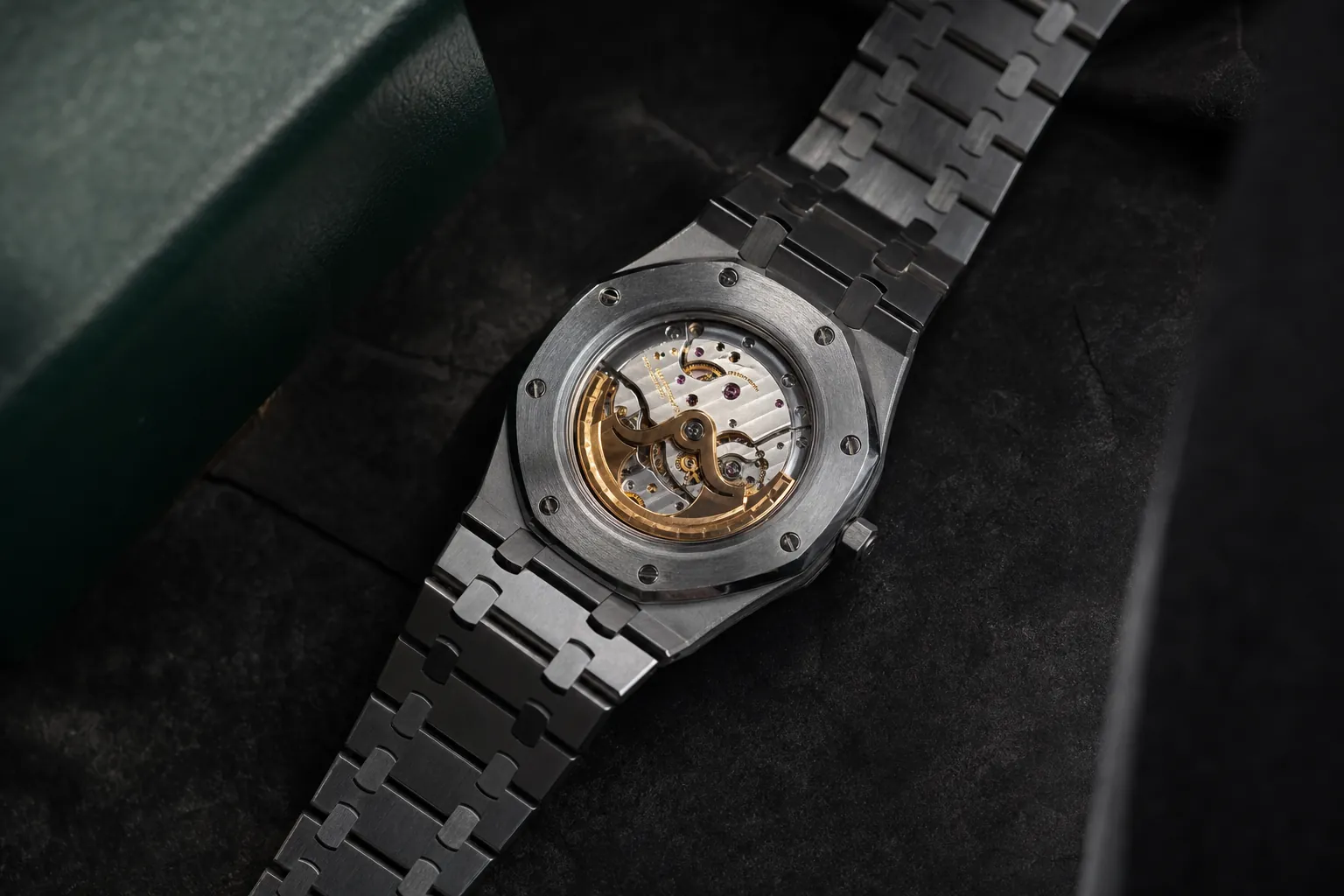
The Audemars Piguet Royal Oak's enduring legacy is inextricably linked to the remarkable horological engines beating within its iconic octagonal case. This deep dive explores the evolution and technical prowess of the key movements that have powered the Royal Oak since its inception, offering collectors and enthusiasts a detailed understanding of their engineering, performance, and historical significance. From the ultra-thin Caliber 2121 that debuted in 1972 to the contemporary in-house Caliber 4302, understanding these calibers is crucial for appreciating the Royal Oak's status as a pinnacle of luxury sports watchmaking.
The Reference at a Glance: Production Years, Case, Movement, Dial Variants
While the Royal Oak's external design is instantly recognizable, the movements powering it have undergone significant evolution, reflecting Audemars Piguet's commitment to continuous innovation. The earliest models, like the original reference 5402 "Jumbo", housed the groundbreaking Caliber 2121. Subsequent iterations introduced a range of self-winding and chronograph calibers, adapting to market demands for varying case sizes, complications, and performance characteristics. From compact 33mm quartz movements to robust 41mm chronographs, the Royal Oak family showcases a diverse array of mechanical masterpieces.
Key movement calibers that have defined the Royal Oak include:
- Caliber 2121 (and its variants 2120, 2125): The original ultra-thin, full-rotor automatic movement, based on Jaeger-LeCoultre's Caliber 920. Featured in early "Jumbo" models like the AP Royal Oak Jumbo 15202: Full Reference Guide & Buyer's Checklist.
- Caliber 2325/2225/2329: Workhorse self-winding movements used in various mid-size Royal Oak references before the introduction of fully in-house options.
- Caliber 3120 (and its variants 3126, 3124): Audemars Piguet's first large-scale, fully in-house automatic movement, introduced in 2003, offering enhanced robustness and a larger diameter suitable for 39mm and 41mm cases.
- Caliber 4302: The current generation in-house self-winding movement, introduced in 2019 for the Royal Oak "Jumbo" 15500ST (now 15510ST) and others, featuring improved power reserve and modern architecture.
- Caliber 2385 (and derivatives): A venerable F. Piguet 1185-based chronograph movement, renowned for its slim profile, powering many Royal Oak Chronographs.
- Caliber 4401: Audemars Piguet's fully in-house integrated automatic chronograph movement, debuted in 2020, offering flyback functionality and a column-wheel mechanism.
Case materials have ranged from stainless steel and yellow gold to rose gold, platinum, and even titanium and ceramics. Dial variants are numerous, most famously the "Tapisserie" patterns (Petite, Grande, and Mega), available in iconic blue, grey, black, and white, along with more exotic colors and materials. For a deeper look into the Royal Oak's aesthetic, consult our guide on Audemars Piguet Royal Oak: Case Finishing & Tapisserie Dial Guide.
Full Specification Table
Below is a comparison of key Audemars Piguet Royal Oak movements, highlighting their technical evolution and impact on the watch's performance.
| Feature | Caliber 2121 | Caliber 3120 | Caliber 4302 | Caliber 2385 (Chronograph) | Caliber 4401 (Chronograph) |
|---|---|---|---|---|---|
| :---------------- | :----------------------------------------- | :----------------------------------------- | :----------------------------------------- | :----------------------------------------------- | :----------------------------------------------- |
| Type | Automatic, Ultra-thin | Automatic, In-house | Automatic, In-house | Automatic Chronograph (F. Piguet base) | Automatic Integrated Flyback Chronograph (In-house) |
| Jewels | 36 | 40 | 32 | 37 | 40 |
| Frequency | 19,800 vph (2.75 Hz) | 21,600 vph (3 Hz) | 28,800 vph (4 Hz) | 21,600 vph (3 Hz) | 28,800 vph (4 Hz) |
| Power Reserve | ~40 hours | ~60 hours | ~70 hours | ~40 hours | ~70 hours |
| Diameter | 28mm | 26.6mm | 32mm | 26.2mm | 32mm |
| Thickness | 3.05mm | 4.26mm | 4.8mm | 5.4mm | 6.8mm |
| Functions | Hours, Minutes, Date | Hours, Minutes, Central Seconds, Date | Hours, Minutes, Central Seconds, Date | Hours, Minutes, Small Seconds, Date, Chronograph | Hours, Minutes, Small Seconds, Date, Flyback Chronograph |
| Rotor | Full-size, 21K Gold (peripheral track) | Full-size, 22K Gold | Full-size, 22K Gold | Full-size, 18K Gold (AP decorated) | Full-size, 22K Gold |
| Origin | JLC 920 base, AP finished | Audemars Piguet | Audemars Piguet | F. Piguet 1185 base, AP finished | Audemars Piguet |
| Key Models | 5402, 15202 | 15300, 15400, 15500 (early) | 15500 (later), 15510, Code 11.59 | 25860, 26300, 26320, 26331 | 26239, 26393, 26715 |
Production Timeline and Dial/Bezel Variations
The history of Audemars Piguet Royal Oak movements closely mirrors the watch's own evolution. The Caliber 2121 (derived from the JLC 920, with modifications and finishing by AP) was a revolutionary movement for its time, embodying the ultra-thin philosophy of the original Royal Oak. Its integration into the Jumbo 5402 and subsequent 15202 references defined its legacy as the ultimate purist's Royal Oak movement, known for its elegant slimness and sophisticated full-rotor design. The absence of a central seconds hand was a design choice to maintain its thin profile and a nod to traditional elegance.
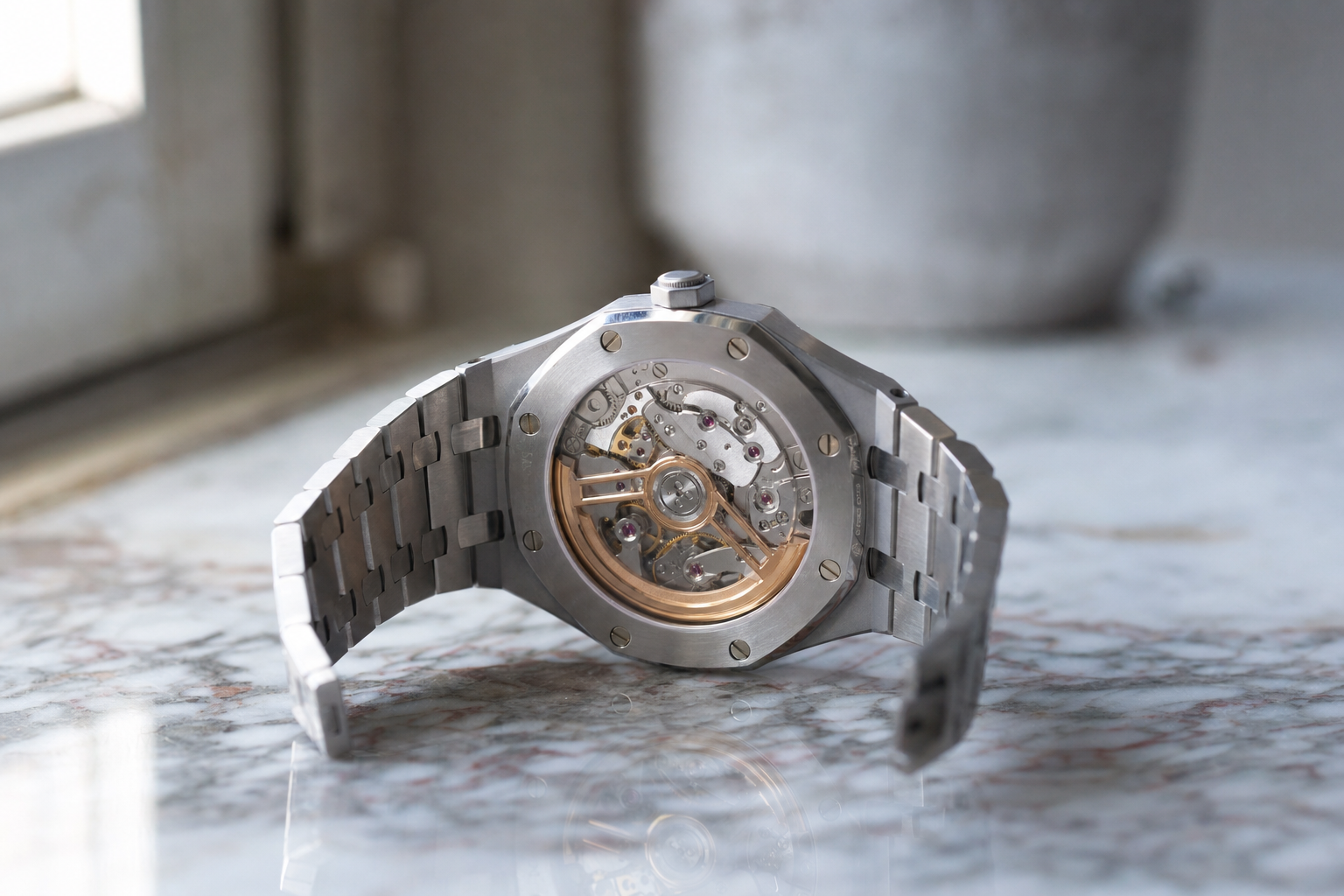
By the early 2000s, as Audemars Piguet sought greater independence and control over its movements, the Caliber 3120 emerged. This was a significant step, marking AP's first truly in-house automatic movement produced in volume. It offered a higher beat rate (3 Hz), a longer power reserve (60 hours), and a hacking seconds function, addressing modern preferences for accuracy and usability. It powered popular references like the 15300 (39mm) and later the 15400 (41mm), becoming a foundational movement for the self-winding Royal Oak range.
The transition to the Caliber 4302 in 2019 for references like the 15500ST (and subsequently the 15510ST) represented another leap forward. With a modern 4 Hz frequency, a substantial 70-hour power reserve, and a larger diameter (32mm vs. 26.6mm for the 3120), the 4302 was designed to fit larger cases more aesthetically, allowing for a clearer view through the exhibition caseback. It also offers enhanced shock resistance and stability.
For chronographs, the story involved the highly reliable and slim Caliber 2385, a modified F. Piguet 1185, which allowed for the elegant proportions of the Royal Oak Chronograph despite its complex functionality. This movement, seen in references like the 26300 and 26320, delivered excellent performance and a tactile column-wheel operation. However, the pursuit of full in-house mastery led to the development of the Caliber 4401 (and smaller 4404 for 38mm cases). Launched in 2020, this fully integrated, flyback chronograph movement boasts a column wheel and vertical clutch, a 70-hour power reserve, and a higher beat rate, significantly elevating the Royal Oak Chronograph's technical sophistication and visual appeal through its intricate finishing visible via the display caseback. For a comparison of these models, see our article Royal Oak Chronograph vs. Selfwinding: Which Should You Buy in 2026?.
Wearing Experience and Sizing on the Wrist
The choice of movement significantly impacts the wearing experience of a Royal Oak. The Caliber 2121's ultra-thin profile directly translates to the svelte elegance of the "Jumbo" references. At just 8.1mm thick (for the 15202), these watches slide effortlessly under a cuff, offering a discreet yet profound wrist presence. This thinness is a hallmark of Gerald Genta: The Architect of the Luxury Sports Watch in 2026 original vision.
Watches equipped with the Caliber 3120 (e.g., 15400) or Caliber 4302 (e.g., 15500/15510) are thicker, typically ranging from 9.8mm to 10.4mm for 41mm models. While still remarkably comfortable, this added thickness lends a more substantial, modern feel on the wrist, appealing to those who prefer a more robust timepiece. The presence of a central seconds hand on these movements also provides a continuous visual indication of the watch's operation, a feature absent in the Caliber 2121-powered "Jumbo" models.
Royal Oak Chronographs, particularly those with the older Caliber 2385, maintain a relatively slim profile for a chronograph (around 11mm). The integrated Caliber 4401 chronographs, however, are thicker, typically exceeding 12mm. This increased thickness contributes to a sportier, more prominent feel on the wrist, aligning with the robust aesthetic often associated with chronographs. Despite the varying thicknesses, the Royal Oak's integrated bracelet design ensures excellent comfort and balance across all sizes, making it a joy to wear whether you're buying luxury watches in New York or luxury watches in California.
Market Pricing and Which Variants Command a Premium
The market pricing for Audemars Piguet Royal Oaks is heavily influenced by their movement. Historically, Caliber 2121-powered "Jumbo" references have commanded the highest premiums due to their historical significance, ultra-thin profile, and relative scarcity, particularly for well-preserved 5402 and early 15202 models. For example, a stainless steel 15202ST (discontinued in favor of the 16202) can fetch significantly above its original retail price on the secondary market, often in the range of $80,000 to $120,000, depending on condition and provenance. Older A-series 5402ST can climb even higher.
Royal Oaks with the Caliber 3120 (e.g., 15300ST, 15400ST) and Caliber 4302 (e.g., 15500ST, 15510ST) generally trade below the "Jumbo" models but still represent strong value within the luxury watch market. The 15500ST/15510ST, with the modern Caliber 4302, typically ranges from $35,000 to $60,000 for stainless steel versions, influenced by dial color and condition. Our current inventory sometimes includes options like the Audemars Piguet Royal Oak Selfwinding Black Dial.
Royal Oak Chronographs also see varied pricing based on their movement. Models with the Caliber 2385 (e.g., 26320ST) are usually more accessible than their in-house counterparts, often trading in the $30,000-$50,000 range for stainless steel. The newer Caliber 4401-powered chronographs (e.g., 26239ST, 26715ST) command higher prices, often starting from $60,000 and upwards, reflecting their advanced in-house mechanics and newer release. Gold models, such as the Audemars Piguet Royal Oak Offshore Chronograph Rose Gold, naturally command a premium.
Factors influencing premium pricing include:
- Rarity: Limited editions or rare dial configurations.
- Material: Gold, platinum, or exotic materials.
- Condition: Unpolished examples with original components.
- Provenance: Full box and papers, service history.
As with any significant luxury watch purchase, conducting thorough research and potentially seeking advice from reputable dealers for luxury watch investment & market guide: Navigating 2026 is recommended.
Authentication Checklist Specific to This Reference
Authenticating an Audemars Piguet Royal Oak, particularly focusing on its movement, requires a keen eye and expert knowledge. Given the high value and desirability of these timepieces, counterfeiters often attempt to replicate them. Our in-house team independent authentication process is rigorous, but here are key movement-specific points to consider:
- Movement Finishing: Audemars Piguet movements are renowned for their exquisite haute horlogerie finishing. Look for perfectly executed Côtes de Genève, mirrored anglage (beveled edges), circular graining (perlage), and polished screw heads with chamfered slots. Fakes often have rough, inconsistent, or machine-stamped finishing.
- Rotor Engravings and Material: The winding rotor, typically made of 21K or 22K gold, should have crisp, deep engravings of the AP logo and 'Audemars Piguet' text. The texture and color of the gold should be correct. Counterfeit rotors often look dull, have poor engravings, or are made of a base metal.
- Caliber Number and Markings: The specific caliber number (e.g., "2121", "3120", "4302") should be clearly engraved on a bridge. Cross-reference this with the model's expected movement. Serial numbers and other specific AP markings should also be present and correctly formatted.
- Balance Wheel and Hairspring: Observe the balance wheel's oscillation. AP movements are high-beat (21,600 vph or 28,800 vph for newer calibers), resulting in a smooth sweep of the seconds hand. The balance bridge and regulation system should match genuine examples. The presence of a free-sprung balance (especially in Caliber 3120, 4302, 4401) is a key indicator.
- Screw Quality: All screws should be thermally blued (a deep, iridescent blue, not painted) and perfectly polished with chamfered slots. Low-quality, unpolished, or incorrectly colored screws are a red flag.
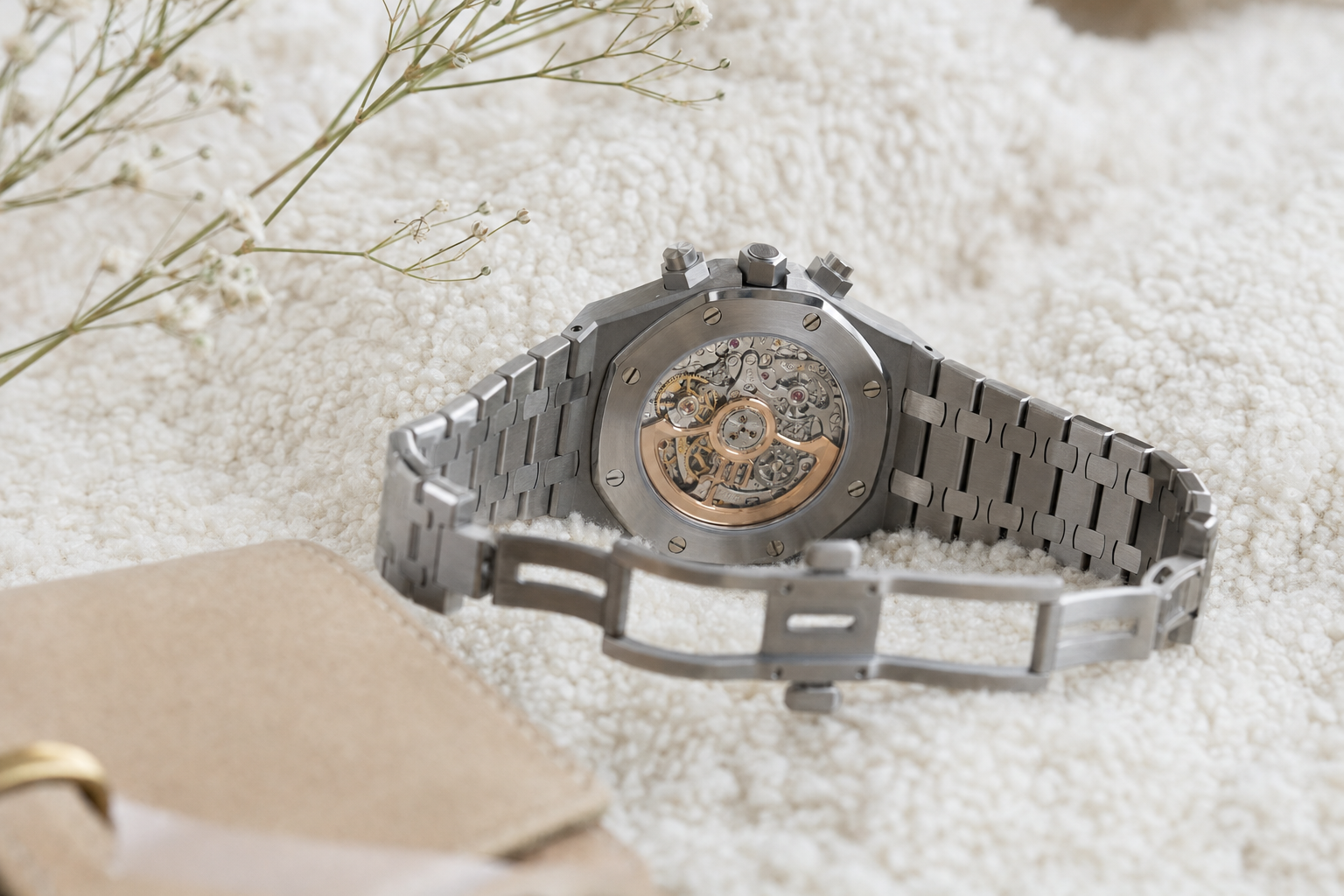
- Functionality: Test all functions: time setting, date change (should be crisp, not mushy), chronograph start/stop/reset (for chrono models). A flyback chrono (Caliber 4401) should reset and restart instantly with a single push of the lower pusher.
- Caseback and Gasket: If it's a display caseback, check the fit and quality of the sapphire crystal. The seals and gaskets should appear fresh and properly seated. The engraving on the outer caseback (if applicable) should be sharp and precise.
When in doubt, always seek an expert opinion. Our team at Lume Wrist Watches offers comprehensive authentication services, ensuring peace of mind for every purchase.
Frequently Asked Questions
### What is the most significant Audemars Piguet Royal Oak movement? The Caliber 2121, powering the original "Jumbo" Royal Oak (reference 5402), is arguably the most significant due to its groundbreaking ultra-thin profile and historical importance in establishing the Royal Oak's identity. While based on a JLC ebauche, AP's modifications and exquisite finishing made it uniquely their own, defining an era of luxury sports watchmaking.
### Why did Audemars Piguet stop using the Caliber 2121? Audemars Piguet retired the Caliber 2121 in 2022, primarily due to its advanced age and the desire for full in-house movement independence. The successor, Caliber 7121, introduced in the 16202, is a fully in-house design that retains the ultra-thin philosophy while incorporating modern advancements like a higher beat rate and longer power reserve.
### What's the difference between Caliber 3120 and Caliber 4302? The Caliber 4302 is a newer, larger, and more technically advanced in-house automatic movement compared to the 3120. It operates at a higher frequency (28,800 vph vs. 21,600 vph) and boasts a significantly longer power reserve (70 hours vs. 60 hours). The 4302 also has a larger diameter (32mm vs. 26.6mm), better suited for the modern 41mm Royal Oak cases.
### Is the Caliber 2385 chronograph movement in-house? No, the Caliber 2385 is not fully in-house; it is based on the highly regarded Frédéric Piguet Caliber 1185, a famously thin and reliable integrated column-wheel chronograph movement. Audemars Piguet extensively modified and finished it to their exacting standards. AP's newer Caliber 4401, however, is a fully in-house integrated flyback chronograph movement.
### Do all Royal Oak models have a display caseback? Not all Royal Oak models feature a display caseback. While many modern self-winding and chronograph Royal Oaks showcase their movements through sapphire casebacks (e.g., models with Caliber 3120, 4302, 4401), some historical or specialized references, particularly certain older "Jumbo" models or those focused on water resistance, might have solid casebacks. The original 5402, for instance, had a solid caseback.
Contact Lume Wrist Watches
Have more questions about Audemars Piguet Royal Oak movements or looking to acquire a specific reference? Our expert team is ready to assist you. Whether you're interested in Audemars Piguet at Lume Wrist Watches or seeking specific Audemars Piguet Royal Oaks, we offer personalized service and an authenticated selection.
Email: sales@lumewrist.com Phone: +1 (332) 285-2190 Boutique: 18 East 48th Street, Suite 1503, New York, NY 10017 Hours: Mon–Fri 9:00 AM – 7:00 PM EST · Closed Saturday & Sunday
Visit our contact page or explore our authenticated collection.
Final Thoughts
The movements within the Audemars Piguet Royal Oak are far more than mere timekeeping devices; they are the horological heartbeats that define the collection's enduring appeal. From the pioneering Caliber 2121 to the cutting-edge Caliber 4401, each movement tells a story of innovation, craftsmanship, and a relentless pursuit of excellence. Understanding these intricate machines enriches the appreciation of every Royal Oak timepiece and highlights Audemars Piguet's mastery of haute horlogerie. For those looking to delve deeper into the world of luxury watches or find their next treasured timepiece, we invite you to explore our shop for exceptional examples of mechanical artistry. Whether you're searching for luxury watches in Florida or luxury watches in Texas, Lume Wrist Watches is your trusted partner.