Chronograph Movements: An Expert Collector's Deep Dive
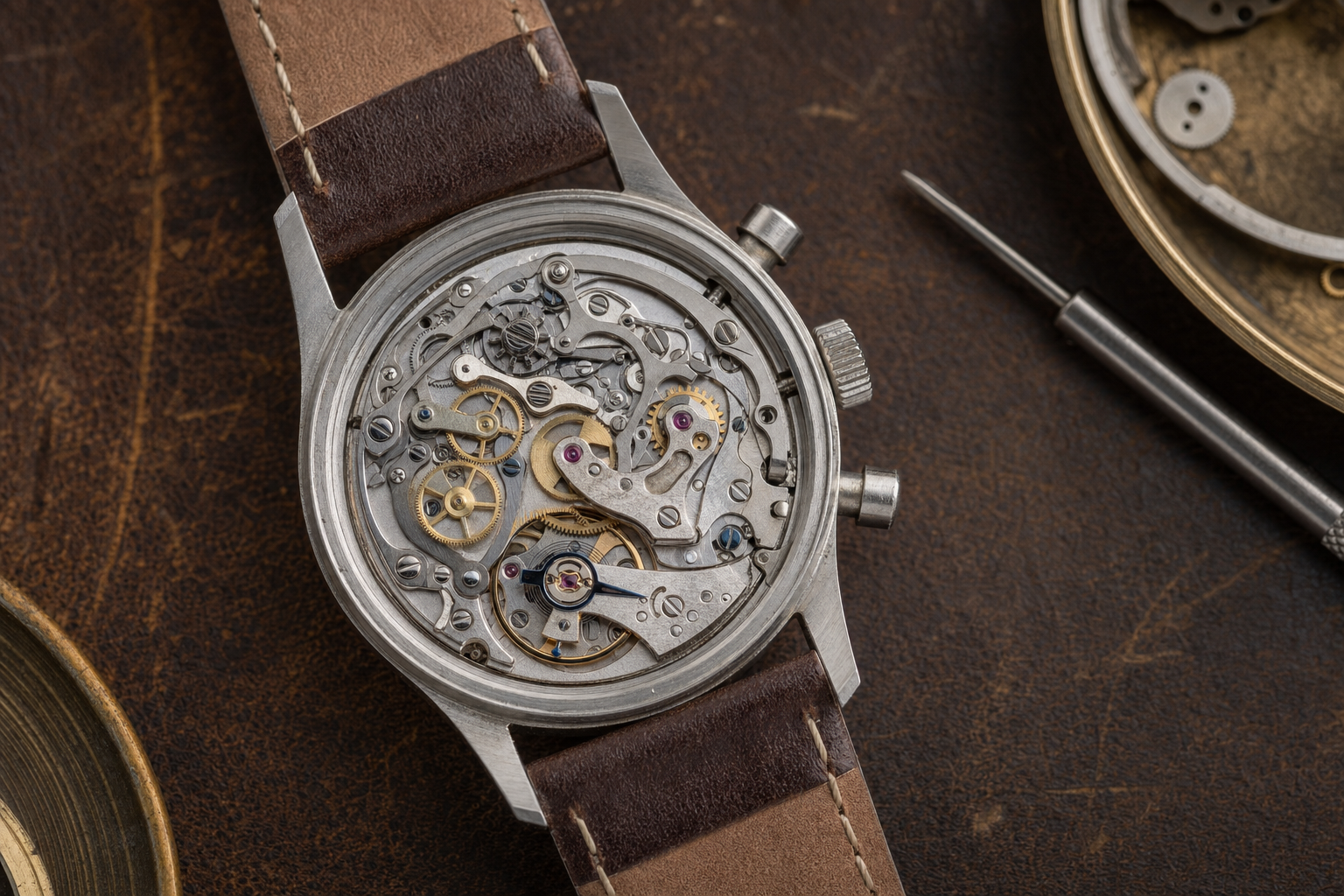
Explore the intricate world of chronograph movements, from column wheels to vertical clutches. This expert guide is essential for luxury watch collectors.
# Chronograph Movements: An Expert Collector's Deep Dive For the discerning collector, few complications resonate with the blend of technical prowess and historical significance quite like the chronograph. More than just a time-telling instrument, a chronograph is a miniature marvel of mechanical engineering, a testament to humanity's enduring fascination with measuring and mastering time itself. Understanding the nuances of these intricate mechanisms is not merely academic; it elevates the appreciation for [our authenticated collection](/shop) and the master craftsmanship within each timepiece. ## The Essence of the Chronograph: Beyond Simple Time-Telling At its core, a chronograph is a watch that incorporates a stopwatch function, allowing the wearer to measure elapsed time independently of the main time display. This function is typically operated via pushers on the side of the case—one to start and stop, and another to reset. While the basic concept seems straightforward, the underlying mechanisms range from simple cam-actuated systems to highly complex multi-layered architectures, each offering distinct advantages and characteristics that captivate serious horological enthusiasts. The term "chronograph" itself stems from the Greek words "chronos" (time) and "grapho" (to write), a nod to the earliest iteration, Nicolas Rieussec's 1821 invention, which used small inked pointers to mark elapsed time on a rotating disc. Since then, the complication has evolved dramatically, driven by demand from aviation, motorsport, scientific research, and military applications. This rich history means that [investing in vintage Rolex GMT-Master: A Collector's Insight](/blog/investing-vintage-rolex-gmt-master-collectors-insight) can often include exploring early chronograph references, particularly those from brands like Rolex and Omega, which famously supplied instruments to various demanding fields. ## Unpacking the Mechanical Heart: Key Components and Mechanisms To truly appreciate a chronograph, one must delve into its mechanical intricacies. Two primary architectural systems define how the chronograph function is engaged and disengaged within the movement: the cam (or coulisse) system and the column wheel system. ### The Cam (Coulisse) System: Robust and Cost-Effective Often found in more accessible—though no less impressive—chronograph movements, the cam system, also known as a coulisse lever, uses a series of levers and cams to control the start, stop, and reset functions. When a pusher is activated, a cam rotates, pushing levers that engage or disengage the chronograph wheels from the main timekeeping train. This design is known for its robustness, ease of manufacturing, and reliability. One of the most ubiquitous and historically significant cam-actuated chronographs is the Valjoux 7750, first introduced in 1973. Despite the quartz crisis looming, Valjoux (now ETA) developed this automatic movement, which has since powered countless [luxury watches](/shop) from brands across the spectrum. Its distinctive wobble, caused by the unilateral winding rotor, is a characteristic many collectors have come to recognize and even appreciate. Movements like the Valjoux 7750 are workhorses, appearing in numerous [Omega collection](/shop?brand=Omega) chronographs and various other marques, providing a reliable and proven platform for timing elapsed events. ### The Column Wheel System: The Connoisseur's Choice Considered by many collectors and watchmakers to be the more elegant and refined solution, the column wheel system utilizes a rotating "column wheel" with tooth-like pillars that rise and fall. These columns directly control the levers that govern the chronograph's functions. The tactile feel of a column wheel chronograph pusher is often described as crisp and smooth, with a satisfying engagement and disengagement. Historically, column wheel chronographs were prevalent in high-end movements. Think of the legendary Valjoux 72, which powered early [Rolex collection](/shop?brand=Rolex) Daytonas, or the Patek Philippe CH 29-535 PS found in their exquisite chronographs. The integrated column wheel movement, designed from the ground up to incorporate the chronograph function rather than adding it as a module, represents the pinnacle of this design. The Patek Philippe CH 27-70, based on a Nouvelle Lémania ebauche, is another exemplary column wheel chronograph, celebrated for its superb finishing and precision, often found in exquisite [Patek Philippe timepieces](/shop?brand=Patek%20Philippe). ## The Vertical vs. Horizontal Clutch: Engaging the Stopwatch Beyond the column wheel versus cam debate, another critical distinction lies in how the chronograph's timing mechanism engages with the main timekeeping gear train: through a horizontal or vertical clutch. ### Horizontal Clutches: The Traditional Approach Horizontal clutches are the more traditional method, characterized by two wheels that mesh together laterally when the chronograph is activated. One wheel is driven by the main movement, and the other is connected to the chronograph's central seconds hand. Visually, when you engage a horizontal clutch chronograph, you can often observe the slight "jump" of the seconds hand as the gears mesh. This system, while elegant and traditional, can lead to a very minor initial "stutter" or slight wear over long periods due to the meshing of teeth.  Many classic movements, including the aforementioned Valjoux 72 and the famous Omega Calibre 321 (which powered the Speedmaster during the moon landing missions), utilize a horizontal clutch. The visual drama of seeing the gears engage is a charming aspect for many collectors, and the smooth operation of well-engineered horizontal clutches remains highly prized. ### Vertical Clutches: Precision and Modernity Vertical clutches operate differently. Instead of meshing gears laterally, a vertical clutch uses two discs pressed together axially, much like the clutch in a car. When engaged, friction between the discs transmits power from the main movement to the chronograph mechanism. This design offers several advantages: virtually no initial "jump" of the chronograph seconds hand upon activation, reduced wear, and often, the ability to run the chronograph for extended periods without significant detriment to timekeeping accuracy. Modern integrated chronographs frequently employ vertical clutches. A prime example is the Rolex Calibre 4130, found in contemporary Daytonas, which is lauded for its efficiency, robustness, and precision. Its vertical clutch system allows for continuous running of the chronograph without impacting the watch's amplitude, a feature appreciated by those who enjoy seeing the chronograph seconds hand sweep around continuously. Another notable instance is the Seiko 6139 movement from the late 1960s, one of the world's first automatic chronographs, which remarkably featured a vertical clutch, underscoring its innovative design well ahead of its time. ## Advanced Chronograph Complications: Pushers and Precision While the basic start/stop/reset function defines a chronograph, some movements push the boundaries of complexity and utility. ### Flyback Chronographs: Instant Reset and Restart Originally developed for pilots, a flyback chronograph (also known as "retour en vol" in French) allows the wearer to reset and restart the chronograph with a single press of a pusher, without the need to first stop the ongoing timing. This is incredibly useful for timing consecutive events quickly, as in navigation when timing legs of a journey. Without a flyback function, one would typically need three presses (stop, reset, start). With flyback, it's one smooth action, activating the reset lever to instantaneously bring the hands back to zero and immediately recommence timing upon release. Many high-performance chronographs, such as those from Zenith (with its legendary El Primero movement, Calibre 400), feature flyback functionality. The El Primero, introduced in 1969, was one of the first automatic integrated chronographs and famously beats at a high frequency of 36,000 vibrations per hour (5Hz), allowing it to measure time to 1/10th of a second. The [Audemars Piguet Code 11:59 Purple Dial](/product/fffecf12-282a-4c2c-b9a9-7cdc7a5ab98) also showcases Audemars Piguet's mastery of complex chronographs, often featuring flyback capabilities in their higher-end references, reflecting their commitment to horological innovation. This is part of the allure of [Audemars Piguet Royal Oaks](/shop?brand=Audemars%20Piguet) and other models. ### Rattrapante (Split-Seconds) Chronographs: Measuring Multiple Events The rattrapante, or split-seconds chronograph, is arguably one of the most challenging and prestigious chronograph complications to produce. It features two superimposed chronograph seconds hands. When the chronograph is started, both hands move in unison. A second pusher allows one hand (the "rattrapante" or split hand) to be stopped while the other continues to run. This enables the measurement of intermediate times (e.g., lap times in a race) or the timing of two separate events that start simultaneously but end at different moments. A third pusher is then used to allow the stopped rattrapante hand to instantly "catch up" to the running main chronograph hand. The sheer complexity of integrating an additional column wheel and an intricate clamping mechanism to control the split hand makes rattrapante movements incredibly rare and expensive. Brands like Patek Philippe, A. Lange & Söhne, and Vacheron Constantin are renowned for their exquisite rattrapante creations, often commanding substantial figures in the secondary market. These masterpieces exemplify the pinnacle of watchmaking artistry, making them highly coveted by serious collectors looking for the ultimate horological statement. ## The Evolution of Chronograph Movements: Milestones and Innovations The journey of the chronograph movement is punctuated by groundbreaking innovations that have shaped modern horology. * **1821**: Nicolas Rieussec invents the "chronograph" for measuring race times using ink. Louis Moinet simultaneously created a 'Compteur de Tierces' in 1816, a high-frequency (216,000 vph) stopwatch with a central hand, often debated as the true first chronograph, though Rieussec coined the term. * **1844**: Adolphe Nicole patents a chronograph with a reset-to-zero function, a critical step towards modern chronographs. * **Late 19th Century**: The advent of the chronograph pusher and improved designs. Breitling, for instance, pioneered the separation of start/stop and reset functions into two distinct pushers. * **1969**: A pivotal year with the simultaneous introduction of three automatic chronograph movements: the Zenith El Primero (Calibre 400), the Seiko 6139, and the "Chronomatic" consortium (Heuer, Breitling, Buren, Dubois-Dépraz) Calibre 11. Each brought automatic winding to the chronograph, a major leap forward. * **1980s-Present**: Resurgence of mechanical chronographs, refinement of designs, and introduction of in-house movements like the Rolex Calibre 4130 and the Audemars Piguet Calibre 3126/3840. The development of advanced materials and manufacturing techniques continues to push the boundaries of precision and reliability. Understanding this lineage enriches the appreciation for timepieces like the [Rolex Rolex Sea-Dweller Deepsea ‘James Cameron’ (126660)](/product/9f78727b-7480-49cd-af0c-6cbd02c446b8), which, while not a chronograph, benefits from the same robust engineering principles developed in complication movements. Similarly, the elegance of a [Longines Longines DolceVita (L5.255.4.71.6)](/product/16e44f6e-98d5-4ed2-b9a7-0c77eaa820c0) or a [Jaeger-LeCoultre Jaeger-LeCoultre Master Control (Q1452404)](/product/9c298512-dd64-42df-816a-ae8060303b10) speaks to a tradition of refined watchmaking that often intersects with chronograph development, even if these specific models don't feature the complication themselves.  ## Maintenance and Care for Chronograph Movements Given their complexity, chronograph movements require meticulous care. Regular servicing, typically every 3-5 years for modern movements and more frequently for vintage pieces, is crucial. This involves disassembly, cleaning, lubrication, and adjustment by a skilled watchmaker. At Lume Wrist Watches, [our in-house team independent authentication](/policies/authenticity) extends to a thorough inspection of movement functionality, ensuring the intricate mechanisms perform as intended. Running a chronograph continuously, especially older models, can increase wear on certain components, making proper lubrication and timely service paramount. For collectors, understanding the specific movement within a desired watch is key. For example, knowing if a [Rolex Rolex Datejust 41 (126300)](/product/594f2728-ccfd-4550-b9a7-0c77eaa820c0) or an [Omega Omega De Ville Prestige Stainless Steel & 18k Sedna Gold](/product/fb05b95d-49b5-47f6-ae3d-f8aa607137ba) contains a particular caliber can greatly inform purchasing decisions and long-term care plans, as well as providing context to [why luxury timepieces hold their appeal across generations](/blog/why-luxury-timepieces-hold-their-appeal-across-generations). ## The Collector's Perspective: What to Look For For collectors, the allure of chronograph movements extends beyond mere functionality. It's about historical significance, rarity, aesthetic finishing, and the tactile experience. An integrated column wheel with a vertical clutch, for example, is often seen as the gold standard for its precision and smooth operation. However, the charm of a vintage horizontal clutch chronograph with its unique engagement can be equally compelling. When evaluating chronographs, consider the following: * **Movement Architecture**: Is it cam or column wheel? Horizontal or vertical clutch? Integrated or modular? * **Finishing**: The level of decoration (Côtes de Genève, perlage, anglage) on the movement components, visible through a display back, speaks volumes about the manufacturer's commitment to craftsmanship. * **Historical Context**: Movements tied to significant events (e.g., Omega Speedmaster's lunar missions) carry immense historical weight. * **Rarity and Pedigree**: Limited editions, historically important calibers, or those from [all featured maisons](/brands) known for their watchmaking prowess often appreciate in value. * **Serviceability**: Can the movement be easily serviced? Are spare parts available? This is especially crucial for vintage pieces. For more insights into making informed decisions, explore [how to choose a luxury wrist watch that lasts for decades](/blog/how-to-choose-a-luxury-wrist-watch-that-lasts-for-decades) or delve into specific brand guides like [Cartier Ballon Bleu: The Definitive Women's Luxury Watch Guide](/blog/cartier-ballon-bleu-womens-luxury-watch-guide). The world of chronographs is vast and rewarding for those willing to dive deep into its mechanical wonders. ## Contact Lume Wrist Watches Discover the perfect chronograph for your collection at Lume Wrist Watches. Our experts are ready to assist you. Email: sales@lumewrist.com Phone: +1 (315) 413-9130 Boutique: 18 East 48th Street, Suite 1503, New York, NY 10017 Hours: Mon–Fri 9:00 AM – 7:00 PM EST · Closed Saturday & Sunday Learn more on [our contact page](/contact) or browse [our shop](/shop). ## Final Thoughts The chronograph movement, in all its varied forms, stands as a monument to human ingenuity and the pursuit of precision. From the robust workhorses to the exquisitely finished haute horlogerie masterpieces, each click of a pusher and sweep of a hand tells a story of meticulous engineering and historical significance. For the collector, understanding these intricate mechanisms is not just an intellectual exercise; it's a gateway to a deeper, more profound connection with the art and science of watchmaking. We invite you to explore our curated selection of fine chronographs and experience the magic for yourself. Your next horological journey begins at [our shop](/shop).