Can Watches Be Shipped Insured? What Buyers Need
Published October 2, 2026 · Last updated October 17, 2026 · By Lume Wrist Watches Editorial Team
A luxury watch should not travel through the mail as an ordinary parcel. A Rolex, Patek Philippe, Audemars Piguet, or Omega may be compact, but its value, collectibility, and susceptibility to loss demand a controlled shipping process. So, can watches be shipped insured? Yes - and for a high-value timepiece, insured shipping should be a standard part of the transaction rather than an optional extra.
Insurance matters, but it is only one layer of protection. The strength of a shipment depends on the declared value, the carrier and service selected, the packaging method, signature requirements, documentation, and the seller's ability to respond if something goes wrong. Buyers should understand how those layers work before a watch is placed in transit.
Can Watches Be Shipped Insured Through Major Carriers?
Yes. Major carriers offer declared-value coverage or shipment protection for eligible packages, and specialty shipping arrangements may be available for items that exceed standard program limits. However, the phrase "insured shipping" can mean different things depending on the carrier, the shipping service, the declared value, and the policy behind the shipment.
For the buyer, the central question is not simply whether a label says insured. It is whether the watch is covered for its appropriate replacement value while in the carrier's custody, subject to the applicable terms and exclusions. A shipment may have a maximum declared value that is lower than the watch's purchase price. Certain services may also exclude jewelry, watches, or other high-value goods, especially when a package is sent internationally or left without a signature requirement.
A professional retailer should select a shipping method that is appropriate for the specific watch, not use one standard service for every order. A steel sports Rolex and a complicated Patek Philippe may need different declared-value handling depending on their value and the carrier's limits.
Declared Value Is Not Always the Same as Full Insurance
This distinction is worth understanding. A declared value tells the carrier the value assigned to the shipment and may determine the carrier's maximum liability. It does not automatically mean every loss scenario is covered without qualification.
Carrier programs commonly include conditions. The package may need to be packed according to published standards, tendered at an authorized location, and shipped through an eligible service. A claim may require proof of value, proof of shipment, photographs of the packaging, and evidence that the recipient did not receive the item or that it arrived damaged.
Some retailers also use third-party shipping insurance or specialized logistics coverage. That can be useful when a watch's value exceeds a carrier's standard limit or when the seller wants coverage structured specifically for high-value merchandise. The buyer does not need to manage those arrangements, but should expect the seller to be clear that the shipment is insured and to take responsibility for resolving a verified delivery issue.
For this reason, a low insured amount on a high-value watch is not meaningful protection. The coverage should reflect the transaction value and the terms of the shipment.
Packaging Protects the Watch Before Insurance Ever Applies
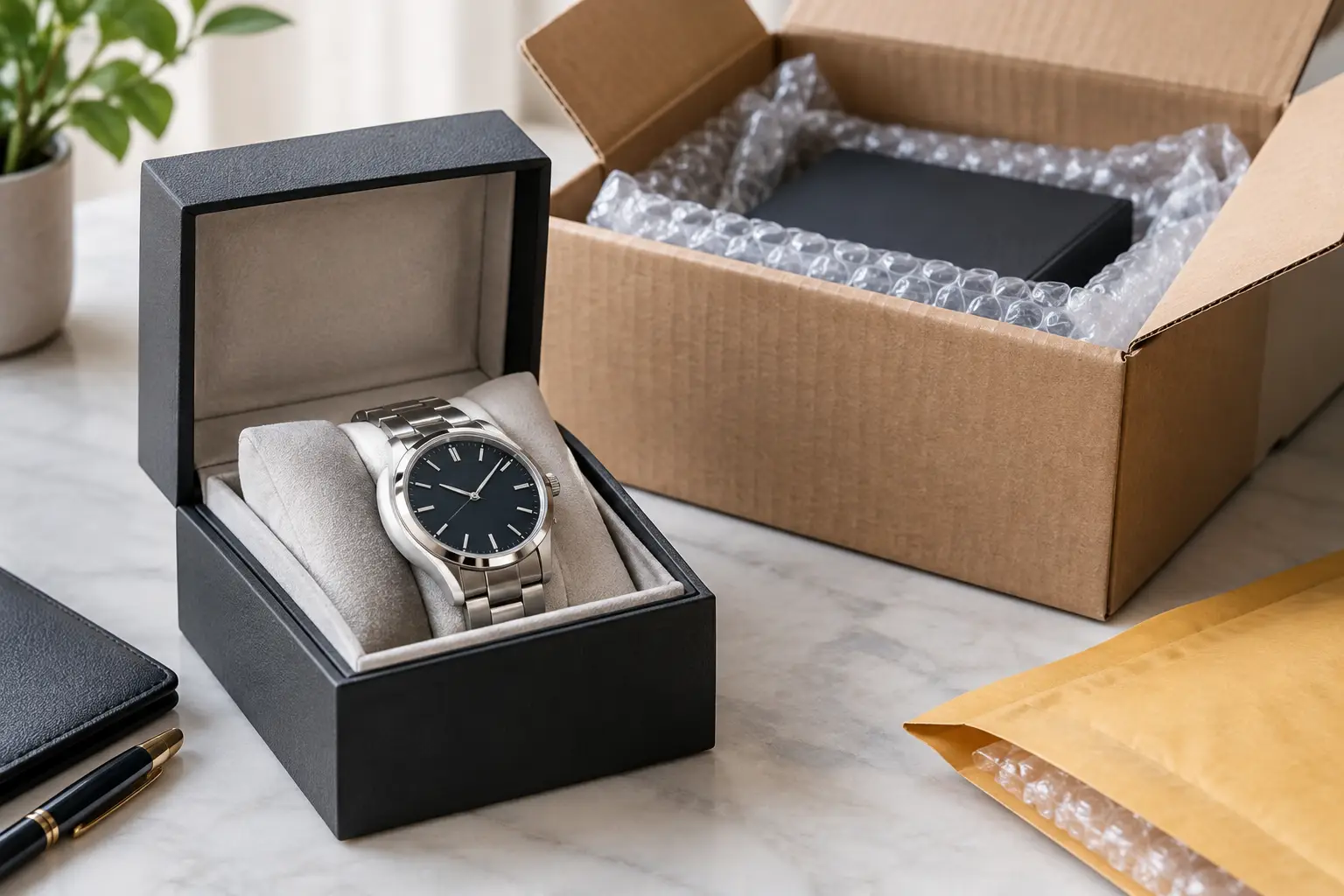
Insurance helps after a covered loss. Proper packaging helps prevent damage and may help preserve eligibility for a claim. A luxury watch should be secured inside its presentation box or a protective travel case when appropriate, with additional cushioning to prevent movement. That inner container should then be placed in a plain, durable outer carton with enough packing material to keep it stable during handling.
The outer package should not identify the watch brand, model, or contents. Prominent luxury branding can create unnecessary attention. A discreet shipping label and an unmarked carton are sensible precautions, particularly for collectible references whose appearance alone may indicate substantial value.
A seller should also avoid oversized packaging that allows the box to shift or crush. Conversely, a carton that is too small may leave little room for protective material. The goal is a compact, well-cushioned package that does not rattle, flex, or reveal its contents.
For watches shipped with original boxes, papers, accessories, and bracelet links, the packing process deserves even more care. These items can scratch a case, crystal, or bracelet if they move freely in transit. Separating accessories and securing the watch itself protects both condition and presentation.
Delivery Controls Matter as Much as Transit Coverage
The package's highest-risk moment may be the final delivery, not the journey between facilities. A watch should not be left on a porch, in a building lobby, or at an unsecured front desk whenever a controlled handoff is available.
For valuable shipments, adult signature confirmation or another signature-required service provides a meaningful additional safeguard. It creates a delivery record and reduces the chance that a package is left unattended. Buyers should plan ahead if they will not be home during normal delivery hours. Receiving a watch at a secure workplace, arranging delivery when someone is present, or requesting a carrier hold location can be more prudent than hoping an unattended package remains undisturbed.
Signature confirmation is not a substitute for insurance, and insurance is not a substitute for signature confirmation. Together, they address different risks: one supports recovery after a covered problem, while the other helps reduce the opportunity for a problem to occur.
What Buyers Should Confirm Before a Watch Ships
A buyer does not need to interrogate every detail of a retailer's logistics process, but a few direct questions can clarify whether the shipment has been handled responsibly. Confirm that the package will be insured for the purchase value, that signature will be required at delivery, and that tracking information will be provided once the watch ships.
It is also reasonable to ask what happens if the package is delayed, damaged, or marked delivered but cannot be located. The answer should be specific. A responsible seller should explain that it will open the appropriate investigation, request the necessary information, and manage the carrier or insurance claim process rather than simply directing the buyer to solve it alone.
Keep your order confirmation, shipping notification, tracking record, and any delivery communications until the transaction is fully complete. If a package arrives with visible damage, photograph the exterior before opening it. If the watch or its accessories appear damaged, retain all packaging materials. Discarding the carton or internal packing too quickly can make a carrier investigation more difficult.
Insurance Does Not Replace Authentication and Documentation
A fully insured shipment protects against certain transit risks. It does not establish that the watch inside is authentic, accurately described, or complete with the accessories represented in the listing. Those are separate obligations that should be addressed before a package leaves the seller.
For a pre-owned luxury watch, buyers should look for clear condition reporting, reference and serial documentation where appropriate, and professional authentication. In-house certification provides an additional point of accountability because the retailer is standing behind the timepiece it is sending. Original box and papers can be meaningful to collectors, but they should be described accurately rather than treated as a substitute for verification.
This is also why a secure purchase process should include a defined return policy and warranty terms. Shipping protection addresses the narrow period of transit. Certification, a return window, and warranty coverage address broader ownership concerns after delivery.
At Lume Wrist Watches, free insured US shipping is paired with in-house certification, a 30-day return window, and a two-year warranty. Those protections serve different purposes, but together they give buyers clearer recourse than an informal transaction where shipping, authenticity, and after-sale support are left unresolved.
International Watch Shipping Requires Added Attention
International delivery can be arranged for collectors when appropriate, but it involves more variables than a domestic US shipment. Carrier restrictions, declared-value limits, import rules, local taxes or duties, signature procedures, and customs delays can all affect the process. Coverage that applies to a domestic shipment may not apply in the same way across borders.
A buyer requesting international delivery should receive a shipment-specific quote and clear information about the method being used. Do not assume that insurance terms, delivery timing, or import charges are identical from one destination to another. The right approach is to confirm the details before payment and before the watch is released for shipment.
A watch can be shipped insured, but the best protection is not a single insurance line on an invoice. It is a disciplined process: proper declared value, discreet packaging, tracked delivery, a required signature, accurate documentation, and a retailer prepared to stand behind the shipment from dispatch through receipt.