Is Rolex a Good Investment? What Buyers Should Know
Published September 18, 2026 · Last updated October 17, 2026 · By Lume Wrist Watches Editorial Team
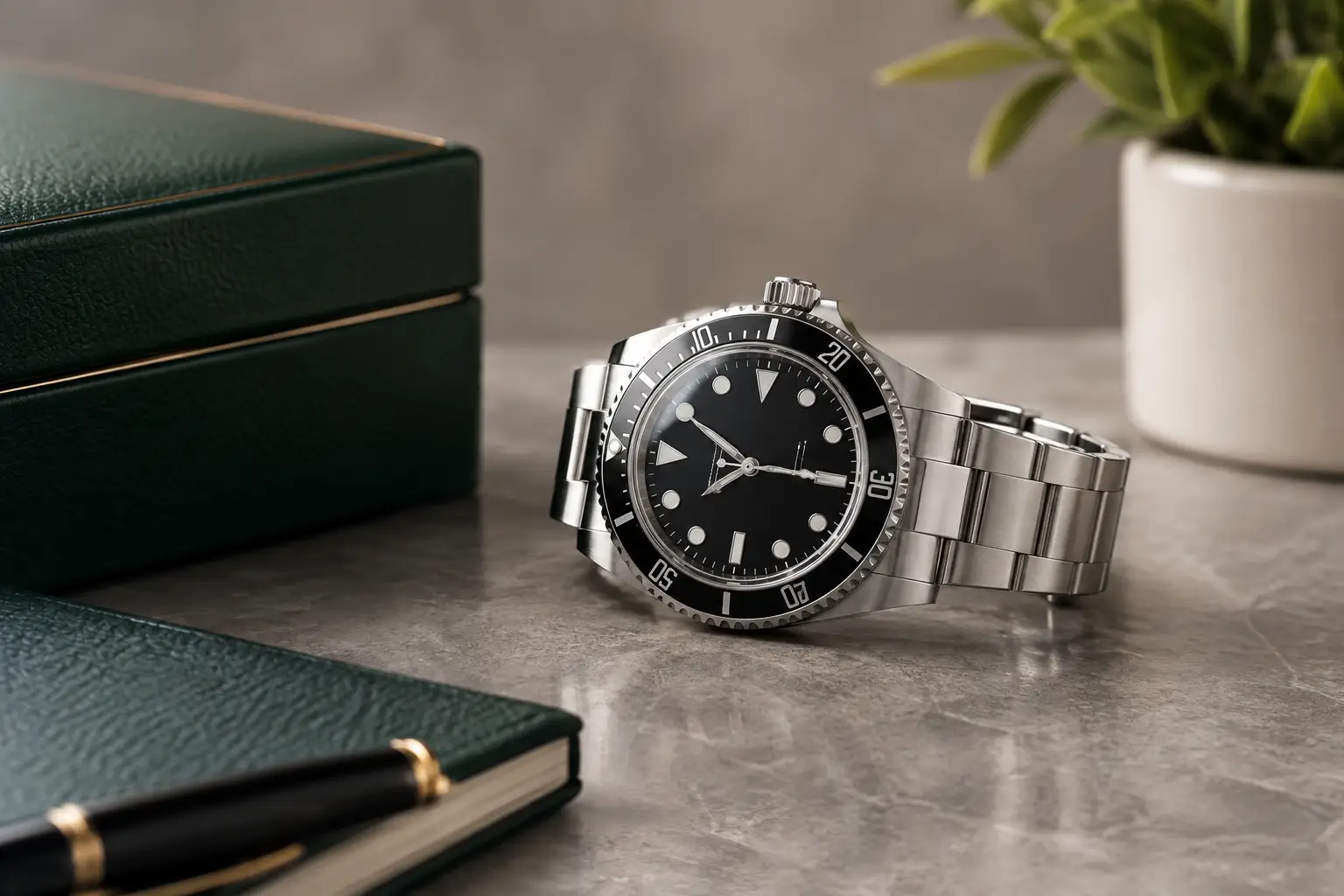
A Rolex can be an exceptional object to wear, collect, and potentially preserve value in - but the question, “is Rolex a good investment,” deserves a more disciplined answer than a simple yes. Certain references have shown enduring demand across decades. Others trade more like luxury goods: enjoyable to own, but sensitive to condition, market cycles, and the price paid at purchase.
For a buyer allocating meaningful capital to a watch, the better question is whether a specific Rolex reference is likely to remain desirable, authentic, and liquid when it is time to sell or trade. That requires attention to the watch itself, its documentation, its condition, and the quality of the transaction.
Is Rolex a Good Investment for Most Buyers?
Rolex has several characteristics that support long-term market interest. The brand has global recognition, a deep collector base, a long record of purposeful design evolution, and a catalog built around highly identifiable models. A Submariner, Daytona, GMT-Master II, Datejust, or Day-Date is immediately understood by both seasoned collectors and first-time luxury-watch buyers.
That recognition matters because resale value is ultimately driven by demand. Rolex watches are not valued solely for precious metal content or mechanical complexity. Their value reflects cultural relevance, limited supply for certain references, strong design continuity, and the confidence buyers place in the brand.
Still, a Rolex should not be treated as a guaranteed financial return. Secondary-market values can rise, level off, or decline. A watch purchased at the height of demand may take time to recover its acquisition cost, particularly after considering insurance, servicing, transaction costs, and sales commissions if they apply. The most defensible approach is to buy a watch you would be satisfied to own even if the market becomes less favorable.
The Rolex References That Tend to Hold Attention
Not every Rolex carries the same collector appeal. Market durability typically follows a combination of model recognition, production history, configuration, and scarcity. Sports models often receive the most attention because their designs have remained relevant for generations and because demand is broad across regions and age groups.
The Daytona is a prominent example. Its association with motorsport, its distinct chronograph design, and its long-standing collector following have made many Daytona references closely watched. GMT-Master and GMT-Master II models also benefit from a strong identity, especially configurations with recognizable bezel colors and historically important dial variations.
The Submariner remains one of the most widely recognized tool watches ever produced. Its appeal is not dependent on a fleeting trend. Buyers appreciate its proportions, practical durability, and direct connection to Rolex’s dive-watch history. The Explorer and Explorer II can appeal to collectors who prefer a quieter profile while still seeking a purposeful professional-watch lineage.
Classic models deserve equal consideration. The Datejust has enormous name recognition and an extensive history, but investment potential varies significantly by size, metal, dial, bracelet, and reference. The Day-Date, particularly in precious metal and with notable dial configurations, can have a distinct collector audience. These watches may be less universally liquid than the most sought-after sports models, yet the right example can remain highly desirable.
The point is not to chase a model name alone. Within any family, the exact reference and configuration can materially affect demand.
Condition Is Part of the Investment Case
In the luxury-watch market, condition is evidence. A reference may be desirable, but over-polishing, incorrect components, damaged dials, stretched bracelets, and poor service history can reduce buyer confidence and future resale appeal.
Originality is especially important for collectible Rolex watches. Collectors often examine dial printing, handset consistency, bezel inserts, bracelet codes, case geometry, and the relationship between serial-era details and the reference. A vintage watch may show honest wear and still be compelling. What matters is that its condition is accurately represented and that the components align with the watch’s period and history.
Modern Rolex watches require the same discipline, even when their condition standards are different. Buyers will look for sharp case lines, appropriate bracelet condition, correct accessories when available, and signs of unauthorized alteration. A watch described as complete should have its included items clearly identified rather than assumed.
A low purchase price can lose its appeal quickly if the watch later requires substantial work or raises questions during resale. For this reason, condition should be evaluated before a buyer focuses on a perceived discount or market narrative.
Provenance and Documentation Strengthen Confidence
A Rolex does not need to have every original accessory to be authentic or collectible. However, accompanying materials can increase buyer confidence and help establish a clearer ownership story. Depending on the reference, the original card or papers, box, service records, manuals, and dated sales documentation may all matter.
Documentation is most useful when it supports facts that buyers can verify: the reference, serial-era consistency, service history, and chain of custody. It should never substitute for an independent assessment of the watch itself. Papers can be incomplete, mismatched, or unrelated to the piece being offered.
For investment-grade collecting, provenance is less about accumulating accessories and more about reducing unanswered questions. The fewer uncertainties surrounding a high-value watch, the easier it may be for a future buyer to evaluate.
Timing Matters More Than Headlines Suggest
Luxury-watch markets can move quickly when demand concentrates around a small group of popular references. Public attention, production changes, anniversary releases, broader economic conditions, and shifts in collector taste all influence pricing. A watch that performed strongly over a short period is not automatically positioned for the same result over the next several years.
Buyers should also distinguish between a headline market price and an achievable transaction price. Asking prices can reflect ambition rather than completed sales. The relevant value is what informed buyers are willing to pay for a comparable watch in similar condition, with similar documentation, from a seller who provides a credible purchase process.
Patience is often an advantage. Collectors who buy a reference because it fits a long-term collection strategy are generally less exposed to short-term sentiment than buyers pursuing a rapid resale. Rolex ownership tends to make the most sense when the watch has personal appeal as well as established market support.
Authentication Protects the Value You Are Trying to Preserve
A Rolex’s future value depends on its authenticity. That sounds obvious, yet it is central to every serious acquisition. Counterfeit components, altered serial information, incorrect replacement parts, and inaccurate condition descriptions can create material financial risk even when a watch appears convincing at first glance.
A professional retailer should be prepared to state how the watch has been evaluated and what protections accompany the sale. In-house certification, transparent condition reporting, insured shipping, a defined return period, and warranty coverage give the buyer a clearer framework than an informal transaction with limited recourse.
At Lume Wrist Watches, timepieces are in-house certified and supported by free insured US shipping, a 30-day return window, and a two-year warranty. Those safeguards do not determine market performance, but they can help protect the buyer from avoidable risks at the moment of acquisition.
How to Buy Rolex With Resale in Mind
Start with a reference you understand. Study its production era, dial and bezel variants, bracelet options, service considerations, and the characteristics that collectors expect to see. A well-known model is not automatically a strong purchase if its components are inconsistent or its condition falls below the standard expected for that particular reference.
Then compare like with like. A full-set modern watch in excellent condition should not be evaluated against a heavily worn example without documentation. Likewise, an untouched vintage piece may warrant a different assessment than one with replacement parts and aggressive refinishing.
Finally, keep ownership records. Retain purchase documentation, service invoices, appraisal updates if obtained, and photographs of the watch at the time of purchase. If you later decide to sell, these records help a prospective buyer understand how the watch was cared for during your ownership.
The strongest Rolex purchase is rarely the one supported by the loudest market claim. It is the watch with enduring design, verified authenticity, accurate condition disclosure, and a reference you will still be pleased to wear while the market takes its course.