Cartier Tortue Watches: Complete 2026 Buying Guide
Published October 26, 2026 · Last updated October 27, 2026 · By Lume Wrist Watches
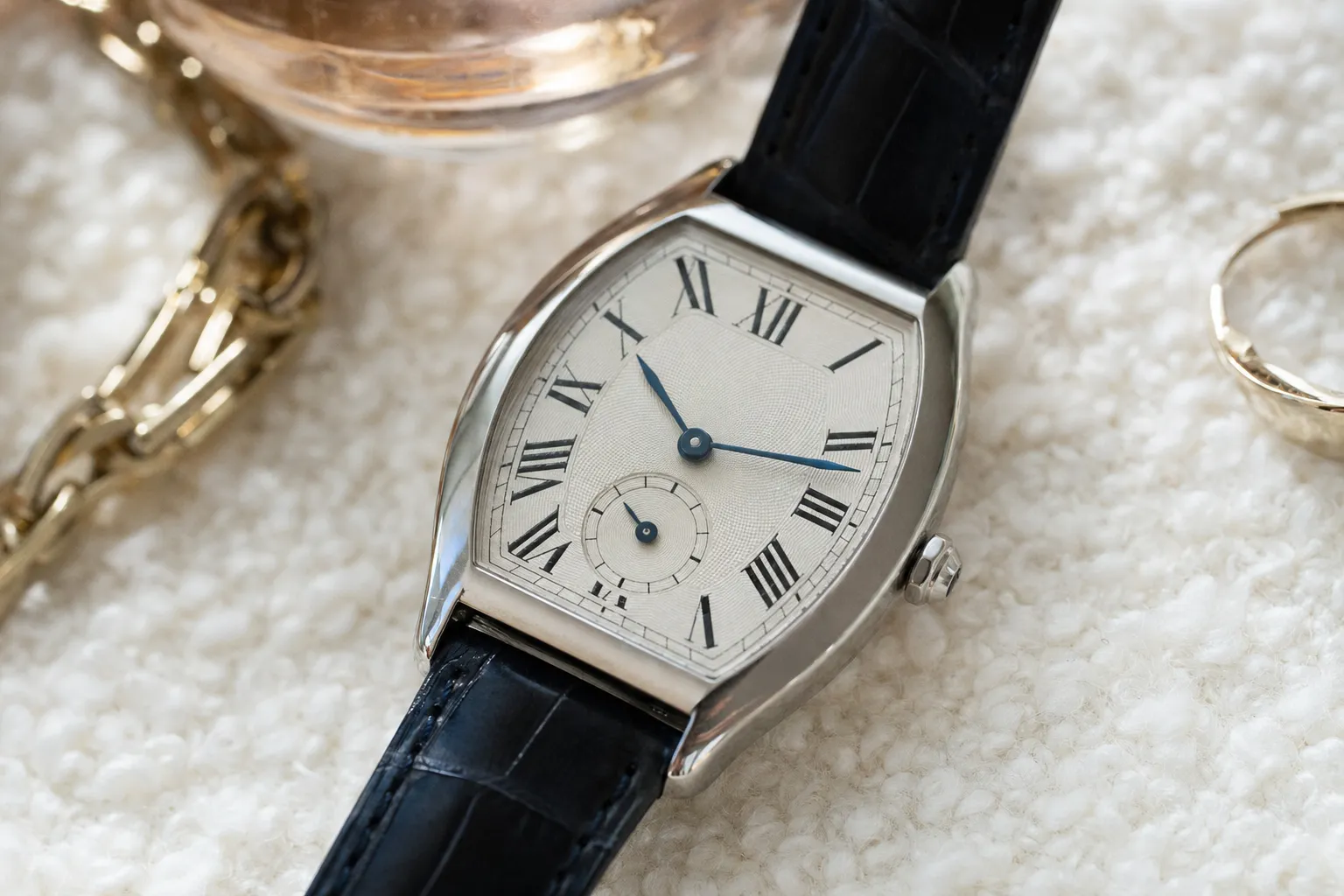
The Cartier Tortue remains one of the most historically significant shaped wristwatches ever conceived, introduced in 1912 by Louis Cartier as only the third wristwatch design in the maison's storied archive. Characterized by its curved, tortoise-shell silhouette and classical Roman dial geometry, the Tortue represents the pinnacle of Cartier’s form-led horology. Whether you are hunting for an ultra-collectible Collection Privée Cartier Paris (CPCP) Monopoussoir or evaluating modern iterations from the Cartier Privé collection, this comprehensive 2026 buying guide details references, calibers, historical milestones, and prevailing secondary market values.
For collectors exploring the broader scope of the maison's non-round silhouettes, our Cartier Watches: Complete 2026 Buying Guide to Shaped Cases details the overarching evolution of Parisian form design.
---
Why This Maison Matters
Cartier occupies an unrivaled position in horological history as the true pioneer of shaped case architecture. While contemporary watchmaking spent the early 20th century adapting round pocket watch movements into modified cases with soldered wire lugs, Louis Cartier approached the wrist as an entirely distinct artistic canvas.
The house codes established on the Tortue have defined the maison for over a century: bold Roman numeral indices, the railway minute track (chemin de fer), blued-steel Breguet-style hands, and a cabochon-cut sapphire set into the winding crown. Unlike the stark utilitarianism of the early Santos or the rectangular austerity of the Tank, the Tortue balances geometric curve and visual volume. It conveys a refined, intellectual elegance favored by connoisseurs who gravitate away from standard mass-market luxury toward mechanical connoisseurship and bespoke design.
---
Brand History and Defining Milestones with Dates
The narrative of the Cartier Tortue is inextricably tied to the birth of the modern wristwatch and the maison’s golden eras of high mechanical watchmaking.
- 1912 — Conception of the Turtle Case: Following the 1904 Santos-Dumont and the 1906 Tonneau, Louis Cartier unveiled the Tortue (French for turtle). Inspired by the curved shell profile of a tortoise, the design integrated contoured flanks that sat flush against the wrist.
- 1928 — The First Single-Button Chronograph: Cartier introduced the legendary Tortue Monopoussoir (monopusher chronograph), housing an ultra-thin movement developed in collaboration with the European Watch and Clock Co. (EWC). It remains one of the rarest complications of the Art Deco era.
- 1998 — The Collection Privée Cartier Paris (CPCP) Revival: To reclaim its standing in haute horlogerie, Cartier launched CPCP. The Tortue served as a centerpiece canvas, reintroducing the Monopoussoir (Ref. 2396 in white gold and Ref. 2356 in yellow gold) powered by the Calibre 045MC, engineered by THA Ébauche (a collective featuring Vianney Halter, Denis Flageollet, and F.P. Journe).
- 2000s — Complications and Minute Repeaters: Under CPCP, Cartier expanded the line with perpetual calendars, high-complication tourbillons, and eight-day manual winds, affirming the Tortue as a vessel for complex watchmaking.
- 2024–2026 — The Cartier Privé Resurgence: Cartier reintroduced the Tortue to the elite Cartier Privé series at Watches and Wonders, debuting modernized time-only two-hand models alongside an all-new manual-wind monopusher chronograph (Ref. CRWGTO0006 and Ref. CRWGTO0007), cementing the silhouette’s modern renaissance.
This historical lineage stands alongside sibling design icons; collectors often compare the Tortue's curvier aesthetic with other historical case profiles such as the Cartier Baignoire Watches: The Complete 2026 Buying Guide or the elongated geometry detailed in our Cartier Tank Américaine vs Tank Cintrée: 2026 Comparison.
---
Every Current Collection Explained, with Signature References
The Tortue universe is divided into three distinct collector eras: the elusive mid-century vintage pieces, the mechanical masterworks of the CPCP era (1998–2008), and modern Cartier Privé releases.
### The CPCP Monopoussoir Chronographs (Ref. 2396, 2356, W1525751) The CPCP Tortue Monopoussoir chronographs represent one of the absolute peaks of modern independent movement collaboration within a legacy luxury house. Measuring 34mm across and 43mm lug-to-lug with a modest 10mm thickness, these pieces feature a central rosette guilloché dial, blued Breguet hands, and a coaxial pusher integrated directly into the sapphire crown.
### The CPCP Time-Only & Perpetual Calendars (Ref. 2496, 2498, 2646) For traditionalists, the CPCP time-only models—such as the yellow-gold Ref. 2496 and platinum Ref. 2646—measure a classical 34mm wide by 43mm long. Collectors seeking high complications often seek out the Tortue Quantième Perpétuel (Ref. 2498), featuring calendar indications arranged cleanly across a meticulously engraved dial.
### Modern Cartier Privé Tortue (2024–2026 Editions) The contemporary Privé line expanded the architecture slightly to match modern proportions while retaining Art Deco restraint: Time-Only Privé (CRWGTO0008 / CRWGTO0009): Measuring 41.4mm by 32.9mm and just 7.2mm thin, offered in yellow gold, platinum, and diamond-set iterations. The dials feature an apple-shaped handset and a rail track that hugs the curved perimeter. Privé Monopoussoir Chronograph (CRWGTO0006 / CRWGTO0007): Measuring 43.7mm by 34.8mm with a slender 10.2mm profile, these manual-wind pieces bring open-caseback finishing back to the forefront of Cartier's catalog.
Cartier Tortue Reference Comparison
| Reference / Era | Case Metal | Dimensions (Width x Length x Height) | Caliber | Complication | Typical Secondary Market Range |
|---|---|---|---|---|---|
| :--- | :--- | :--- | :--- | :--- | :--- |
| CPCP 2396 (c. 1999–2005) | 18k White Gold | 34mm x 43mm x 10mm | Calibre 045MC (THA) | Monopusher Chronograph | $38,000 – $55,000 |
| CPCP 2356 (c. 1999–2005) | 18k Yellow Gold | 34mm x 43mm x 10mm | Calibre 045MC (THA) | Monopusher Chronograph | $34,000 – $48,000 |
| CPCP 2496 (c. 2000–2006) | 18k Yellow / White Gold | 34mm x 43mm x 8.5mm | Calibre 437MC | Time-Only / Central Seconds | $14,000 – $22,000 |
| Tortue XL 3177 (c. 2008–2014) | 18k Pink / White Gold | 38mm x 48mm x 10.5mm | Calibre 9601MC | Large Date / Small Seconds | $12,500 – $18,000 |
| Privé CRWGTO0008 (2024–2026) | 18k Yellow Gold | 32.9mm x 41.4mm x 7.2mm | Calibre 430MC | Hours, Minutes | $26,000 – $34,000 |
| Privé CRWGTO0007 (2024–2026) | Platinum | 34.8mm x 43.7mm x 10.2mm | Calibre 1928MC | Monopusher Chronograph | $55,000 – $75,000 |
Note: Market figures represent approximate observations based on secondary collector transactions and may fluctuate depending on condition, completeness, and provenance. Readers who track macro pricing across high-end icons should review our Luxury Watch Investment & Market Guide: Navigating 2026 for broader perspective.
---
Movements and In-House Calibers Used Across the Range
The internal mechanics of the Tortue collection represent an exceptional crossover between historic Swiss movement manufacturers and independent artisanal engineering.
``` [THA Ébauche: Halter / Flageollet / Journe] │ ▼ [Cartier Calibre 045MC] (Swiveling pin transmission, Monopusher) │ ▼ [Modern Calibre 1928MC] (Column wheel, vertical clutch, curved bridges) ```
### The THA Ébauche Legacy: Calibre 045MC In the CPCP Monopoussoir, Cartier deployed the manual-wind Calibre 045MC, conceived by Techniques Horlogères Appliquées (THA)—the renowned workshop run by Vianney Halter, Denis Flageollet (founder of De Bethune), and François-Paul Journe. Rather than using an ordinary lateral clutch or vertical clutch system, the 045MC utilizes a swiveling pin (embrayage basculant) mechanism to engage the chronograph train. This completely eliminates the jarring jump of the central chronograph seconds hand upon actuation. It operates at 21,600 vibrations per hour (vph) and features distinctive circular Cartier monogram finishing across its bridges.
### The Ultra-Thin Workhorse: Calibre 430MC Derived from the ultra-thin Piaget Calibre 430P, the 430MC is a hand-wound movement measuring just 2.1mm thick. Operating at 21,600 vph with a 40-hour power reserve, this movement has powered both classical CPCP references and the modern Cartier Privé time-only Tortue models, allowing the watch to slip effortlessly under a tailored cuff.
### Modern In-House Mechanicals: Calibre 1928MC For the re-engineered 2024–2026 Privé Monopoussoir, Cartier developed the Calibre 1928MC. This manual-wind chronograph movement fits the curves of the Tortue case back, showcasing traditional Geneva striping, hand-beveled bridges, and a column-wheel assembly visible through an exhibition sapphire crystal.
---
Price Tiers Today: Entry, Core and Grail
Acquiring a Cartier Tortue involves navigating several price tiers that reflect production rarity and historical significance.
``` ┌────────────────────────────────────────────────────────┐ │ GRAIL: $45,000 – $80,000+ │ │ CPCP / Privé Monopusher Chronographs, Platinum 2646 │ ├────────────────────────────────────────────────────────┤ │ CORE: $16,000 – $35,000 │ │ CPCP Time-Only (2496), Privé Time-Only, Tortue XL │ ├────────────────────────────────────────────────────────┤ │ ENTRY: $7,500 – $15,000 │ │ Mid-size Tortue 1990s (Ref. 96079), Ladies Quartz/Auto │ └────────────────────────────────────────────────────────┘ ```
### Entry Tier ($7,500 – $15,000) The entry point to the Tortue silhouette consists largely of vintage 1970s–1980s references, mid-size electro-plated or 18k gold automatic pieces from the early 1990s (such as Ref. 96079), and quartz ladies' references. While these watches feature smaller proportions (typically 26mm to 31mm wide), they deliver authentic historic case architecture in solid precious metals.
### Core Tier ($16,000 – $35,000) The core collector bracket includes CPCP time-only models like the Ref. 2496 in 18k yellow gold, the larger mid-2000s Tortue XL references (Ref. 3177 and Ref. W1556233), and modern standard-production Privé time-only releases. These timepieces house fine mechanical movements and feature classical guilloché dials with CPCP rosette or Privé sunburst executions.
### Grail Tier ($45,000 – $80,000+) At the pinnacle of the line sit the CPCP Monopoussoir references (Ref. 2396 in white gold and Ref. 2356 in yellow gold), limited platinum CPCP models, and the 2024–2026 Cartier Privé Monopoussoir in platinum (Ref. CRWGTO0007). Collectors pay top-of-market premiums for original box-and-papers sets with unpolished cases, where competition rivals interest seen in iconic siblings like the Cartier Crash.
---
What to Check Before Buying Pre-Owned from This Maison
When purchasing a pre-owned Cartier Tortue, close examination of specific traits protects you against over-polished silhouettes and altered dials:
- Case Geometry and Step Preservation: The Tortue's appeal lies in its double-stepped flanks and gentle curved lugs. Heavy machine polishing easily washes out the sharpness between the case flank and the bezel, ruining the intended geometry. Examine the case profiles under directional lighting.
- Dial Authenticity and CPCP Signatures: True CPCP-era Tortue dials feature a central guilloché medallion radiating from the hands, framed by the chemin de fer minute track. Crucially, the word "Paris" sits at the bottom of the dial beneath the 6 o'clock Roman numeral on CPCP pieces. Modern Privé models will read "Swiss Made."
- Secret Signature Placement: Inspect the Roman numeral at VII (or occasionally X). The miniature text reading "Cartier" must be crisp, with sharp serif strokes and no blurred ink bleeding.
- Chronograph Reset Precision (045MC): On Monopoussoir models, cycle the pusher several times. Ensure the chronograph seconds and minute hands jump crisply to 12 without creeping or lagging.
- Crown Cabochon Integrity: Cartier cabochons are natural or synthetic sapphires (or rubies in select limited editions). Check for chipping, fracture lines, or poor-fitting replacement stones from non-authorized repairs.
Before finalizing your acquisition, read our comprehensive Watch Warranty FAQ for Luxury Watch Buyers to understand coverage considerations on vintage and neo-vintage mechanics.
---
Current Authenticated Stock at Lume Wrist Watches
At Lume Wrist Watches, we specialize in curating pristine, verified shaped wristwatches from the world's premier maisons. Browse our current selection of Cartier and related fine timepieces:
- Cartier Cartier Tank Américaine 1713 White Gold Silver Dial — An exquisite 18k white gold shaped dress watch that embodies Cartier's Art Deco aesthetic.
- Cartier Cartier Tank Américaine W26015K2 Yellow Gold Silver Dial — Classical yellow gold presence with an integrated curved case profile.
- Cartier Cartier Ballon Bleu W6920068 33mm Rose Gold Silver Dial — A modern interpretation of rounded volume in solid rose gold.
- Cartier Cartier Must de Cartier Tank Vermeil Champagne Roman Dial — An accessible vintage classic showcasing traditional Parisian roman dial codes.
Looking for an alternative shaped sports or tool piece? Consider the Longines Longines Spirit Zulu Time L3.802.4.53.6 Black Dial Stainless Steel or the bold cushion-cased Panerai Panerai Luminor Submersible PAM00684 Red Gold Black Dial.
Explore our complete Cartier at Lume Wrist Watches catalog or view our wider selection across our Rolex collection, Patek Philippe timepieces, Audemars Piguet Royal Oaks, Omega collection, and all featured maisons.
Every timepiece we sell undergoes rigorous multi-point verification by our specialists to guarantee complete mechanical and aesthetic authenticity.
---
Frequently Asked Questions
### What does "Tortue" mean in Cartier watchmaking? "Tortue" is French for tortoise or turtle. Louis Cartier named the silhouette in 1912 after its distinctive rounded sides, curved lugs, and domed profile, which deliberately evoke the shape of a tortoise shell.
### Why is the Cartier Tortue Monopoussoir CPCP so famous? The CPCP Tortue Monopoussoir (Refs. 2356 and 2396) is renowned because its manual-wind Calibre 045MC was co-developed by legendary watchmakers François-Paul Journe, Denis Flageollet, and Vianney Halter through THA Ébauche. It features a unique swiveling pin engagement that prevents the chronograph hand from jumping upon start.
### How does the Tortue wear compared to the Cartier Tank or Santos? The Tortue wears with greater visual width and wrist presence than a standard Tank due to its expanded barrel-shaped flanks, yet it sits flatter than a modern Santos de Cartier. A 34mm wide Tortue feels similar to a 37mm or 38mm round watch on the wrist.
### Did Cartier produce the Tortue in stainless steel? Historically, the vast majority of Cartier Tortue models have been produced exclusively in precious metals—yellow gold, white gold, pink gold, and platinum. Steel iterations are exceptionally scarce and limited to specific modern variations or niche releases; the core CPCP and Privé lines remain strictly precious metal.
### Are modern Cartier Privé Tortue models limited edition? Yes. Contemporary Privé collections—such as the 2024–2026 releases—are produced in strictly numbered, limited editions (typically 50, 100, or 200 pieces globally per reference), making them highly sought-after on the secondary market.
---
Contact Lume Wrist Watches
Our advisory team is available to help you source, evaluate, or consign rare shaped-case timepieces.
- Email: sales@lumewrist.com
- Phone: +1 (332) 285-2190
- Office Address: 18 East 48th Street, Suite 1503, New York, NY 10017
- Hours of Operation: Monday – Friday: 9:00 AM – 7:00 PM ET · Closed Saturday & Sunday
Whether you are shopping for luxury watches in New York, seeking luxury watches in California, or purchasing from collectors in Florida, we offer nationwide client support. You can browse our authenticated collection, schedule private viewing appointments, use our dedicated concierge sourcing service, or contact us directly via our contact page.
---
Final Thoughts
The Cartier Tortue occupies an elevated echelon in watch collection culture. By pairing Louis Cartier's early 20th-century aesthetic audacity with some of the most celebrated mechanical movements of the modern era, the Tortue stands apart from conventional dress watches. Discover our rotating inventory of fine horology at our shop and secure your next shaped-case masterpiece.