Watch Warranty FAQ for Luxury Watch Buyers
Published October 26, 2026 · Last updated October 26, 2026 · By Lume Wrist Watches
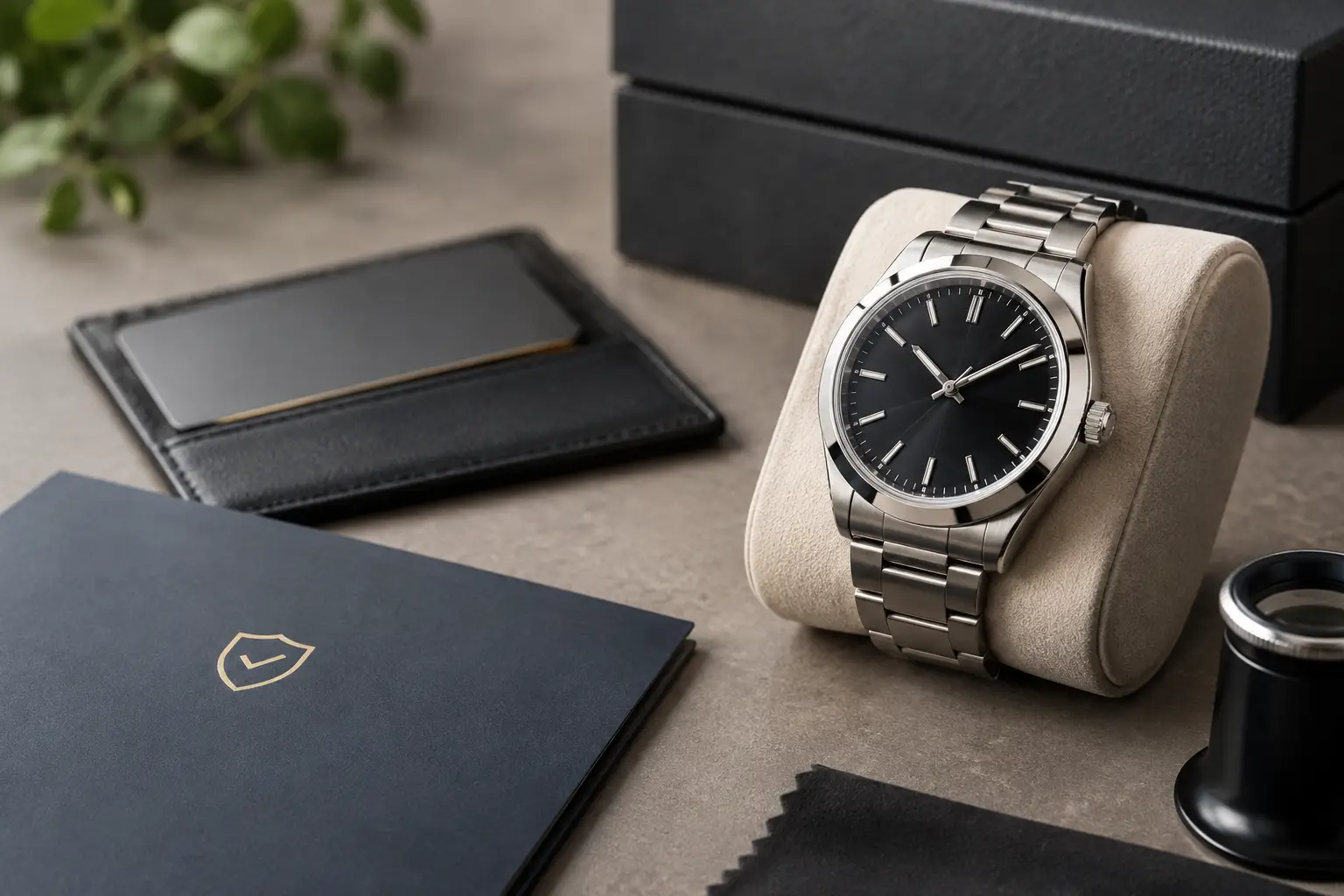
A luxury watch warranty is not a decorative line item on an invoice. It is the service commitment that matters if a movement stops winding properly, timekeeping changes unexpectedly, or a functional issue emerges after delivery. This watch warranty FAQ addresses the questions buyers should settle before purchasing a pre-owned Rolex, Patek Philippe, Audemars Piguet, Omega, or another fine timepiece.
For a high-value watch, authentication, condition reporting, secure shipping, returns, and warranty coverage work together. A warranty cannot replace careful inspection before purchase, but it can provide meaningful recourse when an eligible mechanical issue arises under normal ownership.
What does a luxury watch warranty cover?
Warranty coverage is designed to address defects in the watch's mechanical function that are not caused by accident, misuse, or ordinary wear. In practical terms, that may include a covered issue with the movement, winding system, automatic rotor, or other internal components required for the watch to operate as intended.
The exact scope always depends on the retailer's written warranty terms and the specific watch. A vintage manual-wind piece, a modern chronograph, and a complicated perpetual calendar do not present the same service considerations. Buyers should ask what functional standards are used, what repair options are available, and whether prior servicing or disclosed condition affects coverage.
At Lume Wrist Watches, every timepiece is in-house certified and supported by a two-year warranty. That protection sits alongside free insured US shipping and a 30-day return window, giving buyers a defined process both immediately after delivery and over the longer ownership period.
What is usually excluded from watch warranty coverage?
A warranty is not the same as comprehensive insurance or a maintenance plan. Most watch warranties exclude damage resulting from drops, impact, theft, loss, fire, water exposure beyond the watch's stated resistance, improper handling, and unauthorized repair work.
Cosmetic changes are also commonly outside coverage. Scratches on polished surfaces, wear to a bracelet, fading on a strap, or normal aging of a vintage dial may affect appearance without indicating a functional defect. That distinction matters because pre-owned luxury watches are evaluated not only for how they run, but also for the condition characteristics disclosed at the time of sale.
Consumable or naturally aging components can require separate consideration. Leather straps, for example, are subject to ordinary use and moisture exposure. Water resistance can also change over time as gaskets age, particularly if a watch has not been pressure-tested recently. Never assume that a watch is suitable for swimming or diving solely because the model was originally designed with a water-resistance rating.
Does the manufacturer's warranty transfer to a pre-owned buyer?
Sometimes, but not always. Manufacturer warranties may remain valid when the original warranty period is still active and the required card, documentation, and transfer conditions are present. Other manufacturer programs limit coverage based on purchase channel, registration, region, alterations, or prior service history.
A retailer warranty is separate from a manufacturer's warranty. This is particularly relevant for discontinued references, vintage watches, and pieces whose original manufacturer coverage has already expired. An independent retailer should be clear about which warranty applies, how long it lasts, and who will coordinate service if a covered issue occurs.
Do not assume that a manufacturer will cover every pre-owned watch simply because it bears a recognized brand name. Confirm the paperwork and terms before relying on that protection.
How should you document a concern after delivery?
If you believe your watch has a functional issue, document it promptly. Keep the original invoice, warranty documentation, shipping materials, and any authentication or condition records provided with the purchase. A short video can be useful when the concern involves a winding problem, an intermittent function, an unusual sound, or a complication that does not operate correctly.
Describe the issue precisely. Rather than saying the watch “is not working,” note whether it stops after a certain period, loses or gains time noticeably, will not wind, or has a chronograph, date, or bezel function that behaves unexpectedly. Clear documentation helps determine whether the concern is operational, environmental, or related to use.
Avoid opening the caseback, attempting a repair, or bringing the watch to an unauthorized technician before contacting the seller. Unauthorized intervention can complicate diagnosis and may affect warranty eligibility. For a watch with a valuable or delicate movement, restraint is usually the better first step.
What is the difference between a return window and a warranty?
A return window gives the buyer a limited period to evaluate whether the purchase is right for them, subject to the seller's return conditions. This is useful when a watch does not meet expectations for wrist presence, condition, fit, or overall suitability.
A warranty addresses eligible functional issues over a longer defined period. It is not intended to turn every change of preference into a service claim. The distinction protects both parties: the buyer has time to assess the purchase, while the seller has a structured process for resolving covered mechanical concerns.
For a luxury watch, both safeguards have value. The return policy provides an early decision period, while warranty coverage provides confidence beyond the first weeks of ownership.
Watch warranty FAQ: questions to ask before you buy
Before completing a purchase, request direct answers to the following questions:
- How long does the warranty last, and when does the coverage period begin?
- Which mechanical components and functional issues are covered?
- What exclusions apply to water, impact, accidental damage, cosmetic wear, straps, and bracelets?
- What should you do if an issue appears, and who authorizes service?
- Does any remaining manufacturer's warranty apply separately?
- Are prior service records, original papers, or condition disclosures included with the watch?
These questions are not excessive for a luxury purchase. They are part of a disciplined buying process, particularly when evaluating a collectible reference with a complex movement or a meaningful service history.
Does regular maintenance affect warranty protection?
Regular care supports long-term performance, but it should be appropriate to the watch. Mechanical watches benefit from sensible handling: avoid strong magnetic fields where possible, keep the crown secured, follow the stated water-resistance guidance, and store the watch carefully when it is not being worn.
Service intervals vary by model, age, use, complications, and the condition of internal lubricants and seals. A watch worn occasionally in an office environment has different demands from one exposed frequently to water, sports, travel, or temperature changes. If performance changes materially, request professional guidance rather than waiting for a minor concern to become a larger repair.
For vintage watches, preserve originality where possible and make service decisions carefully. Replacing original components may improve usability in some cases, but it can also change the watch's character and collector appeal. The right approach depends on the reference, its condition, and your priorities as an owner.
Why written terms matter more than broad promises
Words such as “guaranteed,” “serviced,” or “covered” can sound reassuring without defining the buyer's actual protection. Written warranty terms establish the useful details: duration, covered defects, exclusions, claim procedures, and the limits of responsibility.
The same standard applies to authentication and condition. A reliable purchase process should identify what is being sold, describe its condition accurately, and provide a clear path if an eligible issue arises. This is especially important for pre-owned watches, where age, prior ownership, and service history can vary substantially from one example to another.
A warranty should give you clarity, not a reason to skip due diligence. Confirm the terms, retain your documentation, and choose a seller prepared to stand behind the watch after it reaches your wrist.