How Much Does a Cartier Crash Cost in 2026? Price Guide
Published October 24, 2026 · Last updated October 25, 2026 · By Lume Wrist Watches
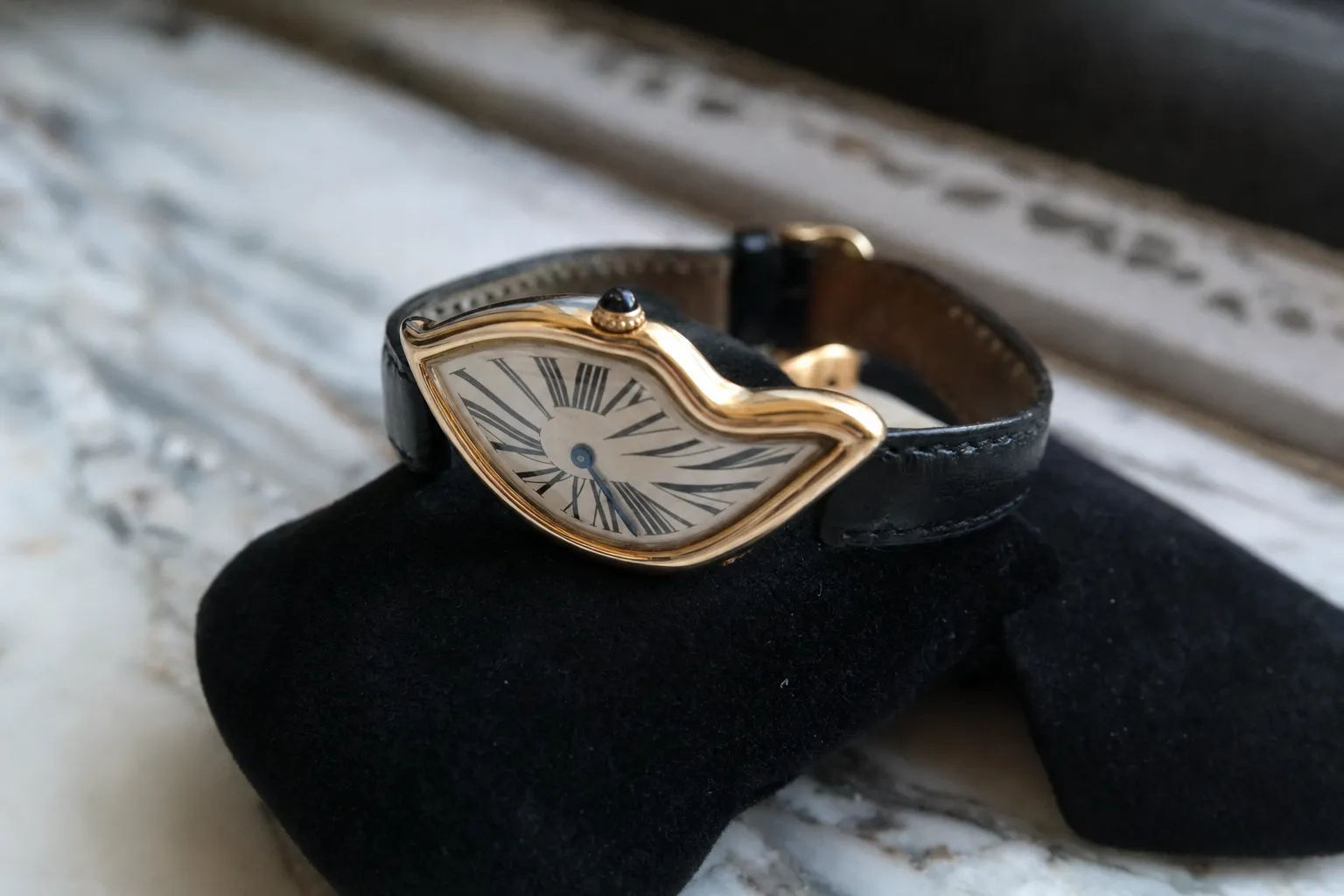
Acquiring a Cartier Crash in 2026 requires an investment typically ranging between $140,000 and upwards of $1,500,000, depending strictly on provenance, production year, and case origin. While modern limited editions and 1990s Paris reissues trade between $150,000 and $280,000, historic 1967 London originals regularly surpass seven figures at major international auctions. Because Cartier produces this asymmetrical masterpiece in exceptionally scarce allocations, secondary market values command an immense premium over original retail figures.
As part of our comprehensive exploration within our Cartier Watches: Complete 2026 Buying Guide to Shaped Cases, this guide examines every commercial facet of the Crash—from historical references and auction benchmarks to ownership costs and acquisition logistics.
---
Cartier Crash Price Breakdown: References, Eras, and Valuations
The Cartier Crash is not a single production model, but an elusive lineage spanning nearly six decades. Valuations hinge heavily on whether the watch originated from Cartier London, Cartier Paris, or modern bespoke allocations.
| Reference / Era | Production Years | Case Metal & Dimensions | Typical Market Range (2026) |
|---|---|---|---|
| :--- | :--- | :--- | :--- |
| London Original | 1967–early 1970s | 18k Yellow Gold (~43mm × 25mm) | $800,000 – $1,650,000+ |
| Paris Crash Limited Series | 1991 (400 pieces) | 18k Yellow Gold (38.5mm × 22.5mm) | $160,000 – $240,000 |
| Crash Radieuse | 2018 (50 pieces) | 18k Yellow Gold (42mm × 23.3mm) | $180,000 – $260,000 |
| Crash Skeleton (Manual) | 2015–2016 (67 pieces) | Platinum / Pink Gold (45.3mm × 28.1mm) | $190,000 – $290,000 |
| New Bond Street Reissue | 2019–Present (Ultra-limited) | 18k Yellow Gold (42mm × 24.2mm) | $220,000 – $340,000 |
| London Crash 1980s–1990s | Bespoke Order Era | 18k Yellow / White Gold | $350,000 – $650,000 |
Note: All figures reflect current secondary market observations and auction hammers. Figures fluctuate based on physical preservation, originality of components, and accompanying archival provenance.
---
What Drives the Price: Rarity, Provenance, and Mechanics
The asymmetrical contour of the Crash represents one of the most radical design departures in horological history. Unlike mass-produced luxury references, several strict parameters dictate the market clearing price for a Crash:
### 1. London vs. Paris Lineage The Crash was conceived in 1967 at Cartier London under Jean-Jacques Cartier. Legend claims a client brought a melted Baignoire to the New Bond Street workshop following a fiery automobile accident; however, historical records confirm Jean-Jacques Cartier and designer Rupert Emmerson deliberately warped the oval form to mirror swinging sixties rebellion.
Original London pieces carry unique hallmarks, case numbers stamped on the exterior reverse, and hand-wound movements sourced from Jaeger-LeCoultre (Calibre 841). These pieces represent the apex of collectible Cartier, routinely fetching quadruple the value of later Continental releases.
### 2. Micro-Batch Production Quantities Unlike the continuous production seen in icons like the Cartier Santos vs Tank: Which Should You Buy in 2026?, the Crash has never been cataloged as a standard line item. Total production across all iterations since 1967 is estimated to be fewer than 1,000 pieces globally. Even the celebrated 1991 Paris reissue was strictly limited to 400 numbered units, while contemporary New Bond Street boutique editions are produced in single-digit annual volumes allocated exclusively to vetted clients.
### 3. Movement Execution Historic Crash references utilize manual-wind calibers fitted into deformed housings: - Vintage London: Calibre Jaeger-LeCoultre 841 (oval layout). - Paris 1991: Calibre 1978-2 (sourced from ETA/Peseux or Jaeger-LeCoultre Calibre 812 variants). - Modern Reissues: Cartier Manufacture Calibre 8970 MC or Calibre 1917 MC. - Skeleton Models: Manufacture Calibre 9618 MC, featuring baseplate bridges shaped to form the distorted Roman numerals.
Mechanics that remain entirely unmolested, lacking signs of moisture intrusion or unapproved third-party service modifications, demand standard premiums of 20% to 35%.
### 4. Dial Condition and Typography Early Crash dials were individual artworks. The distorted Roman numerals and deformed "Cartier" signatures were hand-painted. Flaws such as flaking lacquer, relumed hands, or refinished typography severely degrade collectibility. Collectors prioritize unrestored dials displaying authentic patina over pristine, factory-replaced service dials.
---
Retail vs. Pre-Owned vs. Auction Pricing Compared
Navigating the acquisition of a Crash requires understanding how three distinct channels value the timepiece.
``` [Cartier Retail (Invitation Only)] -> ~$30,000 - $45,000 (Nominal List) │ ▼ [Specialist Secondary Market] -> ~$180,000 - $340,000 (Immediate Access) │ ▼ [Historic Auction Hammer] -> ~$250,000 - $1,500,000+ (London Rarities) ```
### Boutique Retail (The Nominal Tier) Contemporary Crash reissues allocated through the New Bond Street maison maintain a list retail price between approximately $30,000 and $45,000. However, acquiring one at retail is virtually impossible for the general public. Allocations require extensive purchase histories, VIP vetting, and years of waiting. The retail price exists largely as an institutional baseline rather than an accessible market point.
### Pre-Owned Specialist Market Independent secondary dealers represent the only viable path for collectors seeking delivery without decade-long relationship cultivation. As examined in our study on Boutique Versus Secondary Watches: Key Differences, secondary market pricing internalizes immediate liquidity and hyper-scarcity. A collector seeking an authenticated 1991 Paris Crash or modern reissue will transact between $175,000 and $300,000 through vetted luxury dealers.
### The Global Auction Circuit Auctions set historic public ceiling prices. In 2022, an original 1967 London Crash shattered expectations by selling for over $1.5 million on Loupe This, followed by consistent six-figure results at Phillips and Sotheby’s for 1990s variants. Auctions expose buyers to intense competitive bidding, alongside substantial buyer’s premiums (typically 20%–26% on top of the hammer price).
If you appreciate Cartier’s historic design philosophy but prefer accessible proportions, compare these figures against alternatives like the Cartier Cartier Tank Américaine 1713 White Gold Silver Dial or evaluate proportional geometry via our Cartier Tank Américaine vs Tank Cintrée: 2026 Comparison.
---
Hidden Costs: Servicing, Insurance, Shipping, and Duties
When underwriting an asset of this magnitude, the acquisition price is only the initial line item. Seasoned collectors must calculate total cost of ownership across several critical categories:
### Restoration and Movement Servicing Due to the irregular case geometry and bespoke gasket placement, servicing a Cartier Crash cannot be entrusted to generalized watchmakers. Maintenance must either go directly through Cartier’s Restorations Department in Geneva or an elite master horologist specializing in vintage shaped calibers. - Routine service: $1,500 – $3,000. - Vintage archival restoration (case re-truing, movement parts fabrication): $5,000 – $15,000+. - Cartier charges an archival extract fee to review historical manufacture ledgers.
### High-Value Insurance Coverage Insuring a piece valued into six or seven figures requires a specialized private client policy (e.g., Chubb, Hodinkee Insurance, or Pure). Expect annual insurance premiums ranging between 1% and 2% of appraised valuation: - A $200,000 Paris Crash costs approximately $2,000 to $3,500 annually to insure. - Insurers mandate an independent, certified appraisal renewed every two years.
### Secure Armored Logistics Standard couriers will not insure cargo exceeding $50,000. Transportation of a Crash mandates secure armored transit through services such as Malca-Amit or Ferrari Logistics. Domestic armored transit within the United States runs between $1,500 and $4,000, with rigorous hand-to-hand custodial protocols.
### State Sales Tax and Import Tariffs Acquiring a Crash within the United States incurs local state sales tax unless shipped to a tax-free jurisdiction. For collectors securing luxury watches in New York, state and local levies can reach 8.875%, adding over $17,000 to a $200,000 acquisition. Similar considerations apply when buying luxury watches in California or luxury watches in Florida. International cross-border shipments introduce federal customs declarations and luxury excise tariffs.
---
How to Pay: Card and Bank Wire at Lume Wrist Watches
At Lume Wrist Watches, high-value acquisitions are handled with discretion, institutional compliance, and security. We maintain streamlined financial channels designed specifically for top-tier horological purchases:
- Bank wires provide immediate ledger verification, expedited dispatch, and complete transaction safety without third-party processing limits. Domestic and international wire instructions are provided securely upon invoice creation.
- Major Credit Cards: Accepted for qualifying transactions subject to internal verification and processing limits. Card payments offer convenience while adhering to strict identity verification and fraud prevention controls.
Every timepiece in our authenticated collection undergoes exhaustive scrutiny. Every piece is examined via our in-house team independent authentication framework, verifying case stamps, movement serials, and historical dial integrity. Learn more regarding dispatch safety on our shipping & delivery protocols page.
---
Is It Worth It? Value Retention and Market Outlook
To understand whether the Cartier Crash represents a sound capital allocation, examine its performance against the broader luxury sphere via our Luxury Watch Investment & Market Guide: Navigating 2026.
Over the past decade, collector tastes have pivoted from oversized sports chronographs toward sculptural, artistic case designs. As collectors have matured, shaped watches have established unprecedented dominance. The Cartier Crash sits at the structural apex of this aesthetic evolution.
``` Price Trajectory: 1991 Paris Crash (Averaged Market Observations) 2016: ~ $35,000 ■■ 2019: ~ $75,000 ■■■■ 2022: ~ $225,000 ■■■■■■■■■■■ 2026: ~ $200,000 - $240,000 ■■■■■■■■■■ (Consolidated stability) ```
### Why the Crash Retains Value 1. Insulated from Industrial Production: Unlike conventional references produced in five-figure runs, Cartier cannot rapidly flood the market with Crash allocations without compromising the design's cultural aura. 2. Cultural Resonance: Worn by leading creative visionaries, collectors, and design icons, the Crash transcends traditional horology, functioning simultaneously as high jewelry, sculpture, and modern art. 3. Preservation of the Shaped Watch Hierarchy: While icons like the Cartier Baignoire Watches: The Complete 2026 Buying Guide or the Cartier Panthère & Jewellery Watches: The Definitive 2026 Guide satisfy broader formal dress segments, the Crash remains the definitive crown jewel of non-round cases.
While market consolidation has brought pricing down from speculative 2022 peaks, the Crash has established a firm market floor. For high-net-worth collectors, it remains one of the most liquid and defensively positioned design objects in the luxury landscape.
If your collection targets broader historical icons alongside artistic timepieces, explore our catalog of all featured maisons or review foundational models such as the Cartier Cartier Must de Cartier Tank Vermeil Champagne Roman Dial.
---
Frequently Asked Questions
### Why is the Cartier Crash so expensive? The Cartier Crash commands extreme valuations due to its historic rarity, artistic significance, and microscopic production numbers. Fewer than an estimated 1,000 pieces have been created across all variations since 1967. This limited supply, combined with soaring cultural demand among premier fine art and watch collectors, fuels high secondary-market prices.
### Did a car crash actually inspire the design? While popular folklore attributes the distorted shape to a molten Cartier Baignoire recovered from a fatal car wreck, modern archival documentation paints an alternative picture. Jean-Jacques Cartier and Rupert Emmerson deliberately engineered the asymmetrical case in 1967 London to embody the rebellious, surrealist spirit of London’s counter-culture era.
### Can you buy a new Cartier Crash at retail today? Technically, Cartier still fabricates small allocations of the Crash through its New Bond Street maison, but these are not available for standard retail walk-ins. They are strictly invitation-only allocations reserved for the brand's most prolific collectors, leaving the pre-owned specialist market as the only practical route for prospective buyers.
### How does the 1991 Paris Crash differ from the 1967 London Crash? The 1967 London Crash features a larger case (approximately 43mm × 25mm), bespoke London hallmarks, and a vintage Jaeger-LeCoultre movement. The 1991 Paris edition is slightly smaller (38.5mm × 22.5mm), limited to 400 pieces, features "Paris" script on the dial, and houses a distinct manual-wind caliber.
### How do I safely buy a Cartier Crash on the secondary market? Given the prevalence of modified dials, replica cases, and altered references, buyers must deal exclusively with reputable, independent luxury dealers who provide multi-point authentication. Always insist on movement caliber verification, case hallmarking inspections, and payment via secure bank wire.
---
Contact Lume Wrist Watches
Our client team assists seasoned collectors in sourcing, acquiring, and trading high-tier horological masterworks across the globe. Whether you are actively seeking an elusive shaped case, exploring alternatives like the Cartier Cartier Rotonde de Cartier W1556252 Rose Gold Silver Dial or Cartier Cartier Pasha Seatimer 2790 Black Dial Stainless Steel, or preparing to sell your watch to us, we provide confidential, white-glove advisory.
- Email: sales@lumewrist.com
- Phone: +1 (332) 285-2190
- Private Showroom: 18 East 48th Street, Suite 1503, New York, NY 10017
- Operating Hours: Monday – Friday: 9:00 AM – 7:00 PM ET · Closed Saturday & Sunday
We invite you to schedule private viewing appointments at our Manhattan offices, enlist our tailored concierge sourcing service for off-market access, or reach out through our contact page.
---
Final Thoughts
The Cartier Crash stands alone at the intersection of haute horlogerie and twentieth-century sculpture. Its enduring valuation reflects both historical scarcity and genuine industrial bravura. While securing an allocation directly from the maison remains near impossible, discerning collectors can navigate secondary offerings with confidence by prioritizing documented provenance, original typography, and verified movements.
Ready to elevate your collection with an iconic shaped timepiece? Explore curated Cartier watches and discover our latest acquisitions within our authenticated collection at Lume Wrist Watches.