How Patek Philippe Watches Hold Their Appeal
Published August 23, 2026 · Last updated October 17, 2026 · By Lume Wrist Watches Editorial Team
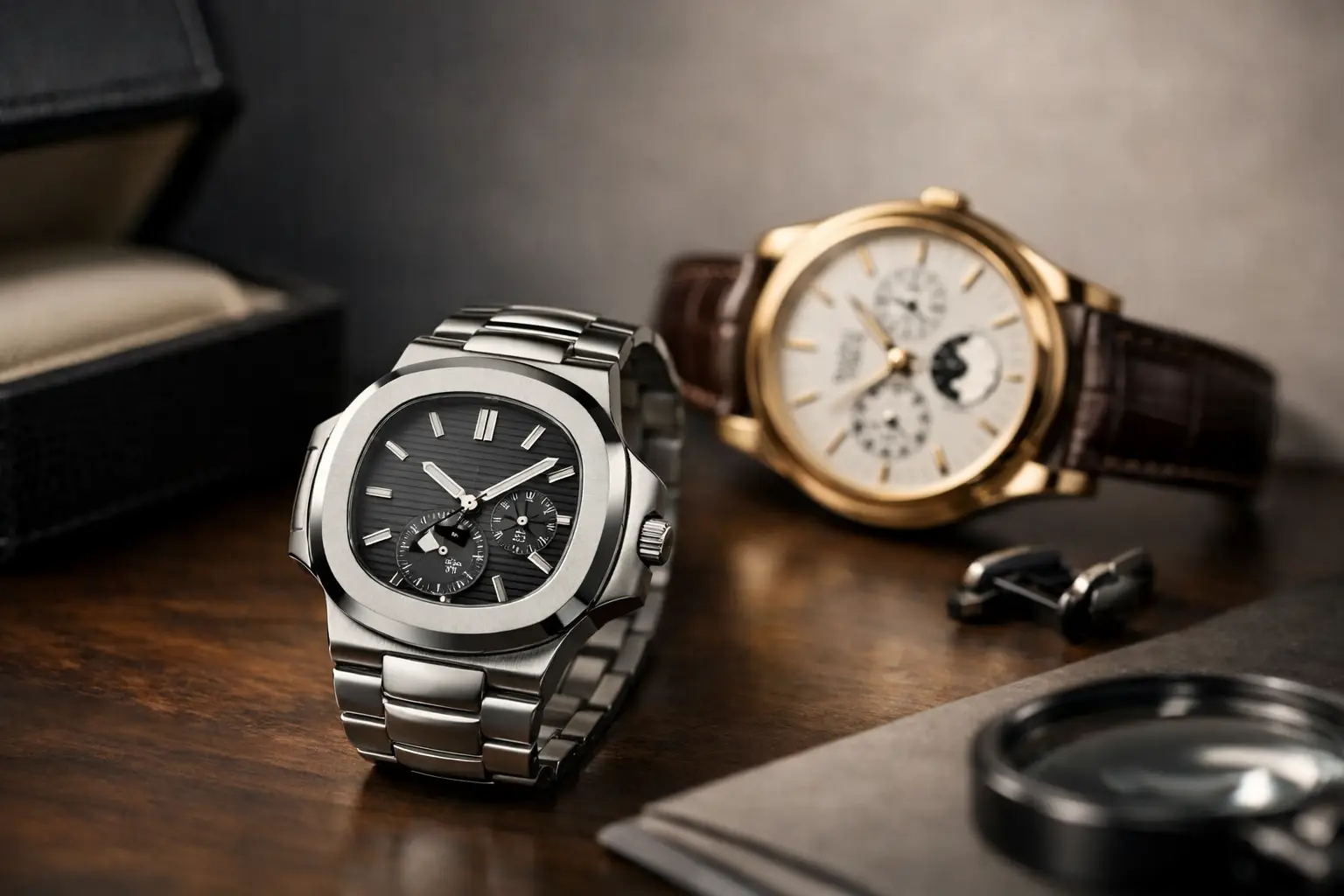
A Patek Philippe is rarely a casual purchase. Whether the reference is a discreet Calatrava, a complicated Annual Calendar, a sporty Aquanaut, or a perpetual-calendar masterpiece, the decision usually begins with a specific standard: the watch must be authentic, correctly represented, and worthy of long-term ownership. Patek Philippe watches carry exceptional historical and technical weight, but the details surrounding an individual example matter as much as the name on its dial.
For buyers in the pre-owned market, that means looking beyond a compelling photograph or a familiar reference number. Case condition, originality, service history, included accessories, and seller accountability can meaningfully affect both the ownership experience and the watch's collector appeal.
Why Patek Philippe Watches Command Such Careful Attention
Patek Philippe has spent generations building a reputation around traditional Swiss watchmaking, refined design, and mechanical complexity. Its most recognizable models are not necessarily loud. A Calatrava can appear almost severe in its simplicity, while a Nautilus pairs an unmistakable case shape with a level of finishing that becomes more apparent the longer it is examined.
This restraint is part of the appeal. The brand's watches are often designed around proportions, finishing, and movement architecture rather than overt display. A well-preserved Patek Philippe can feel as relevant in a boardroom as it does at a formal event or private collection viewing.
The collection also spans distinctly different ownership preferences. A dress-watch buyer may prioritize a slim manual-wind Calatrava or a vintage Golden Ellipse. Someone seeking a versatile steel sports watch may focus on a Nautilus or Aquanaut. Collectors drawn to horology itself may pursue chronographs, world-time models, perpetual calendars, or minute repeaters. These are not interchangeable choices. Each comes with its own wear profile, service considerations, and market of knowledgeable buyers.
Start With the Reference, Not the Hype
The right Patek Philippe is usually the one that fits how you intend to wear and keep it. That sounds obvious, but demand around certain models can distract from practical questions about size, material, complications, and condition.
A simple time-only reference offers fewer mechanical variables and often a more understated wearing experience. Complicated watches provide greater technical interest, but they may require more careful handling and more specialized service over time. A perpetual calendar, for example, is an extraordinary mechanical achievement, yet it is not the ideal choice for every owner who wants a watch to set quickly and wear without interruption.
Case dimensions deserve the same attention. Vintage Patek Philippe dress watches can wear substantially smaller than modern sports references. Their proportions may be exactly what a collector wants, but a first-time buyer should not assume a classic 33 mm to 36 mm case will feel like a contemporary watch. Whenever possible, compare dimensions with watches you already wear comfortably.
Material also changes the character of a reference. Yellow gold, rose gold, white gold, platinum, and stainless steel each create a different visual presence and may show wear differently. Steel sports models attract significant attention, while precious-metal dress watches may offer a quieter expression of Patek Philippe design. Neither is inherently the better choice. It depends on your taste, intended use, and the particular watch in front of you.
Condition Is More Than a Cosmetic Question
On a high-value watch, condition should be evaluated with discipline. Light signs of honest wear are different from excessive polishing, damaged dial surfaces, moisture exposure, or a case that has lost its original definition. A watch can be genuine and still be poorly preserved.
The case is a useful starting point. Sharp bevels, defined edges, properly shaped lugs, and balanced proportions can indicate that a watch has not been aggressively refinished. Conversely, softened lines or uneven surfaces may suggest heavy polishing. This does not automatically make a watch unsuitable, especially if it is intended to be worn, but it should be reflected in how the piece is represented and evaluated.
Dials and hands require equal care. Originality is particularly meaningful in vintage examples, where aging, patina, and small production variations can be part of the watch's identity. A dial with obvious damage, inconsistent printing, or a mismatched handset deserves further scrutiny. For modern references, examine the clarity of the dial, the condition of luminous material, and the alignment of applied markers and date displays.
Bracelets and clasps should not be overlooked. On a Nautilus or Aquanaut, the bracelet or strap system is central to the design and wearing experience. Check for excessive stretch in metal bracelets, correct clasp operation, and condition appropriate to the watch's age. Original Patek Philippe accessories are valuable to ownership confidence, but the watch itself should always be assessed on its own merits.
Provenance, Documentation, and What They Tell You
A complete set can be desirable, particularly for collectors. Depending on the era and reference, this may include the original certificate, presentation box, booklets, hang tags, service records, and other accompanying materials. These items can help establish continuity of ownership and support the watch's story.
However, paperwork is not a substitute for professional assessment. Documents can be separated from watches, incorrectly paired, or incomplete through no fault of a prior owner. A pre-owned Patek Philippe without its original box or papers is not automatically problematic. The more useful question is whether the watch has been evaluated for authenticity, reference correctness, and condition by a knowledgeable retailer.
Service history can be particularly relevant for mechanical watches. Documentation of prior service may help clarify maintenance, although the absence of records does not prove that a watch has been neglected. A seller should be direct about known service information, functional condition, and any work performed before sale.
Authentication Should Be Paired With Accountability
The pre-owned luxury market rewards informed buying, but it also requires safeguards. A high-resolution image cannot confirm what is inside a case, and an attractive listing does not replace a structured inspection process. Buyers should expect clear identification of the reference, transparent condition descriptions, and a retailer willing to stand behind the transaction.
Authentication is fundamental, but it is only one part of the purchase. The practical protections surrounding the sale matter just as much: secure payment handling, insured shipping, a realistic opportunity to inspect the watch after delivery, and warranty support if a covered mechanical issue arises.
Lume Wrist Watches offers in-house certified timepieces with free insured US shipping, a 30-day return window, and a two-year warranty. For a purchase of this level, those terms provide a defined process after the watch leaves the retailer, not simply a promise made before payment.
Match the Watch to Your Ownership Style
The best Patek Philippe for a collector who wears several watches in rotation may be different from the best choice for an executive seeking one highly versatile piece. A manual-wind dress watch can make ownership feel more intentional. A self-winding model may suit a more frequent wearing schedule. A complicated reference can be deeply rewarding for someone who enjoys its mechanism, but only if the owner is comfortable with its setting requirements and care needs.
Consider where the watch will spend most of its time. A thin gold Calatrava is not designed for the same environment as a steel Aquanaut. Water resistance, strap condition, clasp security, and the demands of travel all deserve consideration before a purchase. A watch does not need to be treated as fragile to be treated appropriately.
It is also wise to distinguish between collector importance and personal connection. Certain references are celebrated because of production history, movement significance, or design legacy. Those factors can matter. But a watch that fits your wrist, wardrobe, and habits is more likely to become a meaningful part of your collection than one selected only because it is widely discussed.
A Deliberate Purchase Is the Right Standard
Patek Philippe ownership is built around details that remain relevant long after the initial excitement: the integrity of the watch, the quality of its condition, and the confidence of knowing who has examined and sold it. Take the time to compare the specific example, ask direct questions about its history and functionality, and choose protections that match the significance of the purchase.
The right watch should leave you focused on wearing and appreciating it, not on unresolved questions about what you bought.