Luxury Dive Watches Ranked by Collector Significance
Published August 9, 2026 · Last updated October 21, 2026 · By Lume Wrist Watches
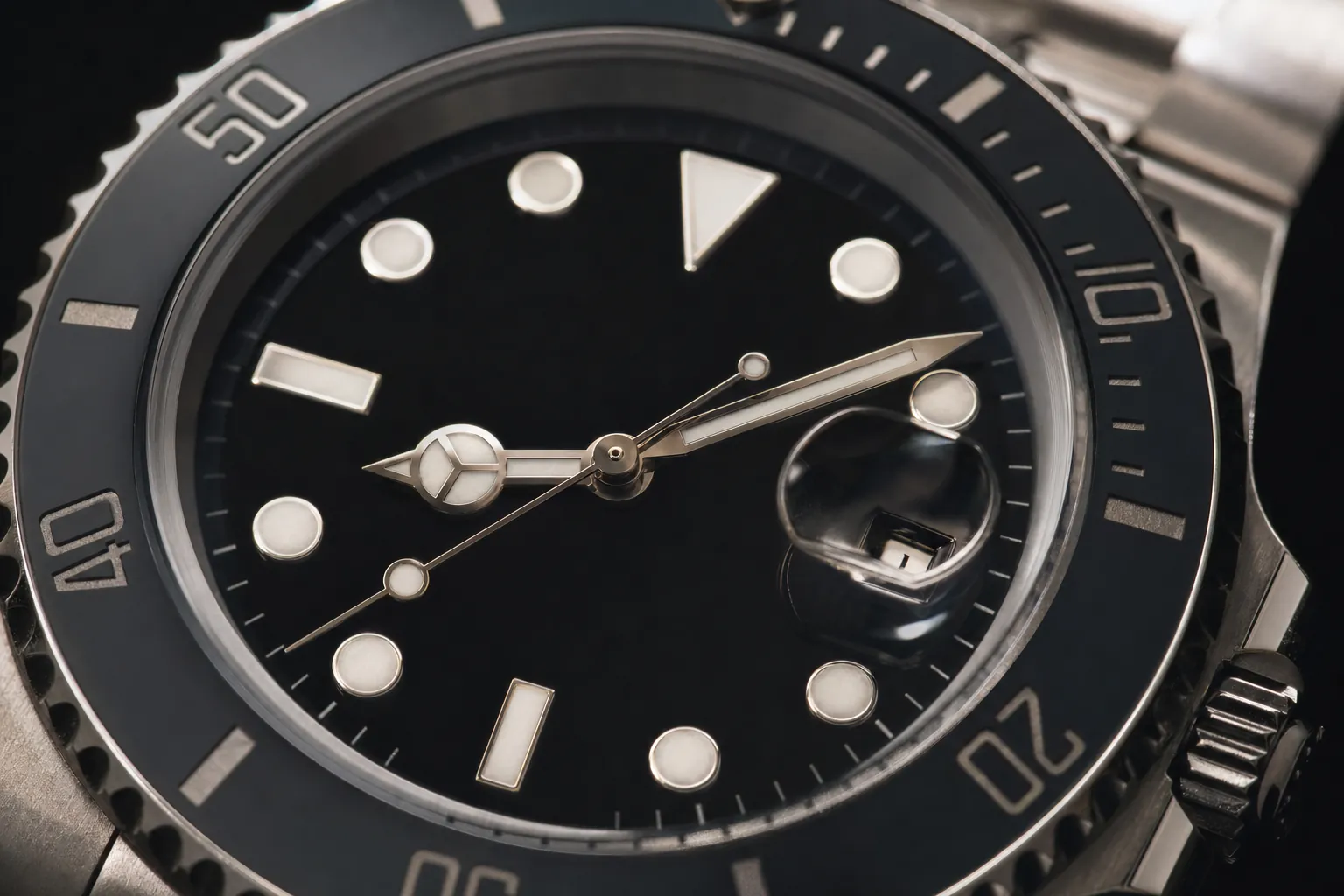
The development of underwater timekeeping represents one of the most mechanically demanding eras in twentieth-century horology. When military frogmen and commercial divers pushed beyond recreational depths, the wrist-worn timer became a primary instrument of survival rather than a decorative accessory. This luxury dive watches collectors guide examines the defining references that established the technical framework of the category, evaluating each model through historical precedence, functional design, and milestone manufacturing transitions.
Criteria for Ranking Historic Dive References
Evaluating the horological significance of a vintage dive reference requires looking beyond current popularity. A watch earns enduring importance when its architecture solves an existential engineering problem or establishes an industry standard that manufacturers still observe decades later.
Historical Primacy and Tactical Provenance
The most important dive references were built under the pressure of real-world necessity. Combat diver units, oceanographic researchers, and commercial deep-sea outfits presented strict specifications that commercial manufacturers had to meet. Watches that saw field testing and military adoption hold historical provenance that purely commercial launches cannot duplicate.
Technical Milestones and Reference Evolution
A reference gains status through its mechanical evolution. Collectors categorize references by specific engineering milestones: the integration of reliable O-ring gaskets, patented crown-locking mechanisms, unidirectional rotating bezels, and dial layouts optimized for low-light legibility. A watch's place in horological history corresponds directly to where it stands on the timeline of these functional breakthroughs.
| Model & Reference | Launch Year | Critical Horological Milestone |
|---|---|---|
| :--- | :--- | :--- |
| Blancpain Fifty Fathoms (Original) | 1953 | External rotating timing bezel, double O-ring crown system |
| Rolex Submariner Ref. 6204 | 1953/1954 | First dedicated Rolex diver, 100m depth rating without crown guards |
| Omega Seamaster 300 CK2913 | 1957 | Naiad pressure-sealing crown, high-contrast reverse-printed bezel |
| Rolex Submariner Ref. 5513 | 1962 | Standardized crown-guard case, foundational no-date proportions |
| Doxa Sub 300 | 1967 | US Navy no-decompression bezel scale, high-visibility orange dial |
Blancpain Fifty Fathoms: The Blueprint of 1953
The modern dive watch emerged from a technical collaboration initiated in the early 1950s. Jean-Jacques Fiechter, an avid diver and the chief executive of Blancpain, began developing an aquatic timepiece after experiencing an underwater disorientation event caused by losing track of his elapsed dive time. Concurrently, Captain Robert "Bob" Maloubier and Lieutenant Claude Rifaud of the French Navy's elite Nageurs de Combat (combat swimmers) were searching for a watch capable of surviving rigorous underwater tactical operations.
The French Combat Swimmer Specification
When French military suppliers failed to produce a watch capable of meeting Maloubier's standards, the naval officers presented their criteria directly to Blancpain. The requirements were exacting: a high-contrast dial visible in murky waters, an automatic movement to minimize wear on the winding stem seals, and an external mechanism to calculate dive durations.
Fiechter responded by engineering solutions that defined the archetype of the dive watch. Blancpain developed a double O-ring seal system on the crown stem, bypassing existing screw-down crown patents while maintaining complete water resistance. The watch featured a broad, lockable rotating bezel with clear minute increments, black dial treatment, and bold radium indexes. Delivered to the French military in 1953, the Fifty Fathoms derived its name from the traditional British maritime measurement of depth, with 50 fathoms equaling approximately 300 feet (91.45 meters)—the practical limit for compressed-air diving at the time.
Key Early References: The "Rotomatic" and "Mil-Spec 1"
Early civilian and military Fifty Fathoms models were driven by the automatic Caliber AS 1361N, housed in large 41mm cases that dwarfed typical watches of the 1950s. The earliest production dials featured simple typography and the "Rotomatic" designation. As global military interest expanded, the model diversified.
The "Mil-Spec 1" arrived in roughly 1957, characterized by a circular water-tightness indicator placed above the 6 o'clock marker. If water entered the case, the bi-color paper disc changed from white to pink, warning the operative of compromised seals. Subsequent military-adjacent variants included dials bearing the crossed-out radiation trefoil symbol ("No Radiations"), developed for civilian sale to verify the absence of hazardous radium lume after tritium became the industry standard.
Rolex Submariner: Evolution from Ref. 6204 to Ref. 5513
Rolex built on the legacy of its 1926 water-resistant Oyster case by entering the dedicated dive instrument arena. Guided by director René-Paul Jeanneret—a passionate diver and friend of Jacques-Yves Cousteau—Rolex tested prototype cases with deep-sea pioneer Auguste Piccard before unveiling its dedicated diver at the 1954 Basel Fair.
``` Ref. 6204 (1953/54) ──> Ref. 6538 "Big Crown" (1956) ──> Ref. 5512 (1959) ──> Ref. 5513 (1962) [Straight Case / Pencil Hands] [8mm Brevet Crown / Cal. 1030] [Crown Guards / COSC] [Standard Non-COSC Run] ```
The Monobloc Pre-Crown Guard Era (6204, 6538)
The initial reference, the 6204, debuted around late 1953 and hit the commercial market in 1954. Powered by the Caliber A260, early 6204s carried thin cases without crown guards and possessed small winding crowns. Dials ranged from glossy black gilt executions to honeycomb textures, frequently paired with thin pencil hands rather than the iconic Mercedes handset that followed shortly thereafter.
The lineage evolved through references 6205, 6200, and 6536, culminating in the historic Reference 6538, manufactured between 1956 and 1959. Known to historians as the definitive "Big Crown," the 6538 incorporated an oversized 8mm Brevet crown, a thicker case profile to endure deeper depths (rated to 200 meters), and the automatic Caliber 1030. Its clean, guard-free lines, red bezel triangle at the 60-minute marker, and gilt printing represent the pinnacle of early tool watch design. If you are comparing mid-century sports models, exploring our buying guide offers deep insights into verifying correct era components and reference changes.
Case Modernization and the 5513 Benchmark
In 1959, Rolex redesigned the Submariner architecture with Reference 5512. The watch introduced protective crown shoulders, expanded the case diameter to 40mm, and integrated a broader, serrated bezel. The crown guards evolved from initial "square" profiles to pointed profiles (often termed "eagle beak" or "cornino"), before settling into standard rounded contours.
Reference 5513 arrived in 1962 as the non-chronometer sibling to the 5512. Driven by Rolex Caliber 1530 and later Caliber 1520, the 5513 remained in production for roughly 27 years until 1989. Because it featured a clean, two-line dial unencumbered by official chronometer certification text, the 5513 became a benchmark for visual balance and functional restraint. Over its production run, the reference recorded the entire material evolution of Rolex dial manufacturing: moving from early gilt glossy surfaces with radium or zinc sulfide markers to matte dials with tritium, and finally to gloss dials with white gold surround markers in the mid-1980s.
Omega Seamaster 300: The CK2913 Military Legacy
Omega unveiled its professional tool watch collection in 1957 with a legendary triumvirate of releases: the Speedmaster (CK2915), the Railmaster (CK2914), and the Seamaster 300 (CK2913). While earlier Seamaster models were dress-oriented water-resistant timepieces, the CK2913 was an uncompromising technical response to underwater sports and maritime operations.
The 1957 Trilogy Architecture
The CK2913 relied on a 39mm stainless steel case featuring straight lugs and an external rotating bezel. Its bezel utilized an anodized aluminum insert or a reverse-printed Bakelite construction that displayed a count-down or count-up scale. Driven by Omega’s automatic Caliber 501, the watch displayed bold Arabic numerals at 3, 6, 9, and 12, complemented by luminous triangular hour markers and a "Broad Arrow" hour hand.
Rather than relying on a traditional screw-down crown, the initial CK2913 utilized Omega’s patented "Naiad" crown system. This mechanism operated on an internal spring design where external water pressure compressed the crown tighter against the case seals as the diver descended deeper. The system offered water resistance down to 200 meters (Omega designated it the "300" due to superior laboratory testing conditions under pressure).
Military Adaptation and the British MoD
The CK2913 moved through subsequent iterations—such as the CK14755 and ST 165.014—before Omega completely overhauled the architecture with the second-generation Reference ST 165.024 (no-date) and ST 166.024 (date) in the mid-1960s. These models introduced twisted, asymmetrical "lyre" lugs that extended outward to form protective barriers around the crown.
The British Ministry of Defence (MoD) identified the ST 165.024 as an ideal instrument for the Royal Navy. These military-spec versions featured fixed strap bars welded between the lugs, sword-shaped hour and minute hands for instantaneous reading, and a fully graduated 60-minute acrylic bezel insert. The MoD dials were stamped with an encircled "T" above the 6 o'clock position to designate the controlled use of tritium luminous paint, cementing the Seamaster 300's status in twentieth-century military horology.
Doxa Sub 300: High-Visibility Dial Innovations
By the mid-1960s, diving had transitioned from elite military assignments to an expanding civilian and scientific pursuit. Doxa, under the leadership of Urs Eschle, resolved to design a pure diver from the ground up, ignoring prevailing dress-watch aesthetics in favor of maximum legibility.
The 1967 Orange Dial Breakthrough
Introduced at the 1967 Basel Fair, the Doxa Sub 300 abandoned traditional black dials. Following tests conducted by Doxa engineers and professional divers in the murky waters of Lake Neuchâtel, the company concluded that an intense orange dial remained visible at depths where yellow, green, and black washed out into monochromatic gray.
The dial layout paired a minute hand that was radically enlarged into an oversized fluorescent arrow with a compact, minimal hour hand. Under saturation or decompression diving conditions, divers track elapsed minutes, making the hour hand secondary. Complementing the watch was an ergonomic, cushion-shaped tonneau case that distributed its mass flatly against the wrist, fitted to an expanding stainless steel "beads of rice" bracelet engineered to slide over thick neoprene wetsuit cuffs.
The US Navy No-Decompression Bezel
The signature innovation of the Doxa Sub 300 was its patented unidirectional dual-bezel ring. Doxa engraved two separate scales onto the stainless steel bezel: An inner black ring displaying elapsed dive time in minutes. An outer orange ring displaying maximum depths in feet or meters, calculated directly against the US Navy No-Decompression Tables.
This mechanical interface allowed a diver to align the bezel's zero marker with the minute hand upon submersion and immediately cross-reference their current depth with the maximum bottom time permitted before mandatory decompression stops were required. Jacques-Yves Cousteau’s company, U.S. Divers, was so impressed with the engineering that it signed an exclusive distribution agreement, co-branding the dial with the U.S. Divers "Aqua-Lung" logo.
Transitional References and Dial Nuances to Track
When collecting historically significant divers, tiny variations within transitional references mark the technical and material turning points of watch manufacturing. Collectors track these evolutionary shifts to establish production accuracy and historical integrity.
When you explore vintage inventory in our curated shop, understanding these production variations helps contextualize how a watch aged and whether its components correspond accurately to its reference number:
- Dial Finishes: The mid-1960s marked the industry-wide transition from galvanic "gilt" dials (where text and markings are revealed through positive relief in gold-colored brass under high-gloss lacquer) to screen-printed matte dials.
- Luminous Chemistry: Watches transitioned from hazardous radium to tritium during the early 1960s. Transitional dials often display small visual cues, such as the Rolex "exclamation point" (a small dot beneath the 6 o'clock marker) or "underline" dials (a small horizontal line indicating lower-radiation compounds). By the mid-1960s, standardized dial text read `T SWISS T` or `SWISS < T 25`.
- Insert Aging and Ghost Bezels: Original cellulose or chemically-treated aluminum bezel inserts degrade over decades of ultraviolet and saltwater exposure. Highly prized "ghost bezels" present faded, slate-gray or soft-blue coloring while maintaining sharp typography.
- Case Profiles and Chamfers: Factory-correct vintage cases feature prominent, distinct chamfers (bevels) running along the case edges. Heavy polishing over decades softens these lines; finding an unpolished example with sharp case bevels is an essential goal for historic watch preservation.
Frequently Asked Questions
### What makes early Blancpain Fifty Fathoms references so rare? Early Fifty Fathoms models were specialized military and professional tools manufactured in small quantities rather than mass-produced civilian products. Many saw rigorous use by armed forces, leading to high attrition rates, replaced parts, or complete loss during operational dives. Surviving examples with original Bakelite bezels, intact moisture indicators, and factory-correct movements are exceptionally uncommon today.
### Why is the Rolex Submariner Reference 5513 considered an essential vintage diver? The Reference 5513 represents the archetypal modern dive watch design, retaining the classic proportions, crown guards, and balanced two-line dial layout for nearly three decades. Its exceptionally long production run allows collectors to trace the evolution of Rolex dial and case manufacturing, from early 1960s gilt-gloss dials to late-1980s white-gold surround gloss dials. It captures the essential identity of the Submariner without the visual interruption of a date window and magnifying lens.
### How did the Omega Seamaster 300 CK2913 influence modern dive watch design? The CK2913 demonstrated that a purpose-built dive watch could merge uncompromising utilitarian performance with distinct, refined graphic design. Features such as the high-contrast triangular indices, broad arrow hands, and reverse-printed bezel became foundational aesthetic elements that Omega continues to revive today. Furthermore, its technical evolution directly led to the Royal Navy-issued specifications that established the standard for military-issued dive equipment.
### What role did the decompression table play on vintage Doxa bezels? The Doxa Sub 300's dual-scale bezel integrated the US Navy No-Decompression Tables directly onto the wrist, converting the watch into an analog dive computer. By setting the outer depth scale against their dive plan, divers could read their remaining safe bottom time on the inner minute ring without calculating formulas or carrying external plastic dive charts. This innovation streamlined bottom-time calculations during deep dives, reducing the risk of decompression sickness.