Luxury Dive Watches Ranked by Technical Engineering
Published August 12, 2026 · Last updated October 21, 2026 · By Lume Wrist Watches
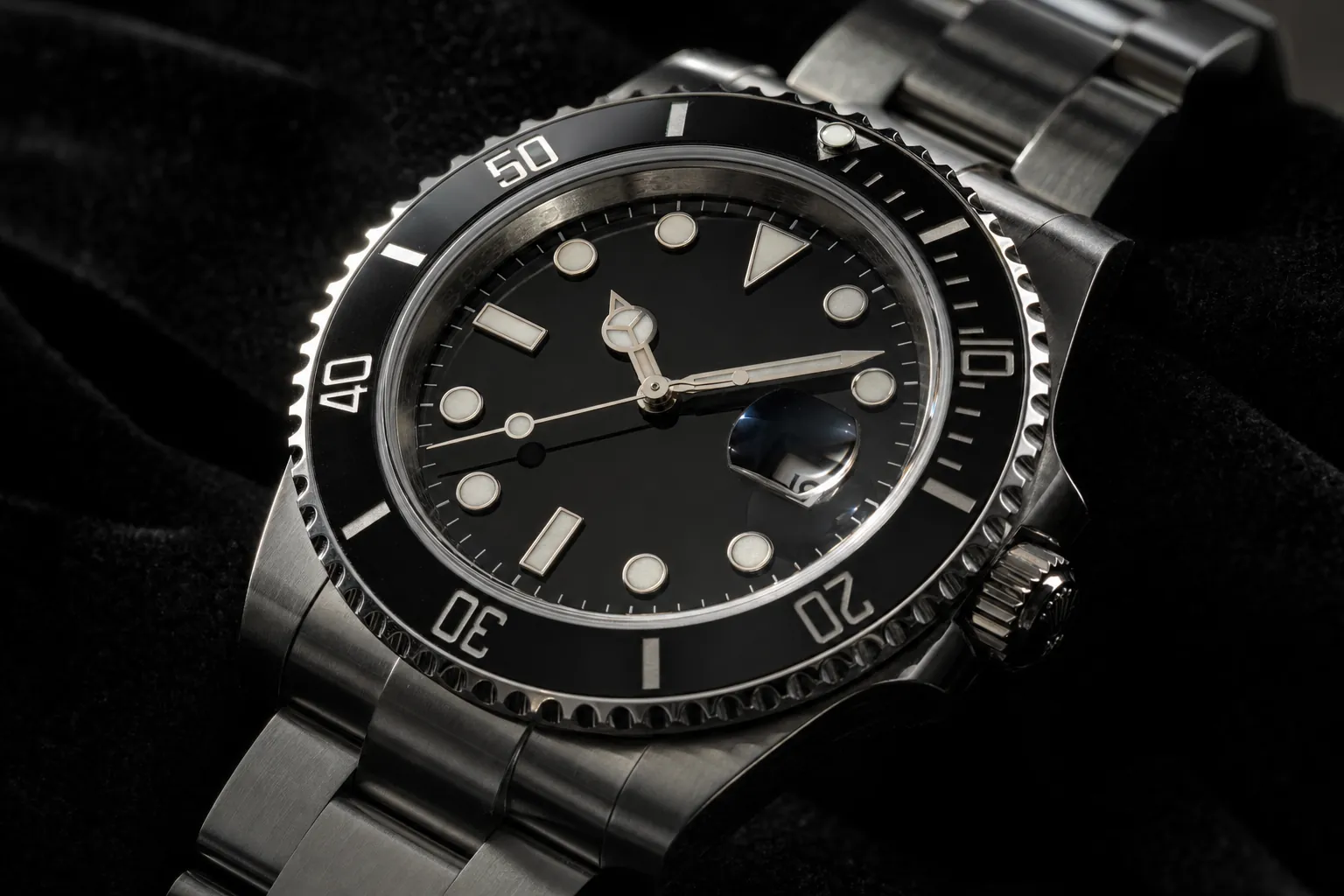
While the archetypal dive watch originated as an analog timing instrument for mid-century skin divers, modern extreme-depth horology has evolved into an uncompromising arena of hyperbaric physics and structural metallurgy. Engineering a timepiece to endure the crushing hydrostatics of the twilight and hadal zones requires solutions that surpass standard water resistance through novel load-bearing geometries, zero-defect sealing, and innovative alloys. This luxury dive watch engineering guide analyzes professional-grade tool watches ranked by structural integrity, bezel mechanics, and hyperbaric capabilities.
Benchmarking Criteria for Extreme Diver Architecture
Evaluating a professional dive watch requires looking beyond aesthetic cues or nominal depth stamps printed on a dial. Real-world structural integrity is determined by how an assembly redistributes extreme mechanical loads under hyperbaric pressure. As depth increases, hydrostatic pressure applies hundreds of pounds of force per square inch across the exterior surfaces of the case, crystal, and crown assembly.
Hydrostatic Load Distribution and Deflection
At substantial depths, conventional watch construction suffers from physical deflection. Standard flat sapphire crystals can bow inward under stress, potentially making contact with the hand stack or stressing perimeter gaskets until water breach occurs. Similarly, conventional threaded casebacks can flex, warping the flat rubber O-rings tasked with sealing the inner movement chamber.
Superior diver architecture resolves this by employing stress-deflecting geometries, such as semi-conical or domed sapphire crystals and tensioned structural rings. When evaluating timepieces through a technical lens or consulting a comprehensive buying guide, collectors must prioritize how a design channels external forces to reinforce—rather than compromise—its hermetic seal.
Metallurgical Yield Strength and Corrosion Resistance
Depth ratings also depend heavily on metallurgical boundaries. While marine-grade 316L stainless steel remains an industry standard, extreme environments demand superior yield strength to resist micro-deformation.
The introduction of high-nitrogen alloys, Grade 5 titanium (Ti-6Al-4V), and proprietary nickel-free steels provides the rigidity required to withstand extreme compressive loads. Concurrently, these alloys offer complete resistance to pitting and crevice corrosion in chloride-rich saltwater environments, ensuring that threaded interfaces maintain microscopic tolerances across decades of use.
Rolex Sea-Dweller Deepsea: Ringlock System Mastery
Introduced in 2008 with reference 116660 (and refined in references 126660 and 136660), the Rolex Sea-Dweller Deepsea stands as a monumental achievement in structural load redirection. Rated to an extraordinary depth of 3,900 meters (12,800 feet), the Deepsea was developed to withstand approximately 4.5 metric tons of pressure exerted on its exterior surface without requiring an impractically thick case profile.
``` External Hydrostatic Force │ ▼ ┌─────────────────────────────────────────┐ │ 5.5mm Domed Sapphire Crystal │ └─────────────────────────────────────────┘ │ (Compression load) ▼ ┌─────────────────────────────────────────┐ │ Nitrogen-Alloyed Steel Central Ring │ ◄── Main Load Receiver └─────────────────────────────────────────┘ │ (Compression load) ▼ ┌─────────────────────────────────────────┐ │ Grade 5 Titanium Caseback │ └─────────────────────────────────────────┘ ```
The Ringlock System Architecture
The core of the Deepsea's resilience is the patented Ringlock System. Rather than relying on the middle case to absorb the entire compressive force, Rolex implemented a three-piece modular chassis:
- Nitrogen-Alloyed Steel Compression Ring: A central, ultra-hard ring manufactured from BioDur 108 high-nitrogen alloy sits inside the case middle, encircling the caliber (Rolex Caliber 3135 in early references; Caliber 3235 in modern references). This component serves as the primary load-bearing spine of the watch.
- 5.5mm Synthetic Sapphire Crystal: A slightly domed, un-faceted sapphire crystal rests directly against the front lip of the compression ring, bypassing traditional weak points in case wall threading.
- Grade 5 Titanium Caseback: A flexible, high-strength titanium disc sits against the rear lip of the compression ring, held in place by an independent threaded 904L steel (Oystersteel) outer clamping ring.
Dynamic Pressure Utilization
The mechanical genius of the Ringlock System lies in its utilization of ambient pressure. As hydrostatic load mounts, the massive synthetic sapphire crystal is driven backward into the nitrogen-alloyed central ring, while the Grade 5 titanium caseback is forced inward against the opposite side.
Because Grade 5 titanium possesses a lower modulus of elasticity than steel, the caseback flexes imperceptibly against the internal seals. The greater the external water pressure, the more tightly the components are compressed together, turning environmental stress into an active structural ally.
Omega Seamaster Planet Ocean Ultra Deep: O-Megasteel
In 2019, Omega made horological history when the experimental Seamaster Planet Ocean Ultra Deep reached the bottom of the Mariana Trench at 10,928 meters. In 2022, Omega adapted this record-breaking hadal architecture for civil production, releasing the Planet Ocean Ultra Deep, depth-tested to an astounding 6,000 meters (20,000 feet) and certified in hyperbaric chambers up to 7,500 meters in accordance with ISO 6425 standards.
Metallurgical Breakthrough: O-Megasteel
To maintain a wearable 45.5mm by 18.1mm footprint without resorting solely to titanium, Omega developed O-Megasteel, a proprietary high-performance stainless steel alloy. This material represents a significant advancement over standard austenitic steels:
- Yield Strength: O-Megasteel achieves a yield strength of 560 MPa—roughly double that of conventional 316L steel—allowing the case walls to resist inward deformation under hadal loads.
- Hardness: With a Vickers rating of approximately 300 HV, it delivers 40% greater hardness than standard steel, offering superior resistance to physical shearing and scratching.
- Corrosion Resistance: The formulation offers an exceptional Resistance Equivalent Number (PREN), completely neutralizing saltwater crevice corrosion.
Load-Bearing Crystal and Gasket Elimination
The Ultra Deep operates without a helium escape valve. Omega accomplished this by eliminating the traditional flat crystal gasket in favor of an assembly inspired by deep-sea submersible viewports.
The semi-conical sapphire crystal is engineered with calculated edge tapers that fit into a precision-milled seat within the main O-Megasteel case. A specialized sealing gasket provides initial low-pressure resistance, but under high hyperbaric loads, the crystal directly beds down into the conical metallic seat.
This design evenly diffuses physical loads across the case perimeter while preventing helium atoms from penetrating the seal during saturation diving. Powered by the Master Chronometer Caliber 8912, the Ultra Deep operates with zero risk of crystal displacement during post-dive depressurization.
IWC Ocean 2000: Titanium Pioneer by Porsche Design
Long before computational stress modeling, International Watch Company (IWC) set the template for modern technical diving with the Ocean 2000 (Reference 3500). Commissioned in the late 1970s and launched commercially in 1982, the Ocean 2000 was designed by Ferdinand Alexander Porsche following a procurement tender from the West German Federal Armed Forces (Bundeswehr) for their combat divers (Kampfschwimmer).
Early Mastery of Grade 2 Titanium
The Ocean 2000 was among the earliest wristwatches built entirely from titanium. At the time, milling and threading titanium to microscopic tolerances presented immense metallurgical hurdles due to the metal's tendency to gall and seize under friction.
IWC developed proprietary inert-gas machining techniques to mill the Reference 3500 case. The watch achieved a certified operational depth of 2,000 meters (200 atmospheres) while maintaining an impossibly slim case profile of just 10.5mm. This unmatched thickness-to-depth ratio remains one of the finest feats of industrial design in horological history.
Structural Efficiency and Bezel Integration
Rather than deploying oversized bulk to resist pressure, Porsche Design prioritized structural minimalism. The case featured an organic, domed geometry devoid of sharp corners, preventing point-source stress accumulation.
The Ocean 2000 dispensed with a conventional spring-clip external bezel. Instead, it utilized a spring-loaded, push-to-turn unidirectional bezel system.
Divers had to physically depress the bezel downward against internal leaf springs to disengage its locking pins and rotate it, completely preventing accidental underwater rotation. Coupled with an ETA 2892 base movement refined into the IWC Caliber 37521, the Ocean 2000 proved that hyperbaric strength could be achieved through pure geometric elegance.
Seiko Prospex Marinemaster: Monobloc Case Defense
Japanese engineering took an entirely different path toward hyperbaric defense, originating in 1975 with the reference 6159-022 "Grandfather Tuna" and crystallizing into modern luxury tool watch manufacturing with the Marinemaster Professional 300M (Reference SBDX001 and its update, the SBDX017).
The Monobloc Architecture
The structural foundation of the Marinemaster line is the monobloc (one-piece) case. Unlike conventional watches featuring a separate screw-down caseback, the Marinemaster case is milled from a single, solid billet of stainless steel.
- Elimination of the Rear Joint: Because the entire rear and mid-case form an unbroken bowl of steel, there is no caseback gasket to dry out, misalign, or deform under extreme depth.
- Front-Loading Movement Assembly: The mechanical movement (Seiko's high-grade Caliber 8L35, derived from the Grand Seiko 9S55 architecture) is installed entirely through the front of the case before the dial, chapter ring, and crystal are locked down.
L-Shaped Gasket Technology
Seiko completely circumvented the need for a mechanical helium escape valve by targeting atomic diffusion. During deep saturation diving, helium molecules easily slip past traditional flat or round elastomer gaskets under prolonged pressure.
``` Front-Loading Retaining Ring │ ▼ ┌─────────────────────────────────────────┐ │ Dual-Curved Hardlex / Sapphire │ └─────────────────────────────────────────┘ ▲ │ (Direct Compression) ┌─────────────────────────────────────────┐ │ L-Shaped Elastomer Gasket │ ◄── Clamped on Two Axes └─────────────────────────────────────────┘ │ ▼ ┌─────────────────────────────────────────┐ │ Solid Monobloc Case (No Caseback) │ ◄── Single Steel Billet └─────────────────────────────────────────┘ ```
Seiko engineered an L-shaped elastomer gasket positioned along the upper shoulder of the case and held under intense mechanical tension by a threaded retaining ring. When compressed, this L-shaped profile seals on two distinct axes simultaneously.
The combination of the monobloc chassis and this proprietary gasket interface yields a case that is virtually impermeable to helium entry, ensuring structural integrity in commercial saturation environments without an additional case aperture.
Evaluating Helium Release Valves and Bezel Precision
Case integrity is only part of the hyperbaric equation; professional diving also demands precision exterior controls and internal pressure equilibrium.
| :--- | :--- | :--- | :--- | :--- |
|---|---|---|---|---|
| Rolex Sea-Dweller Deepsea | Ringlock 3-Piece Assembly | 3,900m / 12,800ft | Automatic Spring-Loaded Valve | Nitrogen-Alloyed Steel / Titanium |
| Omega Planet Ocean Ultra Deep | Semi-Conical Gasketless Crystal | 6,000m / 20,000ft | Impermeable Construction (No Valve) | O-Megasteel (560 MPa Yield) |
| IWC Ocean 2000 | Domed Monolithic Geometry | 2,000m / 6,600ft | Precision Tolerance Gaskets | Early Military Grade 2 Titanium |
| Seiko Marinemaster 300 | Front-Loading Monobloc Case | 300m / 1,000ft | L-Shaped Gasket Barrier | Monolithic Machined Steel Billet |
Helium Escape Valve Mechanics
During saturation diving, divers breathe a heliox mix inside pressurized habitats. Because helium atoms are exceptionally tiny, they gradually migrate past case seals over days or weeks of exposure. During decompression, if the ambient chamber pressure drops faster than trapped gas can diffuse outward, the resulting internal pressure will force the crystal out of its setting.
Rolex addressed this in 1967 with the spring-loaded Helium Escape Valve (HEV), developed in partnership with French deep-sea diving company COMEX. The modern iteration on the Deepsea features a Grade 5 titanium piston inside an airtight sleeve.
When the pressure differential inside the watch exceeds approximately 3 to 5 bar above ambient chamber pressure, the spring compresses, pushing the piston outward and venting the gas safely before resealing automatically.
Omega, on the other hand, alternates between manual screw-down HEVs on the Planet Ocean 600M and zero-valve saturation seals on the Ultra Deep, highlighting two distinct mechanical philosophies. Serious collectors exploring the pre-owned market can find both variations across the curated models available in our online watch shop.
Detent Precision and Bezel Kinematics
The rotating bezel remains a diver's primary analog lifeline for elapsed-time monitoring. Under marine conditions, bezels are subjected to corrosive saltwater, silt, sand, and impacts.
Modern high-tier dive watches utilize advanced detent mechanisms to ensure consistent tactile feedback. Rather than relying on simple stamped-metal tension springs, modern Rolex Submariner and Sea-Dweller references incorporate multiple spring-loaded ball bearings set into the case perimeter, engaging precision teeth on the underside of a ceramic (Cerachrom) bezel ring.
This design distributes rotational friction across smooth spherical contact points, eliminating play and drastically reducing mechanical wear over decades of operation.
---
Frequently Asked Questions
### How does the Rolex Ringlock System handle extreme hydrostatic pressure? The Rolex Ringlock System uses a high-strength central ring made from nitrogen-alloyed BioDur 108 steel to shoulder the crushing load. As water pressure mounts, it forces the extra-thick front sapphire crystal and the Grade 5 titanium caseback directly against this central structural ring. This inward compression forces the hermetic seals tighter against the chassis, leveraging ambient depth pressure to actively reinforce the watch's seal.
### What is the engineering advantage of a monobloc dive watch case? A monobloc dive watch case is milled from a single, continuous billet of metal, eliminating the traditional separate caseback and threaded interface entirely. By removing the caseback, engineers eradicate the largest structural aperture and its associated elastomer gasket, which are common failure points under extreme shear or compressive forces. This seamless design minimizes internal entry points for moisture and significantly reduces the chance of helium penetration during deep commercial saturation dives.
### Do recreational divers actually need a helium escape valve? No, recreational divers do not need a helium escape valve because their dive profiles do not involve saturation chambers or helium-enriched breathing gases. Helium release valves only function during the decompression phase inside a dry hyperbaric habitat following multi-day saturation dives, where small helium atoms have penetrated the case seals. In standard open-circuit scuba diving using atmospheric air or enriched nitrox, divers breathe conventional gas mixes that cannot cause internal watch pressurization.
### How does the ISO 6425 standard define a true professional diver? The ISO 6425 international standard mandates that a watch undergo individual hyperbaric testing to at least 125% of its rated depth, along with rigorous evaluations for thermal shock, condensation, magnetic field resistance, and strap tensile strength. It also dictates that the timepiece must feature a unidirectional elapsed-time bezel with minute markings, clear luminous legibility at a distance of 25 centimeters in total darkness, and an operational running indicator—typically a luminous seconds hand—to confirm functionality underwater.