Omega Constellation Watches: A Modern Buyer's Guide 2026
Published October 19, 2026 · Last updated October 20, 2026 · By Lume Wrist Watches Editorial Team
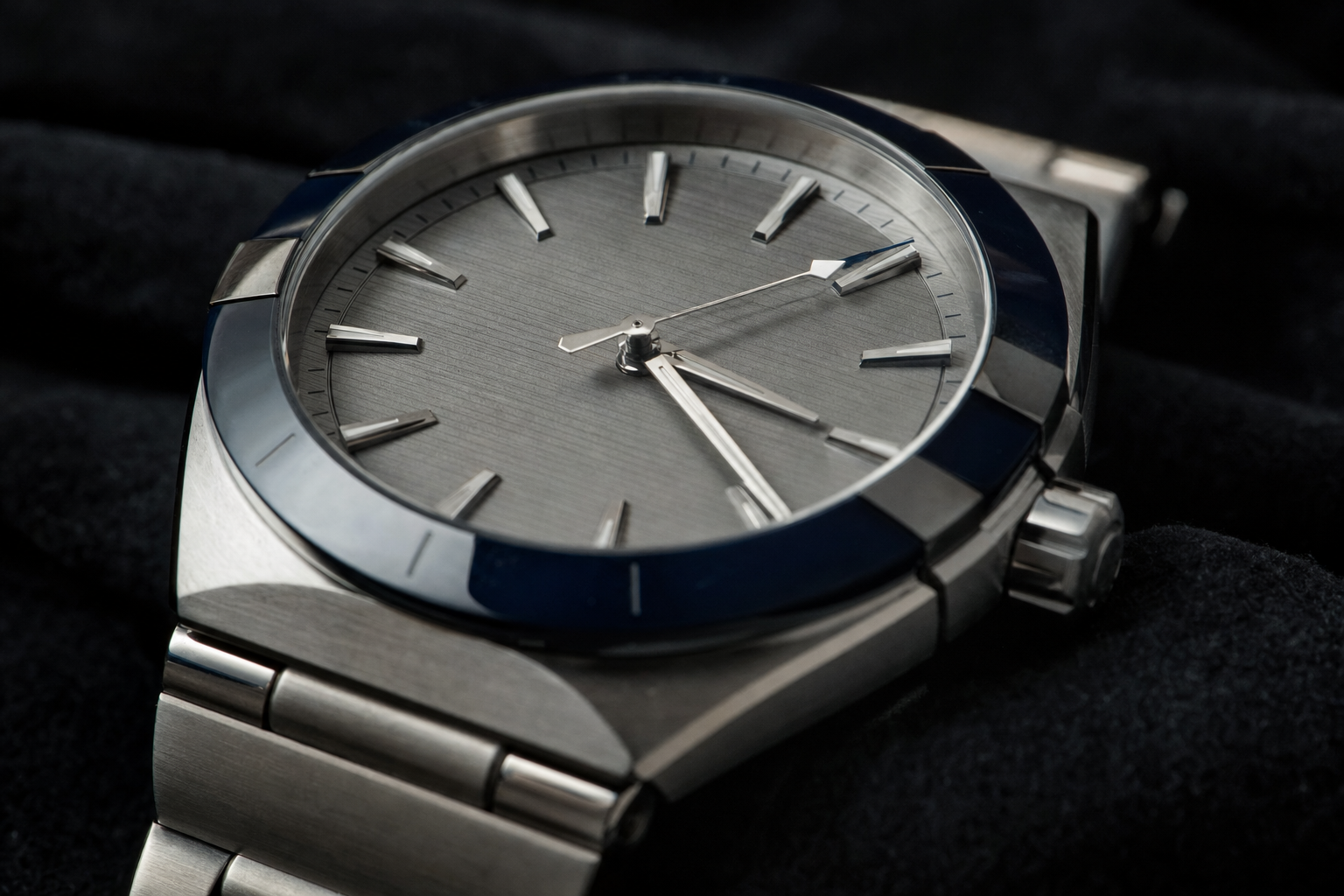
The Omega Constellation stands as a distinguished emblem of precision, elegance, and groundbreaking horological design, offering a compelling choice for discerning collectors and first-time luxury watch buyers alike. This comprehensive guide delves into the nuances of this iconic collection, providing a detailed overview of its history, modern iterations, and what to consider when acquiring an Omega Constellation in 2026.
Why this maison matters
Omega, as a maison, holds an indelible position in horological history, synonymous with precision, innovation, and iconic achievements, from lunar expeditions to Olympic timekeeping. The Constellation collection, in particular, represents Omega's dedication to certified chronometric excellence and sophisticated design. It carved a unique niche as Omega's flagship dress watch line, characterized by its distinctive "claws" or griffes and elegant integrated bracelet design. For those who appreciate refined aesthetics combined with robust, technically advanced movements, the Constellation offers a compelling blend of artistry and engineering. It is for the individual seeking a versatile luxury timepiece that transitions effortlessly from formal events to daily wear, offering a subtler statement than its sportier siblings, the Omega Speedmaster and Omega Seamaster.
Brand history and defining milestones with dates
The Omega Constellation's legacy traces back to a golden era of chronometry, establishing itself as a benchmark for accuracy and design innovation.
- 1952: The first Omega Constellation is introduced, initially named the "Globemaster" for the American market. It was conceived as Omega's high-precision, chronometer-certified flagship, recognizable by its pie-pan dial and observatory medallion on the caseback, symbolizing Omega's chronometry records.
- 1960s: The Constellation evolves with increasingly refined and sometimes avant-garde designs, including C-shape cases by Gérald Genta.
- 1982: The collection undergoes a revolutionary redesign, introducing the now-iconic Constellation "Manhattan" series. This radical departure featured four griffes or "claws" clamping the sapphire crystal to the case, an integrated bracelet, and often a visible bezel with Roman numerals. This design revitalized the line, becoming its most recognizable aesthetic.
- 1995: The Constellation '95 series refines the Manhattan design, often featuring a distinct "double eagle" motif on some models and continuing the tradition of the integrated bracelet and claws.
- 2003: Introduction of the Constellation Double Eagle, showcasing Omega's new Co-Axial escapement technology within the collection, marking a significant technological upgrade.
- 2009: A comprehensive update to the Constellation collection, subtly refining the classic Manhattan design with updated movements, enhanced dials, and improved bracelet construction. This era introduced models with Omega's modern Co-Axial calibers.
- 2015: Reintroduction of the Globemaster sub-collection, paying homage to the original Constellation's chronometric roots and pie-pan dials, and featuring the groundbreaking Master Chronometer certification – a standard far exceeding COSC.
- 2020-2022: Significant redesigns for the Constellation ladies' and men's models (29mm, 36mm, 41mm), enhancing aesthetics, improving ergonomics, and introducing new materials and dial finishes, all powered by Master Chronometer movements.
Every current collection explained, with signature references
The modern Omega Constellation family is diverse, catering to various tastes while maintaining its core identity. It primarily comprises the classic Constellation (available in multiple sizes and materials) and the historically inspired Globemaster.
Constellation Collection (Modern)
The contemporary Constellation line is characterized by its distinctive griffes, integrated bracelet, and usually Roman numerals on the bezel. It comes in a wide array of sizes and materials, often featuring diamond-set bezels or hour markers.
- Constellation Co-Axial Master Chronometer 41mm: This is the most masculine and robust interpretation, often with ceramic bezels. References like the 396.10.41.50.06.001 (stainless steel with grey dial and blue ceramic bezel) exemplify its bold yet refined presence. These models often feature powerful Master Chronometer movements visible through a sapphire caseback.
- Constellation Co-Axial Master Chronometer 39mm: A versatile size, ideal for many wrists. Look for references such as 131.33.39.20.06.001 (stainless steel with grey dial on a leather strap) or 131.20.39.20.02.001 (steel and Sedna™ gold with silver dial). These models strike a perfect balance between presence and classic elegance.
- Constellation Co-Axial Master Chronometer 36mm: A popular unisex size, offering a slightly more understated presence than the 39mm/41mm. Examples include 131.20.36.20.52.001 (steel and Sedna™ gold with diamond-set dial) or 131.10.36.20.03.001 (steel with blue dial).
- Constellation Quartz/Automatic 29mm: Predominantly a ladies' watch, available in a vast array of precious metals, bi-color options, and often with diamond accents. References like the 131.25.29.20.55.001 (Omega Omega Constellation Two-Tone Blue Dial with Diamond Bezel) or the full Sedna™ gold 131.55.29.20.55.001 with diamond bezel showcase its opulent side. Many 29mm models use the automatic Co-Axial Master Chronometer Calibre 8700/8701, while some entry-level models are quartz.
- Constellation Quartz 28mm & 25mm: Smaller, elegant quartz-powered options, exclusively for ladies, offering convenience and classic Constellation aesthetics. These are ideal for those seeking a sophisticated everyday timepiece without the need for winding.
Globemaster Collection
The Globemaster, launched in 2015, revives the historical aesthetic of the original Constellation models, featuring a pie-pan dial and fluted bezel, along with a medallion on the caseback. Crucially, it was the first watch line to receive the industry's highest certification – Master Chronometer – established by METAS.
- Globemaster Co-Axial Master Chronometer 39mm: The quintessential Globemaster, available in steel, Sedna™ gold, or platinum, often with sun-brushed blue, grey, or silver pie-pan dials. Reference 130.33.39.21.03.001 (stainless steel with blue dial) is a prime example of its understated sophistication and technical prowess.
- Globemaster Annual Calendar 41mm: A more complicated version, displaying the month through an additional hand on the dial. Reference 130.33.41.22.06.001 (steel with grey dial) showcases a higher level of horological complication in a classic package.
Movements and in-house calibers used across the range
Omega's commitment to precision and innovation is perhaps best exemplified by its movements. The Constellation collection leverages some of Omega's most advanced in-house calibers.
- Co-Axial Escapement: Invented by George Daniels and industrialized by Omega, the Co-Axial escapement significantly reduces friction in the movement, leading to greater stability, accuracy, and longer service intervals. All modern automatic Constellation movements feature this technology.
- Master Chronometer Certification: This rigorous certification, established by METAS (the Swiss Federal Institute of Metrology) and Omega, tests watches not just for precision (like COSC) but also for magnetic resistance up to 15,000 gauss, water resistance, and power reserve, among other parameters. All current automatic Constellation models, including the Globemaster, carry this superior certification.
Key Automatic Calibers:
- Calibre 8900/8901 (Globemaster/Constellation 39mm, 41mm): Self-winding Co-Axial Master Chronometer movement, anti-magnetic to 15,000 gauss, featuring a free sprung-balance with silicon balance spring. Power reserve of approximately 60 hours. Calibre 8901 is the luxury version with an 18K Sedna™ gold rotor and balance bridge.
- Calibre 8800/8801 (Constellation 36mm): Similar to the 8900 but without the jumping hour hand. Self-winding Co-Axial Master Chronometer, anti-magnetic, 55-hour power reserve. Calibre 8801 features an 18K Sedna™ gold rotor and balance bridge.
- Calibre 8700/8701 (Constellation 29mm): The smaller variant for the 29mm models, still a Co-Axial Master Chronometer with anti-magnetic properties and a 50-hour power reserve. Calibre 8701 again denotes the luxury finish with Sedna™ gold components.
Key Quartz Calibers:
- Calibre 4061 (Constellation 28mm, 25mm): A high-precision quartz movement designed for smaller ladies' models, offering reliability and convenience without the daily winding or setting of an automatic.
Price tiers today: entry, core and grail, with realistic ranges
The Omega Constellation offers a wide range of price points, reflecting its diverse materials, complications, and sizes. Prices are approximate and subject to market fluctuations, especially for pre-owned pieces.
| Tier | Description | Approximate Price Range (New USD) | Approximate Price Range (Pre-Owned USD) |
|---|---|---|---|
| :------------ | :---------------------------------------------------------------------------------------------------------------------------------------------------------------------------------------------------------------------------------------------------- | :-------------------------------- | :------------------------------------ |
| Entry-Level | Constellation Quartz 25mm/28mm: Stainless steel, often with simple dials, non-diamond set. These provide access to the Constellation aesthetic at the most accessible price point. | $3,000 - $6,000 | $1,500 - $3,500 |
| Core Collection | Constellation 29mm/36mm/39mm: Stainless steel or bi-color (steel/gold), automatic Co-Axial Master Chronometer movements. May include subtle diamond accents or more intricate dial finishes. This is where most modern Constellation sales occur. | $6,000 - $12,000 | $3,500 - $8,000 |
| Premium/Grail | Constellation 41mm/Globemaster: Full gold (Sedna™ Gold, Yellow Gold), platinum, diamond-set bezels or pavé dials, complications like Annual Calendar. These represent the pinnacle of the collection in terms of materials and horological complexity. | $12,000 - $40,000+ | $8,000 - $25,000+ |
| Vintage | Pre-Manhattan "Pie-Pan" Constellations (1950s-1970s): Prices vary wildly based on condition, originality, and movement. Significant potential for appreciation in rare examples. | N/A | $2,000 - $15,000+ |
It's important to note that the pre-owned market for Omega Constellation watches, especially newer Master Chronometer models, generally offers better value compared to buying new. Vintage models require careful assessment, as discussed in our guide on How to Assess Omega Watches for Sale Before Buying.
What to check before buying pre-owned from this maison
Acquiring a pre-owned Omega Constellation, particularly a vintage model, requires diligence to ensure authenticity and value. For a broader perspective, consult our general guide on Vintage Omega: Your Essential Pre-Purchase Checklist & Buying Guide.
- Authenticity: The primary concern. Check for original Omega markings on the dial, movement, caseback (observatory medallion for vintage, transparent caseback for modern automatics), crown, and bracelet clasp. Counterfeits exist, especially for popular models. Our inspection process process ensures peace of mind.
- Movement Condition: For mechanical models, ask for service history. A well-maintained Co-Axial Master Chronometer will perform excellently. For vintage pieces, check for original parts, signs of rust, or amateur repairs. A movement shot is crucial. The original caliber number (e.g., Calibre 561 for vintage, 8900 for modern) should match.
- Case and Dial Condition: Scrutinize the case for excessive polishing, which can alter the original lines, especially the distinctive griffes of the Manhattan models. Check the dial for moisture damage, re-luming, or re-finishing, which significantly impacts value. For vintage pie-pan dials, minor patina is acceptable, but heavy staining or flaking is not.
- Bracelet and Clasp: The integrated bracelet is a hallmark of the Constellation. Ensure all links are present and that there isn't excessive stretch. Verify the clasp operates correctly and has the correct Omega logo. Replacement bracelets can be very costly.
- Papers and Box: While not essential for authenticity on their own, original box and papers (especially Master Chronometer cards) add significant value and provide evidence of origin and service history. They confirm the reference number and serial number.
- Water Resistance: Unless recently serviced and pressure tested, assume an older pre-owned watch is not water-resistant, especially for vintage models. It's advisable to have it tested post-purchase if you intend to expose it to water.
Always purchase from reputable dealers like Lume Wrist Watches who provide a guarantee of authenticity and a transparent return policy. For high-value purchases, consider our concierge sourcing service to find specific references.
Current authenticated stock at Lume Wrist Watches (link products)
Lume Wrist Watches proudly offers a curated selection of authenticated Omega timepieces. Our inventory changes frequently, but here are some examples of the exceptional Omega watches that pass through our hands:
- For a distinctive two-tone option with diamond elegance, explore the Omega Omega Constellation Two-Tone Blue Dial with Diamond Bezel. This 29mm reference embodies the Constellation's refined luxury.
- While not a Constellation, we often feature other exceptional Omega lines, such as the robust Omega Omega Seamaster Diver 300M 210.92.44.20.01.001 Black Ceramic, demonstrating Omega's diverse offerings.
- For those interested in the brand's iconic chronographs, the Omega Omega Speedmaster Dark Side of the Moon 311.92.44.51.01.003 Black Ceramic showcases another facet of Omega's innovation.
- We also carry the elegant Omega Omega Seamaster Aqua Terra Shades 220.10.38.20.13.003 Terracotta Steel, a versatile option for everyday wear.
Explore our complete Omega collection for more options, or browse our authenticated collection across all featured maisons. We can also assist with finding specific models through our concierge sourcing service.
Frequently Asked Questions
Is the Omega Constellation a good investment?
While most watches are not primary investments, the Omega Constellation holds its value reasonably well, especially well-maintained Master Chronometer models or rare vintage "pie-pan" references. Its enduring design and horological significance contribute to its sustained appeal in the secondary market, particularly when bought shrewdly from a reputable dealer.
What does "Master Chronometer" mean for an Omega Constellation?
"Master Chronometer" is Omega's highest certification, surpassing COSC standards. It signifies that the watch (and its movement) has passed eight rigorous tests set by METAS, demonstrating exceptional precision, resistance to magnetic fields up to 15,000 gauss, water resistance, and power reserve.
Can I wear an Omega Constellation every day?
Absolutely. Modern Omega Constellation watches are designed for daily wear, boasting robust Master Chronometer movements and durable construction. Their elegant yet resilient design, often with water resistance suitable for everyday exposure, makes them a perfect daily companion for the discerning owner.
What's the difference between the Constellation and the Globemaster?
The Constellation refers to the broader collection, most famously recognized by its "claws" or griffes and integrated bracelet. The Globemaster is a distinct sub-collection within the Constellation family, drawing inspiration from the original 1952 Constellation with its pie-pan dial and fluted bezel, and was the first to feature Master Chronometer certification.
How often should an Omega Constellation be serviced?
Omega recommends servicing its Co-Axial Master Chronometer movements approximately every 5-8 years. The Co-Axial escapement's reduced friction extends service intervals compared to traditional escapements, contributing to the watch's longevity and reliable performance.
Are older Omega Constellation models still accurate?
Older Omega Constellation models, especially the vintage chronometer-certified pieces from the 1950s and 60s, were highly accurate for their time. If properly serviced and regulated by a skilled watchmaker, many can still keep excellent time, though perhaps not to the same exacting standards as a modern Master Chronometer.
Contact Lume Wrist Watches
For personalized assistance, inquiries about specific Constellation models, or to arrange a private viewing, please reach out to our expert team:
- Email: sales@lumewrist.com
- Phone: +1 (332) 285-2190
- Office (by appointment only): 18 East 48th Street, Suite 1503, New York, NY 10017
- Hours: Mon–Fri 9:00 AM – 7:00 PM EST · Closed Saturday & Sunday
You can also visit our contact page or browse our entire shop online.
Final Thoughts
The Omega Constellation stands as a testament to Omega's enduring legacy of precision, elegance, and innovation. From its chronometric roots to the distinctive "Manhattan" design and the technological prowess of its Master Chronometer movements, it offers a sophisticated choice for any collector. Whether you're drawn to the classic allure of a Globemaster or the modern elegance of a diamond-set Constellation, this collection promises a timepiece of remarkable quality and heritage. Explore our collection today and find the Omega Constellation that resonates with your style and values, available for purchase from our authenticated collection with confidence. We offer luxury watches delivered to all 50 states, including popular markets for luxury watches in New York and luxury watches in California.