Omega Seamaster Diver 300M Guide to Sizes, Dials, and Calibers
Published October 7, 2026 · Last updated October 14, 2026 · By Lume Wrist Watches Editorial Team
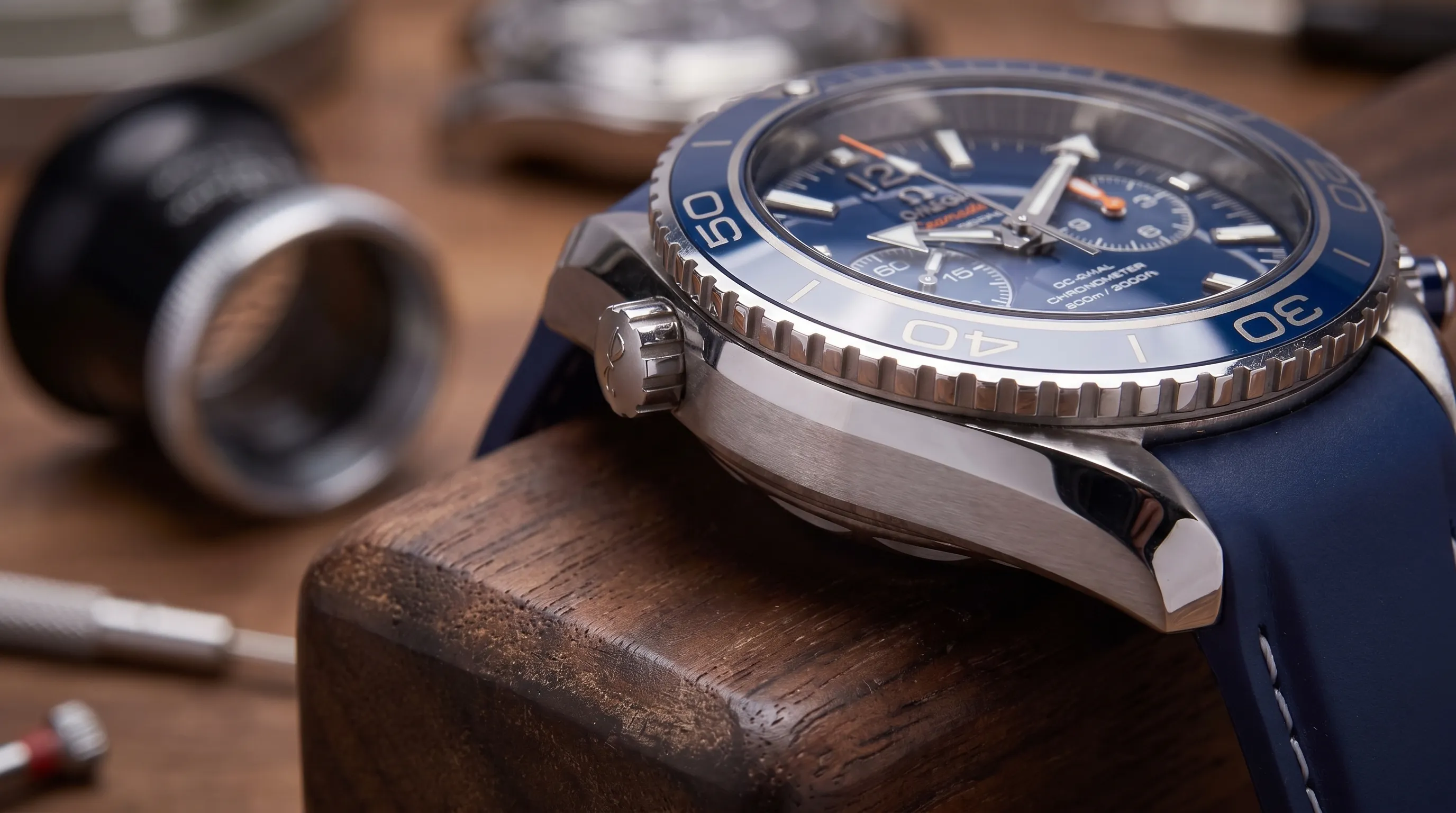
Choose the Omega Seamaster Diver 300M by reference number first: older 36.25mm and 41mm models differ substantially from later 42mm versions in fit, dial construction and movement. The main decisions are case size, date versus no-date, ceramic versus aluminum components and the level of movement certification you want.
A blue dial alone does not identify the watch. Two blue Seamasters can look similar in photographs yet have different escapements, bezel materials and maintenance requirements. This guide focuses on those reference-level differences rather than treating the entire collection as one specification.
Omega Seamaster Diver 300M references at a glance
The following references illustrate the main configurations buyers encounter. This is a representative selection, not a complete catalog of special editions, chronographs or recent releases. Case diameters exclude the crown.
| ----------- | --------------- | ---------------- | --------- | -------------------- |
|---|---|---|---|---|
| 2551.80 | 36.25mm (1.43 in) | Blue wave dial, aluminum bezel insert | 1120 automatic | Midsize automatic |
| 2531.80 | 41mm (1.61 in) | Blue wave dial, aluminum bezel insert | 1120 automatic | Earlier full-size automatic |
| 2541.80 | 41mm (1.61 in) | Blue wave dial, aluminum bezel insert | 1538 quartz | Battery-powered alternative |
| 2220.80 | 41mm (1.61 in) | Blue wave dial, aluminum bezel insert | 2500 automatic | Earlier Co-Axial generation |
| 212.30.41.20.03.001 | 41mm (1.61 in) | Smooth blue dial, ceramic bezel insert | 2500 automatic | Pre-2018 ceramic-bezel generation |
| 210.30.42.20.03.001 | 42mm (1.65 in) | Blue ceramic wave dial, ceramic bezel insert | 8800 automatic | Date-equipped Master Chronometer |
| 210.90.42.20.01.001 | 42mm (1.65 in) | Brown aluminum dial and bezel insert | 8806 automatic | Titanium No Time to Die edition on mesh bracelet |
The long modern references identify a particular configuration. A different strap or bracelet can mean a different reference even when the watch head looks similar.
Confirm the number against the watch and its documentation. A listing described only as “Seamaster Professional” leaves too much unresolved for a reference-specific purchase.
Choosing the right case size
An Omega Seamaster Diver 300M should fit according to its full case footprint, not diameter alone. Lug-to-lug length, thickness, weight and the way the bracelet leaves the case all affect how it sits.
36.25mm: compact without changing the basic design
The 2551.80 retains the recognizable wave dial, skeletonized hands and scalloped bezel in a smaller case. It is worth considering if full-size dive watches overhang your wrist or compete with shirt cuffs.
Do not dismiss it solely because older listings call it “midsize.” On a narrower wrist, it can have better proportions than a larger reference. Check bracelet length before buying, especially when original spare links are missing.
41mm versus 42mm: more than a millimeter
The earlier 41mm models and later 42mm models are not simply the same watch scaled up. The case construction, dial layout and bracelet execution changed between generations.
The standard steel 42mm caliber 8800 model is approximately 13.6mm thick (0.54 in). That matters under a fitted cuff. A wrist circumference of 6.5 inches (165mm) does not guarantee either a good or poor fit because wrist shape varies.
Ask for a straight-on wrist photograph and a side profile. If trying the watch in person, check whether the lugs remain within the flat upper surface of your wrist and whether the clasp sits comfortably underneath.
Reading the dial and bezel correctly
Earlier wave dials and smooth ceramic-era dials
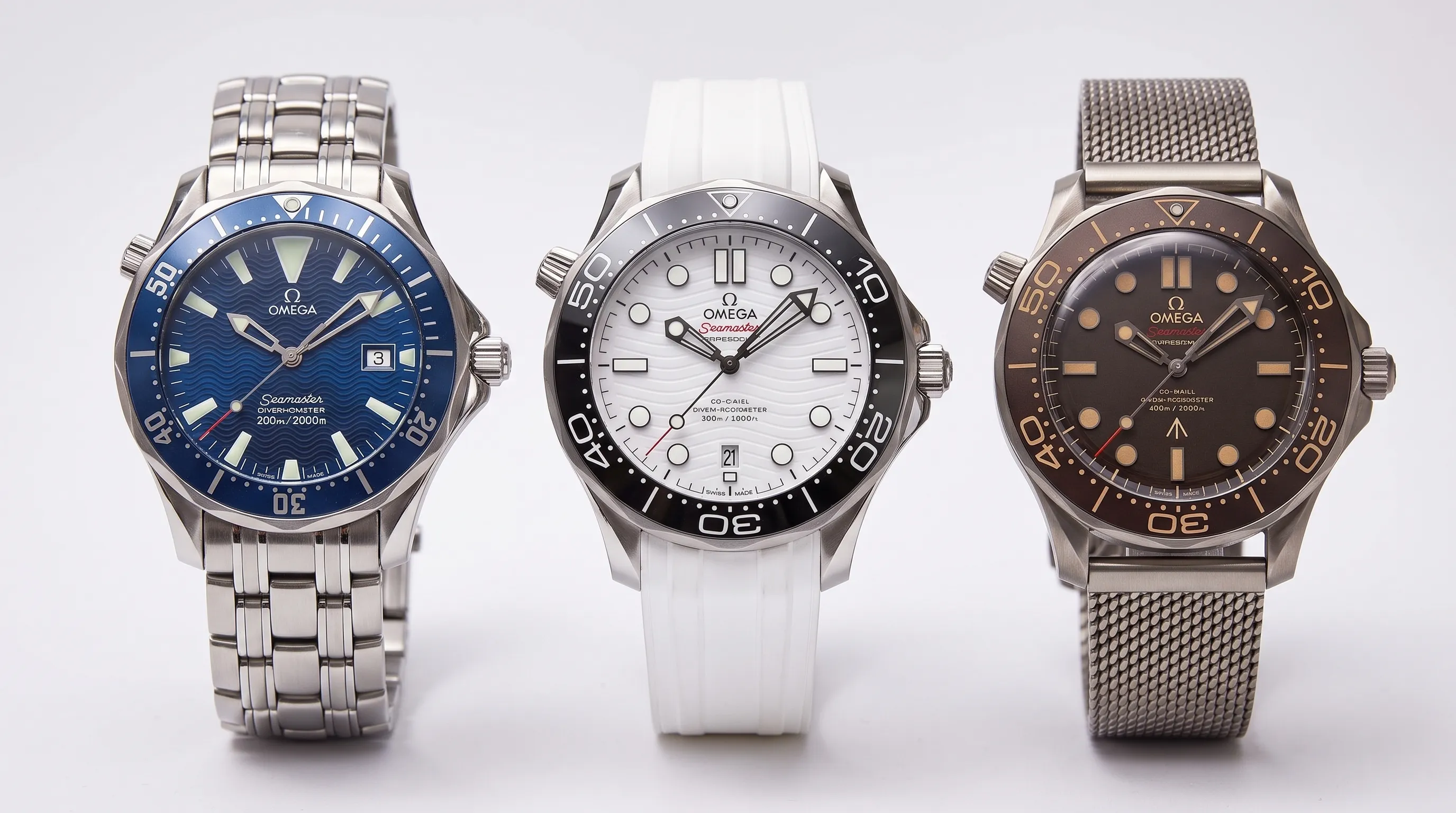
References such as the 2531.80 and 2220.80 have blue wave-pattern dials and aluminum bezel inserts. The later 212.30.41.20.03.001 combines a smooth blue dial with a ceramic bezel insert.
That smooth dial is correct for the reference. It is not evidence that the original wave dial has been replaced. Conversely, a seller should not describe every glossy blue dial as ceramic merely because the bezel is ceramic.
Aluminum can show scratches, fading and edge wear. Ceramic resists many everyday scratches but can chip or fracture from impact. Neither material makes condition inspection unnecessary.
Modern ceramic waves and deliberate exceptions
The 2018-generation date models brought back the wave motif on ceramic dials. Reference 210.30.42.20.03.001 has a blue dial, while 210.30.42.20.04.001 combines a white ceramic dial with a black bezel. These models place the date at six o’clock.
The No Time to Die edition is different. Its brown aluminum dial and bezel, titanium construction and vintage-colored luminous material are intentional design choices. That coloring should not be presented as naturally aged patina.
Not every later no-date model uses those same materials. Within the Omega Seamaster Diver 300M collection, confirm dial material, bezel material and date layout separately rather than assuming they follow the case size.
Calibers: what changes in daily ownership
The movement determines how the watch is powered, which functions it has and what certification applies. The word “automatic” alone does not explain these differences.
| --------- | --------------- | ------------------------- | ---------------------------- |
|---|---|---|---|
| 1538 | Quartz | Battery-powered | Requires battery replacement rather than winding |
| 1120 | Automatic, conventional lever escapement | About 44 hours | Earlier chronometer movement with date |
| 2500 | Automatic, Co-Axial escapement | About 48 hours | Co-Axial, but not Master Chronometer certified |
| 8800 | Automatic, Co-Axial escapement | About 55 hours | Master Chronometer with date |
| 8806 | Automatic, Co-Axial escapement | About 55 hours | Master Chronometer without date |
Calibers 1120 and 2500
Caliber 1120 is a conventional automatic movement found in earlier references. Caliber 2500 introduced Omega’s Co-Axial escapement to this part of the collection.
There are revisions within the 2500 family. If a particular revision matters to you, request documented movement identification rather than relying on dial photographs or an estimated production year.
Neither movement should be dismissed because it predates the newer calibers. For a pre-owned example, documented service and measured performance are more useful than assuming a movement is healthy because it runs.
Calibers 8800 and 8806
These movements carry Master Chronometer certification. Omega describes that certification as testing the complete watch for performance that includes precision, magnetic resistance, power reserve and water resistance. Its Master Chronometer explanation distinguishes this process from movement-only chronometer testing.
Omega publishes a 55-hour power reserve and resistance to magnetic fields reaching 15,000 gauss for the standard caliber 8800 model. The manufacturer’s 42mm blue-dial specifications provide a useful reference point.
For an Omega Seamaster Diver 300M buyer, 8800 versus 8806 is primarily a date-function decision. Certification is not a substitute for checking the present condition of a used watch, nor does it establish the authenticity of an individual listing.
Keep adjacent dive-watch families separate
A Seamaster name does not necessarily identify a Diver 300M. The Planet Ocean is a separate family, with different case proportions and movement configurations.
The Omega Seamaster Planet Ocean 600M Chrono (232.92.46.51.03.001) is relevant if you want a chronograph as well as a dive watch. Its elapsed-time displays and additional controls make it a different proposition from a three-hand Diver 300M. Compare the exact dimensions and wrist fit rather than choosing between them on depth rating alone.
For a simpler no-date comparison, the Black Dial Rolex Submariner Ref 114060 Stainless Steel has a 40mm (1.57 in) case and caliber 3130. It offers a useful contrast to the Seamaster’s skeletonized hands, scalloped bezel and separate helium escape valve.
Choosing between that Submariner and an Omega Seamaster Diver 300M should begin with fit, legibility and your preferred controls. Brand recognition does not answer those questions.
Condition, documentation and price comparisons
Compare asking prices only after matching reference, condition, accessories and service documentation. A broad price range can hide differences between a watch-only example and a complete set, or between an extensively polished case and one with sharper original contours.
“Excellent” is a condition description, not a statement that every component is original or that the case has never been polished. Request photographs of the actual watch, including the lugs, bezel, clasp and caseback.
For older references, ask whether the dial, hands, bezel insert or bracelet have been replaced. Correct service parts can be appropriate for daily use, but collectors may distinguish them from parts fitted when the watch was produced.
Box and papers help document the watch’s history. They do not authenticate it by themselves. Service records should identify the work performed, and a buyer planning to swim should request confirmation of a recent pressure test. The original 300-meter rating is not proof that decades-old seals remain effective.
Once your reference choice is settled, the Omega Seamaster Diver 300M buying guide provides a broader purchase checklist.
Lume Wrist Watches is an independent retailer, not an authorized Omega or Rolex dealer. Its pre-owned inventory is listed in Excellent condition, certified authentic by Watch CSA and serviced before shipping. That authentication is separate from Omega’s factory movement certification.
Frequently asked questions
Is the 36.25mm Seamaster suitable for men? Yes. Case size is a fit preference, not a technical limitation. Reference 2551.80 is worth considering for a narrower wrist or anyone who prefers compact proportions.
Does every blue Seamaster have a wave dial? No. Reference 212.30.41.20.03.001 has a smooth blue dial. Earlier wave-dial references and later ceramic wave-dial models belong to different generations.
Is caliber 2500 a Master Chronometer? No. It uses a Co-Axial escapement, but that does not make it Master Chronometer certified. Calibers 8800 and 8806 carry that certification.
Can I swim with a pre-owned Omega Seamaster Diver 300M? Only after its present water resistance has been verified. Ask about pressure testing and seal condition, ensure the crown is secured and do not operate the crown or helium valve underwater.
Compare the exact watch before deciding
Use Lume’s authenticated pre-owned watch selection to compare available references and request photographs, bracelet measurements and service details for the individual watch.
Lume provides free insured shipping within the United States, a 30-day return guarantee and two-year warranty coverage. International shipping is available on request and quote. Confirm the applicable return and warranty terms before purchasing, especially if the watch is a gift or intended for regular swimming.
## Part of the series This article belongs to our complete guide: Omega Watches: Complete 2026 Buying Guide.\n