Omega De Ville Guide to Classic Dress Watch Models
Published October 14, 2026 · Last updated October 14, 2026 · By Lume Wrist Watches Editorial Team
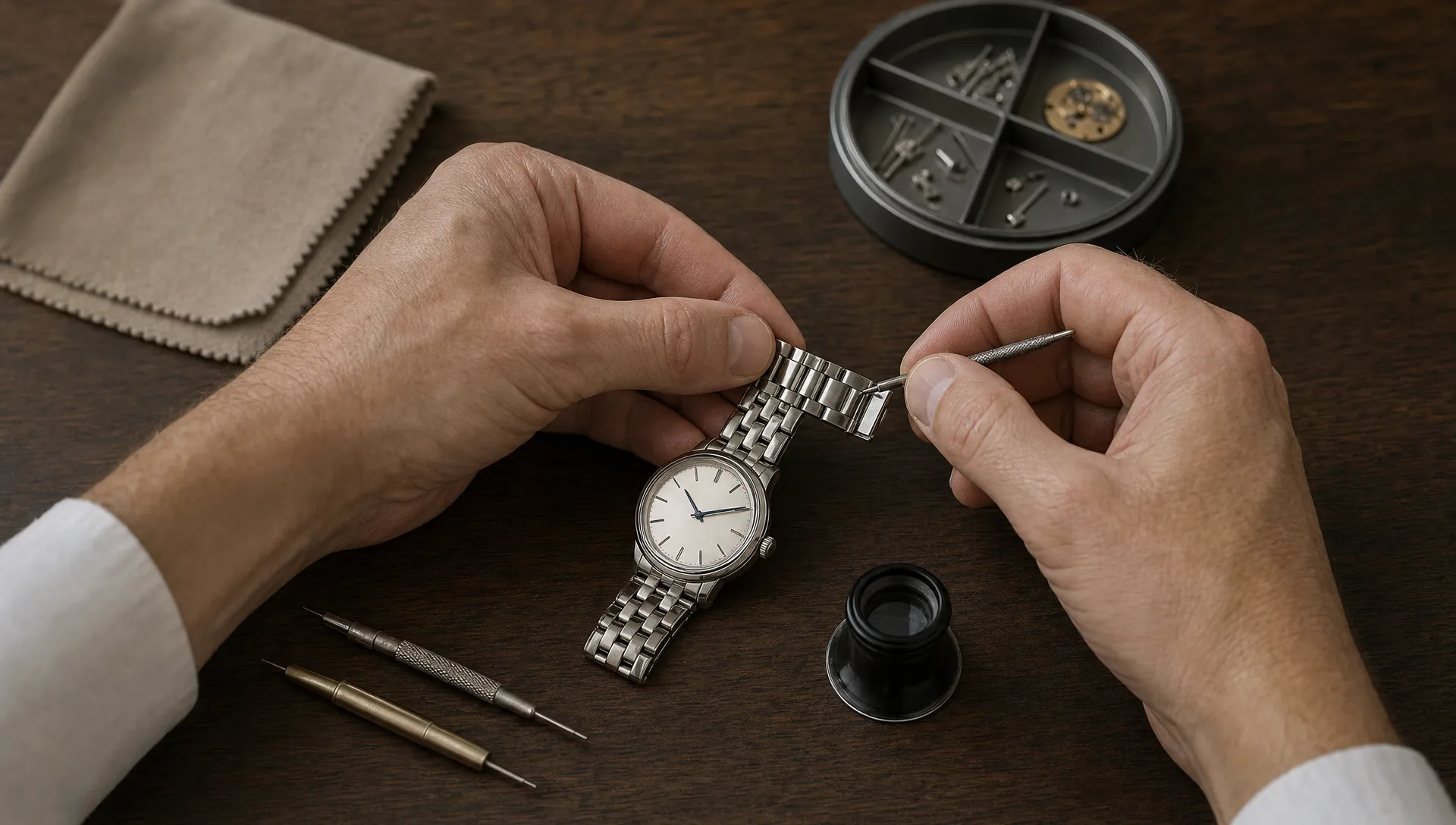
The Omega De Ville is the dress-oriented side of Omega’s catalog, spanning compact quartz watches, traditional automatic models and refined hand-wound designs. Start with the Prestige for a conventional dress watch, then consider the Trésor, Hour Vision or Ladymatic according to your preferred proportions and movement.
The collection name alone does not establish size, specification or value. Two watches with similar dials can have different movements, case materials and maintenance requirements. The useful comparison starts with the full reference number and the individual watch’s condition.
Which Omega De Ville family suits you?
These four families provide a practical starting point. They are not interchangeable, and specifications change across generations. OMEGA’s official De Ville collection is the manufacturer reference for comparing current designs with older examples.
| --- | --- | --- | --- |
|---|---|---|---|
| Prestige | Traditional round case, restrained dials and multiple bracelet or strap options | Quartz and automatic references exist | A versatile first dress watch |
| Trésor | Slim-looking profiles, with restrained mechanical designs and more decorative quartz versions | Modern examples include manual-winding and quartz movements | Buyers prioritizing a particular silhouette or dial treatment |
| Hour Vision | More substantial case architecture and distinctive case-side construction | Automatic mechanical movements | Someone who prefers a larger, more technical-looking dress watch |
| Ladymatic | Sculpted case and bracelet styling, often with decorative dials | Automatic mechanical movements | A jewelry-oriented watch with a mechanical caliber |
The Prestige is the most straightforward place to compare understated designs. A simple dial on leather can suit formal clothing, while a bracelet makes the same basic concept less occasion-specific.
Trésor requires closer attention to the reference. A hand-wound mechanical example and a decorative quartz version offer different ownership experiences, despite sharing a family name.
For an Omega De Ville worn mainly to the office, prioritize legibility, cuff clearance and comfortable proportions over a more elaborate dial.
Read the reference before choosing the movement
A full reference identifies a specific configuration far more reliably than a seller’s shorthand title. Keep it alongside the stated caliber, case diameter, dial description and bracelet or strap information.
Do not assume that every Prestige is automatic or every Trésor is hand-wound. Retail descriptions can also contain errors. If the title, specification table and photographs disagree, resolve the discrepancy before payment.
Quartz, automatic and manual winding
Quartz makes sense when convenience matters most. It does not need daily winding, but it still requires battery replacement, seal checks and eventual servicing.
Automatic movements wind through wrist motion and may also allow hand winding. Older Prestige references can use Omega’s caliber 2500. Later mechanical references may carry Master Chronometer certification, but that designation should be verified for the exact watch.
Manual-winding movements require winding through the crown. Some buyers enjoy that routine; others find it inconvenient for a watch worn only occasionally.
Co-Axial describes an escapement design. Master Chronometer refers to a testing and certification framework involving METAS. Neither term means that servicing is unnecessary, and neither should be applied to the entire collection.
When comparing an Omega De Ville, ask for the actual caliber rather than accepting “Swiss automatic” as a complete movement description.
Choose proportions for your wrist and shirt cuff
Diameter is only one measurement. Lug-to-lug length determines how far the case extends across the wrist, while thickness affects whether it passes comfortably beneath a cuff.
A dress watch also has relatively little visual interruption around the dial. A narrow bezel and pale dial can make it appear larger than its diameter suggests. Conversely, a darker dial may look more restrained.
Do not dismiss a compact reference because a listing labels it “men’s” or “women’s.” Those categories are less useful than actual fit. A smaller watch can be an intentional choice rather than a compromise.
For a 7-inch wrist, approximately 178mm, ask for a straight-on wrist photograph on someone with a similar circumference. Perspective matters: a close phone photograph can exaggerate the apparent size.
Bracelet fit deserves equal attention. Confirm the supplied links and current wearable length. For a strap, ask about its length and whether the buckle or clasp is included. These details are particularly useful when buying a gift.
The right Omega De Ville should sit securely without its lugs extending beyond the flat upper surface of your wrist. Try it with the shirt you expect to wear most often.
Three Prestige references to compare
The following catalog examples show why reference-level comparisons matter. Prices are the supplied listings’ bank-wire prices, not market averages or promises of future availability. Confirm the live price and specifications before purchasing.
| Prestige reference | Case diameter | Dial | Listed bank-wire price |
|---|---|---|---|
| --- | --- | --- | --- |
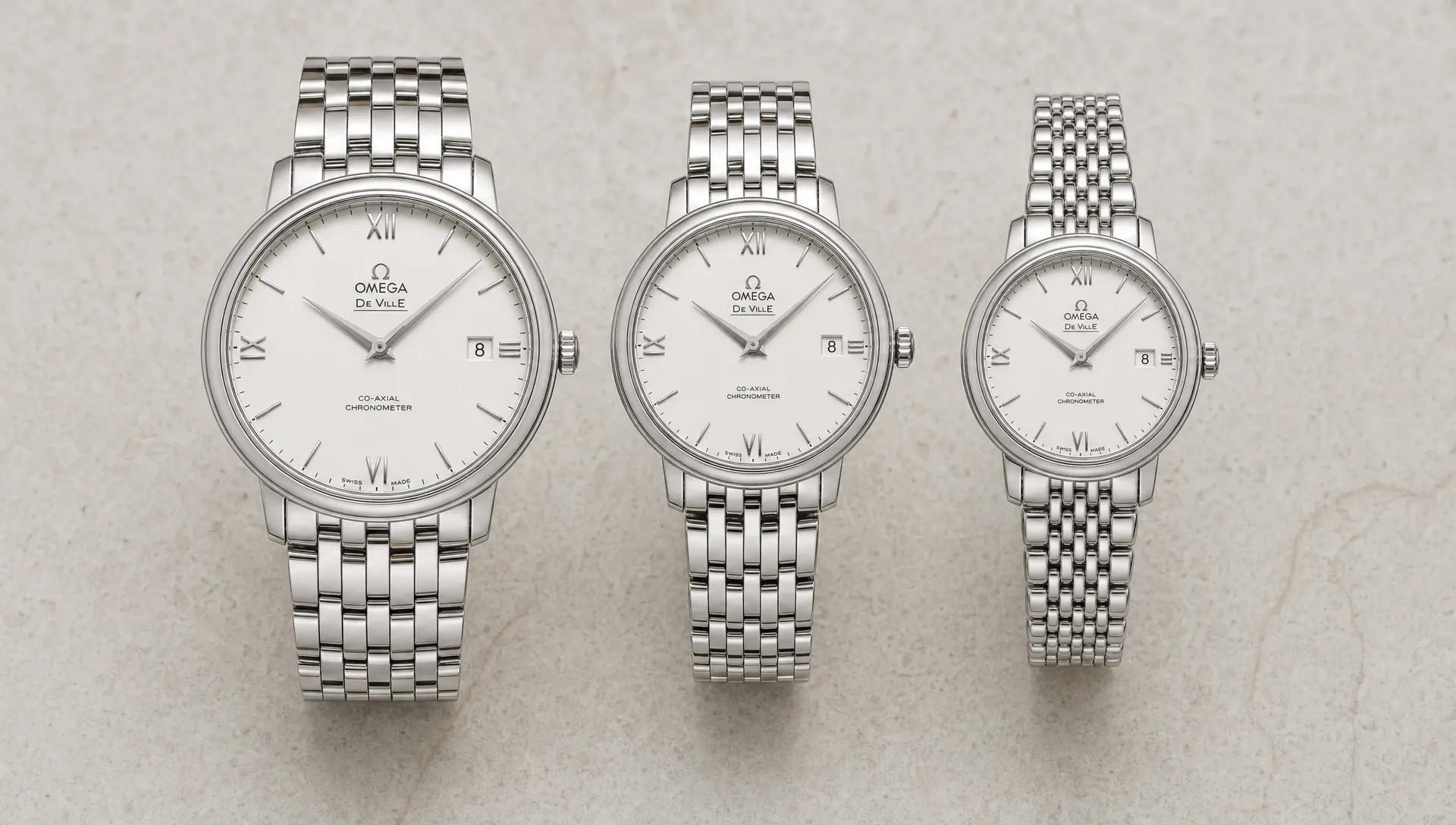
| 424.10.33.20.05.001 | 32.7mm, approximately 1.29 inches | Mother-of-pearl | $2,995 |
| 424.20.27.60.08.001 | 27.4mm, approximately 1.08 inches | Champagne | $3,595 |
| 424.13.40.21.06.002 | 39.5mm, approximately 1.56 inches | Gray | $3,715 |
Retail listings sometimes round these diameters to 33mm, 27mm and 39mm. Small differences in the written size should prompt a reference check, not an assumption that two listings describe different watches.
The mother-of-pearl example offers compact proportions and a dial that changes with the light. The champagne reference is substantially smaller. The gray-dial reference provides a larger presence without moving away from traditional dress-watch styling.
These three Omega De Ville examples also show why price should not be judged by diameter alone. Compare the complete specification and condition rather than treating the largest watch as the most valuable.
Inspect condition beyond the grade
“Excellent” is a condition category, not a statement that a pre-owned watch has never been worn or polished. Photographs and written disclosures should explain what that grade means for the individual piece.
Examine the bezel, lug edges and case sides for their shape and finish. Ask whether the watch has been polished and whether any refinishing is documented. Light wear and heavy refinishing are different issues; neither should be hidden behind a broad condition label.
The dial deserves separate attention. Look for discoloration, moisture marks, damaged printing and inconsistencies around applied markers. On older watches, ask whether the dial and hands are original, manufacturer service replacements or otherwise replaced.
Before buying, confirm these practical details:
- Included accessories: Identify the box, warranty card, booklets, spare links and any service documentation supplied with that watch.
- Mechanical checks: Ask what inspection and testing were completed, including any available timing or pressure-test results.
- Replacement components: Clarify the status of the crown, crystal, dial, hands, strap and clasp.
- Return eligibility: Review the requirements before sizing the bracelet, removing tags or wearing the watch.
Box and papers support documentation and completeness. They do not independently prove authenticity, and a missing box does not establish that a watch is counterfeit.
For a pre-owned Omega De Ville, authentication, documented condition and a clear return policy should be assessed together rather than treated as substitutes for one another.
Judge the price alongside ownership costs
A lower asking price needs context. Quartz versus mechanical construction, case material, size, accessories and service history can all distinguish apparently similar watches. A small quartz reference should not be compared directly with a larger mechanical reference simply because both have Roman numerals.
Build your ownership budget around the individual watch. Ask whether it needs a strap, additional bracelet links or near-term service. A proprietary clasp or bracelet component can also affect the practicality of an otherwise appealing purchase.
There is no responsible universal service-cost estimate for the entire range. A quartz battery service and an overhaul of a complicated mechanical movement are different jobs. Obtain a written estimate for the exact caliber and required work.
Likewise, do not assume that water resistance remains unchanged throughout a watch’s life. Gaskets age, and previous repairs matter. Have suitability for water exposure assessed rather than relying only on the original specification.
Buy an Omega De Ville because its design and ownership requirements suit you. If resale matters, compare documented transactions for the same reference, material and condition; an advertised asking price is not evidence of a completed sale or a guaranteed future value.
Frequently asked questions
Does Omega still make the De Ville? Yes. De Ville remains part of Omega’s collection. Individual references change, so distinguish a discontinued configuration from a discontinued collection when researching an older watch.
Why are some examples less expensive than others? The name covers different movements, materials, sizes and generations. Condition, accessories and service needs also affect an individual asking price. Check those differences before deciding that a listing is unusually inexpensive.
Is it an entry-level Omega? Some Prestige references provide a relatively straightforward introduction to the brand, but the collection is not a single entry-level specification. It also includes more elaborate mechanical watches and precious-metal configurations.
Does an Omega De Ville hold its value? There is no collection-wide answer or guaranteed resale outcome. Your purchase price, the exact reference, condition and selling costs all matter. Treat potential resale as uncertain rather than as part of a promised return.
Compare the individual watch before deciding
Lume Wrist Watches is an independent retailer, not an authorized Omega dealer. Its pre-owned inventory is listed in Excellent condition, certified authentic by Watch CSA and serviced before shipping. Buyer protections include a two-year warranty, a 30-day return guarantee and free insured US shipping. International shipping is available by request and quote.
When reviewing the authenticated pre-owned watch selection, ask the concierge to confirm the full reference, movement, included accessories and bracelet fit. For a gift or fixed occasion, confirm delivery timing and the applicable return terms before payment.