Tudor 1926 Watch Guide to Sizes, Dials, and Movements
Published September 1, 2026 · Last updated October 14, 2026 · By Lume Wrist Watches Editorial Team
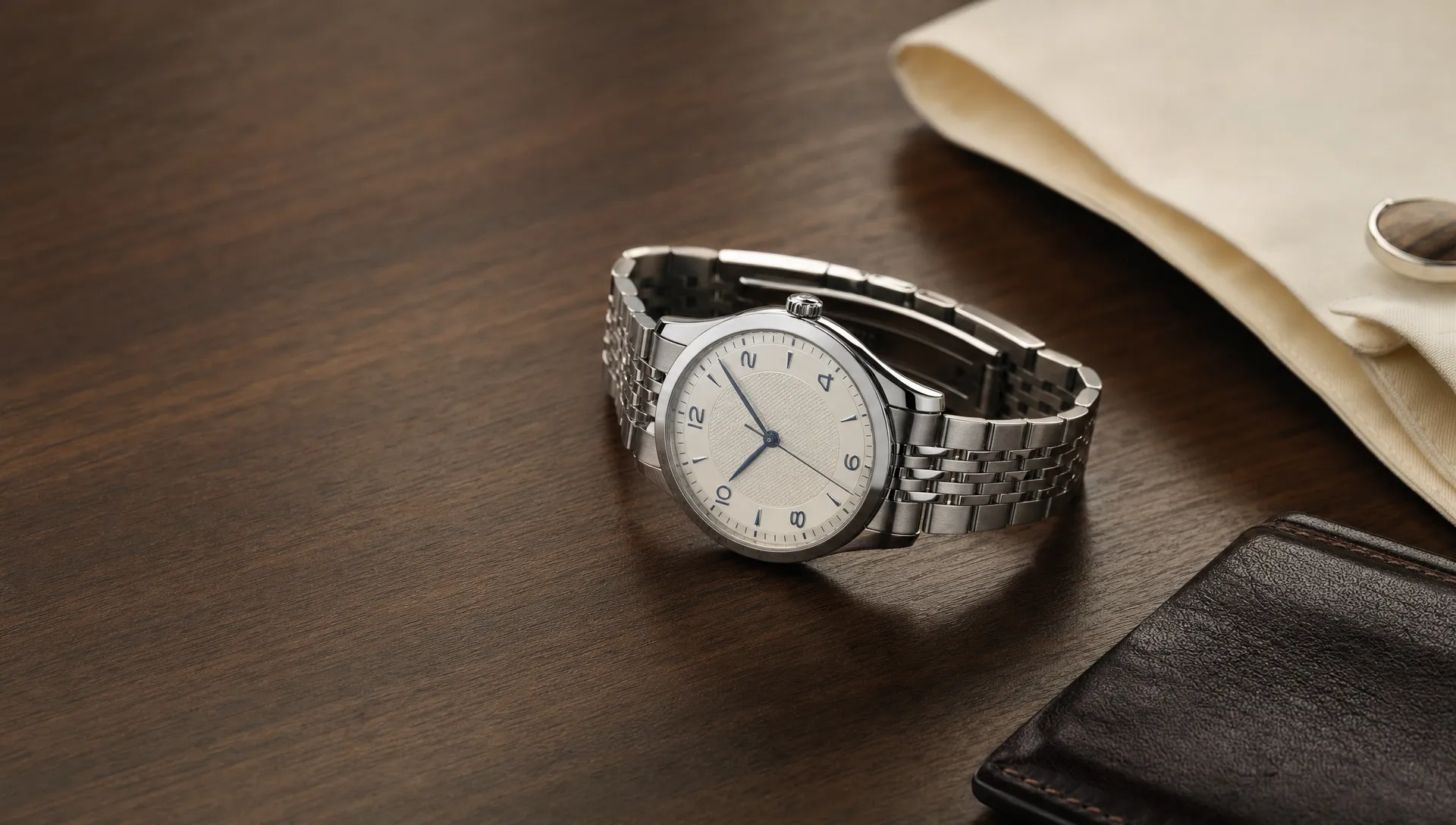
The Tudor 1926 is Tudor’s classic dress-casual line, best bought by choosing case size first, dial second and movement expectations last. Most buyers should start with 36mm or 39mm, then decide whether they want a quiet silver or opaline dial, a sportier blue or black dial, or a dressier two-tone and diamond-set configuration.
It is not a Black Bay in formal clothing. The Tudor 1926 has its own purpose: a slim, automatic, date-equipped Swiss watch with traditional proportions, 100m water resistance and a design that works with a suit, office wardrobe or weekend clothes.
What the Tudor 1926 is
The Tudor 1926 is a polished everyday watch with a smooth bezel, central seconds, date at 3 o’clock and an automatic movement. It is more formal than most Black Bay references and more modern than vintage Tudor Oysterdate models. That middle ground is the reason it appeals to first-time Swiss watch buyers.
According to Tudor’s 1926 collection overview, the name refers to the year connected to Tudor’s origins under Hans Wilsdorf. The watch follows that brief closely. It is not trying to be aggressive or technical. It is a clean, traditional wristwatch with enough durability for regular use.
The core Tudor 1926 decision points are simple.
| Buying decision | Main options | Plain-English guidance |
|---|---|---|
| --- | ---: | --- |
| Case size | 28mm, 36mm, 39mm, 41mm | Choose by wrist size first, not by trend |
| Dial | Silver, opaline, black, blue, champagne and other tones | Lighter dials wear dressier, darker dials wear more modern |
| Markers | Applied markers, Arabic numerals, diamond-set options | Diamond dials are dressier and less neutral |
| Movement | T201 or T601 automatic, depending on size | Reliable automatic calibers, not Tudor MT manufacture movements |
| Use case | Office, travel, dinner, daily wear | Better as a refined daily watch than a sports watch |
Tudor 1926 sizes: 28mm, 36mm, 39mm and 41mm
The Tudor 1926 size range is unusually broad. That is useful, but it can also make the buying decision harder. Case diameter is only one part of fit, but with this model it is the best place to start because the design is clean and the bezel is thin. That means the watch shows more dial than a diver of the same diameter.
| ---: | --- | --- | --- |
|---|---|---|---|
| 28mm | Under 6.25 in (159mm) | Compact and jewelry-like | Small wrists, dress use, understated gifts |
| 36mm | 5.75 to 7.0 in (146 to 178mm) | Classic and balanced | Traditional fit, shared wear, conservative offices |
| 39mm | 6.25 to 7.5 in (159 to 191mm) | Modern without looking large | First Swiss watch buyers, daily wear |
| 41mm | 7.0 in (178mm) and above | Broad, clean and more contemporary | Larger wrists or buyers who prefer presence |
The 36mm is the most historically correct size in spirit. It has the vintage dress-watch feel many collectors like, but it still looks current because of the polished case, crisp dial printing and bracelet design. For a gift where wrist size is uncertain, 36mm is often the safest choice unless the recipient clearly prefers larger watches.
The 39mm is the easiest modern size. It suits many wrists in the 6.25 to 7.5 in (159 to 191mm) range and avoids the two common mistakes: buying too small because vintage proportions sound sophisticated, or buying too large because modern sports watches have normalized 40mm plus cases.
The 41mm has the most dial surface. On the Tudor 1926, that makes a difference. The smooth bezel and clean dial can make 41mm feel larger than expected. It works best on broader wrists or for buyers who want the watch to read as a modern daily piece rather than a discreet dress watch.
The 28mm should not be dismissed as only a women’s size. It is a compact traditional watch size that can look excellent on smaller wrists. In diamond-set configurations, it moves closer to formal jewelry. In simpler steel versions, it remains practical and restrained.
Tudor 1926 reference numbers explained
Tudor 1926 references are easiest to understand by separating the reference family from the dial and bracelet suffix. The first part tells you the case size and general case configuration. The suffix after the hyphen identifies a more specific combination such as dial color, marker style and bracelet or strap.
| --- | ---: | --- | --- |
|---|---|---|---|
| M91350 | 28mm | Steel | Smallest standard 1926 case family |
| M91351 | 28mm | Steel with rose-gold accents | Dressier small-case configuration |
| M91450 | 36mm | Steel | Classic all-around 1926 size |
| M91451 | 36mm | Steel with rose-gold accents | More formal than the full-steel 36mm |
| M91550 | 39mm | Steel | Strong modern daily-wear choice |
| M91551 | 39mm | Steel with rose-gold accents | Warm-toned and dressier in character |
| M91650 | 41mm | Steel | Largest standard 1926 case family |
| M91651 | 41mm | Steel with rose-gold accents | Larger case with a more formal look |
Do not buy from the reference family alone. Two watches in the same family can feel very different if one has a silver dial with applied markers and the other has a dark dial or diamond-set markers. Always verify the complete reference, actual photos and the seller’s description.
Dial options and how they change the watch
The Tudor 1926 dial is the model’s personality. The case architecture is restrained, so dial color and marker style do most of the visual work.
Lighter dials usually make the watch look more formal. Silver and opaline dials pair well with business clothing and tend to show the textured center pattern clearly. Darker dials feel more contemporary. Blue gives the watch a bit more casual range, while black or anthracite tones sharpen the case and make the polished details stand out.
| --- | --- | --- | --- |
|---|---|---|---|
| Silver or opaline | Traditional, clean, dressy | Office, weddings, daily business wear | Often the safest first 1926 choice |
| Blue | Slightly sportier and more casual | Daily wear, smart-casual wardrobes | Good if silver feels too formal |
| Black or anthracite | Sharper and more modern | Evening wear, darker wardrobes | Check legibility in photos |
| Champagne or warm-tone dials | More formal and vintage-leaning | Dress use, two-tone cases | Best when it matches jewelry tone |
| Diamond-set dial | Dressiest option | Gifts, formal wear, smaller sizes | Verify the exact marker layout and condition |
The 1926 is not the Tudor to buy if low-light legibility is your top priority. Its design language is polished and dress-casual. If you want stronger sports-watch utility, a Black Bay or vintage Tudor Submariner family watch makes more sense.
Tudor 1926 movements
Current Tudor 1926 watches are generally associated with the T201 automatic movement in the 28mm size and the T601 automatic movement in the 36mm, 39mm and 41mm sizes. These are not Tudor MT-series manufacture calibers. They are practical automatic movements with a date function and an approximate 38-hour power reserve.
| ---: | --- | ---: | --- |
|---|---|---|---|
| 28mm | T201 | Approx. 38 hours | Compact automatic movement for the smallest case |
| 36mm | T601 | Approx. 38 hours | Standard automatic date movement for classic sizing |
| 39mm | T601 | Approx. 38 hours | Same practical movement family in a modern case size |
| 41mm | T601 | Approx. 38 hours | Same broad movement expectation as 36mm and 39mm |
For a first luxury watch buyer, that is not a negative. The Tudor 1926 is meant to be durable, straightforward and easy to wear. It is not priced or positioned as a high-spec chronometer from Tudor’s modern manufacture movement family.
For collectors, the movement distinction matters because it affects how the watch fits into a collection. A 1926 will not scratch the same itch as a Black Bay Pro or Pelagos with a Tudor manufacture caliber. It will, however, cover the simple automatic dress-casual slot cleanly.
What to check when buying a Tudor 1926 pre-owned
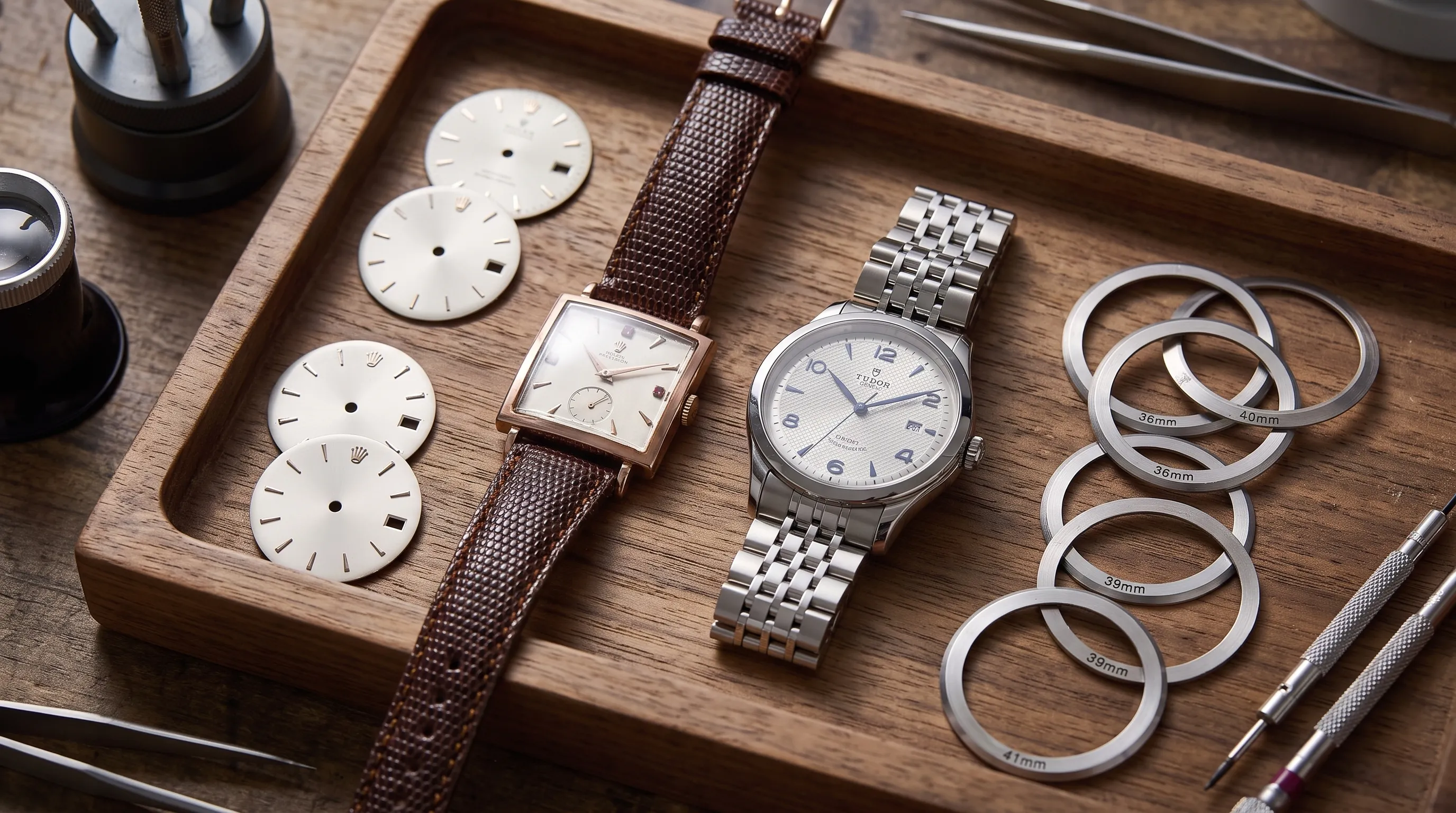
A pre-owned Tudor 1926 should be bought on condition, authenticity, completeness and fit. The model is clean enough that scratches, bracelet stretch, dial flaws and over-polishing are easy to notice when photos are good. Poor photos are a warning sign.
| --- | --- |
|---|---|
| Full reference | Confirms case size, case style and exact configuration |
| Case condition | Polished surfaces show scratches and over-polishing clearly |
| Bracelet condition | Seven-link bracelets can show wear if heavily used |
| Box and papers | Adds confidence and may affect resale, but condition still matters |
Box and papers are useful, but they should not distract from the watch itself. A complete set in poor condition is not better than a clean, correctly authenticated example with transparent service history. For a Tudor 1926, the dial, case edges and bracelet condition deserve close inspection.
At Lume Wrist Watches, inventory is pre-owned, listed in Excellent condition, certified authentic by Watch CSA and serviced before shipping. Lume is an independent retailer, not an authorized dealer for Tudor, Rolex or any other brand. Brand names are used for identification only.
Lume offers free insured shipping within the United States, with international shipping available on request and quote. The store also provides a 30-day return guarantee and 2-year warranty coverage. Payment options include bank wire transfer as the primary method, credit card and cryptocurrency.
Which Tudor 1926 should you choose?
If this is your first Swiss watch, start with the 39mm in steel on a silver, opaline or blue dial. That configuration gives you the broadest range of use without pushing too far into dress watch or sports watch territory.
If you dress conservatively or want the most timeless fit, choose 36mm. A 36mm Tudor 1926 on a light dial can look correct with a suit, a button-down shirt or knitwear. It also avoids the oversized feel that can make dressier watches look less refined.
If you are buying for a spouse, parent, graduate or retirement gift, the 36mm and 39mm sizes are the safest starting points. Use wrist size and existing jewelry or watch habits as your guide. If the recipient already wears larger sports watches, 41mm may be appropriate. If they wear slim bracelets or smaller watches, consider 28mm or 36mm.
If you already collect watches, the most interesting Tudor 1926 may not be the safest one. Two-tone configurations, unusual dial colors and diamond-set versions can give the model more character. Just make sure that character is reflected in the price and that you still like the watch on the wrist, not only in photos.
What to cross-shop against the Tudor 1926
The closest Tudor alternatives are older Oysterdate and Prince Oysterdate references. They share the simple automatic date-watch idea, but with more vintage character. If you like the 1926 because it is clean and practical, an authenticated Tudor Oysterdate can be a useful comparison point. The Tudor Prince Oysterdate (9301/0) is another reference to study if you prefer older Tudor proportions and design language.
If you want a Tudor with more sports-watch heritage, the 1926 is probably not the answer. A watch like the Tudor Submariner Date (76100) sits in a different category, with dive-watch utility and a more collectible tool-watch profile.
Some buyers also compare the Tudor 1926 against understated Rolex models because the wearing purpose overlaps: simple dial, automatic movement and daily use. For buyers cross-shopping a classic Rolex in that lane, the Rolex (4470) in our current catalog is an example of an Excellent-condition men’s Rolex classic watch with an automatic movement, certified authentic by Watch CSA, fully serviced and inspected, with a bank wire price of $4,795.
None of these comparisons should be treated as investment advice. Values move with condition, originality, demand, service history and broader market conditions. Buy the watch that fits your wrist, use case and comfort level.
Frequently Asked Questions
Is the Tudor 1926 a good first luxury watch? Yes. It is a strong first Swiss watch if you want an automatic movement, date, clean styling and enough water resistance for normal daily wear. It is less suitable if you want a sports watch or a highly technical manufacture movement.
Should I buy the Tudor 1926 in 36mm or 39mm? Choose 36mm if you want classic proportions or have a smaller wrist. Choose 39mm if you want a modern daily size that still stays refined. The 41mm is best for larger wrists, while 28mm suits compact and dress-focused wear.
Does the Tudor 1926 have an in-house movement? No. The Tudor 1926 is generally fitted with Tudor T201 or T601 automatic movements, depending on case size. These are practical automatic calibers, not Tudor MT-series manufacture movements.
Are box and papers necessary for a Tudor 1926? They are helpful, but they are not the only factor. Condition, authenticity, correct reference, service status and seller protections matter at least as much, especially for buyers who plan to wear the watch regularly.
Does the Tudor 1926 hold value? No seller can guarantee future value. The main factors that influence resale are condition, configuration, completeness, demand and market timing. Treat value retention as one part of the decision, not the reason to buy.
A practical next step
If you are narrowing your Tudor 1926 choice, decide on case size first and dial second. Then compare the watch against similar Tudor and Rolex references so the purchase fits your wrist, wardrobe and budget.
You can review authenticated pre-owned options in the Lume Wrist Watches shop, or contact our New York City team for help comparing size, condition and reference details before you buy.
## Part of the series This article belongs to our complete guide: Watchmaking Explained: Movements & Complications – A Collector's Guide.\n