Piaget Altiplano Ultra-Thin Caliber History
Published July 30, 2026 · Last updated October 21, 2026 · By Lume Wrist Watches
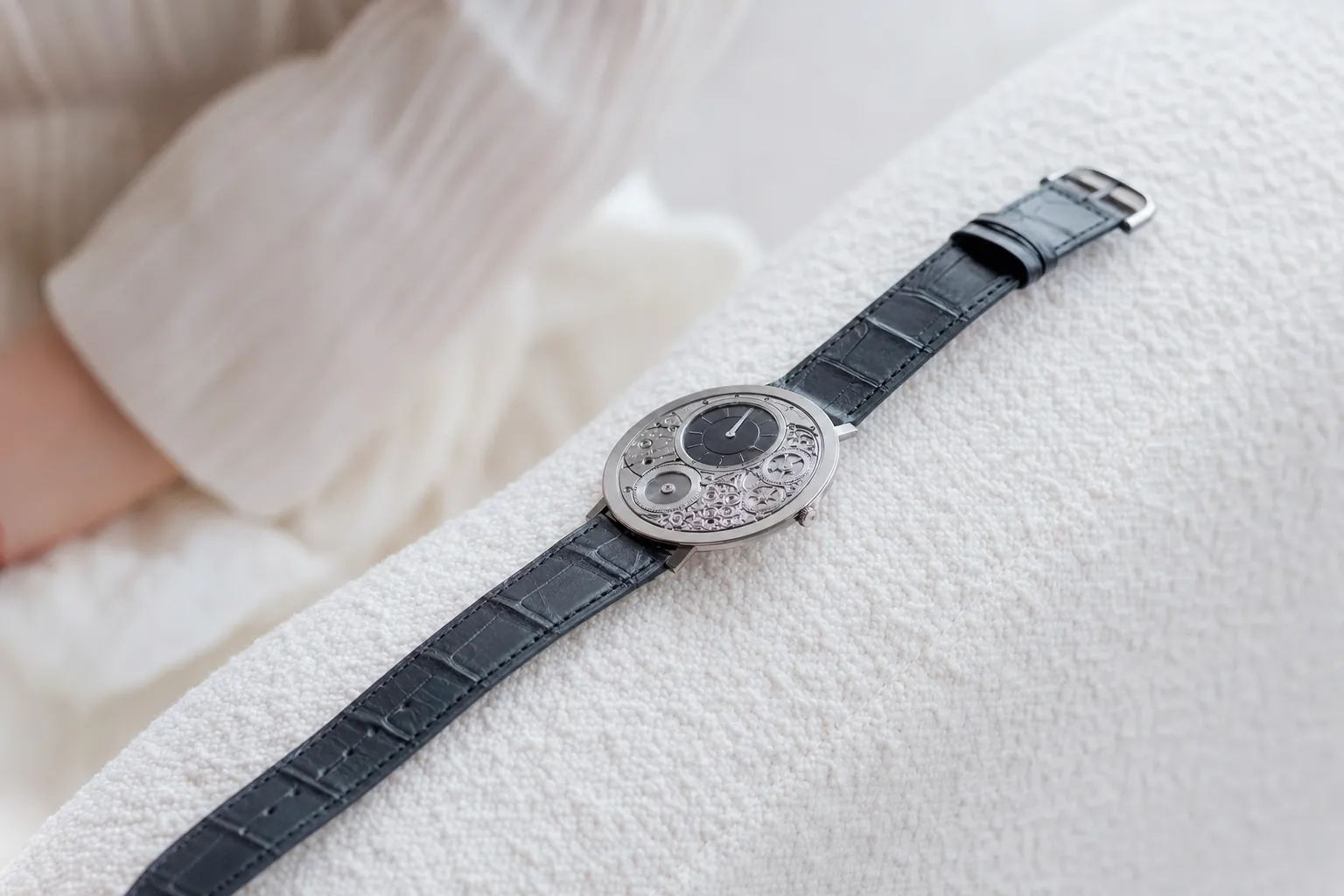
For collectors exploring the refined world of ultra-thin dress watches, few lineages command the prestige and technical respect of Piaget. The manufacturer’s continuous pursuit of horological reduction has yielded some of the most influential slim calibers ever conceived, setting benchmarks that remain central to the brand's identity today. Understanding the piaget altiplano movement history provides indispensable context when evaluating vintage and modern dress watches on the secondary market.
Valentin Piaget and the 1957 Caliber 9P
The modern legacy of ultra-thin watchmaking at Piaget began in La Côte-aux-Fées under the technical stewardship of Valentin Piaget, grandson of company founder Georges-Édouard Piaget. During the early decades of the twentieth century, the atelier operated primarily as a movement manufacturer for elite Swiss houses. However, by the mid-1950s, leadership pivoted to prioritize finished watches bearing the family name. Valentin recognized that slenderness offered a distinctive canvas for modern elegance and established a dedicated research initiative to radically compress mechanical volume.
The Quest for Radical Slenderness
Prior to 1957, extra-flat calibers were delicate, prone to flex, and notoriously difficult to service. Movement makers frequently sacrificed structural integrity to shave fractions of a millimeter from their gear trains. Valentin Piaget challenged his team to create a manual-wind movement that was exceptionally thin while remaining robust enough for everyday wear in high-end dress models.
This research culminated in the unveiling of Caliber 9P at the Basel watch fair in 1957. Measuring just 2.00 mm in height, the 9-ligne (approximately 20.5 mm in diameter) movement was an engineering marvel. It immediately positioned the manufacture as an uncompromising authority in ultra-thin horology.
Architectural Triumphs of the 9P
Caliber 9P achieved its remarkable 2.00 mm profile through an uncompromising rethink of traditional bridge arrangements and component clearance:
- Inverted Component Nesting: Wheels and pinions were placed with minimal tolerances to prevent wasted vertical clearance.
- Large Balance Wheel: Despite its slender profile, the movement maintained a traditional, relatively large balance wheel beating at 18,000 vibrations per hour (2.5 Hz), ensuring steady chronometric stability.
- Dial Proportions: The compact diameter and minimal height left significant room for design innovation, allowing Piaget to craft thin, expansive dials adorned with bold baton markers or exotic stone surfaces.
For collectors browsing a curated vintage /shop, watches housing the historic 9P stand as pure representations of mid-century Swiss minimalism. The caliber proved so reliable that it remained in continuous production for decades, serving as the foundational building block for generations of ultra-thin wristwatches.
Automatic Innovation with the 1960 Caliber 12P
Following the industry-wide acclaim of the hand-wound 9P, Valentin Piaget turned his engineering focus toward an even steeper technical hurdle: developing an ultra-thin self-winding movement. In traditional watchmaking, an automatic rotor sits atop the bridges and gear train, inevitably adding significant height to the movement. Piaget refused to accept a bulky case as the price of automatic convenience.
The 24k Gold Off-Center Micro-Rotor
The breakthrough arrived in 1960 with the debut of Caliber 12P. Measuring just 2.30 mm thick, the movement captured the Guinness World Record as the thinnest automatic movement in the world.
To achieve this profile, Piaget eschewed the conventional full-size central rotor in favor of an off-center micro-rotor integrated directly into the level of the movement plates. Because a smaller rotor has less mass and generates less kinetic leverage, Piaget crafted the oscillating weight entirely from 24-karat gold. The high density of pure gold compensated for the reduced diameter, delivering enough inertia to wind the mainspring efficiently through a bi-directional winding system.
Pushing the Limits of Automatic Winding
Operating at 19,800 vibrations per hour, Caliber 12P required micro-tolerances previously unseen in production wristwatches. The clearance between the oscillating weight, the mainplate, and the surrounding bridges measured only hundredths of a millimeter.
The success of Caliber 12P permanently altered Piaget’s market position. It freed the manufacture to produce ultra-thin automatic dress watches that slipped effortlessly under a shirt cuff without demanding manual intervention. Today, surviving 12P models from the 1960s and 1970s remain highly prized among seasoned enthusiasts who appreciate pioneer-era micro-rotor design.
Introducing the Altiplano Name in 1998
Throughout the 1960s, 70s, and 80s, Piaget applied its ultra-thin calibers to an eclectic array of shapes, including square dress references, integrated bracelet models, and coin watches. However, as the 20th century drew to a close, luxury watch design shifted back toward mechanical purity and classical proportions.
Formalizing the Ultra-Thin Aesthetic
In 1998, Piaget formally unified its classic ultra-thin horology under a dedicated collection: the Altiplano. Named after the vast, high-altitude plateau of the South American Andes, the Altiplano nomenclature was chosen to symbolize wide, sweeping expanses, clean horizons, and pared-back elegance.
Rather than relying on ornate dial flourishes or complex external cases, the Altiplano embraced pure restraint. Key characteristics defined the newly branded family:
- Ultra-flat round cases with straight, slender lugs.
- Expansive dials featuring elongated, minimalist baton hands.
- Single and double baton hour markers spaced across wide dial real estate.
- Stepped or narrow bezels that maximized visual diameter while maintaining a whisper-thin profile.
High-Plateau Inspiration and Minimalism
The introduction of the Altiplano formalized the aesthetic codes that Valentin Piaget had pioneered decades earlier. Crucially, the launch was not merely a cosmetic rebranding; it arrived hand-in-hand with an upgraded suite of calibers developed to succeed the venerable 9P and 12P, bridging Piaget’s mid-century dominance with modern production standards.
The 21st-Century Calibers 430P and 1200P
Entering the modern era, Piaget required next-generation engines capable of meeting contemporary demands for higher beat rates, improved power reserves, and tighter tolerances. The result was a new lineage of in-house movements manufactured at Piaget's dedicated high-horology facility in Plan-les-Ouates, Geneva.
The Hand-Wound Workhorse: Caliber 430P
Introduced alongside the Altiplano family, Caliber 430P arrived as the direct heir to the 1957 Caliber 9P. Measuring a mere 2.10 mm thick, this hand-wound movement upgraded its predecessor's beat rate to 21,600 vibrations per hour (3 Hz) and incorporated a modern balance with balance spring studs, alongside a 43-hour power reserve.
Finishing on the 430P highlighted haute horlogerie traditions: circular Côtes de Genève, circular-grained mainplates, beveled bridges, and blued steel screws. A thinner derivative, Caliber 830P (2.50 mm thick with an extended 60-hour power reserve), expanded the manual-wind roster for larger contemporary cases. Buyers navigating our /buying-guide will note that references powered by the 430P remain among the purest, most widely available modern Altiplano references in the secondary market.
The Fifty-Year Milestone: Caliber 1200P
In 2010, celebrating exactly 50 years since the launch of the ground-breaking 12P, Piaget unveiled Caliber 1200P. Measuring only 2.35 mm thick, the 1200P set a new modern record for the thinnest automatic movement in serial production. Fitted into an Altiplano case measuring 5.25 mm overall, the complete watch captured the title of the thinnest automatic watch of its era.
Caliber 1200P utilized an off-centered micro-rotor crafted from 22-karat gold or platinum, engraved with the Piaget coat of arms. Alongside it, Piaget debuted Caliber 1208P, a variation featuring a small seconds display situated at 5 o'clock. Both movements demonstrated that Piaget’s micro-rotor mastery was not a historic anomaly, but an active, evolving competence.
| :--- | :--- | :--- | :--- | :--- | :--- |
|---|---|---|---|---|---|
| 9P | 1957 | Hand-wound | 2.00 mm | 18,000 vph | Historic foundation of Piaget ultra-thin calibers |
| 12P | 1960 | Automatic | 2.30 mm | 19,800 vph | World's thinnest automatic with 24k gold micro-rotor |
| 430P | 1998 | Hand-wound | 2.10 mm | 21,600 vph | Modern manual caliber developed for the Altiplano line |
| 1200P | 2010 | Automatic | 2.35 mm | 21,600 vph | 50th-anniversary successor to 12P with 22k gold micro-rotor |
| 900P | 2014 | Hand-wound | 3.65 mm (total watch) | 21,600 vph | Fusion of movement mainplate and caseback |
| AUC | 2018 | Hand-wound | 2.00 mm (total watch) | 28,800 vph | Ultra-dense cobalt alloy construction |
Merging Movement with Case in the 900P
By the early 2010s, competition in the ultra-thin watchmaking segment had intensified significantly. To push dimensions even lower, standard architectural paradigms had to be abandoned. Traditionally, a mechanical watch consists of an independent movement encased inside a separate housing, protected by a dial and a crystal.
In 2014, to celebrate Piaget’s 140th anniversary, the manufacture unveiled the Altiplano 38 mm 900P. The watch measured an astonishing 3.65 mm in total thickness—casing and movement combined.
Erasing the Boundary Between Caseback and Mainplate
The revolutionary feat of Caliber 900P lay in merging the movement’s mainplate with the watch caseback. Instead of machining a baseplate and dropping it inside an external gold or platinum shell, the watchmaker machined the inside of the caseback itself to receive the jewels, pinions, and wheel train components.
By eliminating the separate baseplate, Piaget removed an entire physical layer from the watch’s vertical profile. The caseback doubled as the structural foundation of the movement, making it impossible to separate the caliber from its case.
Inverted Dial Construction
This structural fusion required a complete inversion of classic movement anatomy:
- Exposed Dial-Side Mechanics: The bridges, balance wheel, and gear train were placed on the front dial side, visible to the wearer.
- Recessed Off-Center Dial: The time-telling sub-dial was shifted to an off-center position at 10 o'clock to avoid stacking the hands above the balance wheel or barrel.
- Suspended Barrel: The mainspring barrel hung suspended from a single bridge on the dial side rather than supported by a traditional mainplate and bridge sandwich, delivering a 48-hour power reserve without vertical compromise.
The 900P fundamentally transformed the collector community's understanding of the piaget altiplano movement history, demonstrating that future dimensional gains required total structural integration.
The Two-Millimeter Altiplano Ultimate Concept
In 2018, Piaget demonstrated the absolute zenith of this integrated approach at SIHH by presenting the Altiplano Ultimate Concept (AUC). At an unbelievable 2.00 mm of total thickness—matching the exact height of the standalone Caliber 9P movement from 1957—the AUC was the thinnest mechanical watch ever created at the time of its announcement.
Cobalt Alloy and Integrated Engineering
Achieving a 2.00 mm total casing height presented a severe structural problem: precious metals like gold or platinum would flex under wrist pressure at that thickness, causing the hands to collide with the sapphire crystal or binding the gear train.
To overcome this, Piaget manufactured the AUC's combined caseback and mainplate from a high-tech cobalt-based alloy. This material provided extreme rigidity—more than two times stiffer than traditional gold—preventing the razor-thin case from deforming during daily wear.
Every traditional watch component was radically reengineered:
- Integrated Crystal: The sapphire crystal was thinned to a fraction of a millimeter and bonded directly into the bezel frame.
- Telescopic Crown: The conventional winding stem and crown were replaced with a flat, recessed crown integrated directly into the case band.
- Monolithic Balance Wheel: The balance wheel was redesigned without an upper bridge, supported by precision ball bearings directly in the caseback.
From Concept to Production Reality
Initially displayed as an experimental research prototype, Piaget spent two years refining tolerances before officially releasing the Altiplano Ultimate Concept for bespoke commercial production in 2020. The technical tour de force earned the prestigious Aiguille d'Or at the 2020 Grand Prix d’Horlogerie de Genève (GPHG).
The AUC proved that the lineage begun by Valentin Piaget in 1957 had reached its logical structural limit: the complete integration of exterior and interior into a singular, two-millimeter plane of precision mechanics.
Frequently Asked Questions
### When did Piaget launch the first ultra-thin Caliber 9P? Piaget officially unveiled the hand-wound Caliber 9P in 1957 at the Basel watch fair. Measuring exactly 2.00 mm in height, the movement established Piaget as an industry benchmark in ultra-flat horology. Its launch laid the technical foundation for the brand's dress watch production over the decades that followed.
### How thick was the historic Piaget Caliber 12P? The historic automatic Caliber 12P measured a mere 2.30 mm in thickness upon its introduction in 1960. It set a Guinness World Record at the time as the world's thinnest self-winding movement. Piaget achieved this unprecedented profile by integrating a high-density 24-karat gold micro-rotor flush with the movement bridges.
### What made the Altiplano 900P movement architecture unique? Introduced in 2014, the Altiplano 900P abandoned traditional movement-and-case separation by machining the movement's mainplate directly into the watch's solid caseback. This integrated architecture eliminated a structural layer, allowing the entire completed watch to measure an astonishing 3.65 mm thick. The design also inverted the movement mechanics, placing the gear train and balance wheel on display across the dial face.
### When was the Altiplano model line officially introduced? Piaget officially introduced the Altiplano model line in 1998 to formally designate its ultra-thin, minimalist dress watches. Named after the high-altitude South American plateau, the collection debuted alongside new in-house calibers such as the manual-wind 430P. While the aesthetic originated in the late 1950s, 1998 marked the official codification of the Altiplano design language and name.