History of Daily Wearable Luxury Timepieces
Published August 14, 2026 · Last updated October 21, 2026 · By Lume Wrist Watches
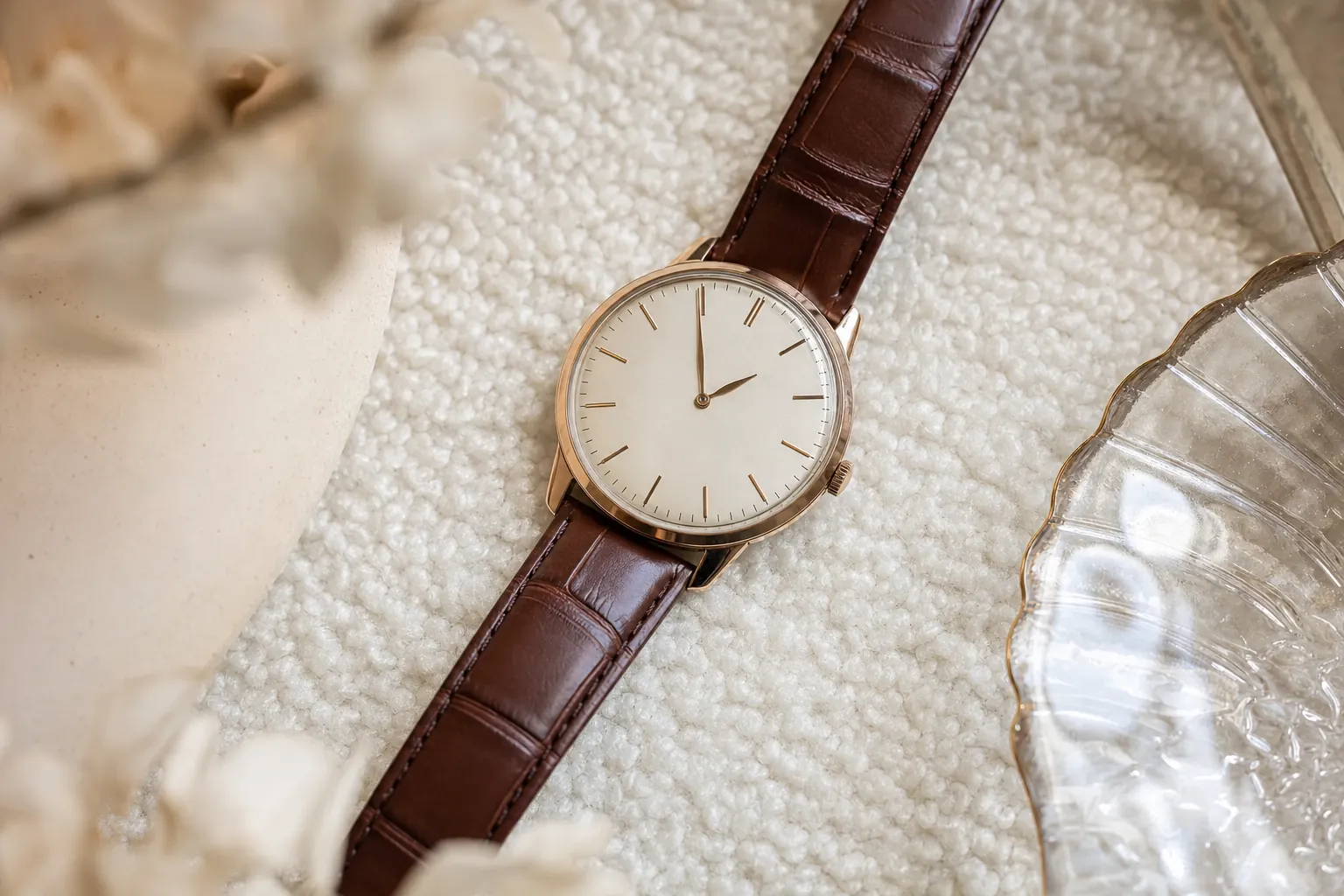
The modern expectation that a mechanical wristwatch should effortlessly survive a morning swim, withstand electromagnetic fields, and slide seamlessly beneath a tailored cuff is a relatively recent development in horology. For much of the twentieth century, timepieces were strictly segregated into delicate dress objects crafted from precious metals or austere, utilitarian tools built exclusively for cockpits, trenches, and marine depths. The history of everyday luxury watches charts the remarkable engineering and stylistic journey that bridged this divide, transforming mission-specific survival equipment into versatile, all-occasion benchmarks of fine watchmaking.
The Origins of the All-Purpose Luxury Timepiece
Before the First World War, the gentleman’s timepiece resided almost exclusively in a waistcoat pocket. Pocket watches were exquisite marvels of micro-mechanics, yet they were fundamentally unsuited to the rigors of an active, modern lifestyle. Encased primarily in gold or silver, they lacked water resistance, offered virtually no protection against dust or moisture, and relied on delicate balance pivots that shattered upon moderate impact. Wristlets existed, but they were largely regarded as feminine jewelry, dismissed by traditionalists as ephemeral novelties incapable of serious chronometric precision.
The crucible of modern warfare rapidly dismantled these conventions. Combat in the late nineteenth and early twentieth centuries demanded coordinated maneuvers that made fumbling for a pocket watch impractical and dangerous. Soldiers and officers during the Boer War and World War I began soldering wire lugs onto pocket watch cases, outfitting them with sturdy leather straps, and fitting metal shrapnel guards over enamel dials.
The Transition from Battlefield Utility to Civilian Life
These early "trench watches" demonstrated the undisputed ergonomic superiority of the wrist-worn format. Manufacturers began sourcing specialized cases, such as the screw-down hermetic cases patented by François Borgel in 1891, which utilized a continuous threaded bezel and caseback to shield movements from the pervasive mud and rain of European battlefields.
When demobilized soldiers returned to civilian life, they brought these rugged wrist instruments with them. The civilian public began to appreciate the utility of a watch that did not demand pampering. However, early post-war wristwatches still suffered from major structural vulnerabilities. Sweat eroded case metals, morning showers ruined balance springs, and daily winding through an unsealed crown admitted grit directly into the gear train. A complete conceptual redesign was needed before the utilitarian wristwatch could legitimately mature into an elegant, daily luxury item.
From Utilitarian Roots to Daily Refinement: Rolex Oyster
The turning point in the history of everyday luxury watches arrived in 1926 when Hans Wilsdorf, founder of Rolex, developed the Oyster case. Recognizing that water and dust were the twin nemeses of mechanical accuracy, Wilsdorf sought to create a hermetically sealed case architecture that offered total environmental isolation without sacrificing clean aesthetic lines.
The 1926 Oyster Patent and the Sealed Case Architecture
Rather than relying on friction-fit crystals and snap-on casebacks, the 1926 Oyster case utilized a three-piece construction with a threaded bezel, a threaded caseback, and a patented screw-down winding crown. Wilsdorf acquired the foundational patents of Paul Perregaux and Georges Perret, fundamentally improving the mechanism with internal gaskets and reverse-threaded crown assemblies.
``` +-------------------------------------------------------------------+ | ANATOMY OF THE EARLY OYSTER HOUSING | +-------------------------------------------------------------------+ | [ Threaded Bezel ] -> Compresses crystal gasket onto case body | | [ Middle Case ] -> Machined solid chassis with integral lugs| | [ Screw-Down Crown ] -> Threaded tube with compressible gaskets | | [ Threaded Caseback] -> Fluted rim tightened with bespoke dies | +-------------------------------------------------------------------+ ```
To validate the design publicly, Rolex equipped British swimmer Mercedes Gleitze with an Oyster pendant watch during her ten-hour swim across the English Channel in October 1927. The watch emerged fully functional and bone-dry inside. This feat redefined consumer expectations: fine mechanical timekeeping was no longer fragile by default.
The Perpetual Rotor and Everyday Mechanical Autonomy
While the original Oyster case delivered unprecedented water and dust resistance, it possessed an ergonomic vulnerability. Users still had to unscrew the winding crown every morning to hand-wind the mainspring, inevitably causing friction wear on the rubber or lead gaskets and leaving the movement exposed if the crown was not carefully screwed shut.
In 1931, Rolex engineered the solution: the "Perpetual" auto-rotor. By mounting a centrally pivoting, freely swinging semicircular weight inside the case, ordinary arm motions kept the mainspring constantly tensioned. Cased in references such as the famous Ref. 3131 and Ref. 2940—affectionately dubbed "Bubblebacks" due to their protruding, domed casebacks designed to accommodate the rotor—the Oyster Perpetual established the blueprint for the self-sustaining daily companion. Collectors who study vintage models can delve deeper into movement generations through our buying guide.
The Mid-Century Transition of Functional Field Watches
Following the breakthrough of hermetic sealing, the mid-twentieth century forced another technological leap. The Second World War established strict government procurement specifications that permanently elevated industrial manufacturing standards for wristwatches.
The "Dirty Dozen" and Post-War Functional Clarity
In 1944 and 1945, the British Ministry of Supply issued the W.W.W. (Wrist Watch Waterproof) specifications for military service timepieces. Twelve Swiss manufacturers—including Jaeger-LeCoultre, IWC, Omega, and Longines—produced watches meeting these rigorous benchmarks. Collectively known to modern enthusiasts as the "Dirty Dozen," these timepieces required:
- Black matte dials with high-contrast Arabic numerals
- Luminous radium paint on indices and handset
- Shatterproof acrylic crystals
- Calibers calibrated to chronometer-grade tolerances
- Robust, water-resistant stainless steel or chromed cases
When the conflict ended, watchmakers realized that the extreme legibility, anti-shock jewel systems (such as Incabloc), and case resilience engineered for wartime service held tremendous appeal for peacetime professions. The utilitarian field watch was systematically restyled, pairing military-spec legibility with understated case geometries suitable for corporate boardrooms.
The Antimagnetic Era: Engineering for Modern Infrastructure
The 1950s ushered in a quiet threat to mechanical timepieces: electromagnetic fields. The rapid expansion of commercial aviation, electrical engineering facilities, telecommunications labs, and medical radiology exposed daily watches to magnetic fields capable of binding hairspring coils and wrecking chronometric stability.
``` +-------------------------------------------------------------------------+ | MID-CENTURY ANTIMAGNETIC PIONEERS | +-------------------+------+-----------------+----------------------------+ | Reference | Year | Movement Shield | Primary Target Audience | +-------------------+------+-----------------+----------------------------+ | IWC Ingenieur 666 | 1955 | Soft-iron cage | Engineers, technicians | | Rolex Milgauss | 1956 | Faraday cage | Research scientists (CERN) | | Omega Railmaster | 1957 | Double-case cap | Rail crews, power workers | +-------------------+------+-----------------+----------------------------+ ```
Manufacturers responded by developing internal Faraday cages. In 1955, IWC unveiled the Ingenieur (Ref. 666), utilizing Calibre 852/853 encased inside a soft-iron inner case and dial that redirected magnetic flux around the escapement. Rolex followed in 1956 with the Milgauss (Ref. 6541), engineered to withstand fields up to 1,000 Gauss specifically for researchers at CERN. In 1957, Omega introduced the Railmaster (CK2914) alongside the Seamaster and Speedmaster.
These references proved that daily watches did not need external rotating bezels or bulky outer armor to handle severe physical conditions. They brought specialized, laboratory-grade resistance into clean, symmetrical designs that looked pristine under a suit sleeve.
Integrated Bracelets and the 1970s Steel Revolution
Through the 1960s, a strict social bifurcation endured: precious metals like yellow gold, white gold, and platinum were designated for luxury and formal wear, while stainless steel was reserved for working-class tools, divers, and military personnel. That hierarchy disintegrated in 1972.
Gérald Genta and the Audemars Piguet Royal Oak
Facing the onset of the Quartz Crisis and shifting cultural attitudes, Audemars Piguet commissioned legendary industrial designer Gérald Genta to conceive an entirely new category: an ultra-luxurious, hand-finished sports watch rendered exclusively in stainless steel.
The result was the 1972 Royal Oak (Ref. 5402ST). Inspired by a traditional diver’s helmet, the Royal Oak featured an exposed octagonal bezel held down by eight visible hexagonal white gold screws, an intricate tapisserie dial, and a remarkably thin profile powered by the ultra-flat Calibre 2121. Crucially, Genta discarded the standard separate leather strap or generic ladder bracelet in favor of a complex, hand-brushed, integrated steel bracelet that flowed seamlessly from the geometric case lugs.
The Democratization of Haute Horlogerie in Steel
The Royal Oak shattered the dogma that high watchmaking required precious metals. It demonstrated that intricate satin-brushing, mirror-polished bevels, and sculptural case architecture could render humble stainless steel more visually compelling and prestigious than conventional gold dress pieces.
The horological world responded almost immediately:
- Patek Philippe Nautilus (Ref. 3700/1A, 1976): Also penned by Genta, the Nautilus embraced maritime inspiration with its porthole-shaped case, lateral hinges, and horizontally grooved dial, pairing sporting ruggedness with high-end finishing.
- IWC Ingenieur SL "Jumbo" (Ref. 1832, 1976): Genta revamped IWC's scientific icon, introducing five visible bezel recesses and an integrated steel architecture.
- Vacheron Constantin 222 (1977): Designed by young prodigy Jörg Hysek for the brand's 222nd anniversary, this monobloc, scalloped-bezel icon established the direct lineage for today’s Overseas collection.
These creations permanently recalibrated collector priorities. A finely finished steel watch with an integrated bracelet became the ultimate symbol of dynamic, all-purpose luxury, perfectly suited for the yacht deck, the boardroom, or global air travel. Collectors looking for classic steel pieces with similar versatility can explore our curated pre-owned watches in our shop.
Modern Movements Engineered for Uninterrupted Daily Wear
The design principles established by mid-century tools and 1970s steel luxury icons have been amplified by cutting-edge material science in the twenty-first century. Today’s daily luxury watch is expected to endure shocks, magnetic surges, and temperature fluctuations that would have immobilized its mid-century ancestors.
Silicon Escapements and Extreme Amagnetism
For decades, watchmakers relied on temperature-compensating alloys such as Nivarox for balance springs. While reliable, these components remained susceptible to common magnetic sources like laptop speakers, magnetic phone cases, and induction cooktops.
Starting in the early 2000s, manufacture consortiums comprising brands like Patek Philippe, Rolex, and the Swatch Group pioneered the use of monocrystalline silicon (such as Silinvar and Patek's Spiromax hairsprings). Silicon is entirely impervious to magnetism, exceptionally light, thermally stable, and manufactured with molecular-level precision using deep reactive-ion etching (DRIE). Omega expanded on this concept with its Master Chronometer certification (METAS), utilizing non-ferrous materials such as silicon balance springs (Si14) and titanium balance staffs to resist magnetic fields up to 15,000 Gauss—eliminating the need for a heavy, movement-obscuring soft-iron inner shield.
Extended Chronometric Autonomy
Movement architectures have also evolved to match modern lifestyle patterns. The historical standard power reserve of 38 to 42 hours meant that a timepiece taken off on Friday evening would halt before Monday morning, requiring the user to reset the time and date.
Modern manufacture engines—such as Rolex’s Calibre 3235, Tudor’s MT5602, and various calibers across the luxury tier—utilize optimized escapement geometries (such as the Chronergy escapement), thinner-walled mainspring barrels, and lower-friction gear trains to provide 70 hours or more of autonomous power. Paired with robust balance bridges anchored at both ends and advanced shock absorption modules like Paraflex or upgraded Incabloc setups, the modern daily luxury caliber achieves unprecedented stability amid the active impacts of modern wear.
Defining Features of the True GADA Watch
Horological enthusiasts often categorize the pinnacle of daily wearable timepieces as "GADA" watches: Go Anywhere, Do Anything. Rather than leaning purely toward utilitarian tool aesthetics or delicate dress design, the true all-around daily timepiece balances an exact set of physical traits.
| :--- | :--- | :--- |
|---|---|---|
| Case Dimensions | 36mm – 40mm diameter; <12mm thickness | Slips neatly beneath shirt cuffs while maintaining modern wrist presence |
| Water Resistance | 100 meters (10 bar) minimum | Safe for swimming, showering, and surface watersports without anxiety |
| Winding Assembly | Screw-down crown with dual internal gaskets | Prevents moisture intrusion and resists structural impact to the stem |
| Crystal | Synthetic sapphire with internal anti-reflective coating | Virtually impervious to daily scratching from metals and masonry |
| Luminescence | Super-LumiNova or Chromalight on hands and indices | Legible in darkness without the visual clutter of military tactical markers |
| Dial Architecture | Smooth, fixed bezel; balanced, uncluttered dial | Neutral elegance that avoids the overt aggression of rotating dive scales |
A successful daily luxury timepiece avoids extremes. It resists deep ocean pressures without the massive bulk of a helium escape valve; it incorporates the robust steel finishing of an industrial tool without sacrificing the refined dial work required for formal evenings.
Frequently Asked Questions
### What defines a GADA watch in horological history? A GADA ("Go Anywhere, Do Anything") watch is defined by its ability to transition seamlessly between formal, professional, and athletic settings without requiring a change of timepiece. Historically, this archetype developed by fusing the durability, water resistance, and legibility of military or tool watches with the understated proportions and hand-finished detailing of traditional dress watches.
### How did the Rolex Oyster case establish daily watch reliability? Introduced in 1926, the Rolex Oyster case was the first commercially successful hermetically sealed watch housing. By using a threaded screw-down crown, a threaded bezel, and a screw-down caseback, it formed an impenetrable barrier against water, moisture, and dust, proving that high-grade chronometric accuracy could survive daily exposure to the elements.
### When did stainless steel become widely accepted in fine watchmaking? Stainless steel was largely relegated to functional military and industrial tool watches until 1972, when Audemars Piguet introduced the Gérald Genta-designed Royal Oak. By applying the same hand-beveling, brushing, and dial artistry to steel that was traditionally reserved for gold and platinum, high-end manufactures established stainless steel as a prestigious, contemporary luxury medium.
### Why do modern daily watches utilize silicon balance springs? Silicon balance springs are entirely non-magnetic, unaffected by typical temperature variations, and impervious to physical corrosion. Because daily wearers are constantly surrounded by magnetic fields from consumer electronics, silicon escapements prevent hairspring magnetizing, ensuring that the movement maintains stable, chronometer-grade precision throughout routine daily use.
### How do vintage daily timepieces compare to modern equivalents? While vintage daily watches possess historical charm and elegant proportions, modern equivalents offer superior structural resilience, higher water resistance ratings, and substantially longer power reserves. Contemporary metallurgy, sapphire crystals, and advanced shock protection allow modern daily luxury watches to endure rigorous physical activities that could easily damage vintage acrylic crystals and aged internal gaskets.