Collecting Rare Piaget Altiplano Variations
Published August 15, 2026 · Last updated October 21, 2026 · By Lume Wrist Watches
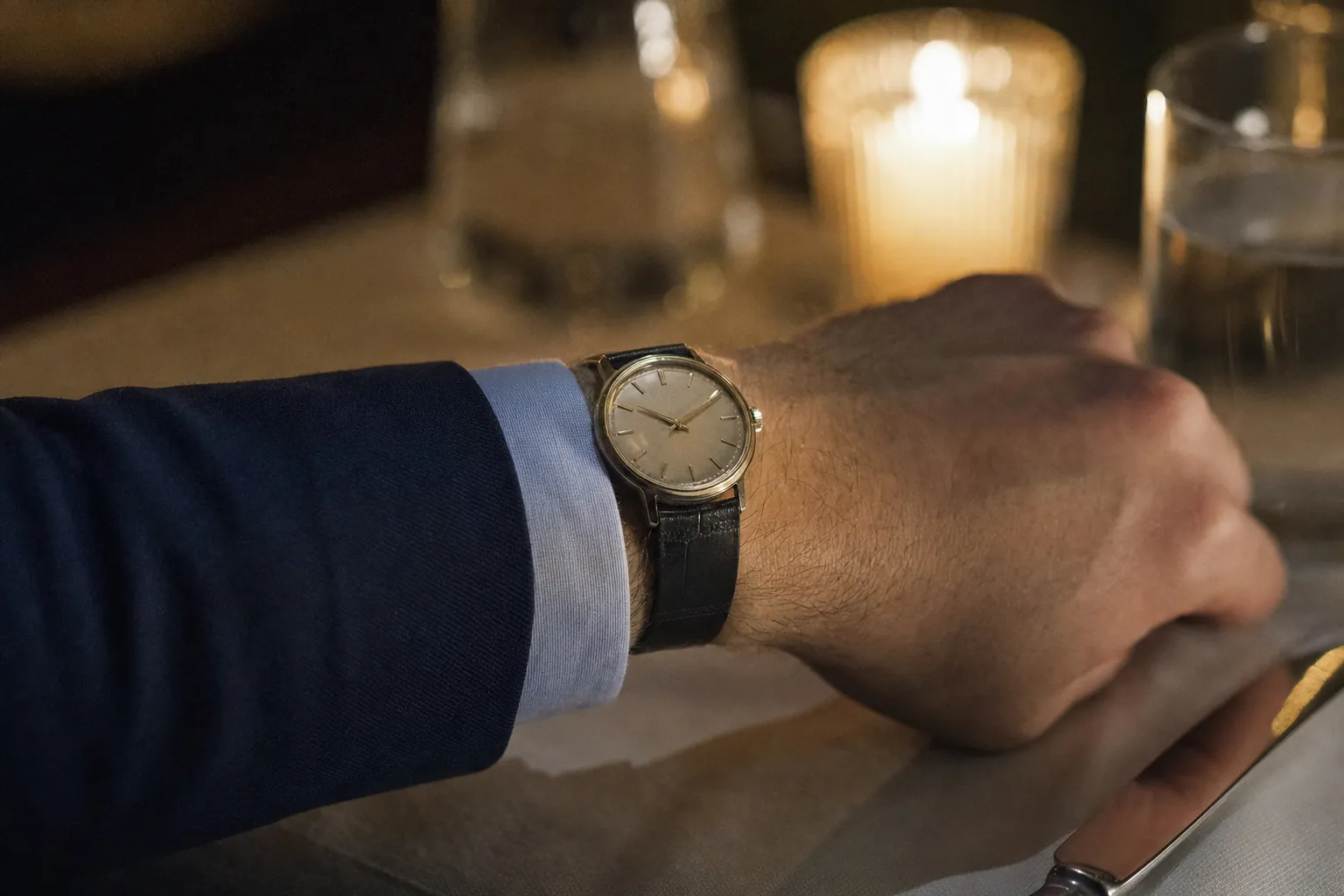
While the Altiplano is celebrated across horology as the baseline for minimalist, ultra-thin dress watches, its canvas frequently transforms into an arena for high artistic craftsmanship. For seasoned collectors, the pursuit often shifts away from standard monochrome dials toward artisanal references that highlight gem-setting, openworking, and lapidary art. Exploring these rare Piaget Altiplano models reveals an intersection of micro-mechanical engineering and decorative savoir-faire that few manufactures can replicate.
Natural Hard Stone Dials in Malachite and Lapis
Piaget’s affinity for natural hard stones dates back to the late 1960s, a period when the brand embraced bold, saturated color palettes across its jewelry and watch lines. In modern iterations of the Altiplano, this lineage manifests through ultra-thin dials cut from raw, organic minerals. Incorporating natural mineral sheets into a casing that measures merely a few millimeters thick presents immense physical challenges, turning every stone-dial reference into a technical accomplishment.
Slicing and Setting Fragile Minerals
Unlike synthetic lacquers or enamel coats, hard stone dials must be cut from solid blocks of raw mineral. Expert lapidaries slice stones such as malachite and lapis lazuli into wafers as thin as 0.2 millimeters to fit within the strict vertical tolerances of the Altiplano case. At this microscopic thickness, the stones become extraordinarily brittle and vulnerable to fracturing during cutting, polishing, and drilling for hand pinions.
Malachite dials require careful orientation during cutting to accentuate their natural banded striations. Collectors prize examples where the light and dark green concentric bands achieve visual symmetry across the two-hand dial. Lapis lazuli, conversely, demands careful selection to balance rich ultramarine pigmentation with an even distribution of golden pyrite inclusions and minimal white calcite veining. Because no two mineral deposits share identical crystalline structures, every stone-dial piece serves as a unique piece of art.
Signature Stones: From Opal to Turquoise
Beyond malachite and lapis lazuli, Piaget has explored a broader palette of stones within the Altiplano collection. Turquoise provides a vibrant, uniform cyan surface free of matrix lines, creating a striking contrast when framed in white gold. Australian white and black opals feature distinct play-of-color, shifting hues under varying light angles. References fitted with heart of ruby (ruby root), meteorite slices, and blue goldstone expand this spectrum, demanding attention from enthusiasts reviewing our curated watch collection for unconventional dress pieces.
``` +------------------+---------------------------+------------------------------+ | Dial Material | Mineral Hardness (Mohs) | Key Visual Characteristics | +------------------+---------------------------+------------------------------+ | Malachite | 3.5 - 4.0 | Banded green striations | | Lapis Lazuli | 5.0 - 5.5 | Deep azure with pyrite flecks| | Turquoise | 5.0 - 6.0 | Sky-blue, uniform texture | | Opal | 5.5 - 6.5 | Iridescent play-of-color | | Gibeon Meteorite | 4.0 - 5.0 (Metallic) | Widmanstätten etch patterns | +------------------+---------------------------+------------------------------+ ```
Openworked Engineering in Altiplano Skeletons
Skeletonization usually removes excess metal from standard-thickness calibers, but executing this discipline within ultra-thin dimensions requires architectural recalibration. In rare Piaget Altiplano models featuring openworked movements, the manufacture pares structural bridges down to their functional limits without compromising torsional rigidity.
Ultra-Thin Calibers 1200S and 838S
The automatic Caliber 1200S stands as one of Piaget’s foremost openworked accomplishments, measuring just 2.4 millimeters in height. Developed from the base Caliber 1200P, the 1200S incorporates a decentralized micro-rotor cast in 22-karat gold or platinum to maintain balance and winding efficiency. For manual-wind purists, Caliber 838S offers a traditional configuration with an off-centered small-seconds display at 10 o'clock, built with a total movement thickness of only 2.7 millimeters.
Removing structural mass from these calibers necessitates strict engineering calculations. Because the mainplate and bridges hold gear trains aligned within fractions of a millimeter, any flex in the remaining metal would cause friction or stop the balance wheel completely. Piaget solves this by designing sweeping, organic bridge geometries that disperse operational stress evenly across the movement.
Finishing and Hand-Beveling Open Bridges
The decorative finishing applied to skeletonized Altiplano calibers represents dozens of hours of bench work. The manufacture utilizes both traditional rhodium-plated treatments and contemporary anthracite or black galvanic coatings on the bridges. Collectors closely examine the interior angles of the openwork; sharp internal angles cannot be cut by computer numerical control (CNC) machinery and must be filed, beveled, and mirror-polished entirely by hand.
The balance wheel, barrel spring, and escapement remain completely exposed to the wearer, creating an interplay of motion on the wrist. Rather than relying on traditional baroque engraving, modern Altiplano skeletons focus on architectural minimalism, matching satin-brushed bridge surfaces with high-polished anglage (bevels) that outline the mechanical layout of the watch.
Enamel Miniature Painting and Marquetry Editions
Piaget’s Métiers d’Art workshops in Plan-les-Ouates regularly collaborate with independent master artisans to produce decorative limited editions. These watches bypass the minimalist codes of the standard collection, using the Altiplano dial as a miniature canvas for grand feu enameling and micro-marquetry.
Grand Feu and Miniature Enameling
The manufacture’s enamel Altiplano editions frequently showcase the work of renowned master enameler Anita Porchet. Utilizing techniques such as cloisonné and miniature painting, Porchet renders intricate motifs—ranging from regional floral subjects like the Yves Piaget rose to symbolic animals celebrating the Chinese zodiac.
Producing these dials requires applying enamel powder suspended in oil, layer by microscopic layer, followed by repeated firings in an oven heated to over 800 degrees Celsius. The danger of cracking or bubbling increases with each trip into the kiln. A successful grand feu dial displays an enduring, glass-like depth and colorfast brilliance that never fades with exposure to ultraviolet light.
Wood, Feather, and Stone Marquetry
Marquetry replaces standard dial materials with tessellated mosaics of organic materials. Piaget works with celebrated artisans such as Rose Saneuil and Hervé Obligi to craft compositions out of unconventional media:
- Wood Marquetry: Assembles dozens of microscopic veneers of rare woods—such as maple, tulipwood, and burr walnut—cut to thousandths of a millimeter and inlaid by hand.
- Feather Marquetry: Employs ethically sourced bird plumage selected for natural iridescence, fixed precisely across the dial surface.
- Stone Micro-Marquetry: Involves slicing hard stones into precise jigsaw elements to construct geometric or pictorial motifs across the dial face.
These editions are produced in strictly limited runs, frequently consisting of 8, 18, or 38 individually numbered pieces globally.
Diamond Bezel and High Jewelry Executions
Gem-setting on an ultra-thin timepiece requires specialized methods. Setting precious stones into an Altiplano case requires stone setters to work within restricted depths without breaching the interior movement cavity or increasing the watch profile unnecessarily.
Factory Setting Techniques
Piaget maintains full in-house high jewelry ateliers, granting the manufacture control over the selection, cutting, and setting of diamonds. Bezel-set Altiplano models generally feature brilliant-cut or custom-cut baguette diamonds. Baguette-cut bezels demand exceptional tolerances, as each stone's channel must be cut uniformly into the gold bezel ring without uneven gaps.
In select limited editions, diamond pavé spreads beyond the bezel onto the dial, crown, and case lugs. Unlike many dress watches that utilize standard prong settings, Piaget employs grain setting for its dials, securing stones with tiny beads of metal carved directly from the dial plate. This technique minimizes the vertical footprint, ensuring the hands maintain sufficient clearance above the stones.
Fully Paved Movement References
The apex of Piaget’s gem-setting capabilities is demonstrated in references like the Altiplano Caliber 1200D. In this rare execution, diamonds are set directly onto the functional bridges and mainplate of an ultra-thin skeletonized movement.
Measuring just 3.0 millimeters thick including the stones, Caliber 1200D represents an extraordinary horological achievement. Watchmakers and gem-setters work side-by-side: the jewelers set brilliant-cut diamonds into the movement bridges, while the watchmakers ensure that the structural integrity, jewels, and oil sinks of the mechanical train remain uncompromised.
Subtle Collector Details: Signatures and Hands
Beyond the overt complexity of gem-set and skeletonized references, collectors of rare Altiplano variations seek out subtle design nuances that define specific production windows. When consulting an in-depth buying guide for high-end dress watches, identifying these minor dial attributes helps distinguish standard production pieces from niche runs.
Key nuances include:
- Dial Typography: Early Altiplano references and commemorative editions often carry the vintage cursive "Piaget" script, while modern catalog pieces feature clean, sans-serif typography.
- Hand Profiles: While ultra-thin baton hands dominate the line, rare variations feature polished dauphine hands, skeletonized leaf hands, or blue-steeled hands on silver opaline dials.
- Sub-dial Arrangements: The manual-wind Caliber 838P and skeleton 838S display small seconds at an off-centered 10 o'clock position, an asymmetric signature favored by purists.
- Index Construction: Baton markers range from single-line printed indexes to applied gold batons, double-baton configurations at 12 o'clock, and crosshair dial designs.
Precious Metal Casings: White, Rose, and Yellow Gold
Piaget crafts Altiplano cases exclusively from noble metals, upholding the brand’s historic 1957 pledge to use only precious metals for its mechanical wristwatches. The case architecture focuses on clean, straight lugs, a flat or gently sloping bezel, and a slim caseback often secured with fine screws.
White gold remains the metal of choice for contemporary collectors who favor flying under the radar, particularly when paired with monochrome skeletons or deep blue lapis dials. Rose gold (18-karat, 4N or 5N alloys) provides visual warmth, complementing wood marquetry and malachite dials. Traditional 18-karat yellow gold is much rarer in contemporary Altiplano production, making late-twentieth-century yellow gold references highly sought after by collectors of classic dress pieces.
Platinum (950 purity) is reserved for exclusive high-end iterations, frequently characterized by blue dials or skeleton calibers with slate-gray micro-rotors. Because platinum is denser and harder to machine than gold, platinum Altiplano cases require specialized tooling to mill their slender profiles, resulting in a distinct, reassuring heft on the wrist despite the watch's slim vertical presence.
Frequently Asked Questions
### Which natural hard stones does Piaget use for Altiplano dials? Piaget draws on a diverse lapidary inventory, most famously malachite, lapis lazuli, turquoise, and Australian opal. Additionally, the manufacture has crafted dials from sliced Gibeon meteorite, tiger's eye, onyx, and heart of ruby. Each raw stone is custom-cut into wafer-thin sheets to fit within the watch's tight internal dimensions.
### How does Piaget skeletonize ultra-thin Altiplano calibers? Piaget begins with dedicated base calibers like the manual 830P or automatic 1200P and calculates structural stress points before carving away non-essential metal. The remaining bridges and mainplates are carefully shaped to preserve absolute rigidity across the gear train. The finished components then receive extensive hand finishing, including circular graining, satin brushing, and beveled internal angles.
### Are stone-dial Altiplano models thicker than standard models? Yes, stone-dial Altiplano models are generally marginally thicker than their standard painted or sunburst metal dial counterparts. Because natural minerals cannot be rolled as thinly as brass or gold plates without shattering, the case profile is usually increased by a fraction of a millimeter to provide adequate hand-pinion clearance. Despite this slight variance, the overall profile remains well within ultra-thin dress specifications.
### What precious metals are standard across artistic Altiplano editions? Piaget manufactures decorative and artistic Altiplano editions exclusively in 18-karat gold—including white, rose, and occasionally yellow gold—as well as 950 platinum. Base metals such as stainless steel or titanium are excluded from the main Altiplano dress line, honoring the brand's long-standing charter of using precious metals for mechanical calibers. Certain skeleton models also incorporate gold or platinum micro-rotors to ensure sufficient winding mass.