Collector's Guide to the Piaget Altiplano
Published August 23, 2026 · Last updated October 21, 2026 · By Lume Wrist Watches
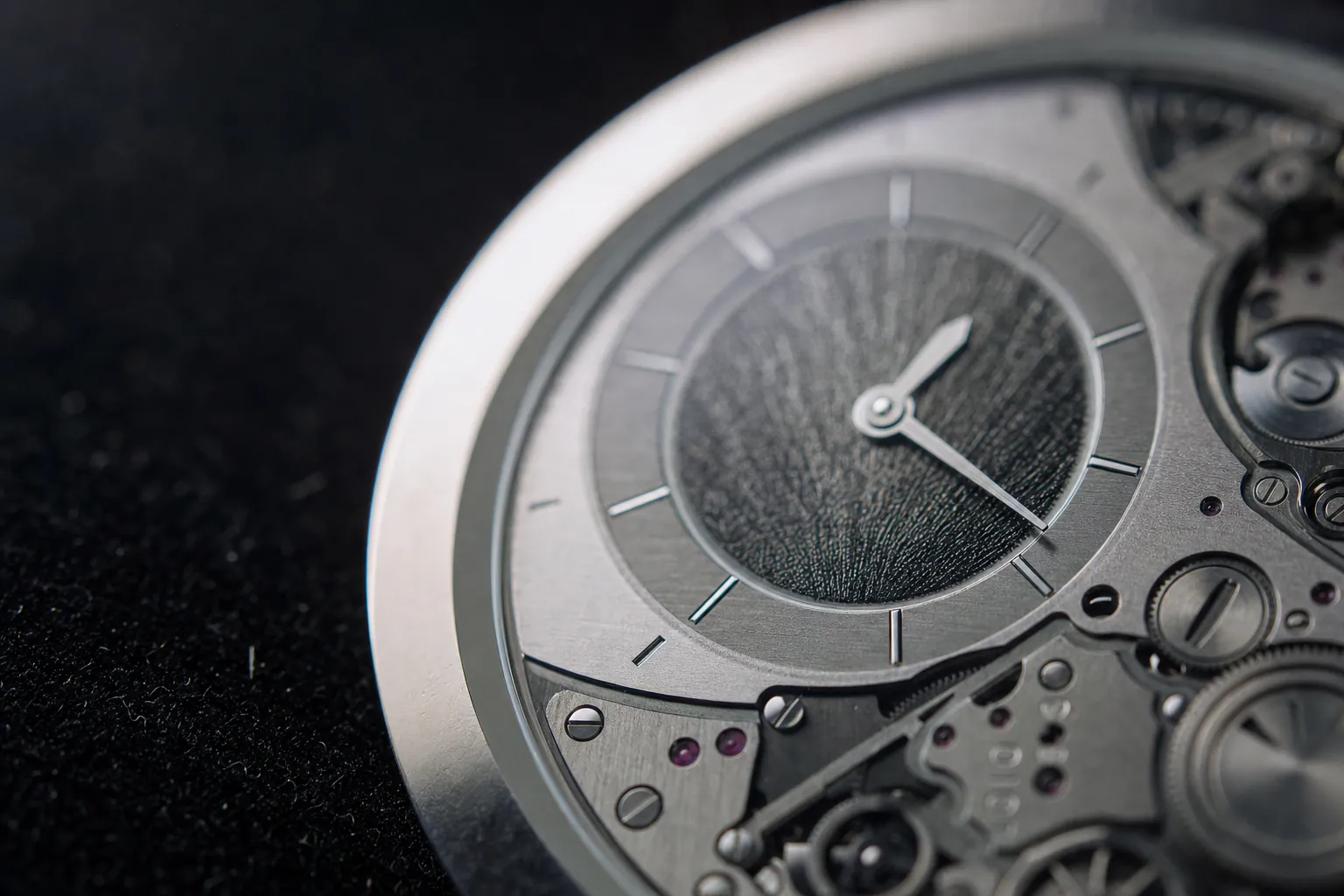
Navigating the secondary market for ultra-thin dress watches requires a sharp eye for mechanical condition and dial integrity. As Piaget's signature dress watch since the late 1990s, the Altiplano represents the benchmark for slender silhouettes, house-developed calibers, and restrained elegance. This pre-owned Piaget Altiplano guide examines the nuances collectors must understand, from caliber architectures to subtle dial executions and critical case diagnostics.
Key References Across Modern Altiplano Generations
The Altiplano moniker officially debuted in 1998, though its mechanical DNA stretches back to the pioneering ultra-thin calibers Piaget developed in the late 1950s. Modern collectors generally split the collection into two key eras: the classic manual-wind period established in the late 1990s and 2000s, and the post-2010 era characterized by micro-rotor automatic calibers and expanded case diameters.
The Pure Manual-Wind Era (38mm and 34mm)
For purists seeking classic mid-century proportions translated into modern construction, the 38mm manual-wind Altiplanos remain the gold standard. References such as the G0A29112 (18k white gold) and G0A31114 (18k rose gold) house the manual-wind Caliber 430P. With a case thickness hovering around an astonishing 6.0mm, these references feature flat sapphire crystals, thin stepped bezels, and printed stick hour markers.
For smaller wrists or those seeking strict vintage dress proportions, Piaget also produced 34mm references (such as the G0A34114). These pieces share the same 430P movement but feature a more condensed dial aperture, providing an ultra-discreet profile under a tailored cuff.
The Small Seconds and Complication References
During the mid-2000s, Piaget expanded the Altiplano line by introducing off-center indications that emphasized dial asymmetry. The Altiplano 40mm Manual Small Seconds (Reference G0A34113 in rose gold and G0A33112 in white gold) introduced the manual-wind Caliber 838P. These references are distinguished by an off-center small-seconds register nestled between 10 and 11 o'clock, balanced by subtle Piaget branding at 3 o'clock.
Later additions introduced date complications via the Caliber 1205P, such as Reference G0A38130. Incorporating a date window into an ultra-thin dial requires severe engineering trade-offs, and Piaget accomplished this by placing the date aperture at 9 o'clock against a dedicated small seconds at 5 o'clock.
Reference Snapshot for Pre-Owned Buyers
| :--- | :--- | :--- | :--- | :--- |
|---|---|---|---|---|
| G0A29112 | 38mm | Caliber 430P (Manual) | 18k White Gold | Pure two-hand layout, silver dial |
| G0A31114 | 38mm | Caliber 430P (Manual) | 18k Rose Gold | Two-hand layout, stepped bezel |
| G0A34113 | 40mm | Caliber 838P (Manual) | 18k Rose Gold | Small seconds register at 10 o'clock |
| G0A35130 | 43mm | Caliber 1208P (Automatic) | 18k White Gold | Micro-rotor, small seconds at 4:30 |
| G0A35131 | 43mm | Caliber 1208P (Automatic) | 18k Rose Gold | Micro-rotor, 24k gold oscillating weight |
| G0A38130 | 40mm | Caliber 1205P (Automatic) | 18k Rose Gold | Date at 9 o'clock, small seconds at 5 |
Consulting our broader buying-guide framework can help you align these case specs with your wardrobe and collecting objectives.
Manual-Wind Versus Micro-Rotor Automatic Calibers
Choosing between a manual-wind Altiplano and a micro-rotor automatic is the primary mechanical crossroads for prospective collectors. Both approaches showcase Piaget's Manufacture de Haute Horlogerie in La Côte-aux-Fées, but they deliver drastically different ownership experiences.
Caliber 430P and 838P: The Manual Foundations
Caliber 430P serves as the modern spiritual successor to the historic 9P caliber. Measuring a scant 2.1mm in thickness, the 430P operates at 21,600 vibrations per hour (3 Hz) with an approximate 43-hour power reserve. It is a traditional manual-wind caliber built with a flat balance spring, balance-stop mechanism, and circular Côtes de Genève finishing across the bridges.
Winding a Caliber 430P requires deliberate tactile interaction. Because the movement is so flat, the crown is relatively small and sits close to the case band. Collectors should expect a light, smooth winding resistance; any harsh mechanical friction or gritty feedback suggests dried lubricants or gear-train contamination.
The Caliber 838P builds upon this architecture, measuring 2.5mm thick. It incorporates an extended 60-hour power reserve, an eccentric balance screw assembly, and the mechanics required to drive the 10 o'clock small-seconds indicator.
Caliber 1200P and 1208P: The Micro-Rotor Marvels
Introduced in 2010 to mark the 50th anniversary of the legendary Caliber 12P, Caliber 1200P (and its small-seconds variant, Caliber 1208P) measures just 2.35mm thick. Achieving this required Piaget to integrate an off-center micro-rotor into the mainplate rather than mounting a central rotor above the movement bridge.
Key technical aspects collectors should evaluate in Caliber 1200P/1208P references include:
- Rotor Mass: The micro-rotor is crafted from 24k gold (or platinum in certain limited editions) to provide sufficient gravitational inertia despite its diminutive radius.
- Winding Efficiency: Because micro-rotors generate lower torque than full-size rotors, check that the oscillating weight swings freely without scraping against adjacent bridges.
- Small Seconds Positioning: The 1208P routes its subsidiary seconds train to 4:30, a layout signature unique to this caliber family.
- Exhibition Aesthetics: Almost all 1200P and 1208P Altiplanos feature sapphire display backs, revealing beveling, blued screws, wheels with sunburst brushing, and the coat-of-arms engraved on the rotor.
When browsing the pre-owned market through our curated /shop, determining whether you prefer the meditative daily ritual of the 430P or the self-winding convenience of the 1200P should be your initial mechanical filter.
Dial Variants: Hardstone, Guilloche, and Minimalist Markers
While movement engineering forms the backbone of the Altiplano, Piaget's historical expertise as a jeweler and dial maker informs the line's visual identity. The dial options found in pre-owned specimens dramatically alter the character of the watch.
Minimalist Baton and Crosshair Dials
The purest Altiplano dials lean entirely into mid-century restraint. These dials feature a matte opaline or silvery sunburst base accented with exceptionally slender baton indexes. On many references, Piaget alternates single and double baton markers, occasionally bisecting the dial with faint crosshairs that trace back to 1960s dress aesthetics.
Because the typography and markers are so fine, printing flaws cannot hide. When evaluating a pre-owned piece, inspect the dial surface under magnification for transfer-print degradation, spotting around the marker edges, or hairline cracking on older lacquered variants.
Guilloché and Textured Treatments
Select modern editions feature guilloché dials that disrupt the flat plane of the ultra-thin case. These patterns—ranging from classical radiating sunbursts to basketweave motifs—catch light at varied angles, introducing visual depth to a watch that sits mere millimeters off the wrist. Pay special attention to the transition between the textured field and the printed brand script; the stamping or engine-turning must remain crisp with no bleeding into the flat typography beds.
Hardstone and Métiers d’Art Dials
Piaget remains one of the few manufactures with continuous expertise in slicing ornamental stone to fractions of a millimeter without fracturing. Within the secondary Altiplano market, collectors occasionally encounter rare dials crafted from:
- Lapis Lazuli: Deep ultramarine surfaces flecked with golden pyrite inclusions.
- Onyx: High-gloss, absolute black stone delivering stark contrast against white gold hands.
- Malachite: Vivid green bands featuring natural mineral striations.
- Meteorite: Slices of iron-nickel meteorite treated to reveal natural Widmanstätten crystalline structures.
Hardstone dials require rigorous vetting. Any internal shock or improper servicing can cause hairline fractures. Use angled macro lighting to confirm there are no microscopic cracks propagating outward from the center pinion or the perimeter mounting points.
Evaluating Ultra-Thin Case Integrity and Wear
Evaluating the exterior condition of an Altiplano demands a different mindset than assessing a standard sports watch. The architecture of an ultra-thin case is fragile by design, leaving little margin for careless refinishing or physical trauma.
The Dangers of Over-Polishing
Altiplano cases rely on razor-thin stepped bezels, crisp caseback flanges, and subtle transitions along the straight lugs. Because these cases are crafted primarily from 18k white gold or rose gold—both relatively soft alloys—careless polishing can permanently ruin the watch's geometry.
When evaluating a prospective purchase, examine:
- Lug Definition: The lug profiles should exhibit crisp flat tops and definitive angles where they meet the case band. If the lugs appear rounded, shortened, or asymmetrical, the case has been over-polished.
- Bezel Edge: The bezel sits tight to the sapphire crystal. Over-polishing rounds off the exterior perimeter of the bezel, causing it to catch light unevenly.
- Hallmarks and Case Numbers: Piaget engraves serial numbers, reference designations, and gold purity hallmarks on the caseback. These engravings are shallow by necessity. If the hallmarks appear washed out or faded, avoid the piece.
Warping and Caseback Integrity
Because the case components are thin, external shock or overtightened caseback screws can introduce microscopic warping. Look down the lateral profile of the watch; the gap between the bezel, middle case, and caseback should be uniform across the entire circumference.
Ensure the solid or exhibition caseback sits perfectly flush. If a solid caseback has been opened with incorrect tools, soft gold casebacks can deform, compromising the dust and moisture seal.
Sizing and Proportion on the Wrist
The Altiplano defies traditional case diameter expectations because of its dial-to-bezel ratio. On standard sports watches, thick rotating bezels compress the visual dial area. The Altiplano, conversely, is virtually all dial, framed by a razor-thin bezel.
As a consequence, an Altiplano wears significantly larger than its numerical diameter indicates:
- The 38mm Reference: Wears like a contemporary 40mm dress watch. It represents the sweet spot for wrists measuring between 6.25 and 7.25 inches.
- The 40mm Reference: Possesses significant wrist presence. With its broad dial face, it wears similarly to a 42mm sports model, making it ideal for average-to-larger wrists.
- The 43mm Reference: Originally designed during the oversized luxury watch era, the 43mm automatic Altiplano features expansive visual real estate. Because the watch is under 6mm thick, a 43mm Altiplano sits completely flat against the wrist. However, if your wrist is under 7 inches, the lugs may overhang the wrist line, creating an awkward stance.
When purchasing pre-owned, factor in the strap thickness as well. Thick, padded aftermarket straps overwhelm an Altiplano's slender case; the watch demands ultra-thin, tapering alligator or calfskin straps to preserve its designed balance.
Crucial Servicing Factors for Ultra-Thin Movements
Maintaining an ultra-thin caliber introduces strict tolerances that standard independent watchmakers often cannot accommodate. Understanding these mechanical sensitivities is essential before finalizing an acquisition.
Ultra-thin calibers operate with microscopic vertical clearances between the gear trains, bridges, and hands. In movements like the 430P or 1200P, the clearance between the hour hand, minute hand, and the underside of the sapphire crystal is measured in tenths of a millimeter. If a watchmaker misaligns a hand during reassembly, the hands can scrape against each other or drag against the crystal, stopping the movement entirely.
Lubrication is similarly unforgiving. Because an ultra-thin gear train generates less driving torque than an industrial-spec sports movement, dried or over-applied oils will immediately cause erratic amplitude drops. The mainspring barrel is compact, meaning any mechanical drag degrades timekeeping precision rapidly.
When reviewing service documentation on a pre-owned Altiplano, look for verification of factory service by Piaget or an authorized Richemont service center. Independent watchmakers must possess specific micromechanical tooling and technical sheets to adjust the delicate escapement assemblies of the 430P and 1200P families correctly.
Frequently Asked Questions
### What is the difference between Caliber 430P and Caliber 1200P in pre-owned Altiplanos? Caliber 430P is a manual-wind movement measuring just 2.1mm thick, operating at 21,600 vph with a central two-hand display. Caliber 1200P is a self-winding movement measuring 2.35mm thick that relies on an integrated, off-center 24k gold micro-rotor. The 430P delivers a more classical, interactive daily winding experience in 38mm cases, while the 1200P offers automatic winding utility typically found in 40mm and 43mm cases.
### How durable are pre-owned Piaget Altiplano dress watch cases? Altiplano cases are designed purely for formal and business wear, crafted primarily from 18k gold with water-resistance ratings rarely exceeding 20 to 30 meters. The thin bezels and slender lugs lack the material mass of modern sports watches, meaning they can warp or dent if subjected to heavy impact. Collectors should treat them as delicate fine instruments, protecting them from moisture, gym environments, and direct physical shocks.
### Which case sizes are most common in the secondary Altiplano market? The 38mm and 40mm references represent the bulk of the pre-owned market, as they strike the best balance between historical dress watch proportions and modern taste. The 43mm micro-rotor models are widely available as well, though their broad dial apertures appeal to collectors with larger wrists. Traditional 34mm references appear less frequently and cater primarily to purists seeking strict vintage-inspired dimensions.
### What should buyers check before purchasing a pre-owned Piaget Altiplano? Buyers should first evaluate the case geometry to confirm that excessive polishing has not rounded off the stepped bezel, softened the lug transitions, or erased the shallow caseback hallmarks. Next, use magnification to inspect the dial and hand clearances, confirming there are no hand-drag scratches on the dial plate or hairline fractures on hardstone surfaces. Finally, wind the crown to ensure the gear train engages smoothly without gritty resistance, verifying that the ultra-thin caliber runs with healthy amplitude.