Watchmaking Explained: Movements & Complications – A Collector's Guide
Published September 6, 2026 · Last updated October 20, 2026 · By Lume Wrist Watches
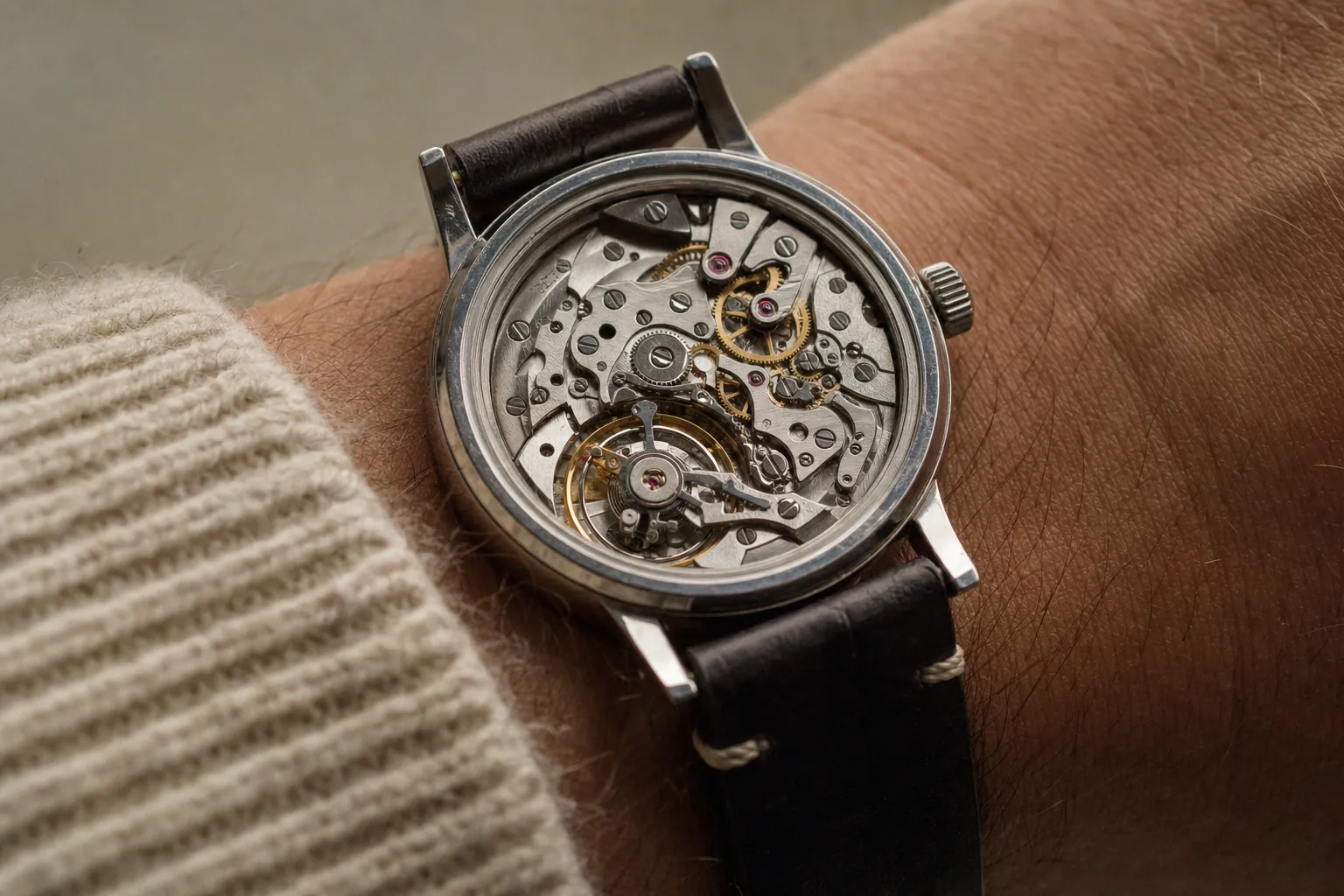
Understanding the intricate mechanisms that power a luxury watch is fundamental to appreciating its true value and artistry. This comprehensive guide from Lume Wrist Watches demystifies the core of horology: movements – the engine of a timepiece – and complications – the ingenious functions beyond simple time-telling. Delve into the fascinating world of mechanical mastery, from the rhythmic beat of a balance wheel to the awe-inspiring complexity of a perpetual calendar, empowering you to make informed choices for your collection.
Why This Topic Matters in Horology (Positioning, House Codes, Who It Is For)
At the heart of every exceptional timepiece lies a marvel of micro-engineering. For collectors, enthusiasts, and first-time luxury watch buyers, grasping the nuances of watch movements and complications is paramount. It’s what distinguishes a mere time-telling device from a portable work of art, a testament to human ingenuity and precision. It positions you as an informed collector, capable of discerning genuine craftsmanship and innovation.
Understanding movements reveals a brand's technical prowess, whether they produce their own "in-house" calibers or rely on expertly modified third-party ébauches. Complications, on the other hand, showcase a watchmaker's ability to push the boundaries of mechanical possibility, adding functionality and artistic flair. This deep dive is for anyone who wants to move beyond surface-level aesthetics and truly understand the soul of a watch.
History of Movements and Defining Milestones with Dates
The evolution of watch movements is a story of relentless innovation, driven by the desire for greater accuracy and portability.
- 16th Century (c. 1500s): The birth of the portable clock. Peter Henlein of Nuremberg is often credited with creating small, spring-driven clocks, marking the dawn of the mechanical watch. These early movements were bulky, inaccurate, and regulated by verge escapements with foliot balances.
- 17th Century (c. 1657): Christiaan Huygens invents the balance spring (hairspring), dramatically improving accuracy from hours per day to minutes per day. This invention was a monumental leap, making watches truly practical timekeepers.
- 18th Century (c. 1700s): Key developments include the lever escapement by Thomas Mudge (1755), which became the industry standard, and the widespread adoption of jewels (rubies) as bearing points to reduce friction and wear within the movement.
- 19th Century (c. 1800s): The industrial revolution brings mass production techniques to watchmaking, particularly in Switzerland and America. Abraham-Louis Breguet introduces the tourbillon (1801) to counteract gravity's effects on accuracy. Self-winding mechanisms begin to emerge, though they wouldn't become truly dominant until the 20th century.
- Early 20th Century (c. 1920s-1930s): The widespread adoption of the automatic winding movement. John Harwood patents a practical self-winding mechanism in 1924, followed by Rolex's seminal "Perpetual" rotor system in 1931, which revolutionized convenience.
- Mid 20th Century (c. 1950s-1960s): The "golden age" of mechanical watchmaking, with intense competition in chronometry and the development of robust, accurate movements like the Valjoux 72 for chronographs and ETA calibers for standard time-only watches. This period also saw the development of various specialized complications for divers, pilots, and scientists.
- Late 20th Century (c. 1970s): The Quartz Crisis significantly impacts the mechanical watch industry as inexpensive, highly accurate quartz movements from Japan flood the market. Many traditional Swiss manufacturers struggle or close.
- Late 20th Century to Present (c. 1980s-Today): A resurgence of mechanical watchmaking, driven by a renewed appreciation for craftsmanship and tradition. Focus shifts towards in-house movements, grand complications, and innovative materials. Brands like Grand Seiko innovate with hybrid technologies like Spring Drive, bridging mechanical and quartz worlds, which you can learn more about in a dedicated piece on Grand Seiko Spring Drive explained.
Every Type of Movement Explained, with Signature References
The movement is the beating heart of a watch, dictating how it tells time. There are three primary types:
1. Mechanical Movements
These are the epitome of traditional watchmaking, powered by a mainspring that stores energy and releases it through a gear train and escapement to move the hands. They are characterized by their intricate visible gears, springs, and levers.
a. Manual-Winding (Hand-Wound) Movements
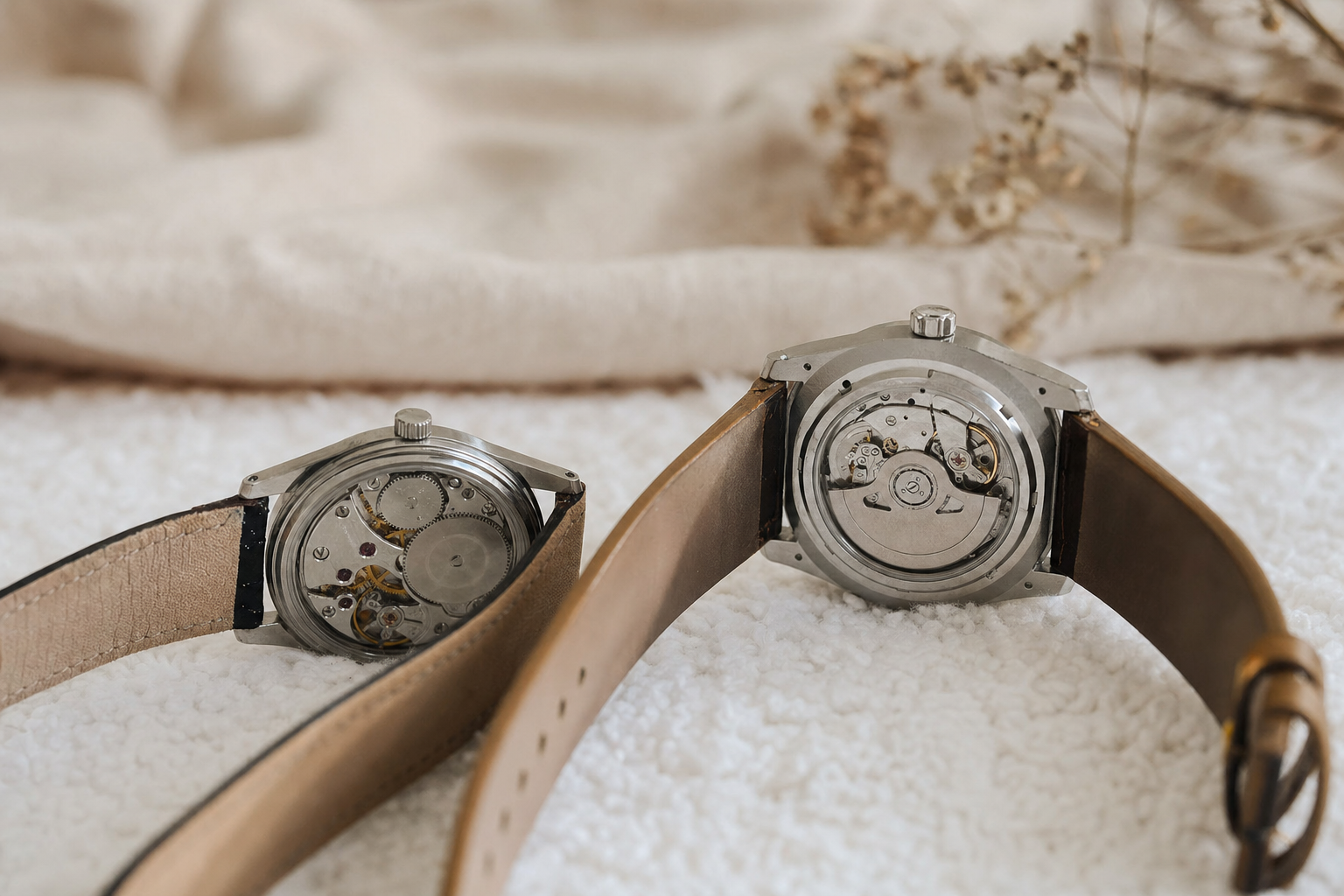
- How it works: The wearer must manually turn the crown to wind the mainspring, typically once every 24 to 72 hours, depending on the power reserve. This direct interaction fosters a deeper connection with the timepiece.
- Characteristics: Often thinner than automatics due to the absence of a rotor; transparent case backs showcase the meticulously finished movement. They are cherished for their purity and traditional charm. Our piece on Automatic vs manual winding: what to choose offers further insight.
- Signature References: Many dress watches and chronographs, like the Omega Speedmaster Professional "Moonwatch" (e.g., Caliber 3861 or its predecessors), utilize manual winding movements. Patek Philippe's Caliber 215 PS is another renowned manual-wind movement, often found in elegant Calatrava models.
b. Automatic (Self-Winding) Movements
- How it works: An oscillating weight, or rotor, rotates with the natural motion of the wearer's wrist. This rotation winds the mainspring, eliminating the need for daily manual winding.
- Characteristics: Convenience is key. While typically thicker than manual-wind counterparts, advancements have led to very slim automatic movements. The rotor can obscure some of the movement's beauty, but micro-rotors offer a solution.
- Signature References: The vast majority of luxury watches today are automatic. Iconic examples include the Rolex Caliber 3235 found in many modern date models (like the Rolex Submariner (114060)) known for its Chronergy escapement and 70-hour power reserve, and the ETA 2824-2 (a workhorse movement used by countless brands), and Omega's Co-Axial Master Chronometer calibers, renowned for their anti-magnetism and performance, such as the one in the Omega De Ville Tresor Blue Roman Dial).
2. Quartz Movements
- How it works: An electronic circuit powered by a battery sends an electrical current through a tiny quartz crystal, causing it to vibrate at a precise, very high frequency (typically 32,768 Hz). This vibration is then divided by the circuit to regulate a stepping motor, which moves the hands.
- Characteristics: Extremely accurate, highly durable, shock-resistant, and requires minimal maintenance (battery changes). Less expensive to produce than mechanical movements.
- Signature References: Widely used in more accessible watches, but also in high-end pieces like the Grand Seiko 9F quartz calibers, which are thermocompensated and hand-assembled to an exceptional standard, offering ±10 seconds per year accuracy.
3. Hybrid Movements (e.g., Spring Drive)
- How it works: Unique to Grand Seiko, Spring Drive movements are mechanically powered by a mainspring, but their speed is regulated by a quartz oscillator and an integrated circuit, all without a battery. The result is unparalleled precision (±1 second per day) and a perfectly smooth, gliding second hand.
- Characteristics: Combines the high torque and reliability of a mechanical movement with the superior accuracy of quartz, while being entirely self-sufficient. It offers the best of both worlds.
- Signature References: The Grand Seiko Caliber 9R86 (found in the Grand Seiko Evolution 9 Collection SLGC006G The Tentagraph), or the time-only 9R65, are prime examples of this groundbreaking technology.
Complications and In-House Calibers Used Across the Range
Complications are any function a watch performs beyond the display of hours, minutes, and seconds. They are a testament to a watchmaker's skill, adding layers of utility and artistic expression. The distinction between general complications and those requiring in-house calibers often highlights a brand's dedication to horological mastery.
Everyday Complications
These are commonly found and enhance daily wearability.
- Date Display: The most common complication, showing the current day of the month, often through an aperture or a sub-dial.
- Day-Date Display: Shows both the day of the week and the date.
- Power Reserve Indicator: Displays how much energy remains in the mainspring, a practical feature for manual-wind and automatic watches, ensuring you know when to wind or wear it. Learn more about power reserve, hairsprings and accuracy explained.
- GMT (Greenwich Mean Time) / Dual Time: Allows the wearer to track a second or even third time zone simultaneously, often with an independent 24-hour hand and a rotating bezel. Found in the iconic Rolex GMT-Master II, for instance.
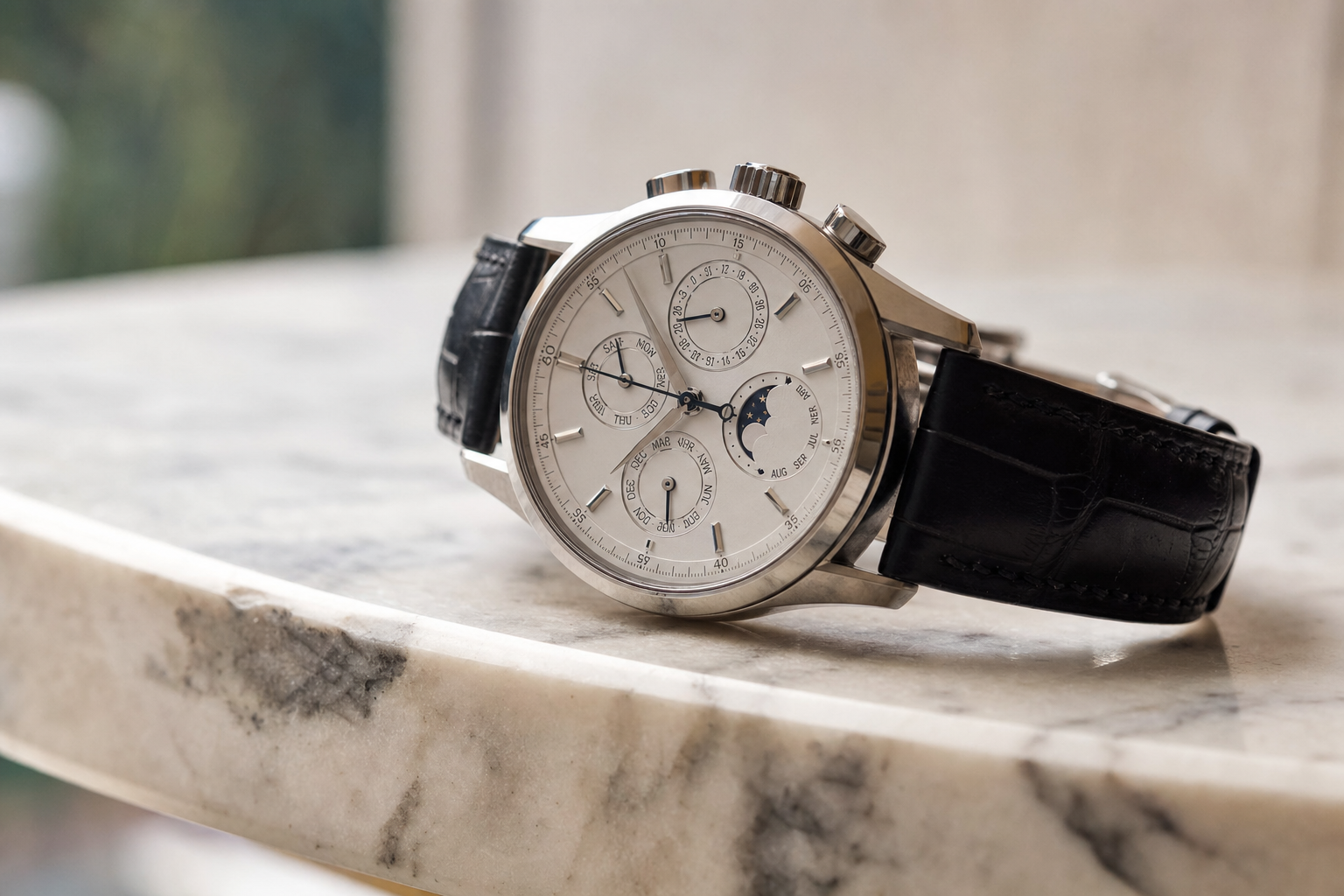
- Chronograph: A stopwatch function, allowing the measurement of elapsed time, independent of the time-telling function. These movements are incredibly complex, featuring pushers to start, stop, and reset. Deep dive into Chronograph movements explained for collectors.
- Moon Phase: Displays the current phase of the moon as seen from Earth, often through an aperture on the dial.
Grand Complications
These are highly complex and represent the pinnacle of watchmaking artistry, often requiring hundreds of additional components.
- Perpetual Calendar: Mechanically accounts for the varying lengths of months (28, 30, 31 days) and leap years, requiring adjustment only once every 100 years, provided the watch runs continuously. It is one of horology's most poetic and challenging complications. Explore this further with Tourbillons, perpetual calendars and minute repeaters.
- In-house Example: Patek Philippe's Caliber 240 Q is a celebrated ultra-thin automatic perpetual calendar movement, renowned for its elegance and reliability.
- Annual Calendar: Similar to a perpetual calendar but requires manual adjustment once a year, at the end of February.
- In-house Example: Rolex's Caliber 9001 in the Sky-Dweller is an ingenious annual calendar with an intuitive "Ring Command" bezel for setting.
- Tourbillon: Invented by Abraham-Louis Breguet, this mechanism houses the escapement and balance wheel within a rotating cage, designed to counteract the effects of gravity on the accuracy of a watch when in different positions. While its practical benefits are debated in modern watches, it remains a magnificent display of micro-mechanical engineering.
- In-house Example: Audemars Piguet's Royal Oak Tourbillon models often feature meticulously finished in-house tourbillon calibers, demonstrating their mastery in this field.
- Minute Repeater: An acoustic complication that chimes the time on demand, using hammers and gongs. It is arguably the most challenging complication to create, requiring extraordinary skill to produce a clear, melodious sound.
- In-house Example: Vacheron Constantin and Patek Philippe are masters of the minute repeater, with bespoke movements designed to produce specific tones and volumes.
- Split-Seconds Chronograph (Rattrapante): A highly complex chronograph that features two second hands, allowing for the timing of multiple simultaneous events. It is a chronograph of extreme difficulty to produce.
In-House Calibers: When a brand develops and manufactures its movements entirely "in-house" rather than sourcing from external suppliers (like ETA, Sellita, or Miyota), it signifies a high level of expertise, investment, and control over quality. This is a significant point of pride for many luxury brands and often commands a premium. Brands like Rolex, Patek Philippe, Audemars Piguet, and Grand Seiko are celebrated for their extensive use of proprietary in-house movements.
Price Tiers Today: Entry, Core and Grail, with Realistic Ranges
The cost of a luxury watch is heavily influenced by the complexity of its movement and complications, the brand's prestige, materials, and finishing. These are approximate market observations, not firm quotes.
| Tier | Movement/Complication Focus | Brands/References (Examples) | Approximate Market Range (USD) |
|---|---|---|---|
| :------------ | :------------------------------------------------------------------- | :------------------------------------------------------------------------------------------------------ | :-------------------------------- |
| Entry-Level Luxury | Reliable automatic/quartz; simple date/day-date. | Tissot, Longines, entry-level Oris, Seiko Prospex. | $500 - $3,000 |
| Core Luxury | Robust in-house automatics; chronographs, GMT, power reserve, robust water resistance. | Rolex (e.g., Datejust, Submariner), Omega (e.g., Seamaster, Speedmaster), Grand Seiko, Tudor, Zenith. | $3,000 - $15,000 |
| High-End Luxury | Advanced in-house movements; higher-end complications (e.g., annual calendars, intricate chronographs). | Panerai, Blancpain, Jaeger-LeCoultre, some Vacheron Constantin, Audemars Piguet entry. | $15,000 - $50,000 |
| Grail/Haute Horlogerie | Grand complications (perpetual calendars, minute repeaters, tourbillons); bespoke finishing; limited editions. | Patek Philippe, A. Lange & Söhne, Audemars Piguet (Grand Complications), independent watchmakers. | $50,000 - $500,000+ |
Prices can fluctuate significantly based on market demand, condition, specific reference, and material (e.g., steel vs. precious metals). Our authenticated collection features watches across many of these price points.
What to Check Before Buying Pre-Owned from This Maison (General Watchmaking Principles)
When acquiring a pre-owned luxury watch, especially one with complex movements or complications, thorough due diligence is essential. This applies to any high-value timepiece, regardless of brand.
- Authenticity is Paramount: Always verify the watch's authenticity. Look for correct serial numbers, appropriate engravings, and ensure the movement matches the caliber expected for that reference. The dial, hands, and case should be consistent with factory specifications. Lume Wrist Watches offers our inspection process to guarantee peace of mind.
- Movement Condition: A well-maintained movement is critical. Ask for service history. A watch with a complex complication, like a perpetual calendar or chronograph, is far more costly to repair if neglected. Check for signs of rust, damage, or amateur repairs. The winding mechanism should feel smooth, and all functions (date change, chronograph start/stop/reset, GMT hand adjustment) should operate crisply.
- Accuracy: While not all watches are COSC-certified, a luxury mechanical watch should keep time within reasonable parameters (e.g., +/- 10 seconds per day for most automatics, much tighter for chronometer-certified or Grand Seiko Spring Drive movements). Ask for timekeeping results if available.
- Complication Functionality: Test every single complication. Does the date change precisely at midnight? Does the chronograph reset perfectly to zero? Does the moon phase advance correctly? For grand complications, these checks are even more critical, as repairs can be exorbitant.
- Water Resistance: Confirm if the watch has been pressure tested, especially for dive watches. Older watches or those that have been opened for service should always be re-tested to ensure their water resistance ratings decoded are accurate.
- Originality: Assess if components like the crown, crystal, dial, and hands are original to the watch. "Service parts" can impact collector value. For instance, a vintage Rolex with original tritium lume hands is generally more desirable than one with service luminova replacements.
- Documentation and Box: Original box, papers, and warranty cards add significant value and provide important provenance. For further reading on this, consult our Watch Authentication & Provenance: The Lume Wrist Watches Guide.
Current Authenticated Stock at Lume Wrist Watches
Our meticulously curated collection of authenticated luxury watches often features exceptional timepieces showcasing a diverse array of movements and complications. While specific inventory changes, we consistently offer a selection from leading maisons known for their horological prowess.
Explore timepieces from leading brands in our Rolex collection featuring their robust in-house automatic movements, or discover the innovative hybrid technology in our Grand Seiko collection. For collectors interested in the highest echelons of craftsmanship, we occasionally feature exquisite Patek Philippe timepieces and stunning Audemars Piguet Royal Oaks with impressive complications. You can also browse our full authenticated collection and all featured maisons for specific models like the Rolex Submariner (114060), an Omega De Ville Tresor Blue Roman Dial or the technologically advanced Grand Seiko Evolution 9 Collection SLGC006G The Tentagraph.
Lume Wrist Watches ensures every piece is rigorously inspected and verified, offering you confidence in your purchase. Whether you are in luxury watches in New York, seeking a watch in luxury watches in California, or looking for luxury watches delivered to all 50 states, we provide exceptional service.
Frequently Asked Questions
### What is the difference between a movement and a complication? A movement is the engine of the watch, responsible for keeping time. A complication is any function a watch performs beyond displaying hours, minutes, and seconds, such as a date display, chronograph, or perpetual calendar. All watches have a movement, but not all watches have complications.
### Are in-house movements always better than outsourced movements? Not necessarily. While in-house movements often signify a brand's dedication and can offer unique features or higher levels of finishing, many outsourced movements (like those from ETA or Sellita) are incredibly reliable, accurate, and easier to service due to wider parts availability. The quality often depends on the specific caliber and the brand's modification and finishing.
### What is a "chronometer" and how does it relate to accuracy? A chronometer is a precision watch that has passed a series of stringent tests by an official, independent body (most commonly COSC - Contrôle Officiel Suisse des Chronomètres) to verify its accuracy and reliability. While an excellent indicator of performance, it's a certification, not a type of movement itself.
### Why are some complications, like the minute repeater or perpetual calendar, so expensive? Grand complications are incredibly intricate, requiring hundreds of tiny, precisely manufactured and hand-finished components. The assembly and adjustment demand immense skill and many hundreds of hours of labor from master watchmakers, making them exceptionally costly to produce.
### How often should a mechanical watch movement be serviced? Most mechanical watch manufacturers recommend a service interval of approximately 3 to 7 years. This interval can vary depending on the movement's complexity, daily wear, and environmental factors. Regular servicing ensures optimal performance and longevity for the intricate components.
### What is the significance of jewels in a watch movement? Jewels (typically synthetic rubies) are used as bearings for the pivots of gears and other moving parts within the movement. Their low friction properties reduce wear and tear, improving accuracy and extending the lifespan of the movement. A higher jewel count often indicates a more complex or finely finished movement, though it's not the sole indicator of quality.
## More in this series - IWC Portugieser Chronograph: The Definitive Buyer's Guide - Zenith El Primero: Legacy of the High-Beat Chronograph - Chronograph Movements: An Expert Collector's Deep Dive - Nomos Watches Guide to Bauhaus Design and In-House Movements - Zenith El Primero: A Legacy of High-Frequency Chronograph Precision - IWC Portugieser Chronograph Buyer's Guide: A Definitive Exploration - How a Tourbillon Works and When It Matters to Collectors - Tudor 1926 Watch Guide to Sizes, Dials, and Movements - Tudor Black Bay Chrono Guide to References and Movements
Contact Lume Wrist Watches
Ready to explore the world of luxury watches with exceptional movements and complications? Contact our expert team for personalized assistance, private viewing appointments, or to inquire about specific timepieces.
- Email: sales@lumewrist.com
- Phone: +1 (332) 285-2190
- Office (by appointment only): 18 East 48th Street, Suite 1503, New York, NY 10017
- Hours: Mon–Fri 9:00 AM – 7:00 PM EST · Closed Saturday & Sunday
- Visit our contact page for more options or browse our shop.
Final Thoughts
The enduring allure of luxury watches lies not just in their aesthetic appeal, but in the miraculous micro-mechanical worlds contained within their cases. Understanding the nuances of watch movements and complications transforms a casual observer into an enlightened collector, revealing the heritage, engineering genius, and artistic dedication inherent in every tick and chime. At Lume Wrist Watches, we are passionate about these horological wonders and invite you to explore our carefully authenticated selection, where each timepiece tells a story of precision and passion. Discover your next cherished acquisition in our authenticated collection.