Water Resistance Ratings Explained: A Collector's Guide 2026
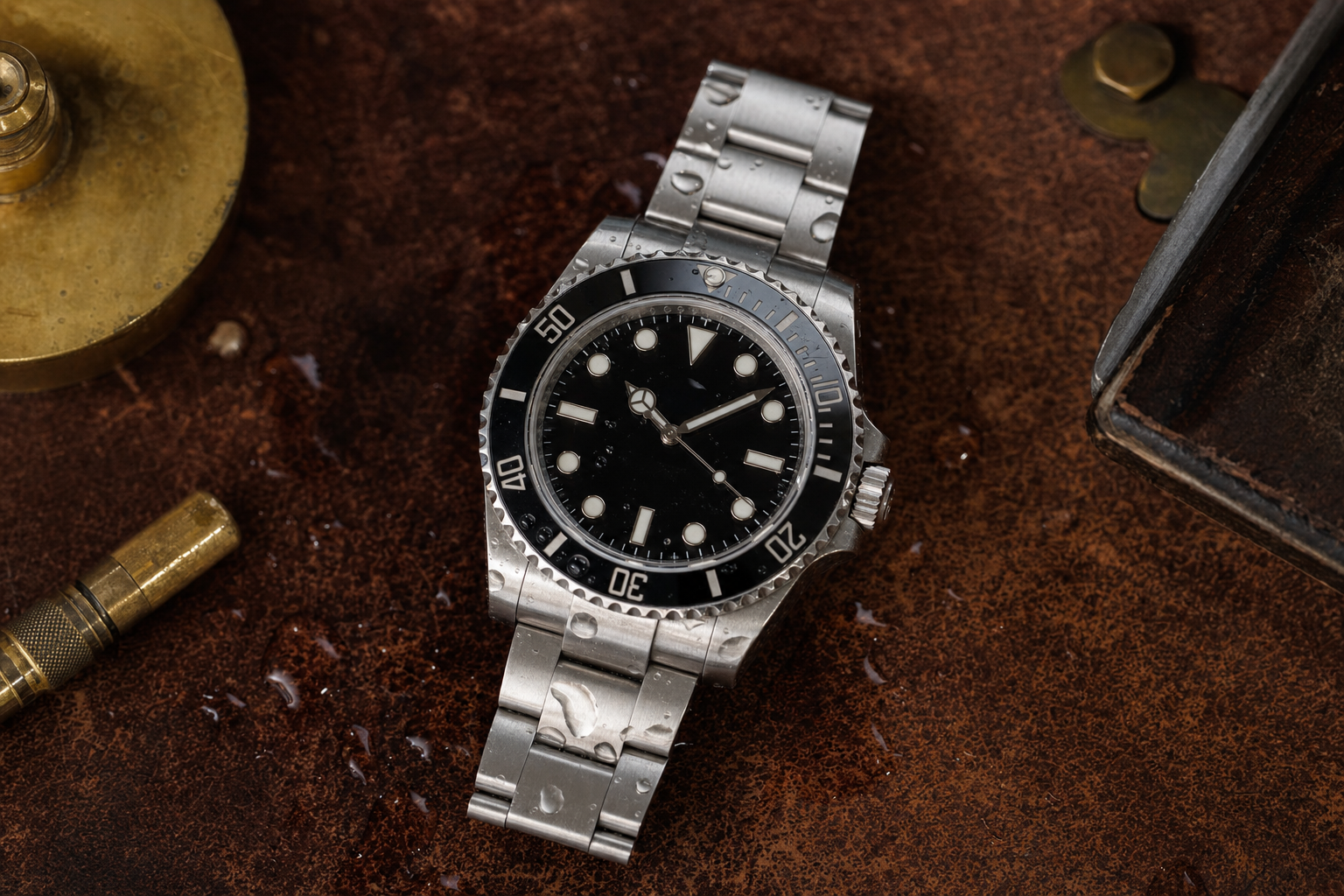
Unravel the complexities of watch water resistance ratings (ATM, Meters, Bar) in our definitive 2026 guide for collectors. Understand what your watch can truly withstand.
# Water Resistance Ratings Explained: A Collector's Guide 2026 Understanding a watch's water resistance rating is crucial for any collector, as it dictates the practical limits of its exposure to moisture and water pressure. A watch's water resistance indicates its ability to prevent water ingress into the case under specified conditions, typically measured in atmospheres (ATM), meters (m), or bar (bar). This guide will thoroughly decode these ratings, clarifying what each means for the longevity and functionality of your cherished timepiece, ensuring you make informed decisions about its use and care. ## Definition in one clear sentence **Water resistance** in horology refers to a watch's ability to withstand water pressure and prevent moisture from entering its case, quantified by standardized ratings (ATM, meters, or bar) under controlled laboratory conditions, not as an absolute guarantee of real-world impermeability. ## How it works, in plain language At its core, a watch's water resistance is achieved through a combination of engineering techniques designed to create a sealed environment around the delicate movement. The primary components contributing to this seal are **gaskets** (also known as O-rings), a **screw-down crown**, a **screw-down caseback**, and a tightly fitted **crystal**. Gaskets, typically made from rubber, silicone, or synthetic compounds like Viton, are strategically placed at potential entry points: around the crystal, the caseback, and the crown stem. When compressed, these gaskets create a tight seal that impedes water molecules from passing through. A **screw-down crown** is a vital feature for higher levels of water resistance. Unlike a push/pull crown, which relies on friction and gaskets alone, a screw-down crown threads into a tube on the case, creating a much more secure seal. This is particularly evident in professional dive watches, such as the [Rolex Submariner](/shop?brand=Rolex) (e.g., reference 126610LN) or the [Omega Seamaster Professional 300M](/shop?brand=Omega) (e.g., reference 210.30.42.20.01.001), which often boast impressive water resistance of 300 meters or more. Similarly, a **screw-down caseback** offers superior water resistance compared to snap-on or exhibition casebacks, as it compresses a large gasket more effectively against the case. The watch's crystal, often made of sapphire, is also press-fit into the bezel with an underlying gasket, contributing to the overall water-tightness. For extreme depths, some dive watches also incorporate a **helium escape valve (HEV)**, which allows mixed-gas divers to safely decompress without pressure building up inside the watch case, potentially popping the crystal. It's critical to understand that these ratings are established in **static laboratory conditions**, meaning the watch is subjected to a specific pressure level without any movement. In real-world scenarios, dynamic forces like swimming strokes, impacts, or rapid temperature changes can exert pressures significantly higher than the static rating, which is why a watch rated for 50m might still be unsuitable for prolonged swimming. This distinction is crucial for collectors seeking [luxury watches delivered to all 50 states](/watches) and understanding their true capabilities. ## History and why it was developed The concept of making watches resistant to water gained prominence out of necessity and a desire for greater reliability. Early timepieces were highly susceptible to moisture, which could corrode delicate movements, fog crystals, and ultimately stop the watch. The initial developments were driven by military requirements and the needs of professionals working in wet environments. One of the earliest and most significant breakthroughs came in 1926 when **Rolex** introduced the **Oyster case**. This revolutionary design featured a hermetically sealed case with a patented screw-down crown, bezel, and caseback, effectively making the watch waterproof (a term Rolex later ceased using due to potential misinterpretation, preferring "water resistant"). This innovation was famously demonstrated when Mercedes Gleitze wore an Oyster watch during her English Channel swim in 1927, and it emerged in perfect working order. This marked a pivotal moment, shifting watches from delicate instruments to robust tools capable of withstanding the elements. Throughout the 20th century, as underwater exploration and recreational diving grew in popularity, the demand for truly water-resistant watches intensified. This led to the development of dedicated **dive watches**. Brands like **Blancpain** with its Fifty Fathoms (1953) and **Rolex** with its Submariner (1953) were instrumental in defining the genre, setting new standards for water resistance, legibility, and robustness. These early dive watches spurred further advancements in gasket materials, case construction, and testing methodologies. The need for standardized testing became apparent to ensure consumer safety and consistent performance. This culminated in the establishment of the **ISO 6425 standard** for diver's watches in 1996 (superseding earlier standards). This international standard specifies the requirements and test methods for watches designed to withstand diving in water at depths of 100 meters or more, and equipped with a system to control time. It mandates additional tests beyond simple static pressure, including condensation tests, thermal shock resistance, and resistance to external forces, providing a reliable benchmark for professional diving timepieces. This historical progression highlights the continuous innovation in [watchmaking explained: movements and complications](/blog/watchmaking-explained-movements-complications-collectors-guide) to meet evolving demands. ## How it affects you as a buyer Understanding water resistance ratings directly impacts your purchasing decisions and how you care for your luxury timepiece. Misinterpreting these ratings can lead to costly damage, voided warranties, and disappointment. Here's how it affects you: * **Matching Watch to Lifestyle**: Your daily activities should dictate the minimum water resistance you require. A dress watch with 30m WR is fine for desk work and occasional splashes, but wholly inadequate for swimming. If you lead an active lifestyle or enjoy water sports, a watch with 100m WR or more is essential. For serious diving, only an ISO 6425 certified diver's watch will suffice. Consider a robust piece like the [IWC Aquatimer Chronograph IW376710 Blue Dial](/product/iwc-aquatimer-chronograph-iw376710-blue-dial) for aquatic adventures. * **Maintenance and Longevity**: Gaskets degrade over time due to exposure to chemicals (chlorine, saltwater, soaps), UV light, and general wear. This means a watch's original water resistance is not permanent. Regular servicing, typically every 3-5 years, is crucial to inspect and replace worn gaskets. For example, [Rolex Servicing Costs & Intervals in 2026: What to Expect](/blog/rolex-servicing-costs-intervals-2026-guide) details the importance of periodic maintenance for maintaining water integrity. Ignoring this can lead to water intrusion, requiring extensive and expensive repairs to the movement.  * **Warranty Implications**: Most manufacturers' warranties specifically exclude damage caused by water ingress if the watch was used beyond its stated water resistance, if the crown was left unscrewed, or if the watch was opened by an unauthorized service center. Always ensure the crown is fully screwed down before any water exposure. * **Understanding the "Static vs. Dynamic" Fallacy**: As mentioned, laboratory ratings are static. A 50m WR watch is *not* meant for diving to 50 meters. The dynamic pressures from swimming strokes can easily exceed the static pressure equivalent of 50m. For general swimming, 100m is a safer minimum, and for snorkeling or recreational diving, 200m+ is recommended. * **Thermal Shock**: Rapid temperature changes (e.g., going from a hot sauna directly into cold water) can cause metal components to contract and expand at different rates, potentially compromising seals and leading to water ingress or condensation under the crystal. Even highly water-resistant watches are vulnerable to severe thermal shock. * **Pre-Owned Considerations**: When buying pre-owned luxury watches, especially vintage pieces, assume that the original water resistance is compromised unless it has been recently serviced and pressure-tested. Always have a trusted watchmaker perform a pressure test if you intend to expose the watch to water. For example, when considering [Vintage Omega: Your Essential Pre-Purchase Checklist & Buying Guide](/blog/vintage-omega-pre-purchase-checklist), water resistance integrity should be a key inspection point. ### Water Resistance Ratings & Recommended Activities It's important to consult this table as a general guideline, not an absolute rule. Always err on the side of caution. | Rating (ATM/Meters/Bar) | General Indication | Recommended Activities | Notes | | :---------------------- | :--------------------- | :------------------------------------------------------- | :------------------------------------------------------------------------------------------------------- | | 3 ATM / 30m / 3 bar | Splash Resistant | Accidental splashes, rain, washing hands | Not suitable for showering, swimming, or submersion. Crown must be pushed in. | | 5 ATM / 50m / 5 bar | Water Resistant | Showering (brief), light swimming (gentle breaststroke) | Not for diving, vigorous swimming, or prolonged submersion. Avoid hot water. | | 10 ATM / 100m / 10 bar | Water Resistant | Swimming, snorkeling, surface water sports | Generally safe for recreational swimming. Not for high-impact water sports or diving. Screw-down crown preferred. | | 20 ATM / 200m / 20 bar | Diver's Watch (non-ISO)| Recreational scuba diving, serious water sports | Suitable for most water activities, including diving up to recreational limits. Screw-down crown usually present. | | 30 ATM / 300m / 30 bar+ | Diver's Watch (ISO 6425)| Professional diving, saturation diving (with HEV) | Meets ISO 6425 standards for true dive watches. Designed for significant underwater pressure. | Choosing the right watch for your lifestyle involves more than aesthetics; it requires a deep understanding of its functional capabilities, especially when considering [luxury watches in New York](/watches/new-york) or other active metropolitan areas. ## Related terms defined (mini glossary list) * **ATM (Atmospheres)**: A unit of pressure commonly used in watch water resistance ratings. 1 ATM is approximately equal to the pressure exerted by 10 meters of water. This is a static pressure measurement. * **Bar**: Another unit of pressure. 1 bar is approximately equal to 1 ATM or 10 meters of water depth. Often used interchangeably with ATM in watch specifications. * **Screw-Down Crown**: A crown that threads into a tube on the watch case, creating a highly secure, watertight seal. Essential for higher water resistance ratings. * **Screw-Down Caseback**: A caseback that screws into the watch case, compressing a gasket and creating a tighter seal than a snap-on caseback. * **Gasket/O-Ring**: A ring made of rubber, silicone, or synthetic material used to create a watertight seal between different parts of the watch case (e.g., crystal, caseback, crown). * **Helium Escape Valve (HEV)**: A one-way valve found on some professional dive watches (e.g., Rolex Sea-Dweller, Omega Seamaster Ploprof) that allows helium atoms to escape from the watch case during decompression in a hyperbaric chamber, preventing the crystal from popping off due to internal pressure build-up. * **ISO 6425**: An international standard established by the International Organization for Standardization specifically for diver's watches. Watches meeting this standard undergo rigorous testing, including water resistance, legibility, shock resistance, and magnetic resistance, ensuring they are truly fit for professional diving. * **Pressure Test**: A test performed by watchmakers to verify the water resistance of a watch after servicing or battery replacement. It typically involves placing the watch in a chamber and subjecting it to air pressure or water pressure to detect leaks. ## Frequently Asked Questions  ### Can I shower with my 50m water-resistant watch? While a 50m rating might suggest suitability for showering, it's generally not recommended. Hot water and steam can expand and contract watch components, potentially compromising gaskets. Soaps and shampoos can also degrade seals over time. It's best to remove your watch before showering to prolong its water resistance integrity. ### How often should I have my watch's water resistance checked? It is advisable to have your watch's water resistance checked every 2-3 years, or whenever the watch is opened for service (e.g., battery replacement for quartz watches, movement service for mechanical watches). Gaskets can degrade over time, and regular pressure testing ensures continued protection against water ingress. ### Does extreme temperature affect water resistance? Yes, extreme temperature changes, especially rapid ones (thermal shock), can significantly impact a watch's water resistance. Rapid expansion and contraction of materials can temporarily compromise seals, leading to condensation or water intrusion. Avoid going from a hot sauna directly into cold water with your watch. ### What does "waterproof" mean on older watches? Older watches sometimes feature "waterproof" on their dials or casebacks. This term is largely obsolete in the modern watch industry, having been replaced by "water resistant" due to legal and practical considerations. No watch is truly 100% waterproof indefinitely, as seals can fail. Always treat older "waterproof" watches as merely splash-resistant unless recently serviced and pressure-tested. ### Can I operate the pushers or crown underwater? Operating the crown or chronograph pushers underwater on a non-dive watch is a common cause of water ingress. Unless your watch is specifically designed for this (e.g., some professional dive chronographs with unique pusher sealing mechanisms), always ensure the crown is screwed down and pushers are not actuated when the watch is wet or submerged. Doing so breaks the watertight seal. ### My watch has condensation under the crystal. What should I do? Condensation under the crystal indicates a breach in water resistance. This can be caused by temperature changes or direct water ingress. It's crucial to take your watch to a qualified watchmaker immediately. Even a small amount of moisture can lead to corrosion of the movement components, which can be very costly to repair if not addressed promptly. ## Contact Lume Wrist Watches For further inquiries regarding watch water resistance, expert advice on maintenance, or to explore our collection of exceptionally crafted timepieces, please get in touch with our team. * **Email**: sales@lumewrist.com * **Phone**: +1 (315) 413-9130 * **Boutique**: 18 East 48th Street, Suite 1503, New York, NY 10017 * **Hours**: Mon–Fri 9:00 AM – 7:00 PM EST · Closed Saturday & Sunday You can also visit [our contact page](/contact) for more options or browse [our authenticated collection](/shop) directly. ## Final Thoughts Understanding water resistance ratings is more than just interpreting numbers; it's about respecting the engineering marvel that is a luxury watch and ensuring its longevity. From the meticulously designed gaskets to the robust screw-down crowns, every component plays a vital role in protecting the intricate mechanical heart within. By adhering to recommended usage guidelines and prioritizing regular professional servicing, you can confidently enjoy your timepiece in various environments, from a casual day out to the depths of the ocean. For those seeking durable elegance, explore our curated selection of timepieces, including robust options like the [Hamilton Khaki Field Expedition (H70315110)](/product/hamilton-khaki-field-expedition-h70315110) or the sophisticated [Audemars Piguet Royal Oak Black Ceramic](/product/audemars-piguet-royal-oak-black-ceramic), available through [our shop](/shop).