Column Wheel vs Cam Chronograph Movements: 2026 Guide
Published October 24, 2026 · Last updated October 25, 2026 · By Lume Wrist Watches
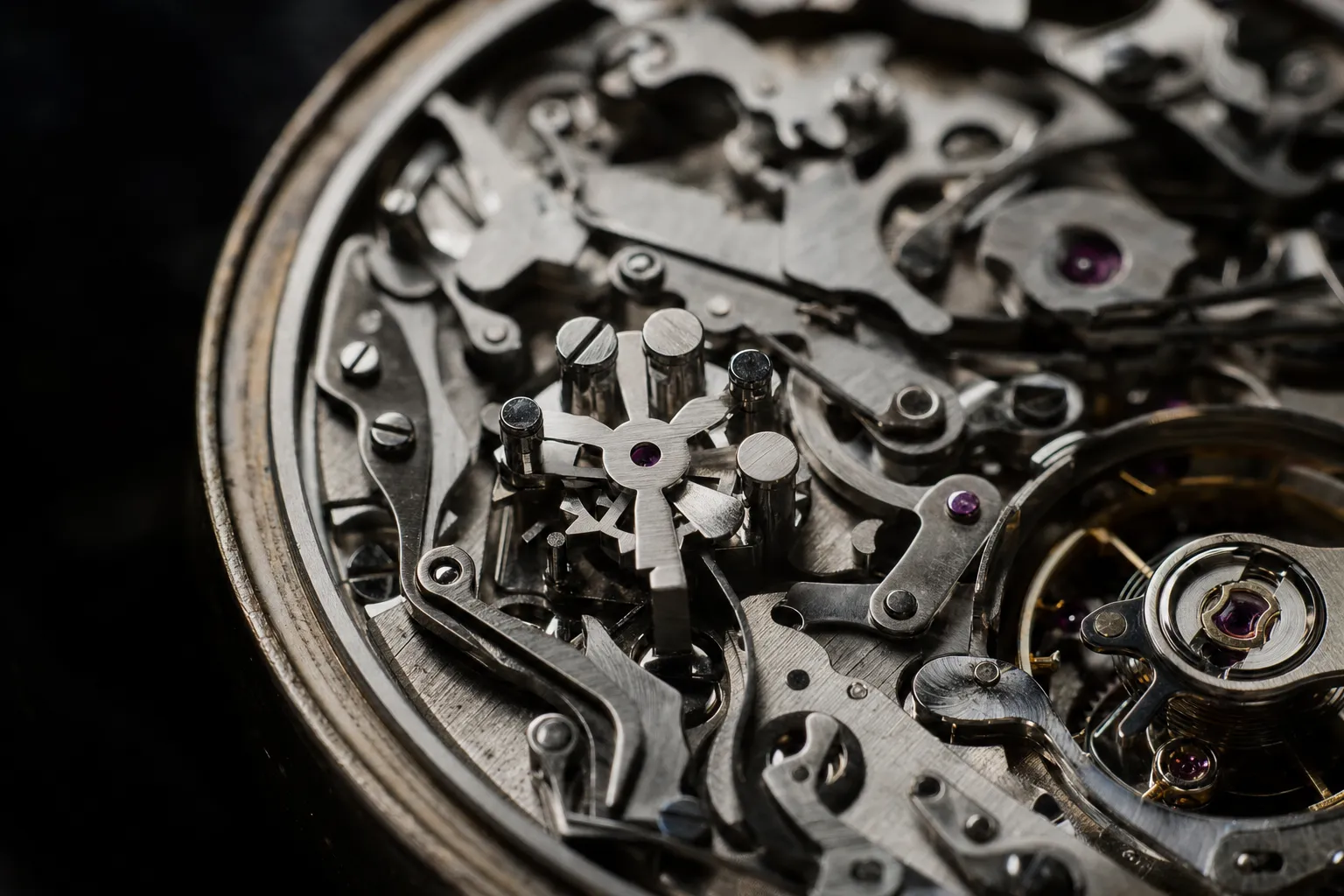
If you demand buttery pusher resistance, traditional haute horlogerie finishing, and historic prestige, buy a column wheel chronograph; if you prioritize rugged shock tolerance, cost-effective maintenance, and bulletproof mechanical reliability, choose a cam-actuated chronograph. While traditionalists revere the intricate architecture of the column wheel, modern cam-and-lever systems offer equal timekeeping precision at a fraction of the manufacturing and servicing cost. In this technical deep dive, we evaluate how these competing switching systems perform under real-world conditions, how they interface with lateral and vertical clutches, and which system belongs on your wrist.
Understanding the mechanical distinction between these two architectures is a fundamental milestone when exploring watchmaking explained: movements and complications. At Lume Wrist Watches, we regularly authenticate both legacy column wheel calibers and modern workhorse cam engines, giving our editorial team deep practical insight into how these movements age over decades.
---
Side-by-Side Specification Table
To contextualize how these architectures differ across engineering, tactile feedback, and manufacturing footprint, consider the technical breakdown below:
| Feature / Metric | Column Wheel Chronograph | Cam-Actuated Chronograph |
|---|---|---|
| :--- | :--- | :--- |
| Primary Switching Component | Precision-machined castellated pillar wheel | Stamped or wire-EDM multi-layer steel cams |
| Pusher Actuation Feel | Smooth, progressive, low tactile break-in resistance | Firm, distinct mechanical click; requires deliberate force |
| Manufacturing Method | Advanced CNC micro-milling or manual lathe turning | Industrial stamping, wire electrical discharge machining (EDM) |
| Component Tolerances | Extremely fine tolerances (<5 microns per pillar) | Moderate tolerances; self-compensating lever geometry |
| Service / Adjustment Complexity | High; requires specialized horological adjustment | Moderate to low; modular components are readily replaced |
| Benchmark Calibers | Zenith El Primero 400, Rolex 4130/4131, Omega 3861 | ETA/Valjoux 7750, Lemania 1873/Omega 1861, Sellita SW500 |
| Standard Clutch Pairing | Lateral clutch (vintage/haute) or Vertical clutch (modern) | Primarily oscillating pinion or lateral coupling levers |
| Average Service Interval | 5 to 7 years | 5 to 8 years |
| Entry-Level Market Range | ~$3,000 (entry modern) to $75,000+ (high complication) | ~$1,200 to $9,000 (tool watch segment) |
---
Design and Wearability Compared
From a functional design standpoint, the chronograph switching organ serves as the mechanical brain of the complication. It dictates the physical sequence of events: start, stop, and reset. However, the mechanism choice directly dictates movement thickness, pusher tactile feedback, and case proportions.
### Tactile Feedback and Pusher Ergonomics A column wheel—resembling a tiny architectural turret with vertical pillars—operates by rotating incrementally with each press of the start/stop pusher. Levers controlling the operating brake, coupling clutch, and reset hammers drop into the spaces between the pillars or ride up onto their outer crests. Because the rotation is uniformly radial, the spring tension needed to advance the wheel remains light and linear. When you press the top pusher on a column wheel reference, the actuation is silky and progressive.
Conversely, a cam-actuated chronograph (often called a heart-cam or shuttle system) relies on an upper and lower flat cam plate oscillating back and forth. Advancing this stamped steel shuttle requires overcoming stiff spring detents. On classic tool watches powered by the legendary Valjoux 7750, pushing the start pusher requires decisive fingertip pressure, producing a sharp, auditory "snap." While purists occasionally dismiss this as unrefined, military aviators and racing drivers have historically favored cam pushers because the distinct mechanical feedback prevents accidental double-actuation while wearing flight gloves.
### Movement Architecture and Case Thickness Traditional column wheel calibers, especially those mated to horizontal clutches, require significant flat surface area across the movement plate. This allows the levers to spread out laterally, yielding relatively slender movement profiles. For example, manual-wind column wheel calibers often measure under 6.0 mm in height, allowing brands to house them in dressy cases under 12.0 mm thick.
Cam systems—most notably integrated automatic architectures like the ETA/Valjoux 7750—were designed for industrial vertical modularity. With its oscillating weight, oversized mainspring barrel, and three-dimensional cam levers stacked above the gear train, the 7750 measures 7.9 mm in movement height alone. Consequently, cam-actuated chronographs frequently yield case profiles measuring 14.5 mm to 16.5 mm thick, creating a muscular wrist presence that tool watch enthusiasts love, though it can challenge formal shirt cuffs.
For collectors studying case ergonomics alongside water resistance, understanding overall housing geometry is paramount; you can read more in our collector's guide to water resistance ratings.
---
Movement and Accuracy Compared
Neither the column wheel nor the cam directly controls the escapement's daily rate; both systems merely marshal the levers that engage the chronograph runner to the base timekeeping gear train. However, the secondary systems they interface with—specifically the clutch mechanism—heavily influence timing precision and operational amplitude.
### The Clutch Interface: Lateral, Vertical, and Oscillating Pinion A common misconception is that the column wheel dictates whether the chronograph hand "jumps" upon starting. In truth, that visual stutter is determined by the clutch system:
- Lateral (Horizontal) Clutch: Traditional and visually breathtaking through a sapphire caseback. When activated by either a column wheel or a cam, a wheel swinging on a pivoted lever meshes horizontally into the central chronograph wheel. Because tooth meets tooth on a horizontal plane, the central seconds hand can exhibit a micro-jump. Many historically significant chronographs pairing a lateral clutch with a column wheel or cam require delicate meshing adjustments.
- Vertical Clutch: Standard on modern high-performance calibers like the Rolex 4130/4131 and the movement inside the Tudor Black Bay Chrono references (the Breitling-derived MT5813). Here, the drive wheels remain permanently aligned vertically; clamping friction plates engage them instantly with zero teeth clashing. Vertical clutches almost universally pair with column wheels today.
- Oscillating Pinion: Patented by Edouard Heuer in 1887 and refined across millions of cam-actuated 7750 calibers. A small pivoting arbor tipped with dual pinions links the fourth wheel to the chronograph mechanism. It is exceptionally durable, energy-efficient, and easy to regulate.
### Amplitude Loss and Isochronism When a chronograph complication is engaged, the additional friction draws torque away from the escapement balance wheel. On unserviced vintage lateral-clutch calibers, engaging the chronograph can drop balance amplitude by 25 to 40 degrees, causing the watch to lose seconds over several hours of continuous timing.
Modern column-wheel/vertical-clutch systems display virtually zero measurable amplitude drop when the timer runs continuously. This mechanical harmony is tied closely to how power delivery interacts with the hairspring, as explored in our technical breakdown of power reserve, hairsprings, and balance accuracy. For those evaluating winding efficiency alongside continuous chronograph operation, comparing automatic vs manual winding movements reveals how mainspring torque distribution stabilizes daily timing.
---
Price and Value Retention Compared
Because manufacturing a column wheel traditionally required extensive hand-machining and selective hardening, watches housing these movements carry a noticeable secondary market price premium. However, modern CNC manufacturing has narrowed production cost gaps, creating intriguing value propositions across both categories.
### Secondary Market Dynamics In the pre-owned and secondary market, column wheel chronographs—particularly those with display casebacks showing off beveled bridges and black-polished pillars—enjoy superior long-term residual value retention. Fine examples from historic brands represent cornerstones of luxury horology, much like pairing complications in an annual calendar vs perpetual calendar comparison or exploring haute horlogerie grand complications.
Cam-actuated chronographs, while retaining robust value in iconic forms like the Omega Speedmaster Professional "Moonwatch" (References 145.022 through 311.30.42.30.01.005 running the cam-driven Caliber 861/1861), generally command lower secondary premiums. An enthusiast buying a pre-owned timepiece in New York or consulting secondary market prices while shopping for a luxury watch in California will find that standard Valjoux 7750-based chronographs routinely trade in the approximate range of $1,500 to $4,500, whereas in-house column wheel sports chronographs trade from $8,000 to well over $30,000 depending on reference and rarity.
To discover how complication architecture shapes multi-year resale performance, consult our comprehensive luxury watch investment and market guide. If you own an established chronograph and wish to capitalize on current secondary demand, you can easily sell your watch to us for immediate, transparent valuation.
---
Who Should Buy Which — Three Clear Buyer Profiles
To cut through theoretical debate, our advisory team categorizes collectors into three distinct buying profiles when choosing between column wheel and cam chronograph architectures:
### Profile 1: The Mechanical Purist & Connoisseur Your Target: A hand-finished, column wheel chronograph with an exhibition caseback (e.g., Zenith El Primero, A. Lange & Söhne Datograph, or Vacheron Constantin Historiques Cornes de Vache 1955). Why It Fits: You view a chronograph as wearable sculpture. You derive tactile pleasure from smooth, effortless pusher engagement and enjoy watching the tiny column wheel index under a loupe. You are comfortable paying higher routine overhaul costs to maintain peak mechanical synchronization. * Where to Explore: Explore our curated collection of Patek Philippe timepieces and iconic Audemars Piguet Royal Oaks to discover masterclass movement finishing.
### Profile 2: The High-Performance Sports Watch Enthusiast Your Target: A modern vertical-clutch, column wheel sports chronograph (e.g., Rolex Cosmograph Daytona Caliber 4130/4131 or Omega Speedmaster Co-Axial Master Chronometer 9900). Why It Fits: You wear your luxury watch everywhere—from boardroom meetings to weekend tracks. You want zero chronograph hand stutter upon actuation, the freedom to leave your chronograph running for 12 hours straight without draining amplitude, and rock-solid shock resistance. You demand chronometric perfection paired with rugged utility. * Where to Explore: Review our authenticated Rolex collection or our expansive Omega collection for daily sports references that blend extreme durability with high-tier switching systems.
### Profile 3: The Practical Tool Watch Collector Your Target: A robust cam-actuated chronograph (e.g., IWC Pilot's Chronograph 3777, Sinn 103, or pre-2021 Omega Speedmaster Professional with Caliber 1861). Why It Fits: You prioritize field durability, resistance to harsh shocks, and low maintenance friction. If a lever in a cam system experiences wear after ten years of heavy use, any competent master watchmaker can source or stamp a replacement component without sending the timepiece back to a Swiss manufacture for six months. You value utilitarian engineering over decorative complexity. * Where to Explore: Browse our authenticated collection across all featured maisons to find heavy-duty chronographs ready for immediate wrist time.
---
Technical Verification & Spotlight References
When evaluating high-grade chronographs and other premier complications on the secondary market, independent technical vetting ensures complete operational integrity. Every timepiece at Lume Wrist Watches passes through our in-house team independent authentication, verifying that hairsprings, escapements, and chronograph levers conform strictly to factory specifications.
While studying switching mechanisms, discerning collectors often cross-shop chronographs against other premier sports and travel complications. Consider these verified references from our inventory:
- The Ultimate Dual-Time Standard: The Rolex GMT-Master II 16710 Black Dial Stainless Steel Pepsi Bezel showcases Rolex's unmatched engineering philosophy—streamlined, robust balance bridges engineered to endure daily wear with the same precision found in their flagship 4130 chronographs.
- Haute Horlogerie Complication Mastery: The Patek Philippe World Time 5230R-001 Rose Gold Gray Dial highlights the peerless hand-finishing, polished column-level tolerances, and micromechanical artistry that elevated Swiss watchmaking to an art form.
- Rugged Two-Tone Professional Heritage: The Rolex Submariner Date 16613 Silver Dial Steel & Yellow Gold delivers legendary case sealing, balance-wheel shock absorption, and chronometric dependability that tool watch collectors demand.
Whether you are acquiring a timepiece in our Manhattan showroom or arranging secure transit while ordering luxury watches in Texas or arranging luxury watch delivery in Florida, our white-glove processes protect your acquisition. Clients seeking rare column wheel grails can leverage our bespoke concierge sourcing service or reserve private viewing appointments.
---
Frequently Asked Questions
### Is a column wheel inherently more accurate than a cam-actuated chronograph? No. The column wheel and cam systems are switching mechanisms that coordinate levers; they do not dictate the frequency or balance accuracy of the escapement. Daily timing accuracy is governed by the escapement, hairspring quality, and regulation, while start-stop precision depends primarily on the clutch mechanism (lateral vs. vertical).
### Why did watch manufacturers switch from column wheels to cams in the 1970s? During the Quartz Crisis and the industrial expansion of the 1960s and 1970s, Swiss manufactures needed to reduce production overhead. Cams could be stamped in bulk from sheet steel with minimal machining, whereas traditional column wheels required labor-intensive milling, heat-treating, and hand-finishing.
### Does a column wheel chronograph feel different to operate than a cam chronograph? Yes. A column wheel provides noticeably smoother, lighter, and more uniform pusher resistance because levers gently drop between pillars. A cam-actuated chronograph requires distinct physical pressure to shift the stamped shuttle past its retaining springs, yielding a firm, mechanical click.
### Can you leave a column wheel chronograph running constantly? If the column wheel is paired with a modern vertical clutch (such as in the Rolex 4130 or Breitling B01), you can leave the chronograph running continuously with virtually zero measurable wear or loss of balance amplitude. If it pairs with a traditional lateral clutch, continuous running causes accelerated gear-tooth wear over time.
### Are cam-actuated chronographs cheaper to service? Generally, yes. Movements like the ETA/Valjoux 7750 or Sellita SW500 use modular, widely available components that any qualified independent horologist can service economically. Column wheel calibers often feature tight proprietary tolerances requiring specialized tooling and factory replacement components.
---
Contact Lume Wrist Watches
Our client advisory team is available to assist you with movement inspections, authentication inquiries, and direct acquisitions. Connect with our horological specialists:
- Email: sales@lumewrist.com
- Phone: +1 (332) 285-2190
- Office: 18 East 48th Street, Suite 1503, New York, NY 10017
- Hours: Monday – Friday: 9:00 AM – 7:00 PM ET · Closed Saturday & Sunday
Visit our contact page to schedule a consultation, or review our insured shipping & delivery protocols governing luxury watches delivered to all 50 states.
---
Final Thoughts
The architectural duel between column wheel and cam-actuated chronographs is not a contest of superiority, but of horological intent. The column wheel represents the romantic apex of classical mechanical engineering—smooth, visually compelling, and deeply historic. The cam system stands as a triumph of industrial efficiency—unflinchingly durable, cost-effective, and engineered to conquer the elements without mechanical fragility.
Explore our hand-vetted timepiece selection by visiting our authenticated collection at Lume Wrist Watches to discover the perfect chronograph mechanism for your personal rotation.