Evaluating Pre-Owned Zenith El Primero Watches
Published August 8, 2026 · Last updated October 21, 2026 · By Lume Wrist Watches
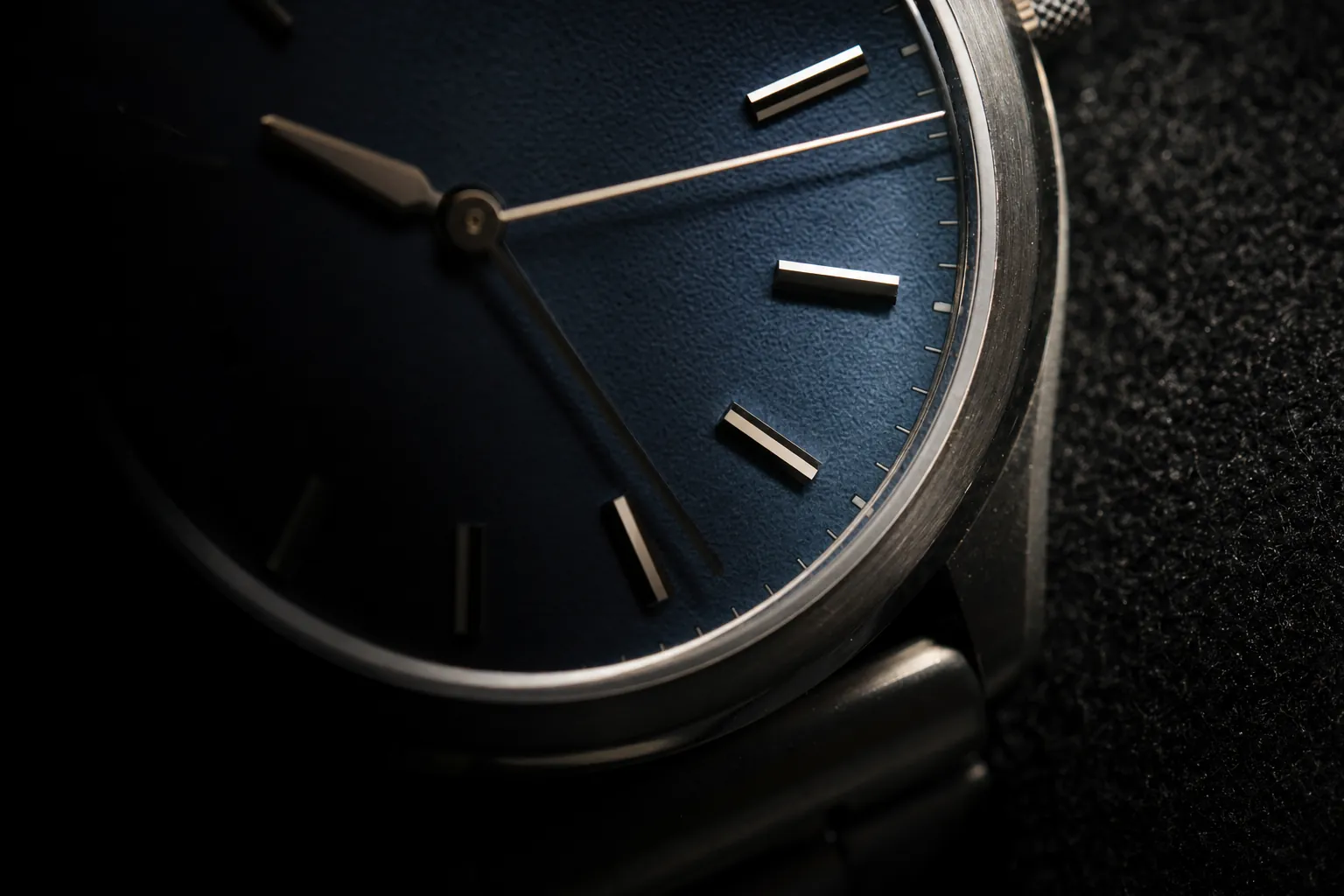
Conducting a thorough pre-owned Zenith El Primero inspection requires a methodical approach that balances micro-mechanical scrutiny with a sharp eye for external case architecture. Because the El Primero operates at a high frequency of 5 Hz (36,000 vibrations per hour), mechanical fatigue and improper servicing can compromise its performance far faster than in conventional 2.5 Hz or 4 Hz calibers. Whether you are navigating our buying-guide or reviewing detailed macro photography of a prospective piece, this technical guide breaks down the critical checkpoints every prospective collector must evaluate before finalizing an acquisition.
Inspecting Case Chamfers and Bevel Geometry
Case condition serves as the primary canvas for evaluating past interventions, polishing history, and overall wear. Because Zenith employed both classical round designs and complex geometric, angular forms during the initial production runs of the late 1960s and early 1970s, understanding original factory finishing is critical.
The Round Architecture: Reference A386 and Neo-Vintage Variations
The Reference A386, along with its later re-editions and neo-vintage descendants, features a traditional round case with slim, tapering lugs. From the factory, these lugs display distinct, mirror-polished outer chamfers that contrast against the horizontal satin brushing of the case sides and the concentric circular brushing on top of the lugs.
When evaluating these models: Inspect the transition edge between the upper lug plane and the case flank. On an unpolished or carefully maintained example, this boundary is sharp and cleanly delineated. Check the lug tips where they meet the strap or end links. Overpolishing blunts these sharp terminations into rounded, indistinct corners. * Verify the symmetry of lug widths using a dial caliper if possible. Hand-polishing often thins the crown-side lugs more aggressively than the left-side lugs due to uneven wheel pressure.
The Angular Monobloc: References A384, A385, and A3817
Tonneau-shaped references like the A384 and A385 rely on aggressive geometry and stark surface transitions. The top surfaces of these cases feature a bold radial sunburst brushing radiating from the dial aperture toward the outer perimeter. The case flanks, by contrast, are flat and horizontally brushed, bordered by broad, mirror-polished facets.
If an angular El Primero case has been subjected to aggressive rotary polishing, the radial sunburst lines are frequently washed out or cross-cut by improper buffing passes. Look closely at the recessed corners adjacent to the pushers and crown. If these recesses appear soft, waxy, or show uneven reflections under direct light, the case has lost its original factory geometry. Recutting or laser-welding can sometimes reconstruct these edges, but unnatural flat spots or shifted bevel planes often betray such restorative work.
Tri-Color Dial Variations and Hands Authenticity
The visual signature of the classic El Primero is its three-register display, most famously configured in the tri-color layout featuring light gray, midnight blue, and dark anthracite sub-dials. Evaluating dial originality requires high-magnification assessment of the dial substrate, printing typography, and hand sets.
``` +---------------------+---------------------------------------------------------------+---------------------------------------------------------+ | Component | Factory Original Characteristics | Common Replacement / Redial Red Flags | +---------------------+---------------------------------------------------------------+---------------------------------------------------------+ | Sub-Dial Overlap | 6 o'clock register overlaps both 3 and 9 o'clock registers | Proportions incorrect; missing register overlap hierarchy| | Dial Text & Serifs | Crisp pad-printing, sharp serifs on "ZENITH", flat paint | Bloated serifs, bleeding ink, glossy thick enamel layers| | Tritium Application | Applied directly to indices/hands; aged to cream/amber patina | Thick, uneven modern luminova; glowing under UV lamp | | Chrono Seconds Hand | Fine needle profile with distinct rectangular lume paddle | Incorrect counterweight profile; modern non-lume design | +---------------------+---------------------------------------------------------------+---------------------------------------------------------+ ```
Sub-Dial Overlap and Proportions
Zenith engineered the dial layout so that the 6 o'clock 12-hour register physically overlaps both the 3 o'clock 30-minute counter and the 9 o'clock running seconds sub-dial. On authentic dials, the circular concentric grooving (azurage) on the sub-dials stops cleanly at these overlapping boundaries.
Counterfeit or refinished dials frequently mishandle these intersecting lines. Look for paint bleed where the midnight blue register meets the anthracite sub-dial, or an incorrect overlap hierarchy where the running seconds improperly overlaps the hour totalizer.
Typography, Serif Execution, and Tritium Application
Examine the minute track, the decimal or tachymeter scale, and the brand signature under a 10x or 20x loupe. Vintage references through the early 1970s feature precise pad-printing with delicate serifs on the "ZENITH" typography and the distinctive four-pointed star logo.
Check the lower perimeter of the dial below the six o'clock register: Vintage dials from 1969 through the mid-1970s typically bear "T SWISS MADE T" or "SWISS MADE T" designations, denoting tritium luminous material. Neo-vintage references from the late 1980s through the late 1990s continued using tritium, transitioning to Luminova and Super-LumiNova around 1998 to 2000, marked simply as "SWISS MADE". * Under ultraviolet (UV) light, original vintage tritium should fluoresce briefly and die down almost instantly once the UV source is removed. If the plots glow brightly green for several minutes, modern luminous material has been applied during an aftermarket service.
Hands Authenticity and Finish
Authentic vintage El Primero references utilize flat, polished steel baton hands with narrow rectangular tritium inserts, paired with a central chronograph seconds hand finished in vivid red or orange featuring a rectangular paddle-shaped lumed tip. Ensure that the register hands match the reference specification: flat-black or polished steel hands on the sub-dials, with painted white hands on the darker registers for legibility. Mismatched hand lengths, modern curved replacement hands, or improper luminous colors across the handset indicate non-original replacements.
High-Beat Escapement Health and Service Tell-Tales
The primary operational distinction of the El Primero movement family is its 36,000 vph (5 Hz) balance frequency. While this enables chronograph timing down to one-tenth of a second and improves rate stability against external shocks, it imposes severe physical demands on the escapement assembly.
Lubricant Migration and Escapement Wear
At 36,000 vph, the escape wheel completes ten interactions with the pallet jewels per second—amounting to roughly 315 million impacts annually if run continuously. Centrifugal force at this operating speed tends to fling conventional liquid lubricants off the escape wheel teeth, leading to accelerated friction and metal transfer.
Factory servicing for the El Primero historically mandated treating the escape wheel and pallet jewels with a specialized surface-tension barrier (epilame) and utilizing specialized dry or thixotropic lubricants like Moebius 9415. When a movement is run without correct lubricants: Escape wheel teeth develop micro-pitting along their impulse faces. Pallet fork stones develop noticeable grooving or chipping along the locking surfaces. * Wear particles mix with aged oils, creating a dark, sludge-like halo on the balance wheel rim and adjacent bridges.
Chronograph Clutch and Amplitude Analysis
Evaluating mechanical health on a timegrapher provides clear insight into whether an El Primero requires immediate service. When monitoring a 5 Hz caliber: 1. Base Amplitude: A healthy Caliber 3019 or modern Caliber 400 series should achieve a balance amplitude of 270° to 310° in horizontal positions when fully wound. 2. Chronograph Engagement Drop: Activate the chronograph mechanism via the 2 o'clock pusher. The horizontal clutch system will mesh the drive wheel with the central chronograph wheel. In a properly adjusted movement, the amplitude drop should not exceed 20° to 30°. An amplitude drop of 50° or more signifies worn clutch wheel teeth, improper meshing depth, or heavy friction within the chronograph runner jewel bearings. 3. Chronograph Seconds Flutter: Observe the central chronograph seconds hand as it sweeps. If it stutters, hesitates, or visibly jumps unevenly, the tension spring resting against the chronograph wheel is either out of alignment, broken, or suffering from incorrect adjustment of the eccentric operating screw.
Caliber 400 Family Revisions and Bridge Markings
Zenith’s automatic chronograph movement has undergone several engineering updates since its inception. Navigating the pre-owned market requires an understanding of these transitions, particularly across vintage Caliber 3019 PHC units and neo-vintage Caliber 400 variants.
Caliber 3019 PHC vs. Caliber 400
The original 1969 design, Caliber 3019 PHC, featured a 30mm diameter, 6.5mm height, 31 jewels, and a date complication positioned between 4 and 5 o’clock. When Zenith resumed production of the movement in the mid-1980s, it re-engineered the platform as the Caliber 400.
The Caliber 400 introduced subtle refinements to parts interchangeability, balance assembly tolerances, and gear-train finishing. Early Caliber 400 variants feature 31 jewels, while retaining the flat balance spring and smooth Glucydur balance wheel.
The Shift to Caliber 400Z
In roughly 1998, Zenith introduced the Caliber 400Z. This update brought key modifications that collectors should verify during a pre-owned Zenith El Primero inspection: Jewel Count: The jewel count shifted in certain technical documentation, though core escapement upgrades defined the revision. Escapement Re-Engineering: The 400Z introduced a revised escape wheel and pallet fork geometry, with the escape wheel diameter slightly reduced and the teeth profiles altered to enhance long-term reliability and lubricant retention. * Bridge Engravings: Bridge markings clearly distinguish the movements. Caliber 3019 PHC bridges display simple, functional stamps with caliber designations placed beneath the balance wheel. Caliber 400 and 400Z bridges feature more elaborate perlage and Côtes de Genève finishing, with the caliber code laser-engraved or stamped visibly onto the mainplate or winding bridge.
When browsing the verified pre-owned pieces in our curated /shop, confirming that movement serial numbers, bridge typography, and rotor designs correspond with the production era of the reference is essential to ruling out "frankenwatch" movement swaps.
Assessing Gay Frères Ladder Bracelets and Clasps
Many early Zenith El Primero models, particularly references A386, A384, and A385, originally left the manufacture fitted to stainless steel "ladder" bracelets manufactured by the legendary bracelet maker Gay Frères. Because these bracelets are highly sought after by purists, inspecting their structural authenticity is vital.
Date Codes and End Link Stamps
Gay Frères bracelets feature specific date stamping on the interior blades of the folding clasp. This stamp consists of a number indicating the quarter of the year, followed by a two-digit year code (for example, "3 69" for the third quarter of 1969, or "1 71" for the first quarter of 1971). Ensure that this date code broadly aligns with the manufacturing window of the watch head.
Equally important are the hollow end links: Reference A386 requires ZKM end links (19mm lug width). Tonneau references (A384/A385) utilize ZK or ZJ end links (20mm lug width). * Generic or modified end links will rattle against the case, leave uneven gaps, and scratch the inner lug flanks.
Link Stretch and Deformation
The open ladder design consists of outer folded links connected by hollow central rungs. Due to the high tensile strain placed on these rungs over decades, check for: Twisted or elongated ladder links. Thinning clasp hinge rivets. * Worn or over-polished exterior clasp logos where the Zenith four-pointed star or NATO star motif has lost its three-dimensional definition.
Key Condition Red Flags on Vintage and Neo-Vintage References
When examining vintage and neo-vintage El Primero chronographs, certain recurring defects should signal caution. Use this targeted checklist during your physical or photographic inspection:
- The Recessed Date Window Misalignment: On Caliber 3019 PHC and 400 watches, the date window sits at 4:30. The date should sit perfectly centered within its beveled frame. If the numeral tilts noticeably upward or downward, the date jumper spring is weak, bent, or improperly indexed.
- Service Replacement Dials: Dials manufactured in the late 1990s or 2000s are often installed into early vintage cases during factory overhauls. These dials feature Luminova hour markers, modern thin typography, and lack the stepped down sub-dial borders found on original pieces.
- Mismatched Pusher Caps: Zenith used specific fluted, non-screw-down pushers on vintage pieces. Look closely to verify that both pusher caps match in diameter, fluting count, and projection length from the case side. Modern generic service pushers often feature thicker bases or shallower fluting.
- Damaged Chronograph Reset Hammer: If pressing the 4 o'clock reset pusher fails to snap both the central seconds and 30-minute register back to true zero simultaneously, the dual-pronged reset hammer inside the movement is either worn, out of alignment, or improperly tensioned.
---
Frequently Asked Questions
### How can you detect overpolishing on an El Primero A386 or A384 case? Overpolishing on an A386 is revealed by softened, rounded lug edges and the loss of the crisp, mirror-polished outer chamfer that borders the brushed lug tops. On angular tonneau cases like the A384, overpolishing erodes the sharp, three-dimensional boundary between the radial sunburst top surface and the horizontally brushed case flanks. Recessed areas around the pushers that show irregular, wavy reflections under direct light are another clear indicator that metal has been excessively removed.
### What are the tell-tale signs of an authentic vintage El Primero dial? An authentic vintage dial displays distinct, sharp typography with period-correct serifs, concentric azurage grooving on the sub-dials, and original tritium luminous plots that show an even, aged patina. The sub-dials must observe the correct overlap hierarchy, where the 6 o'clock 12-hour register cleanly overlaps the running seconds and 30-minute totalizers. Furthermore, the lower edge of the dial will bear period designations such as "T SWISS MADE T" rather than modern "SWISS MADE" markings.
### Why does the 36,000 vph frequency require specialized lubrication during servicing? The 5 Hz escapement of the El Primero movement generates rapid friction, with the escape wheel impacting the pallet stones ten times per second. Standard watch lubricants are quickly dispersed from the impulse surfaces due to centrifugal force, leading to accelerated wear, pallet stone pitting, and dry friction. Consequently, the movement requires an epilame surface treatment combined with high-stability thixotropic lubricants like Moebius 9415 to ensure the oil stays anchored to the contact surfaces.
### How do you identify a period-correct Gay Frères ladder bracelet? A period-correct Gay Frères ladder bracelet features clear quarterly date stamps on the inner folding clasp blades, expressed as a single digit for the quarter followed by the two-digit year (such as "2 70"). The hollow end links should feature explicit factory stampings, such as "ZKM" for the 19mm round-case models or "ZK"/"ZJ" for 20mm tonneau variants. The clasp's exterior Zenith star logo should also retain sharp relief rather than appearing smoothed over by repeated polishing.
### What mechanical symptoms indicate that an El Primero chronograph needs an immediate overhaul? Key mechanical indicators include balance amplitude dropping significantly below 250° when fully wound, or dropping by more than 30° immediately upon activating the chronograph. Chronograph seconds hand stutter, inconsistent flyback zeroing, or a failure of the date disc to center precisely in its aperture at 4:30 all point to mechanical issues. Visible dark halos around the balance wheel or pallet bridge indicate dried, migrated lubricant that can cause severe friction wear if left unaddressed.