Automatic vs Manual Winding: Which Should You Buy in 2026?
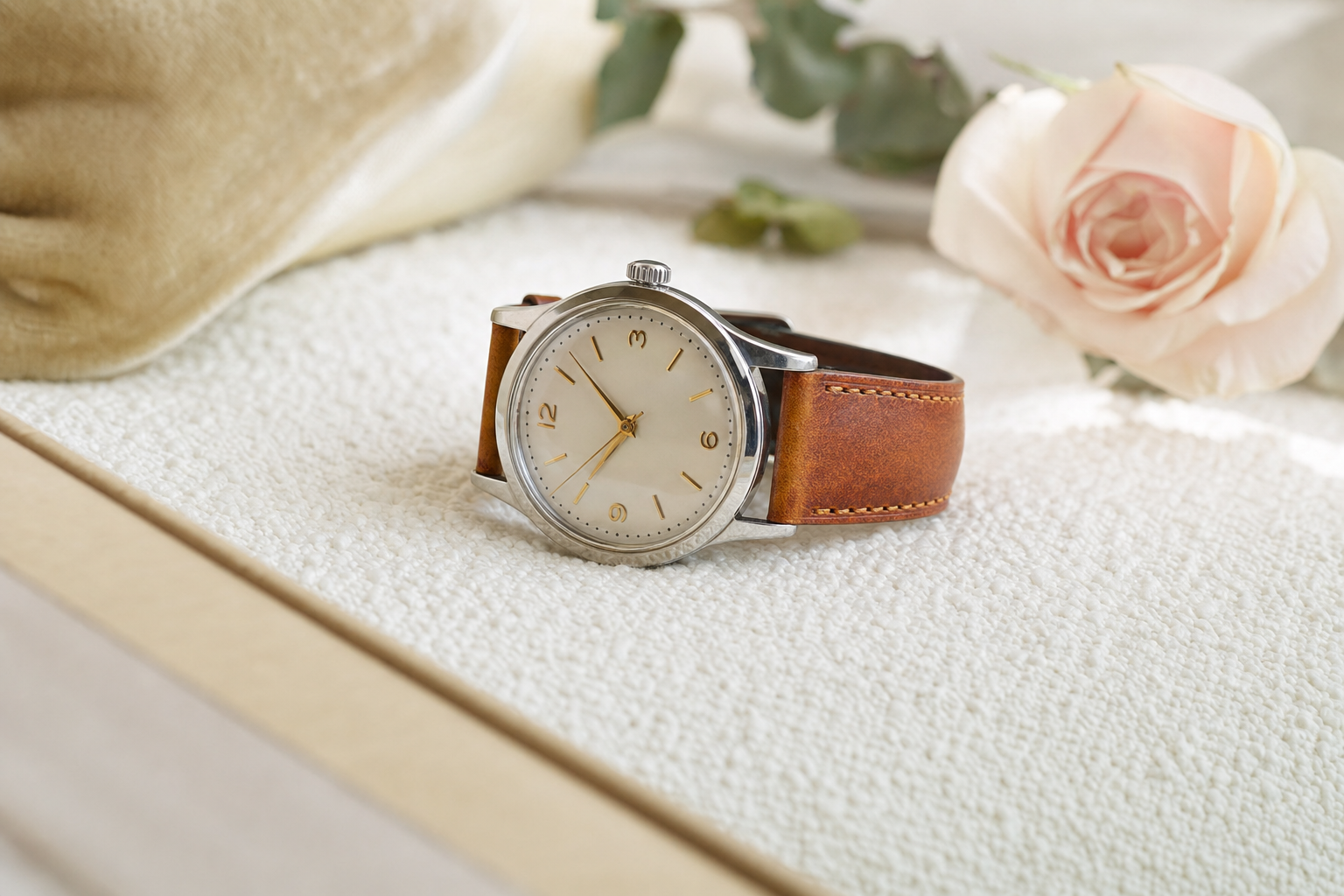
Choosing between automatic and manual winding for your luxury watch in 2026? This expert guide details movements, design, wearability, and value.
# Automatic vs Manual Winding: Which Should You Buy in 2026? Choosing between an automatic and a manual winding mechanical watch in 2026 often comes down to a blend of lifestyle, aesthetic preference, and appreciation for horological artistry. While **automatic movements** offer unparalleled convenience and continuous power through wrist motion, **manual winding movements** connect the wearer intimately with their timepiece through a daily ritual, often showcasing thinner profiles and more intricate finishing. For discerning collectors, the 'better' choice isn't universal; it hinges on what you value most in your luxury watch experience. ## Verdict: Automatic vs Manual Winding in 2026 For most luxury watch enthusiasts seeking daily wearability and minimal interaction, an **automatic watch** stands as the practical choice, offering seamless power delivery and robust construction for active lifestyles. However, for those who cherish tradition, appreciate mechanical finesse, and desire a more personal connection to their timepiece, a **manual winding watch** provides a rich, tactile experience and often allows for more elegant, slender case designs. Both movement types represent the pinnacle of mechanical watchmaking, each with distinct advantages that cater to different collector profiles. ## Side-by-Side Specification Table To aid in your decision, here's a detailed comparison of automatic and manual winding movements, highlighting their core characteristics within the luxury watch market: | Feature | Automatic Winding Movement | Manual Winding Movement | | :------------------ | :------------------------------------------------------------ | :------------------------------------------------------------- | | **Power Source** | Rotor (oscillating weight) wound by wrist motion | Crown wound manually by the wearer | | **Maintenance** | Generally more complex due to additional components | Often simpler construction, can be easier to service | | **Power Reserve** | Typically 38-72 hours, though modern movements extend beyond | Varies greatly, from 30 hours to 8+ days (e.g., A. Lange & Söhne) | | **Thickness** | Generally thicker due to the rotor and self-winding mechanism | Can be significantly thinner, ideal for dress watches | | **Daily Interaction** | Wears itself, minimal interaction unless stored off-wrist | Requires daily or near-daily manual winding | | **Display Back** | Often obstructed by rotor, but some feature skeletonized rotors | Unobstructed view of movement, showcasing finishing | | **Durability** | Can be more susceptible to shocks due to rotor system | Generally robust, fewer moving parts for winding | | **Market Examples** | Rolex Caliber 3235, Omega Co-Axial 8800, Patek Philippe 240 PS IRM C LU | Patek Philippe Caliber 215 PS, A. Lange & Söhne L093.1, F.P. Journe Caliber 1300.3 | This table illustrates that while both are mechanical marvels, their operational principles lead to distinct physical and experiential differences, crucial considerations for any enthusiast exploring [Watchmaking Explained: Movements & Complications – A Collector's Guide](/blog/watchmaking-explained-movments-complications-collectors-guide). ## Design and Wearability Compared ### Automatic Watches: Robust and Ready Automatic movements, with their integrated oscillating weight (rotor), inherently add thickness to a watch case. This often leads to designs that are more substantial and sporty, aligning well with robust tool watches or versatile daily wearers. Think of iconic models like the **Rolex Submariner** (e.g., Ref. 126610LN with its Caliber 3235) or the **Omega Seamaster Diver 300M** (e.g., Ref. 210.30.42.20.01.001 housing the Co-Axial Master Chronometer Caliber 8800). These watches are designed for active use, and their self-winding nature means they're always ready when worn regularly. The convenience of an automatic watch is a major draw. You simply put it on, and the motion of your wrist keeps it wound. For those who own multiple watches, a watch winder can ensure an automatic timepiece remains powered and accurate, ready for immediate wear. While typically thicker, many luxury brands have mastered creating surprisingly svelte automatic movements; for instance, the **Patek Philippe Caliber 240** is a micro-rotor automatic movement renowned for its slimness, found in elegant timepieces like the **Patek Philippe Calatrava** (e.g., Ref. 6119G-001) often featured at [Lume Wrist Watches' Patek Philippe timepieces](/shop?brand=Patek%20Philippe) collection. ### Manual Winding Watches: Elegance and Engagement Manual winding movements, by omitting the rotor, can be significantly thinner. This characteristic makes them the preferred choice for ultra-thin dress watches, where elegance and a sleek profile under a shirt cuff are paramount. Consider the exquisite slenderness of an **A. Lange & Söhne Saxonia Thin** or a **Vacheron Constantin Patrimony Traditionnelle**, powered by hand-wound calibers designed for minimal vertical integration. The **A. Lange & Söhne A. Lange & Sӧhne Cabaret Moon Phase (118.021)**, available in [our authenticated collection](/product/a-lange-sohne-cabaret-moon-phase-118-021), is a prime example of how manual winding enables intricate complications within a refined case. Beyond thickness, manual winding watches offer a unique tactile engagement. The ritual of winding your watch daily creates a personal connection, a moment of pause to appreciate the intricate mechanics. Many enthusiasts find this interaction deeply satisfying. Furthermore, without a rotor to obscure the view, display casebacks on manual wind watches offer an unhindered panorama of the beautifully finished bridges, gears, and plates—a true feast for the eyes and a testament to the artisan's skill. This aesthetic purity is a core reason why many collectors prefer manual winding for their most cherished pieces. ## Movement and Accuracy Compared ### The Engineering of Automatic Movements Automatic movements, also known as self-winding movements, leverage an oscillating weight—the rotor—that pivots with the natural motion of the wearer's wrist. This motion translates into energy, winding the mainspring and powering the watch. The ingenuity lies in the efficiency of this system, converting kinetic energy into mechanical power. Modern automatic movements, such as the **Rolex Caliber 3235** found in contemporary [Rolex collection](/shop?brand=Rolex) pieces or the **METAS-certified Omega Co-Axial Master Chronometer Calibers**, are incredibly sophisticated. They often feature extended power reserves (70+ hours), enhanced anti-magnetism, and superior shock resistance. The integration of silicon components and advanced lubricants contributes to their impressive stability and accuracy over time. Accuracy in automatic movements is continually improving. While historically COSC chronometer certification (requiring an average daily rate of -4/+6 seconds) was the benchmark, many manufacturers now exceed this. Omega's Master Chronometer certification, for instance, tests watches to an even stricter 0/+5 seconds per day under various conditions, including exposure to magnetic fields up to 15,000 gauss. This continuous innovation ensures that automatic watches are not just convenient but also highly reliable timekeepers. ### The Precision of Manual Winding Movements Manual winding movements, while requiring daily interaction, often benefit from a more direct power delivery system. Without the inertia of a rotor, the mainspring receives a consistent, focused winding input from the crown. This directness, combined with the often-larger balance wheels and meticulously regulated escapements found in high-horology manual movements, can result in exceptional accuracy. Brands like **F.P. Journe** and **A. Lange & Söhne** are renowned for their hand-wound calibers, where precision is paramount. The **A. Lange & Söhne Caliber L093.1** in the Saxonia Thin, for example, is a testament to minimalist perfection, delivering precise timekeeping with exquisite finish. From a technical standpoint, the absence of a rotor can sometimes lead to more stable rate keeping, as there are fewer moving parts to introduce potential friction or imbalance. Many high-end manual movements are designed with a focus on long power reserves (some extending to 8 days or more, like certain offerings from Panerai or IWC), meaning less frequent winding is required while maintaining consistent torque delivery. The inherent beauty and mechanical purity of a manual winding movement, visible through a sapphire caseback, often highlight the commitment to precision and finish that defines top-tier [Horology at Lume Wrist Watches](/shop?brand=Horology). ## Price and Value Retention Compared ### Initial Investment: A Broad Spectrum Both automatic and manual winding movements span a vast price range within the luxury watch market. Entry-level luxury automatic watches from brands like Tissot or Hamilton might start around a few hundred to a couple of thousand dollars. However, when we talk about haute horology, the prices for both types can easily extend into the tens or hundreds of thousands. For example, a standard **Rolex Lady Datejust (69173)**, an automatic classic from [our authenticated collection](/product/rolex-lady-datejust-69173), might be found in the secondary market for around $5,000 - $10,000 depending on condition and year. In contrast, a new manual wind **Patek Philippe Calatrava** could start from approximately $25,000 - $35,000, while a complication like the **A. Lange & Söhne Cabaret Moon Phase (118.021)** from [our authenticated collection](/product/a-lange-sohne-cabaret-moon-phase-118-021) would command significantly more. Generally, automatic watches are more ubiquitous in the luxury market, given their convenience. This broad availability means a wider range of price points. Manual winding movements, particularly those from independent watchmakers or highly complicated pieces, often represent a more niche segment and can sometimes be priced higher due to their artisanal nature and lower production volumes. The perceived "complexity" of an automatic movement due to its winding system doesn't always translate to a higher price than a meticulously finished, simpler manual movement from a master artisan. ### Value Retention: Nuance and Niche Appeal Value retention is a complex interplay of brand recognition, model scarcity, condition, and market demand. Both automatic and manual winding watches from esteemed brands can demonstrate excellent value retention. Iconic automatic models from **Rolex** (e.g., a **GMT-Master II** or **Submariner**) or **Audemars Piguet Royal Oaks** are legendary for holding or increasing their value, often performing well in markets like [luxury watches in California](/watches/california) or [luxury watches in New York](/watches/new-york). However, in the high-end collector segment, certain manual winding watches can be even more sought after. This is particularly true for limited editions, historically significant pieces, or watches from independent maisons that prioritize manual craftsmanship. Pieces from brands like **Patek Philippe**, **A. Lange & Söhne**, or **F.P. Journe** (many of whom primarily produce manual-wind movements) are highly coveted and often see strong appreciation over time. The rarity, exceptional finishing, and direct connection to traditional watchmaking make them particularly appealing to serious collectors. Ultimately, irrespective of movement type, the strongest value retention is typically found in watches with strong provenance and a storied history, often authenticated by experts like [our in-house team independent authentication](/policies/authenticity) service. ## Who Should Buy Which — Three Clear Buyer Profiles ### 1. The Daily Wearer & Convenience Seeker: Choose Automatic **Profile:** You lead an active lifestyle, frequently switch between watches, or simply desire a timepiece that requires minimal daily interaction. You value robustness and modern technological advancements. You might be a professional who travels frequently or someone who enjoys a varied watch collection. Your priority is having a reliable, ready-to-wear watch for any occasion without the need for a daily winding ritual. **Why Automatic:** Automatic watches are designed for effortless daily wear. They self-wind with your movement, ensuring consistent operation as long as you wear them. This convenience is unmatched for those who appreciate functionality and practicality above all else. Modern automatic movements from brands like **Omega** or **Grand Seiko** offer excellent accuracy, long power reserves, and anti-magnetic properties, making them ideal for a dynamic lifestyle. A great choice might be a versatile sports watch or a classic three-hander that transitions seamlessly from office to weekend, available across [luxury watches delivered to all 50 states](/watches). ### 2. The Traditionalist & Horological Enthusiast: Choose Manual Winding **Profile:** You appreciate the history and artistry of watchmaking, seeing a timepiece as more than just an instrument for telling time. You cherish the ritual of winding a watch, finding satisfaction in the direct engagement with its mechanical heart. You value exquisite movement finishing and often prefer a slimmer, more elegant aesthetic, perhaps for a dedicated dress watch or a historically inspired piece. You're drawn to the purity of mechanical design and the legacy of craftsmanship. **Why Manual Winding:** Manual winding watches offer a direct, intimate connection to the art of horology. The daily act of winding is a meditative ritual that reinforces the appreciation for the hundreds of tiny components working in harmony. Furthermore, the absence of a rotor allows for thinner cases and an unobstructed view of often beautifully decorated movements through a sapphire caseback. Brands like **Patek Philippe** and **A. Lange & Söhne** excel in this category, offering timepieces that are true works of art, appealing to those who consider collecting an exploration of mechanical genius. Consider exploring the refined elegance of a piece from [Lume Wrist Watches' Patek Philippe timepieces](/shop?brand=Patek%20Philippe). ### 3. The Savvy Collector & Investment-Minded Buyer: Choose Both (Strategically) **Profile:** You understand the nuances of the luxury watch market and view your collection as both a source of personal enjoyment and a potential long-term asset. You are interested in iconic pieces, limited editions, and watches with strong market performance, regardless of their winding mechanism. You appreciate both technological innovation and traditional craftsmanship, and your choices are guided by market trends, historical significance, and potential for appreciation, as discussed in our [Luxury Watch Investment & Market Guide: Navigating 2026](/blog/luxury-watch-investment-market-guide-2026). **Why Both:** A diversified collection often includes both exceptional automatic and manual winding timepieces. Iconic automatic sports watches from brands like **Rolex** (e.g., the [Rolex GMT-Master II Guide: Pepsi, Batman & Root Beer Explained](/blog/rolex-gmt-master-ii-guide-pepsi-batman-root-beer)) often demonstrate strong liquidity and value retention, making them solid investment pieces. Concurrently, highly sought-after manual winding complications or rare pieces from independent watchmakers can offer significant appreciation and represent the pinnacle of horological art. Your strategy involves carefully researching each acquisition, perhaps utilizing our [concierge sourcing service](/concierge) to find specific coveted references, ensuring that each piece aligns with both your passion and your investment goals. You might find a vintage **Rolex Explorer** (often manual wound in early iterations) alongside a modern **Bell & Ross Bell & Ross BR-03 Skeleton Lum Ceramic (BR03A-LM-SKCE/SRB)** from [our authenticated collection](/product/bell-ross-br-03-skeleton-lum-ceramic-br03a-lm-skce-srb). ## Frequently Asked Questions ### What are the key differences between automatic and manual winding watches? The primary difference lies in how they're powered. Automatic watches wind themselves via a rotor that moves with your wrist, offering convenience. Manual winding watches require the wearer to turn the crown daily to wind the mainspring, fostering a more intimate connection with the timepiece. Automatic watches are generally thicker, while manual watches can be slimmer and often offer an unobstructed view of the movement through a display back. ### Are automatic watches more accurate than manual winding watches? Not inherently. Modern manufacturing techniques and rigorous certification standards (like COSC or METAS) ensure high accuracy for both types. While automatic movements may have more components and thus more potential points of friction, well-engineered movements from both categories can achieve exceptional precision. The consistency of winding can sometimes give manual movements a slight edge in rate stability for some enthusiasts. ### Do I need a watch winder for an automatic watch? A watch winder is not strictly necessary but can be beneficial. It keeps an automatic watch wound and accurate when not being worn, saving you the hassle of setting the time and date when you pick it up again, especially for complicated pieces. For watches worn regularly, a winder is optional; for those rotated in a collection, it offers convenience. ### Why do some collectors prefer manual winding watches? Collectors often prefer manual winding watches for several reasons: the traditional connection and daily ritual of winding, the ability for thinner case designs, and the unobstructed view of the beautifully finished movement through a display caseback. Many high-horology pieces, especially dress watches and grand complications, are manual wind, showcasing the pinnacle of artisanal craftsmanship. ### Can I overwind a manual winding watch? With modern manual winding watches, it's virtually impossible to overwind and damage the mainspring. Most contemporary movements incorporate a slipping clutch mechanism that prevents overtightening of the mainspring once it's fully wound. You'll feel a distinct stop when the watch is fully wound, signaling you to cease winding. ### How often should I service my automatic or manual winding watch? Regardless of movement type, a mechanical watch typically requires servicing every 3 to 7 years. This interval can vary depending on the manufacturer's recommendations, the watch's age, and how it's worn. Regular servicing ensures the lubricants are fresh, components are free from wear, and accuracy is maintained, preserving the longevity of your timepiece. ## Final Thoughts The choice between automatic and manual winding is a deeply personal one, reflecting not just a preference for functionality but an appreciation for different facets of horological art. Whether you lean towards the seamless convenience of an automatic or the ritualistic engagement of a manual wind, both represent the zenith of mechanical watchmaking. At Lume Wrist Watches, we celebrate the diversity and ingenuity found in both categories, offering an unparalleled selection of authenticated timepieces. We invite you to explore [our shop](/shop) to discover the perfect automatic or manual winding watch that resonates with your passion for horology. ## Contact Lume Wrist Watches Have more questions or need assistance finding your next luxury timepiece? Our expert team is here to help. Email: sales@lumewrist.com Phone: +1 (315) 413-9130 Boutique: 18 East 48th Street, Suite 1503, New York, NY 10017 Hours: Mon–Fri 9:00 AM – 7:00 PM EST · Closed Saturday & Sunday Visit our [contact page](/contact) for more information or to schedule a [private viewing appointments](/concierge/viewing) at our New York boutique.