Co-Axial Escapement vs Swiss Lever: Which to Buy in 2026?
Published October 28, 2026 · Last updated October 28, 2026 · By Lume Wrist Watches
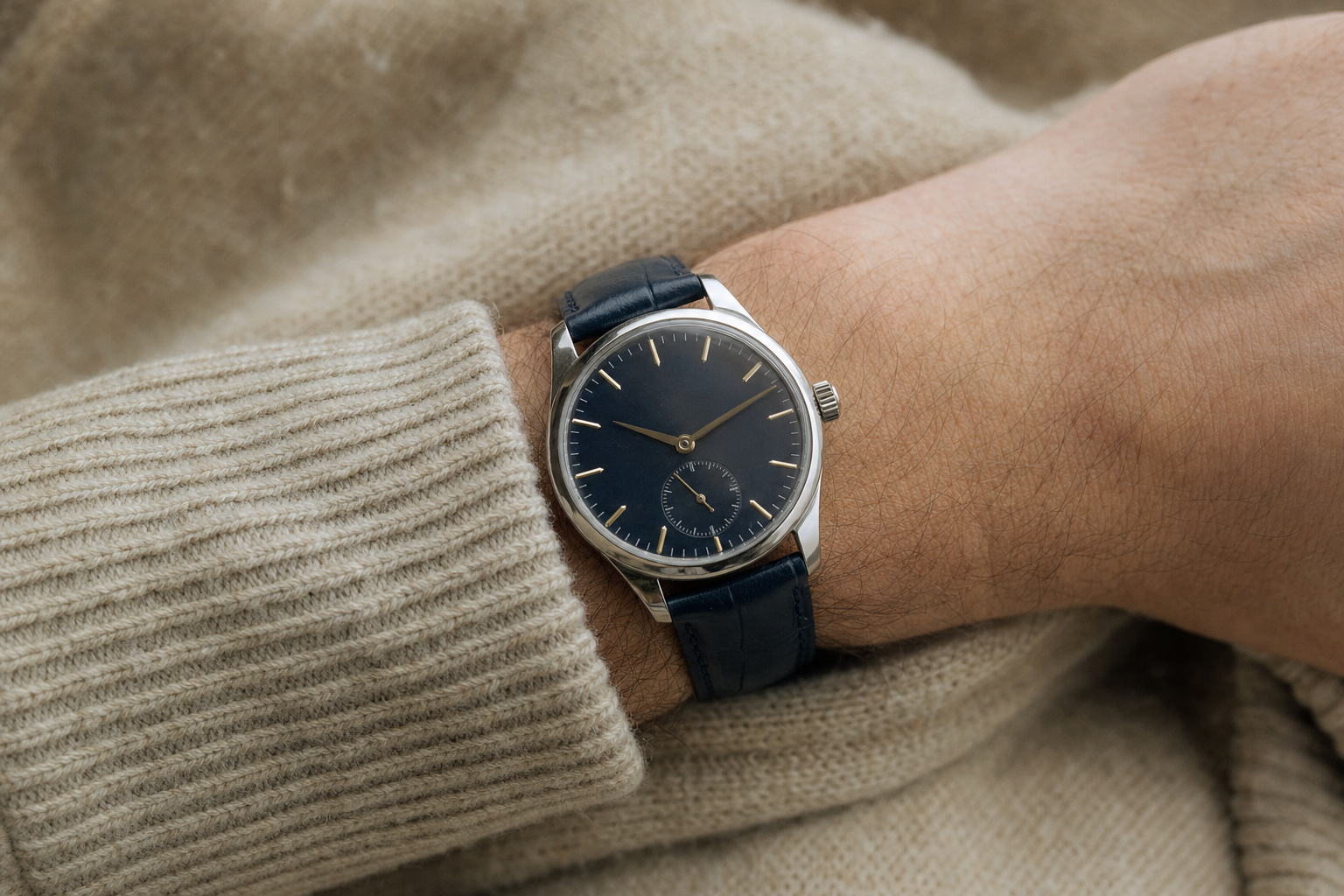
If you are deciding between a timepiece powered by a Co-Axial escapement and one regulated by a traditional Swiss lever escapement, the verdict comes down to long-term mechanical stability versus ubiquitous serviceability. The Co-Axial escapement—invented by master watchmaker George Daniels and industrialized exclusively by Omega—minimizes sliding friction by delivering radial impulse, resulting in extended service intervals (often 8 to 10 years) and exceptional long-term chronometric consistency. Conversely, the Swiss lever escapement remains the historic, battle-tested standard found across 99% of mechanical watches, offering unmatched ease of third-party servicing and proven reliability across centuries. For buyers seeking cutting-edge mechanical engineering and resilient real-world precision, the Co-Axial is superior; for those who prioritize traditional horological architecture and universal repairability, the Swiss lever remains unmatched.
To understand how these systems define modern mechanical timekeeping, we must dive beneath the balance wheel. Escapements serve as the heart of mechanical watches, regulating energy release from the mainspring to the gear train. For a foundational overview of gear trains, regulators, and barrel dynamics, consult our pillar guide on Watchmaking Explained: Movements & Complications – A Collector's Guide.
---
Side-by-Side Specification Table
Comparing these two escapement architectures requires analyzing impulse mechanics, frictional dynamics, lubrication needs, and real-world ownership factors.
| Specification / Feature | Co-Axial Escapement | Traditional Swiss Lever Escapement |
|---|---|---|
| :--- | :--- | :--- |
| Primary Inventor | Dr. George Daniels (c. 1974; patented 1980) | Thomas Mudge (c. 1754–1755) |
| Industrialized By | Omega (debuted 1999 in Calibre 2500) | Universal (Patek Philippe, Rolex, Audemars Piguet, ETA) |
| Impulse Direction | Radial (pushing impulse via pallet teeth) | Tangential (sliding friction across pallet jewels) |
| Lubrication Needs | Near-zero at impulse surfaces (minimal synthetic oil) | Crucial; requires recurring lubrication on impulse faces |
| Recommended Service Interval | 8–10 years (typical market observation) | 4–6 years (traditional industry standard) |
| Standard Frequencies | 25,200 vph (3.5 Hz) or 28,800 vph (4.0 Hz) | 21,600 vph (3 Hz), 28,800 vph (4 Hz), up to 36,000 vph (5 Hz) |
| Manufacturing Complexity | Extremely high (multi-tiered escape wheels, tighter tolerances) | Mature, standardized, highly optimized mass production |
| Service Accessibility | Authorized service networks or specialized watchmakers | Universally serviceable by independent watchmakers |
| Standard Certifications | METAS Master Chronometer (Omega standard: 0/+5 sec/day) | COSC (-4/+6 sec/day), Superlative Chronometer, Geneva Seal |
| Magnetic Resistance | High (frequently paired with silicon balance springs, >15,000 Gauss) | Variable (depends on alloy; silicon hairsprings becoming common) |
---
Design and Wearability Compared
While the escapement resides entirely inside the movement, its physical architecture directly dictates case thickness, movement height, and everyday wearability.
### The Multi-Tiered Architecture of the Co-Axial Escapement The Co-Axial system relies on three pallet jewels instead of two, alongside an escape wheel assembly that features two gear wheels mounted coaxially on the same arbor. Because these wheels sit on top of each other, an integrated Co-Axial calibre inherently requires vertical clearance.
In early executions—such as Omega's Calibre 2500, which modified an ETA 2892 base—the addition of the Co-Axial components caused initial teething issues that were solved by adjusting beat rates down from 28,800 vibrations per hour to 25,200 vph. When Omega designed ground-up in-house calibres like the 8500 and 8900 series, movement thickness expanded to roughly 5.5 mm to 6.7 mm. Consequently, watches like the Omega Omega Seamaster Planet Ocean 600M Chronograph Black Dial Steel exhibit a commanding, athletic presence with case thicknesses frequently exceeding 16 mm.
However, Omega has successfully engineered thinner variations for dressier silhouettes. The Omega Omega De Ville Prestige Automatic Black Dial Bracelet, housing Calibre 2500 or its newer METAS-certified 8800 descendants, proves the escapement can comfortably slide under a shirt cuff at under 10 mm in case profile.
``` Traditional Swiss Lever: Co-Axial Escapement: [Pallet Stone] [Clockwise Wheel] [Counter-Clockwise] | (sliding friction) \ / [Escape Wheel] [Co-Axial Pallet Lever] (low-friction radial push) ```
### The Compact Simplicity of the Swiss Lever The classic Swiss lever has enjoyed more than 250 years of mechanical optimization. Because its escape wheel and pallet lever occupy a single planar horizontal layer, movement designers can shave millimeters off vertical height. Ultra-thin dress references from our Patek Philippe timepieces catalog—as well as elegant daily wears like the Patek Philippe Twenty~4 4910/1200A-001 Blue Dial Stainless Steel—demonstrate the compact utility of the Swiss lever layout.
Collectors seeking svelte sports watches or razor-thin dress profiles will find that Swiss lever movements allow manufacturers across all featured maisons to build cases measuring under 9 mm thick without sacrificing barrel capacity or rotor clearance.
---
Movement and Accuracy Compared
The fundamental conflict between these two systems lies in tribology—the science of friction, lubrication, and wear.
### Escapement Friction: Sliding vs. Pushing In a standard Swiss lever escapement, the teeth of the escape wheel slide along the inclined impulse faces of the synthetic ruby pallet stones. This sliding action creates continuous hydrodynamic friction. To prevent degradation, watchmakers apply specialized synthetic oils (such as Moebius 9415) to the pallet jewels. Over 3 to 5 years, this oil inevitably oxidizes, dries out, or migrates due to centrifugal forces. As lubrication deteriorates:
- Balance amplitude drops.
- Positional rate errors increase.
- The watch gradually loses its timing accuracy.
George Daniels solved this dilemma with the Co-Axial mechanism. Instead of dragging across an inclined plane, the Co-Axial teeth make short, direct pushing contacts against the pallet jewels. This radial impulse converts kinetic energy with virtually zero sliding action. Daniels initially envisioned the system running bone-dry without any oil whatsoever. In mass production, Omega introduces a minuscule drop of specialized lubricant to cushion the initial impact and prevent surface micro-pitting, but the system does not depend on fluid lubrication to sustain its chronometric rate.
### Long-Term Precision and Daily Accuracy Standards Because the Co-Axial escapement does not suffer from rapid lubricant degradation, its rate stability remains remarkably constant across years of wear. Paired with free-sprung silicon (Si14) balance springs, modern Omega Co-Axial calibres effortlessly secure METAS Master Chronometer certification, guaranteeing:
- Daily deviation between 0 and +5 seconds per day.
- Resistance to magnetic fields reaching 15,000 Gauss.
- Consistent amplitude even at one-third power reserve.
Meanwhile, high-grade Swiss lever calibres from the Rolex collection employ proprietary optimizations—such as the Chronergy escapement found in the Calibre 3235—which pairs skeletonized nickel-phosphorus lever components with traditional geometry to achieve a -2/+2 second daily tolerance. Traditional lever setups also dominate high-frequency chronographs; explore our analysis of Column Wheel vs Cam Chronograph Movements: 2026 Guide to see how horizontal and vertical clutch systems interface with traditional escapement trains.
For collectors exploring multi-axis regulation, our deep dive into Tourbillon, Perpetual Calendar, Minute Repeater: Horology's Grand Complications illustrates how haute horlogerie workshops still rely on the Swiss lever as the bedrock for six-figure masterworks.
---
Price and Value Retention Compared
When evaluating watches on the secondary and retail markets, escapement architecture influences ownership costs, retail price points, and long-term liquidity.
### Acquisition Cost Because Omega has spent tens of millions of dollars industrializing the Co-Axial escapement, the technology is largely isolated to the Swatch Group's premier brand. Entry into the modern Co-Axial universe generally begins around an approximate market observation of $3,500 to $5,500 for pre-owned Omega Seamaster Diver 300M or Aqua Terra models in our authenticated collection. Brand-new retail models from authorized boutiques sit between $6,000 and $12,000 for standard steel configurations.
The Swiss lever, by contrast, spans every imaginable price tier. You can acquire an entry-level Swiss lever movement in an ETA- or Sellita-powered tool watch for $800, or invest in an artisanally finished Patek Philippe or Vacheron Constantin exceeding $50,000.
### Cost of Maintenance and Service Accessibility Over a 20-year ownership cycle, service expenses differ dramatically:
- Co-Axial Escapement: Thanks to minimal frictional wear, an owner typically services their watch every 8 to 10 years. A complete factory-standard overhaul through an authorized center ranges approximately from $650 to $950 for three-hand calibres, and $900 to $1,300 for chronographs. Independent watchmakers must possess specialized Omega tooling, microscopic oil-dispensing needles, and training to service modern Co-Axial calibres correctly.
- Swiss Lever Escapement: Standard lever movements require attention every 4 to 6 years to refresh drying lubricants. Overhaul costs range widely: an independent watchmaker might service an ETA 2824 or Sellita SW200 for $250 to $450, while an authorized overhaul for high-tier manufacture calibres (e.g., Rolex or Audemars Piguet) routinely commands $800 to $1,500.
To grasp how broader market cycles affect the secondary value of both escapement types across leading brands, read our Luxury Watch Investment & Market Guide: Navigating 2026.
---
Who Should Buy Which — Three Clear Buyer Profiles
To determine which escapement belongs in your watch box, consider these three collector profiles:
### 1. The Engineering Purist and Daily Tool-Watch Wearer Ideal Match: The Co-Axial Escapement (Omega) If you view mechanical watches through an engineering lens and demand real-world toughness, the Co-Axial escapement is the definitive choice. It provides unmatched magnetic resistance (vital in modern environments filled with laptops and magnetic phone chargers), imperviousness to amplitude decay, and industry-leading METAS tolerances. * Top Recommendations: Modern Omega Seamaster Diver 300M, Speedmaster Professional Co-Axial Master Chronometer Calibre 3861, or Aqua Terra 150M. Explore iconic references in our Omega Seamaster James Bond Editions: 2026 Buying Guide.
### 2. The Traditionalist and Haute Horlogerie Connoisseur Ideal Match: The High-Grade Swiss Lever Escapement If your collecting journey centers on historic lineage, hand-beveling, black-polished steel components, and ultra-thin watchmaking, stick with the Swiss lever. The finest ateliers in Geneva and Le Brassus intentionally preserve the traditional lever format because it enables razor-thin profiles, harmonious movement architecture, and adherence to traditions like the Hallmark of Geneva. To learn more about independent and heritage houses outside the mainstream, read our editorial on Beyond the Big Four: Essential Luxury Watch Maisons to Know in 2026. * Top Recommendations: Patek Philippe Calatrava, Audemars Piguet Royal Oak Extra-Thin, or a classic Rolex Submariner.
### 3. The Frequent Traveler and Pragmatic Collector Ideal Match: Situational — Dependent on Complication & Service Geography If you frequently rotate between time zones, escapement type matters less than functional complications like dual-time functionality. Before making your choice, examine our comparison of Caller GMT vs Flyer GMT: Which Should You Buy in 2026?. Furthermore, if you reside far from major metropolitan luxury hubs, a standard Swiss lever movement can be disassembled and regulated by virtually any reputable local watchmaker, avoiding the need to ship your watch to a manufacturer facility.
Whether you are acquiring a timepiece from our curated inventory while searching for luxury watches in California, purchasing a piece in the Midwest, or sourcing luxury watches in Florida, your lifestyle should dictate the escapement you select.
---
Frequently Asked Questions
### Why didn't other watch brands adopt the Co-Axial escapement? When George Daniels patented the Co-Axial escapement in 1980, he pitched the invention to several prominent Swiss maisons, including Patek Philippe and Rolex. Most brands declined because their traditional Swiss lever tooling was already perfected, profitable, and simpler to mass-produce. Only the late Nicolas G. Hayek, visionary chairman of the Swatch Group, recognized its transformative potential and acquired the industrial rights for Omega in the 1990s.
### Does a Co-Axial watch really run completely without oil? While George Daniels initially designed the Co-Axial escapement to operate completely dry, industrial production required a slight modification. Omega adds a microscopic quantity of specialized synthetic lubricant to the impulse surfaces. This minuscule lubrication prevents initial surface contact wear and dampens acoustic vibration without creating the thick hydrodynamic drag that plagues traditional Swiss lever jewels.
### Is the Co-Axial escapement more accurate than a Rolex? Both systems achieve remarkable real-world precision when fully regulated. Omega's Co-Axial Master Chronometer movements are certified by METAS to operate between 0 and +5 seconds per day under intense magnetic exposure. Rolex's modernized Swiss lever calibres, utilizing their proprietary Chronergy escapement, achieve Superlative Chronometer ratings of -2/+2 seconds per day. The primary advantage of the Co-Axial is not necessarily Day-1 accuracy, but rather its ability to maintain that identical accuracy profile over 8 to 10 years without amplitude loss.
### Can any local watchmaker service a Co-Axial movement? Early Omega Calibre 2500 movements share base architecture with common ETA platforms and can be serviced by skilled independent watchmakers. However, newer in-house calibres (such as the 8500, 8800, and 8900 families) require specialized factory training, micro-metric adjustment tools, and proprietary greases. Collectors often choose authorized Omega service centers or watchmakers with direct Swatch Group parts accounts.
### What beat rate does a Co-Axial escapement use? Traditional Swiss lever movements typically operate at 28,800 vibrations per hour (4 Hz) or 21,600 vph (3 Hz). Omega's modern three-hand Co-Axial calibres usually run at an unusual frequency of 25,200 vph (3.5 Hz). Omega determined this exact harmonic frequency provides optimal impulse geometry, reduced component wear, and superior long-term chronometric stability for the multi-level escape wheel.
---
Contact Lume Wrist Watches
Every timepiece in our collection undergoes rigorous verification by our in-house team independent authentication specialists to guarantee mechanical integrity, chronometric precision, and complete authenticity.
- Email: sales@lumewrist.com
- Phone: +1 (332) 285-2190
- Office: 18 East 48th Street, Suite 1503, New York, NY 10017
- Hours: Monday – Friday: 9:00 AM – 7:00 PM ET · Closed Saturday & Sunday
We accept payment via major credit card or bank wire. We offer fully insured domestic shipping & delivery for clients seeking luxury watches in New York and nationwide across all 50 states. To request a specific reference, utilize our discreet concierge sourcing service or reach out directly through our contact page.
---
Final Thoughts
The contest between the Co-Axial escapement and the Swiss lever escapement represents the very best of horological philosophy: radical technical innovation versus time-tested mechanical perfection. George Daniels' Co-Axial escapement broke a 200-year monopoly on escapement design, giving modern collectors extended service intervals, robust magnetic defense, and rock-solid precision. Meanwhile, the Swiss lever remains the universal standard that built the modern watch industry.
Whether you are drawn to the cutting-edge mechanics of a METAS-certified Co-Axial calibre or the artisanal beauty of a Swiss lever movement, explore our shop today to discover fully authenticated, high-performance timepieces ready for a lifetime on your wrist.