Everyday Watch Wearability and Sizing Guide
Published August 1, 2026 · Last updated October 21, 2026 · By Lume Wrist Watches
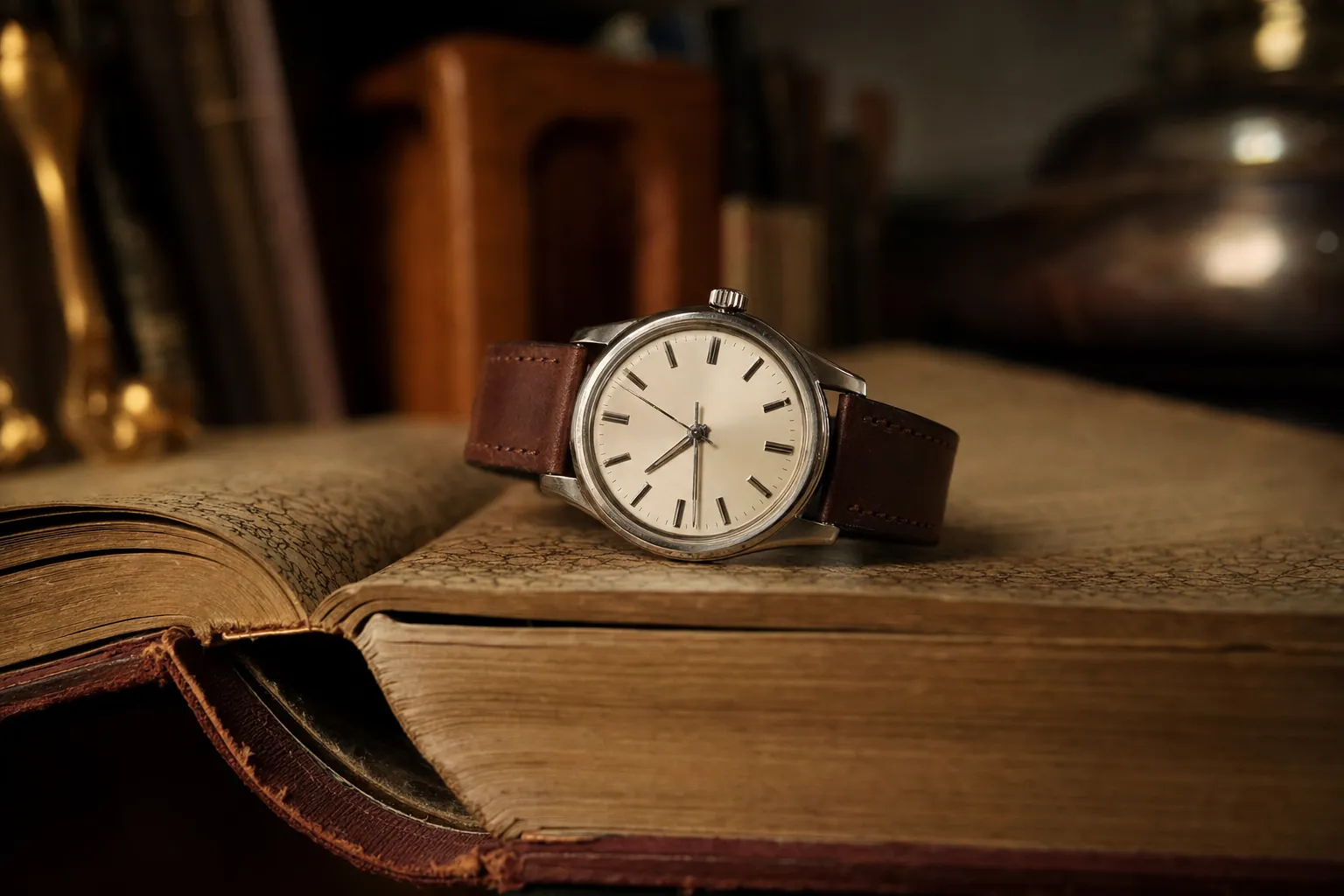
Finding a luxury timepiece that seamlessly integrates into your daily life requires looking far beyond simple dial diameters and marketing specifications. True wearability is an architectural discipline governed by mass distribution, lug geometry, case curvature, and clasp engineering. This luxury watch wearability guide examines the mechanical and physical metrics that determine whether a watch rests comfortably against the wrist throughout an active day or causes chronic fatigue and awkward overhang.
Why Case Dimensions Mean More Than Diameter
For decades, the luxury watch industry relied on case diameter as the primary shorthand for watch sizing. A specification sheet listing a watch as 40mm or 42mm provides only a horizontal cross-section of the case middle, traditionally measured across the bezel from 2 o'clock to 8 o'clock or 3 o'clock to 9 o'clock (excluding the winding crown). While diameter provides a rough baseline, it ignores the three-dimensional reality of human wrist anatomy.
A wrist is not a circle; it is an asymmetrical ellipse composed of bone, tendons, and soft tissue. When evaluating a watch through our buying guide, understanding how a watch's footprint interacts with this surface is far more important than nominal diameter alone.
The Ratio of Dial Aperture to Bezel Width
The visual and physical perception of watch sizing is heavily influenced by the ratio between the dial aperture and the bezel width. A dive watch with a 42mm outer case diameter, such as the Omega Seamaster Diver 300M, often wears smaller than its dimensions suggest because the rotating bezel restricts the dial opening to approximately 30mm. The eye registers the smaller dial face, and the broad, sloped bezel visually compresses the watch on the wrist.
Conversely, a classic dress or minimalist watch measuring 39mm with an ultra-thin bezel—such as a Jaeger-LeCoultre Master Ultra Thin or a Nomos Orion—features a dial opening that stretches nearly the full width of the case. Because the dial surface extends almost to the edge of the caseband, the watch presents a significantly larger visual footprint. When coupled with straight, elongated lugs, a 38mm or 39mm watch can easily dominate a wrist more aggressively than a 41mm sports watch fitted with a substantial external timing bezel.
Case Profile and Three-Dimensional Curvature
Case geometry extends beyond flat two-dimensional boundaries. The cross-sectional profile of the mid-case dictates how light hits the metal and how the watch seats against the arm. Slab-sided cases, characteristic of modern Tudor Black Bay models powered by the manufacture caliber MT5602, feature tall, vertical case flanks with minimal beveling. This verticality exaggerates the physical volume of the watch.
In contrast, brands that utilize complex case profiles—such as the twisted "lyre" lugs and stepped case flanks of the Omega Speedmaster Professional Moonwatch—break up visual mass. The Speedmaster technically measures 42mm across its asymmetrical case band because of the integrated crown guards. However, the bezel itself measures approximately 39.7mm, and the undercut flanks allow the case to settle down into the wrist flesh rather than perching rigidly on top of it.
``` +--------------------------+---------------------+-----------------------+ | Architectural Element | Design Characteristic | Impact on Wearability | +--------------------------+---------------------+-----------------------+ | Wide External Bezel | Steeply angled step | Reduces visual size | | Narrow / Minimal Bezel | Edge-to-edge dial | Increases visual size | | Slab-Sided Mid-Case | Flat, vertical wall | Accentuates bulk | | Undercut / Beveled Flank | Curved lower edge | Lowers wrist profile | +--------------------------+---------------------+-----------------------+ ```
---
The Critical Importance of Lug-to-Lug Distance
If diameter defines a watch's visual scale, the lug-to-lug span—the distance from the tip of the northern lugs to the tip of the southern lugs—determines physical compatibility. This craniocaudal dimension represents the absolute mechanical limit of the watch head.
``` Lug-to-Lug Measurement |<---------------------------------->| +------------------------------------+ | [Lug] [Bezel/Dial] [Lug] | | \ /----------\ / | | \_____| Dial |_____/ | | / | Window | \ | | / \----------/ \ | | [Lug] [Lug] | +------------------------------------+ |<-------->| Case Band ```
Understanding the Wrist Span Limit
The dorsal surface of the human wrist features a flat plane that typically ranges from 45mm to 58mm across in most adults. For a watch to sit securely without lateral shifting, the lug tips should never extend past the edges of this flat plane. When the lug-to-lug span exceeds the width of your arm, the bracelet drops off at an unnatural 90-degree angle, or worse, flares outward. This creates air gaps beneath the end links, turning the watch into an unanchored pendulum that wobbles whenever you rotate your forearm.
Downward curvature in the lugs mitigates this issue. Watches like the IWC Portugieser Chronograph reference 3716 feature a sizable 41mm diameter and a 47.5mm lug-to-lug distance, but the lugs curve downward toward the plane of the caseback. This aggressive rake pulls the spring bars closer to the wrist surface, wrapping the watch securely around the arm’s contours.
Male vs. Female End Links
When assessing bracelet integration, the construction of the solid end link (SEL) is just as critical as the lug-to-lug specification of the bare case:
- Male End Links: These feature a central protrusion that extends beyond the tips of the case lugs. This design effectively extends the rigid footprint of the watch by 3mm to 5mm. A watch with a modest 47mm lug-to-lug case can suddenly require a minimum 52mm span of flat wrist surface before the bracelet links are permitted to articulate downward.
- Female End Links: These feature an inverted central recess, allowing the first pivoting link of the bracelet to enter inside the lug boundary. The bracelet can immediately drop downward around the wrist circumference, preserving the factory case dimensions and accommodating narrower wrists with ease.
---
Thickness, Bezel Profile, and Cuff Clearance
Case thickness, traditionally measured from the apex of the crystal to the lowest point of the caseback, dictates the vertical stability of the watch and its clearance beneath clothing. While a sub-10mm profile represents the standard for traditional dress pieces, sports chronographs and professional dive watches routinely measure between 12.5mm and 16mm.
Crystal Architecture and Perceived Height
The type of crystal fitted to the case significantly affects both measured height and practical cuff clearance. Modern horology utilizes three primary sapphire crystal configurations:
- Flat Sapphire: Sits flush with or slightly below the bezel ring. While this minimizes total thickness, it forces the entire height of the watch into the metallic caseband, yielding an industrial, squared-off profile.
- Domed Sapphire: Features a gentle, continuous convex curve. This profile allows fabric sleeves to slide over the watch without catching on the sharp outer lip of the bezel.
- Box or "Glassbox" Sapphire: Replicates the aesthetic of mid-century acrylic crystals by rising vertically past the bezel before turning sharply inward across the dial. The Omega Speedmaster '57 and TAG Heuer Carrera Glassbox use this architecture. Although a glassbox crystal increases the total height on a caliper, the metallic caseband remains remarkably thin. Because the eye and shirt cuff encounter transparent, beveled sapphire rather than slab-sided steel, the watch wears significantly slimmer than its technical measurement suggests.
Center of Gravity and Top-Heavy Wobble
Total thickness directly influences the center of gravity. When a movement requires substantial vertical space—such as the ubiquitous Valjoux 7750 chronograph caliber (7.9mm thick) or multi-complication automatic movements—the mass moves away from the skin.
If this mechanical height is paired with a bubble-shaped, protruding display caseback, the watch cannot seat flush against the arm. Instead, it balances on a narrow metallic pivot point. This elevated center of gravity causes top-heavy instability, forcing the wearer to cinch the strap or bracelet uncomfortably tight to prevent the watch head from sliding toward the ulnar bone.
---
Bracelet Articulation and On-the-Fly Clasp Adjustment
A watch head can possess exceptional proportions, yet feel uncomfortable if paired with an unyielding bracelet or an unrefined clasp. Because a luxury timepiece spends hours in direct contact with skin and bone, bracelet flexibility and clasp engineering are paramount to everyday comfort.
Link Pitch and Articulation Range
The individual length of each bracelet link—known technically as link pitch—determines how fluidly the metal conforms to uneven anatomy. Long-link designs, such as standard three-link Oyster-style bracelets, create larger flat facets against the wrist. If the individual links are too long, they cannot track tight wrist radii.
In contrast, short-pitch bracelets, such as five-link designs (like the Rolex Jubilee) or multi-link beads-of-rice configurations, articulate across dozens of microscopic pivot points. This granular construction allows the bracelet to drape like fabric, eliminating pressure points against the wrist bones.
Furthermore, bracelet taper plays a major ergonomic role. A bracelet that tapers from 20mm at the lug junction down to 16mm at the clasp reduces lateral stiffness and dramatically cuts down on overall weight, granting the wrist full rotational mobility during desk work.
``` Long Link Pitch (e.g., Traditional Three-Link): +-------------------+ +-------------------+ | | | | <- Rigid planes, larger gaps +-------------------+ +-------------------+
Short Link Pitch (e.g., Five-Link / Jubilee Style): +-------+ +-------+ +-------+ +-------+ | | | | | | | | <- Drapes smoothly over bone +-------+ +-------+ +-------+ +-------+ ```
Modern Micro-Adjustment Systems
Human wrist circumference is dynamic. Depending on hydration, ambient temperature, altitude, and physical exertion, a wrist can expand or contract by 2mm to 5mm over the course of a day. Traditional clasps requiring spring-bar tools or toothpicks for micro-adjustments are ill-suited for daily wear.
High-end manufacturers have resolved this with tool-free, on-the-fly adjustment mechanisms built directly into the clasp bodies:
- Rolex Glidelock: Originally engineered for dive suits on the Submariner and Sea-Dweller, this system provides a toothed rack inside the clasp cover, allowing fine adjustments in 2mm increments over a span of up to 20mm without removing the watch.
- Rolex Easylock: A simpler, highly effective system found on models like the Datejust and Explorer that allows a concealed half-link inside the clasp to fold open or closed, immediately adding or subtracting 5mm.
- Omega Push-Button System: Found across the modern Seamaster and Speedmaster collections, featuring an internal sliding carriage engaged by an interior push button, offering multiple locking positions across several millimeters.
- IWC Micro-Adjustment: Integrated into the folding clasp on models such as the Pilot’s Watch Mark XX, adjusted simply by depressing the spring-loaded IWC emblem on the clasp exterior while sliding the bracelet in or out.
---
Weight Distribution: Stainless Steel Versus Titanium
The material composition of a timepiece directly dictates its daily kinetic behavior. In high-horology sports watches, the choice between traditional stainless steel alloys and modern titanium grades introduces stark differences in wearability.
Steel Alloys (316L and 904L)
Austenitic stainless steels, such as the standard 316L or the nickel- and chromium-dense 904L favored by Rolex, feature an approximate density of 8.0 grams per cubic centimeter. A fully linked stainless steel dive watch on a matching steel bracelet typically registers between 145 and 190 grams on a scale.
This mass imparts a reassuring sense of solidity that many collectors appreciate. However, when paired with an unbalanced case head, that same mass creates inertia. Every sudden movement of the arm causes a heavy steel watch to pull against the wrist, which can cause fatigue over a twelve-hour workday.
Titanium (Grade 2 and Grade 5)
Titanium alloys offer a density of roughly 4.4 to 4.5 grams per cubic centimeter—representing an approximate 40% to 45% reduction in weight compared to steel.
- Grade 2 Titanium: Commercially pure titanium. It is exceptionally lightweight, chemically inert, and highly resistant to saltwater corrosion, though softer and more prone to surface scratching.
- Grade 5 Titanium (Ti 6Al-4V): An alloy containing 6% aluminum and 4% vanadium. It maintains the featherlight qualities of Grade 2 while offering twice the structural strength and tensile capacity of standard steel, allowing for high-polish bevels alongside brushed finishes.
The primary wearability advantage of titanium is the virtual elimination of top-heavy inertia. A Grade 5 titanium watch, such as the modern Omega Seamaster Aqua Terra Ultra Light or titanium variants of the Tudor Pelagos, anchors securely without needing to be strapped tightly down. The skin breathes more easily, and the timepiece essentially vanishes from sensory awareness during daily activities.
``` +--------------------+-----------------+------------------+-----------------------+ | Material | Density (g/cm³) | Avg. Weight (g) | Ergonomic Sensation | +--------------------+-----------------+------------------+-----------------------+ | 316L Steel | ~8.0 | 150 - 175 | Substantial, grounded | | 904L Steel | ~8.05 | 155 - 180 | Heavy, solid presence | | Grade 2 Titanium | ~4.5 | 90 - 110 | Airy, warm to touch | | Grade 5 Titanium | ~4.43 | 95 - 115 | Balanced, disappearing| +--------------------+-----------------+------------------+-----------------------+ Estimated weight for a typical 40-42mm sports watch on a fully linked matching bracelet. ```
---
Evaluating Daily Ergonomics in Pre-Owned Models
When browsing an extensive pre-owned collection, evaluating wearability involves factors beyond catalog specifications. Previous ownership, aging components, and historical refurbishment can fundamentally alter how a watch sits on your wrist.
Checking Clasp Fatigue and Bracelet Stretch
Over years of daily wear, the internal friction pins and link bores of metal bracelets collect microscopic particles of dirt and skin oils. Acting as an abrasive grinding paste, this grit slowly bores out the stainless steel pins, causing what collectors refer to as "bracelet stretch."
A stretched bracelet droops loosely, allowing the heavy case head to slide uncomfortably across the wrist bone. When inspecting a pre-owned luxury piece, hold the watch case horizontally by the bezel and observe the bracelet. A healthy bracelet should remain relatively horizontal, showing only a subtle downward curve. Severe sagging indicates worn link interfaces that will feel sloppy and unpredictable on the arm.
The Hidden Impact of Case Refurbishment
Polishing history plays an underappreciated role in ergonomics. Over-polishing can soften sharp transitions, thin down the case lugs unevenly, and alter the flat plane of the caseback.
If the lugs on the crown side have been polished more heavily than those on the non-crown side, the watch will sit at a permanent, subtle tilt. Furthermore, vintage pressed-metal folding clasps can lose their internal tension over decades of use, leading to accidental openings during daily wear. Always verify that pre-owned friction-fit clasps close with a crisp, tactile click and seat completely flush against the inner bracelet links.
---
Frequently Asked Questions
### How do you measure true lug-to-lug distance on curved cases? To measure the true lug-to-lug distance on curved cases, use a digital vernier caliper across the caseback from the northernmost tip of the lugs to the southernmost tip. Measure parallel to the central axis of the watch rather than diagonally. If the watch uses male solid end links that project beyond the lug boundaries, measure to the outermost edge of those fixed center links to capture the functional lug span.
### Why does case thickness impact daily wear comfort? Excessive case thickness raises the mechanical center of gravity, which creates top-heavy instability and causes the watch head to wobble during normal arm movement. Tall cases also catch easily on clothing cuffs, jacket linings, and desk edges, leading to repeated lateral impacts. Furthermore, watches with protruding casebacks exert concentrated downward pressure over a narrow patch of skin rather than dispersing weight evenly.
### Which bracelet clasp mechanisms offer tool-free adjustment? Leading tool-free clasp systems include the Rolex Glidelock, which relies on a sliding toothed track, and the Rolex Easylink extension system, which uses an un-folding half-link. Omega equips many modern Seamaster and Speedmaster bracelets with internal push-button sliding carriages that lock into several detents. Brands like IWC, Glashütte Original, and Tudor (with its spring-loaded T-Fit system) also offer proprietary tool-free mechanisms that adjust quickly without removal from the wrist.
### Does titanium offer noticeable wearability benefits over steel? Yes, titanium is approximately 40% to 45% less dense than stainless steel, creating a dramatic reduction in total mass that prevents arm fatigue during extended wear. This reduced weight eliminates top-heavy wobble because the watch head produces far less kinetic inertia as your arm swings. Additionally, titanium has lower thermal conductivity than steel, meaning it does not feel shockingly cold in winter or uncomfortably hot in summer when resting against your skin.