Patek Philippe Seal vs. Geneva Seal: A Collector's Guide to Quality Marks
Published October 16, 2026 · Last updated October 17, 2026 · By Lume Wrist Watches Editorial Team
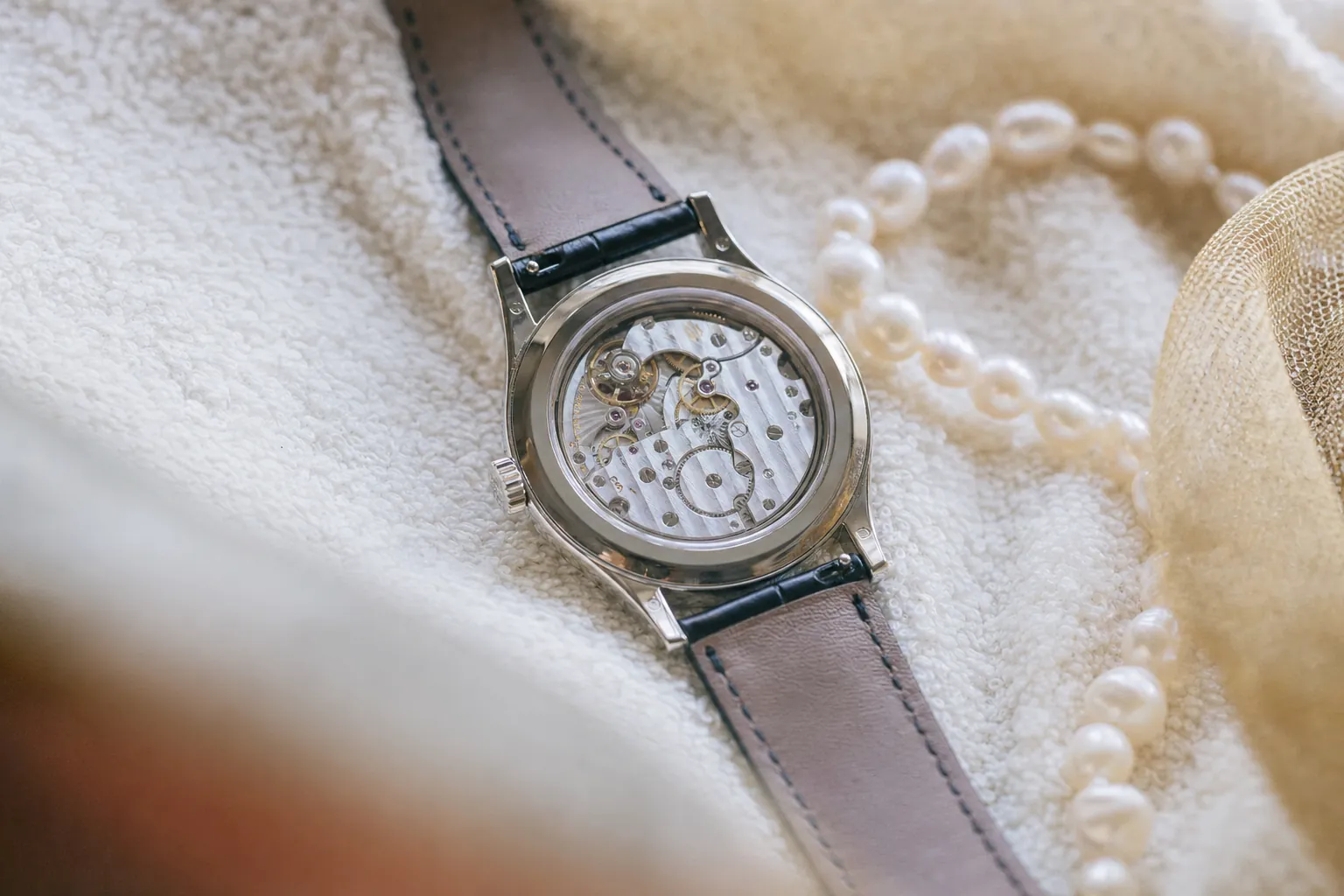
For discerning collectors, understanding the distinctions between the Patek Philippe Seal and the Geneva Seal (Poinçon de Genève) is paramount, as these marks represent the pinnacle of horological excellence and ethical manufacturing in luxury watchmaking. While both signify exceptional quality and finishing, they operate under different authorities and have evolved to reflect distinct standards, directly impacting a watch's provenance and value. This guide demystifies these essential certifications, offering clarity on their history, criteria, and significance for any serious Patek Philippe enthusiast.
Why Patek Philippe Matters: A Legacy of Uncompromising Excellence
Patek Philippe stands as an unrivaled titan in haute horlogerie, a maison synonymous with pioneering innovation, enduring value, and exceptional artistry. For over 180 years, it has consistently set benchmarks for technical complexity and aesthetic refinement, crafting timepieces that transcend mere utility to become cherished heirlooms. Who is it for? Collectors who seek not just a watch, but a piece of history, an investment in peerless craftsmanship, and an object capable of outliving generations. The brand's house codes, from its iconic complications to its meticulous finishing, dictate that every Patek Philippe watch represents the ultimate expression of Swiss watchmaking, often evidenced by the distinguished Seals that certify its quality.
Brand History and Defining Milestones with Dates
The journey of Patek Philippe is one of relentless pursuit of perfection, marked by pivotal innovations and a steadfast commitment to traditional craftsmanship. The story begins in 1839 with Polish immigrants Antoine Norbert de Patek and Franciszek Czapek, quickly evolving with the pivotal partnership formed in 1845 with French watchmaker Adrien Philippe.
- 1839: Patek, Czapek & Cie. founded in Geneva.
- 1845: Adrien Philippe invents the keyless winding and hand-setting system, joining the company, which becomes Patek & Cie.
- 1851: The company is renamed Patek Philippe & Cie, solidifying the partnership that would define its future. This year also marks its first exhibition at the Great Exhibition in London, where Queen Victoria acquires a pendant watch.
- 1863: Patek Philippe introduces its first split-seconds chronograph.
- 1889: Patent for the perpetual calendar mechanism for pocket watches.
- 1902: Patent for the double chronograph (split-seconds chronograph).
- 1925: Introduction of the first wrist-worn perpetual calendar (ref. 97975).
- 1932: The Stern family acquires Patek Philippe, ensuring its continued independence and family ownership, a defining characteristic to this day.
- 1959: Patek Philippe produces its first Gyromax balance, an innovation still used today.
- 1976: Launch of the iconic Nautilus, reference 3700/1A, marking the brand's entry into the luxury sports watch segment.
- 2005: Introduction of the "Advanced Research" program, pioneering silicon-based components like the Spiromax balance spring.
- 2009: Patek Philippe replaces the Geneva Seal with its own, more stringent Patek Philippe Seal, setting new internal quality standards.
- 2014: To celebrate its 175th anniversary, Patek Philippe unveils the Grandmaster Chime, reference 5175, its most complicated wristwatch ever.
This rich heritage, meticulously preserved, underpins why a Patek Philippe Collector's Guide: Investing in Horological Excellence is essential for enthusiasts.
Understanding Quality Marks: Geneva Seal vs. Patek Philippe Seal
The Geneva Seal (Poinçon de Genève) and the Patek Philippe Seal are both hallmarks of exceptional quality in watchmaking, but they represent different philosophies and scopes. The former is an independent certification for movements produced in Geneva, while the latter is an exclusive, holistic quality standard applied by Patek Philippe to its entire timepiece.
The Geneva Seal (Poinçon de Genève)
The Geneva Seal, or Poinçon de Genève, is one of the oldest and most respected independent certifications in watchmaking, established in 1886 by the Canton of Geneva. It is a testament to superior craftsmanship, precision, and durability for mechanical movements assembled and regulated within the Canton of Geneva. Originally, it was a government-backed initiative to protect the reputation of Geneva's watchmaking industry against mass-produced alternatives.
Key Criteria of the Geneva Seal:
The Geneva Seal is not merely an aesthetic mark; it encompasses a stringent set of criteria covering the movement's components, finishing, and construction. Here are some of the most critical aspects:
- Origin: The watch must be assembled and regulated within the Canton of Geneva.
- Mechanical Integrity: Only traditional mechanical movements are eligible.
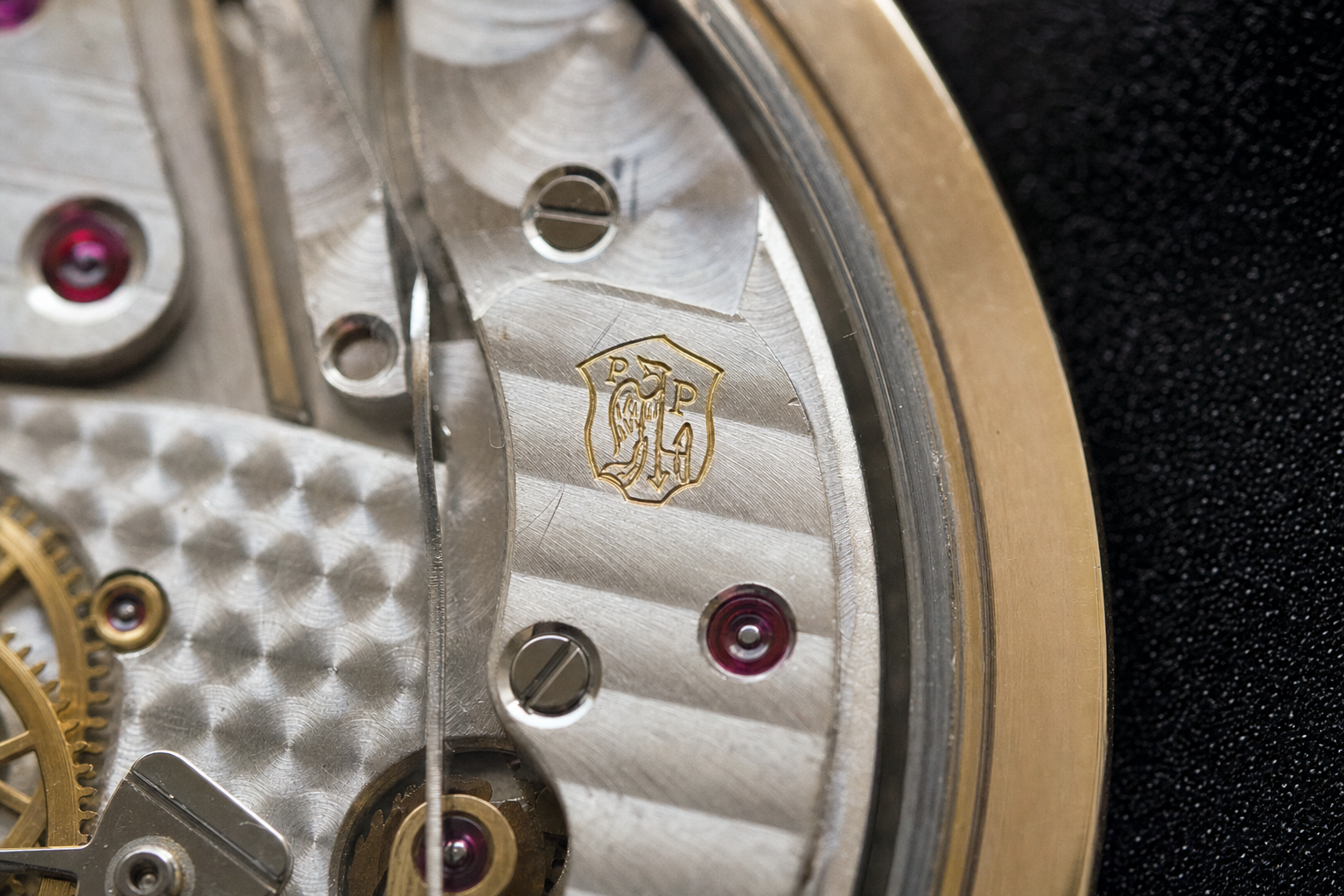
- Finishing: All visible parts, especially bridges, plates, and screws, must be meticulously finished with specific techniques (e.g., Côtes de Genève, perlage, anglage). Sharp angles must be broken, screw heads polished, and jewels countersunk.
- Materials: Certain components like balance springs and escape wheels must meet specified material and construction standards.
- Functionality: Movements must meet strict requirements for proper functioning and durability, although accuracy is not explicitly tested as rigorously as with a chronometer certification (like COSC).
- Components: Specific rules apply to steel parts, gear trains, and regulating organs, ensuring robust construction and elegant execution.
Historically, Patek Philippe proudly adorned its movements with the Geneva Seal. Many vintage and even some modern Patek Philippe watches produced before 2009 bear this prestigious mark. For instance, an early Patek Philippe Complications White Dial 5015P Platinum would likely feature the Geneva Seal on its exquisite movement.
The Patek Philippe Seal
In 2009, Patek Philippe made a groundbreaking decision to replace the Geneva Seal with its own, proprietary Patek Philippe Seal. This move was driven by a desire to implement a more comprehensive and demanding certification that covered the entire watch – from movement to case, dial, hands, and even after-sales service – rather than just the movement. Patek Philippe believed the Geneva Seal, while honorable, no longer fully encompassed their elevated standards across the entire finished product.
Key Criteria of the Patek Philippe Seal:
The Patek Philippe Seal is arguably the most stringent and all-encompassing quality hallmark in the industry. Its criteria are significantly broader and more demanding than the Geneva Seal:
- Holistic Certification: Applies to the entire watch, not just the movement. This includes the case construction, dial aesthetics, hand finishing, and overall integration.
- Movement Finishing & Functionality: Exceeds Geneva Seal standards. Every component, visible or not, must be finished to an exceptionally high standard. Accuracy is guaranteed to a remarkable tolerance for mechanical movements: -3/+2 seconds per day for diameters over 20mm, and -5/+4 seconds per day for movements under 20mm. This is more demanding than COSC chronometer certification.
- Longevity & Reliability: Watches must be designed for longevity, ensuring ease of maintenance and the availability of parts for at least 200 years. This commitment to patrimony is unique.
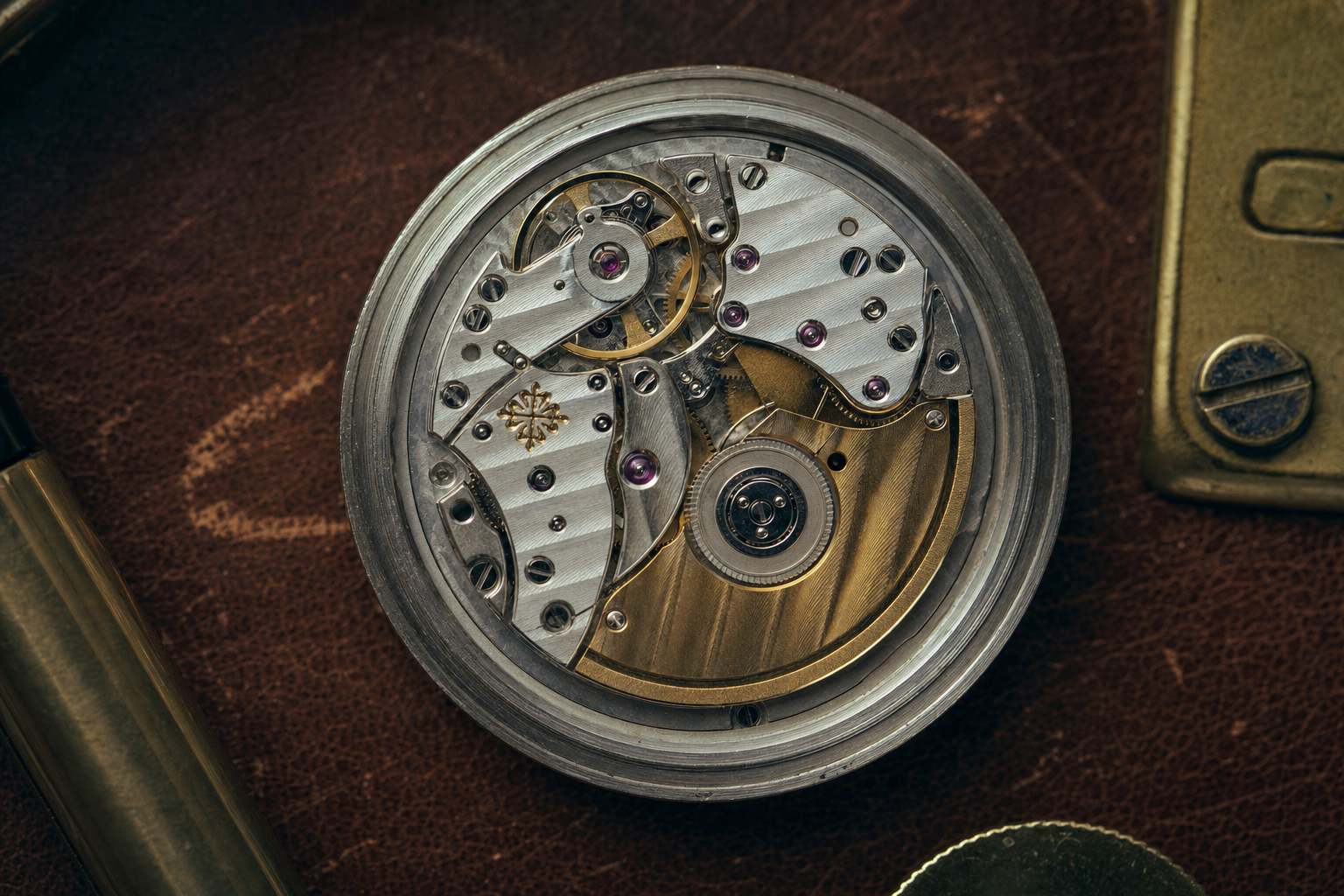
- Aesthetics: Every detail, from the readability of the dial to the precise fitting of parts, must meet Patek Philippe's uncompromising aesthetic standards.
- Innovation: Encourages and certifies the use of advanced technologies, such as those developed through Patek Philippe's "Advanced Research" program, ensuring these innovations meet long-term quality criteria.
- After-Sales Service: The Seal guarantees that the watch will be serviced, repaired, and restored throughout its lifetime by Patek Philippe itself, ensuring the preservation of its original craftsmanship.
This commitment to excellence is why understanding Patek Philippe Movements: In-House Calibers & Horological Innovations is crucial for any collector. The Seal is a testament to the brand's complete control over its production chain and its dedication to the highest standards.
Comparison Table: Geneva Seal vs. Patek Philippe Seal
| Feature | Geneva Seal (Poinçon de Genève) | Patek Philippe Seal |
|---|---|---|
| :------------------ | :----------------------------------------------------------------- | :------------------------------------------------------------------------------- |
| Authority | Independent, official certification by Canton of Geneva | Proprietary internal certification by Patek Philippe |
| Scope | Mechanical movement only | Entire watch (movement, case, dial, hands, service) |
| Location | Movement must be assembled & regulated in Canton of Geneva | No geographical restriction (Patek Philippe manufactures in Geneva, however) |
| Est. Date | 1886 | 2009 |
| Finishing | Strict aesthetic & technical criteria for visible movement parts | Even stricter, applied to all movement parts (visible & hidden); all exterior components |
| Accuracy | Not explicitly specified (implies good functioning) | -3/+2 seconds/day (diam. >20mm); -5/+4 seconds/day (diam. <20mm) |
| Longevity | Implied durability | Guaranteed parts and service for 200+ years |
| Service | Not covered | Guaranteed factory service and restoration for the lifetime of the watch |
| Innovation | Traditionally conservative | Actively certifies and integrates advanced research technologies |
Every Current Collection Explained, with Signature References
Patek Philippe's collections showcase a diverse range of styles and complications, each embodying the brand's pursuit of perfection. While the Seals apply across the board, the intrinsic quality they guarantee is evident in every piece, from the simplest Calatrava to the most complex Grand Complications.
- Calatrava: The quintessential round dress watch, embodying Patek Philippe's minimalist elegance. The Patek Philippe Calatrava Models Every Collector Should Know include iconic references like the Ref. 5196 or the modern Ref. 6119, renowned for its 'Clous de Paris' hobnail bezel. These pieces exemplify understated luxury, with movements like the ultra-thin Caliber 215 PS.
- Nautilus: The legendary luxury sports watch, designed by Gérald Genta. Characterized by its porthole-inspired case, integrated bracelet, and distinctive horizontally embossed dial. The Ref. 5711 (now discontinued) and the current Ref. 5811 in white gold, or the highly sought-after Ref. 5712 with moon phases and power reserve, are signature pieces. The Patek Philippe Neptune 5080 Silver Dial offers a similar sporty aesthetic from a past era.
- Aquanaut: A sportier, more contemporary sibling to the Nautilus, featuring a rounded octagonal case and a "tropical" composite strap. References like the Ref. 5167A (steel, 40mm) or the more complex Ref. 5968A (chronograph) are highly popular. Ladies' models, such as the Patek Philippe Ladies Patek Philippe Aquanaut 4960A Black Dial, also feature prominently.
- Complications: This collection showcases Patek Philippe's mastery of useful complications beyond simple timekeeping, including annual calendars, travel time functions, and world timers. The Ref. 5326G-001 Annual Calendar Travel Time and the World Time Ref. 5230G are standout pieces, exhibiting movements like the Caliber 324 S QA LU 24H/206.
- Grand Complications: The pinnacle of horological complexity, featuring minute repeaters, perpetual calendars, split-seconds chronographs, tourbillons, and celestial charts. References such as the Ref. 5270 (perpetual calendar chronograph) or the Ref. 6002R (Sky Moon Tourbillon) embody the brand's ultimate technical prowess. For a deeper dive into these marvels, consult our guide on Patek Philippe Complications & Perpetual Calendars Explained.
- Gondolo: Distinctive for its shaped cases (rectangular, tonneau, cushion), drawing inspiration from Art Deco designs. These pieces often feature manual-wind movements and sophisticated dial designs.
Movements and In-House Calibers Used Across the Range
The heart of every Patek Philippe watch is its movement, and the presence of either the Geneva Seal (historically) or the Patek Philippe Seal (currently) provides irrefutable evidence of its exceptional quality. Patek Philippe is renowned for its commitment to in-house manufacturing, developing and producing a vast array of calibers.
- Manual-Wind: Calibers like the 215 PS (found in Calatrava models) or the 28-520 IRM QA 24H (a sophisticated chronograph base) exemplify traditional watchmaking. The finishing on these movements, regardless of the Seal, is breathtaking.
- Automatic: The ubiquitous Caliber 324 SC, with its distinctive 21K gold rotor, powers many time-and-date models (e.g., Nautilus 5711/1A). For more complex functions, automatic movements like the Caliber 26-330 S C (Nautilus 5811) or the 31-260 REG QA (Annual Calendar Travel Time) showcase innovative engineering.
- Complication-Specific Calibers: Patek Philippe develops bespoke movements for its grand complications. Examples include the CH 29-535 PS Q for the perpetual calendar chronographs (Patek Philippe Chronograph References: A Collector's Deep Dive) or the R 27 PS QR for minute repeaters. The dedication to perfect execution is why these movements are considered works of art.
The Patek Philippe Seal ensures that these complex mechanisms not only function flawlessly but are also finished to a degree that often surpasses what is required by external certifications. This includes anglage on every bridge, polished screw heads and countersinks, and Côtes de Genève applied with unparalleled precision, even on parts not immediately visible.
Price Tiers Today: Entry, Core, and Grail, with Realistic Ranges
Acquiring a Patek Philippe is a significant investment, reflecting its unparalleled craftsmanship and market demand. Prices fluctuate based on model, materials, complications, and market conditions, often exceeding retail for highly sought-after references. All prices are approximate market observations and not firm quotes. For more detailed pricing, refer to How Much Does a Patek Philippe Cost in 2026? Pricing & Market Dynamics.
| Tier | Description | Example Models (Approx. Market Price) |
|---|---|---|
| :---------- | :-------------------------------------------------------------------------- | :------------------------------------------------------ |
| Entry-Level | Classic, simpler complications, often in precious metals or more accessible sports models. | Calatrava (e.g., Ref. 6119G): ~$35,000 - $55,000 |
| Aquanaut (e.g., Ref. 5167A steel): ~$70,000 - $100,000 | ||
| Core Collection | Popular sports models, annual calendars, travel time watches, chronographs. | Nautilus (e.g., Ref. 5811G): ~$150,000 - $250,000 |
| Complications Annual Calendar (e.g., Ref. 5396G): ~$70,000 - $120,000 | ||
| Chronograph (e.g., Ref. 5172G): ~$90,000 - $150,000 | ||
| Grail Watches | Grand Complications, highly limited editions, rare vintage references, specific materials. | Perpetual Calendar Chronograph (e.g., Ref. 5270P): ~$200,000 - $400,000 |
| Minute Repeater (e.g., Ref. 5078G): ~$450,000 - $800,000+ | ||
| Sky Moon Tourbillon (e.g., Ref. 6002R): ~$2,000,000+ |
What to Check Before Buying Pre-Owned from This Maison
Given the significant investment a Patek Philippe represents, due diligence is critical when considering a pre-owned purchase. The presence and condition of the Geneva Seal or Patek Philippe Seal are vital indicators of authenticity and quality.
- Authentication and Documentation: Always ensure the watch comes with its original papers, including the Certificate of Origin. For vintage pieces, an Patek Philippe Extract from the Archives Explained: Essential Guide is indispensable, verifying its authenticity and original specifications.
- Seal Verification: If the watch is from 2009 or later, it should bear the Patek Philippe Seal. If older, check for the Geneva Seal on the movement. These marks should be crisp and clear. Any doubt about their presence or integrity warrants caution.
- Condition and Originality: Scrutinize the case, dial, hands, and movement for signs of refurbishment, damage, or non-original parts. Patek Philippe places immense value on originality. A watch that has undergone extensive, non-factory restoration can lose significant value.
- Service History: A documented service history from Patek Philippe or an authorized service center is a strong positive. Regular servicing by qualified professionals ensures the watch's intricate mechanics, particularly for complicated pieces, remain in optimal condition.
- Movement Inspection: A qualified watchmaker should inspect the movement. The impeccable finishing guaranteed by both Seals should be evident, with no signs of corrosion, mishandling, or substandard repairs.
- Reputable Dealer: Purchase from an established and trusted dealer like Lume Wrist Watches, which offers our in-house team independent authentication and guarantees the provenance of its timepieces. This is especially crucial for high-value brands like Patek Philippe, which are unfortunately targets for counterfeiting.
Current Authenticated Stock at Lume Wrist Watches
At Lume Wrist Watches, we pride ourselves on offering an authenticated collection of the finest Patek Philippe timepieces, each rigorously inspected to meet our exacting standards. Our curated selection ensures that every watch embodies the quality and heritage associated with this esteemed maison.
Explore our current inventory of Patek Philippe timepieces, where you might find exquisite examples such as:
- Patek Philippe Patek Philippe 3491 Yellow Gold: A classic vintage dress watch, embodying the timeless elegance that Patek Philippe is known for.
- Patek Philippe Patek Philippe Neptune 5080 Silver Dial: An early expression of Patek Philippe's sportier side, preceding the Aquanaut.
- Patek Philippe Patek Philippe Complications White Dial 5015P Platinum: A sophisticated complicated piece, likely bearing the Geneva Seal on its beautifully finished movement.
- Patek Philippe Ladies Patek Philippe Aquanaut 4960A Black Dial: A sought-after ladies' sports watch, blending robustness with refined style.
For those seeking a specific reference not currently in stock, our concierge sourcing service can assist in locating your desired Patek Philippe, ensuring authenticity and quality. You can also visit us for a private viewing appointments in luxury watches in New York.
Frequently Asked Questions
### What is the primary difference between the Patek Philippe Seal and the Geneva Seal? The primary difference is scope: the Geneva Seal certifies only the mechanical movement, focusing on traditional finishing and assembly within Geneva. The Patek Philippe Seal, introduced in 2009, applies to the entire watch (movement, case, dial, hands, etc.) and guarantees accuracy, longevity, and Patek Philippe's proprietary after-sales service commitment.
### Does the Patek Philippe Seal guarantee better accuracy than the Geneva Seal? Yes, the Patek Philippe Seal explicitly mandates stringent accuracy standards for its movements (-3/+2 seconds per day for movements over 20mm, -5/+4 seconds per day for smaller movements). The Geneva Seal primarily focuses on finishing and construction quality, with accuracy being an implied outcome rather than a directly tested and guaranteed criterion.
### Can a Patek Philippe watch have both Seals? No, a Patek Philippe watch will bear one or the other, depending on its production date. Watches produced before 2009 typically feature the Geneva Seal on their movements. Watches produced from 2009 onwards proudly display the Patek Philippe Seal, encompassing the entire timepiece.
### Why did Patek Philippe create its own Seal? Patek Philippe established its own Seal in 2009 because it felt the Geneva Seal, while esteemed, no longer fully encompassed its increasingly high and comprehensive standards across the entire watch, including external components and long-term service commitments. The Patek Philippe Seal allowed the brand to dictate a more holistic and demanding set of criteria tailored to its unique philosophy.
### Does the presence of either Seal affect a Patek Philippe's value? Absolutely. The presence of either the Geneva Seal (for older models) or the Patek Philippe Seal (for newer models) is a crucial determinant of a watch's authenticity, quality, and collector value. These seals provide independent or proprietary assurances of superlative craftsmanship, meticulous finishing, and performance, which are highly prized by collectors and contribute significantly to the watch's market desirability and enduring worth.
### Are there any other quality seals in watchmaking comparable to these? While other certifications exist, such as the COSC chronometer certification (focused solely on accuracy) or the Fleurier Quality Foundation (a comprehensive Swiss certification), none combine the historical gravitas, movement finishing requirements, and holistic brand-specific guarantees quite like the Geneva Seal or, more comprehensively, the Patek Philippe Seal.
Contact Lume Wrist Watches
Ready to find your next horological masterpiece? Contact Lume Wrist Watches today.
- Email: sales@lumewrist.com
- Phone: +1 (332) 285-2190
- Boutique: 18 East 48th Street, Suite 1503, New York, NY 10017
- Hours: Mon–Fri 9:00 AM – 7:00 PM EST · Closed Saturday & Sunday
We invite you to explore our contact page or browse our shop for further assistance.
Final Thoughts
The distinction between the Patek Philippe Seal and the Geneva Seal is more than a mere technicality; it's a window into the evolving landscape of haute horlogerie and Patek Philippe's unwavering commitment to absolute quality. For collectors, understanding these seals provides critical insight into a timepiece's provenance, the meticulousness of its construction, and its potential for enduring value. Whether admiring a vintage piece with the storied Poinçon de Genève or a contemporary marvel bearing the comprehensive Patek Philippe Seal, you are engaging with the very best in watchmaking. Explore our authenticated collection and discover the Patek Philippe that speaks to your horological passion. We ship luxury watches delivered to all 50 states.