How a Tourbillon Works and When It Matters to Collectors
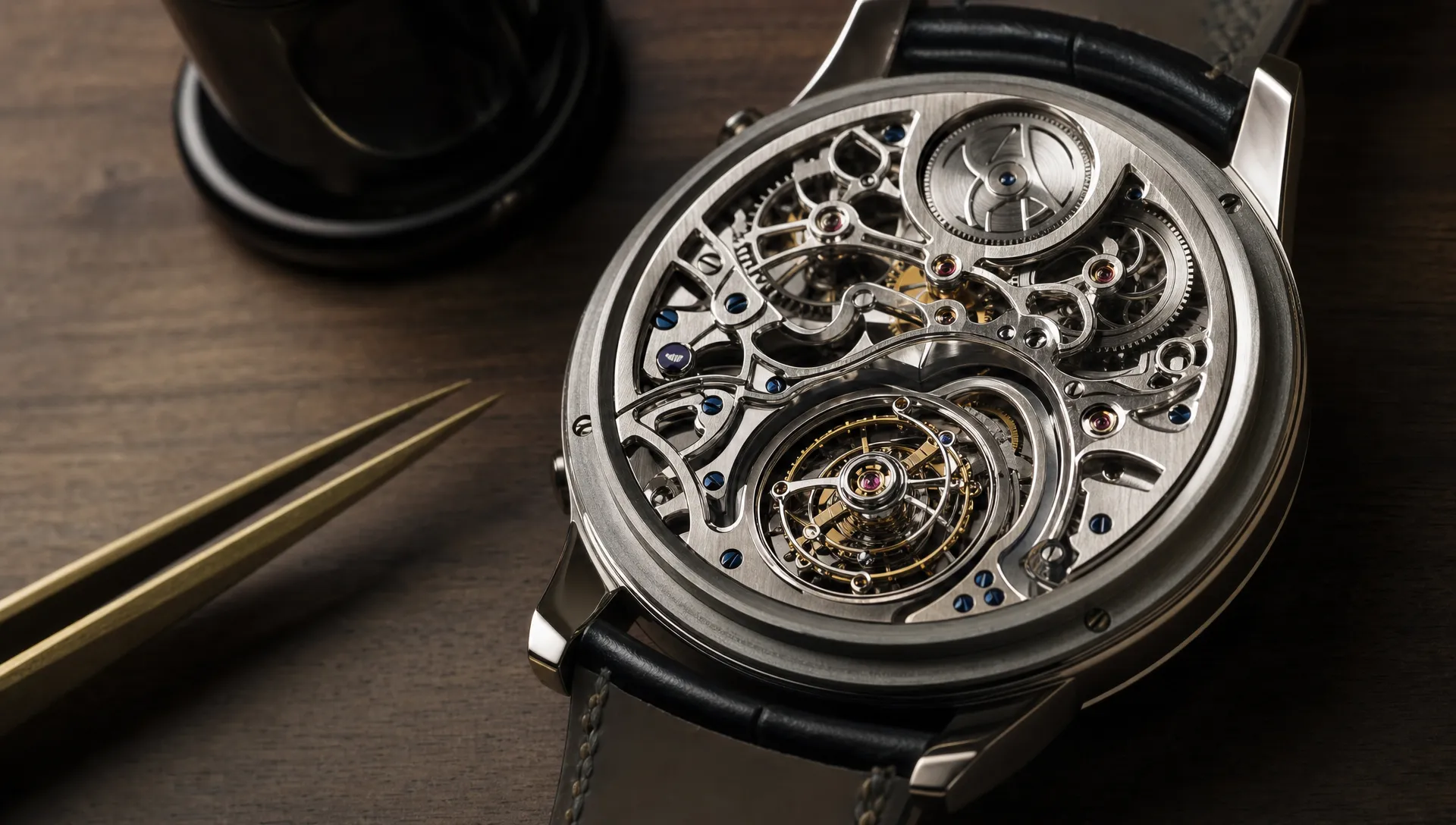
A tourbillon is more than a rotating dial detail. Learn how it works, when it matters to collectors and when a simpler luxury watch is the better buy.
# How a Tourbillon Works and When It Matters to Collectors A tourbillon places the balance wheel and escapement inside a rotating cage to average positional errors caused by gravity. It matters to collectors when the complication adds technical, historical or finishing value to a specific watch, not simply because the dial says “tourbillon.” For most daily wearers, a tourbillon is not the most practical way to improve accuracy. For serious collectors, it can be one of the clearest windows into a manufacture’s engineering discipline, finishing standards and willingness to build something difficult for its own sake. ## What a tourbillon actually does The tourbillon was patented by Abraham-Louis Breguet on 06/26/1801. The original problem was positional error in pocket watches. A pocket watch spent much of its life upright in a vest pocket, so gravity could affect the balance and escapement in a consistent direction. By rotating those regulating parts through a full cycle, the tourbillon averaged some of those errors over time. A wristwatch lives a different life. It is constantly moving through different positions on the wrist, in a drawer and on a nightstand. That is why a modern tourbillon is not automatically more accurate than a well-adjusted conventional movement. Its value is usually found in architecture, hand-finishing, rarity, brand importance and collector demand. ## The mechanism in plain English A mechanical watch keeps time through a regulating organ. The mainspring stores energy. The gear train meters that energy. The escapement releases it in controlled impulses. The balance wheel oscillates back and forth at a set frequency. In a conventional movement, the balance and escapement are fixed to the movement plate. In a tourbillon, those parts sit inside a small rotating carriage, often called a cage. In many traditional designs, the cage makes one full revolution per minute, so it can also carry or indicate running seconds. | Component | What it does | Collector relevance | |---|---|---| | Balance wheel | Oscillates to regulate timekeeping | Look for stable amplitude and clean regulation, not just visual drama | | Escapement | Transfers energy to the balance in impulses | Finishing and adjustment matter because parts are exposed and difficult to service | | Tourbillon cage | Rotates the regulating organ | Low weight, symmetry and clean finishing signal stronger execution | | Bridge or cock | Supports the rotating assembly | Sharp bevels, polished edges and precise alignment are visible quality cues | | Driving system | Rotates the cage at a set rate | Smooth rotation should be steady, not jerky or hesitant | The key idea is simple. The tourbillon does not defeat gravity. It averages the effect of gravity across multiple positions. In a pocket watch, that was a functional answer to a real use pattern. In a wristwatch, it is usually a demonstration of engineering and finishing rather than a guaranteed chronometric advantage. ## Tourbillon vs open-heart watch Many buyers confuse a tourbillon with an open-heart dial. The difference matters. An open-heart watch exposes the balance wheel through a cutout, but the balance usually stays fixed in place. A tourbillon shows the balance, escapement and cage rotating as a complete assembly. | Feature | True tourbillon | Open-heart watch | |---|---|---| | What moves | Entire regulating assembly rotates in a cage | Balance wheel oscillates in a fixed position | | Technical complexity | High | Usually moderate | | Service difficulty | High | Similar to the base movement in many cases | | Collector value driver | Caliber architecture, finishing, rarity and brand | Design, visibility and movement quality | | Common misunderstanding | Assumed to be more accurate | Mistaken for a tourbillon | A visible balance is not enough. If the cage is not rotating around its axis with the regulating assembly inside it, it is not a tourbillon. ## Common tourbillon types Not all tourbillons are built the same way. Some are traditional and restrained. Others are designed for maximum visual impact. Collectors should look past the aperture and identify the actual architecture. | Type | Basic construction | When it matters | |---|---|---| | Classical tourbillon | Cage supported by a bridge, often rotating once per minute | Strong choice when finishing, symmetry and historical design matter | | Flying tourbillon | Cantilevered cage, usually without an upper bridge | Offers a clearer view, but demands excellent engineering and shock management | | Multi-axis tourbillon | Cage rotates on more than one axis | Technically complex, often thicker and more service intensive | | Tourbillon with additional complication | Combined with chronograph, perpetual calendar, minute repeater or other mechanism | Important when the integration is clean and the watch remains wearable | | Ultra-thin tourbillon | Built with minimal movement height | Relevant when slimness is part of the technical achievement | Ultra-thin construction is a separate discipline. A slim tourbillon can be harder to execute cleanly than a larger one because tolerances are tight and the movement has less physical space to manage energy, stability and shock. For more background on thin mechanical watchmaking, the Lume Wrist Watches Journal has a separate look at [Piaget Altiplano ultra-thin watchmaking](https://lumewrist.com/blog/piaget-altiplano-ultra-thin-watchmaking-masters). ## Why accuracy is not the main reason to buy one A tourbillon can be regulated well. It can also be regulated poorly. The presence of the complication tells you that the movement is complex, not that the watch will outperform a simpler chronometer-grade movement in daily use. Modern non-tourbillon watches benefit from better materials, improved hairsprings, precise poising, advanced escapement design and careful regulation. For a watch worn on the wrist, those factors often matter more than a rotating cage. If daily accuracy is the main brief, a high-grade automatic or manual-wind movement may be the more rational choice. That does not reduce the importance of the tourbillon. It just places it in the right category. It is a high complication, not a magic accuracy device. ## When a tourbillon matters to collectors A tourbillon matters when it is supported by the rest of the watch. The caliber should be coherent. The finishing should reward magnification. The case should suit the movement. The brand or independent maker should have the skill and service structure to support it. Collectors usually give more weight to these factors: - **Movement architecture**: The cage layout, bridge shape, depth and symmetry should feel deliberate. - **Finishing quality**: Anglage, black polishing, perlage, brushing and screw finishing should be consistent. - **Wearability**: A thick or oversized case can weaken an otherwise impressive movement. - **Service history**: A high complication without known service support carries more ownership risk. - **Reference specificity**: Exact reference, caliber, production period and dial configuration affect collectibility. - **Complete set and provenance**: Box, papers, service documentation and original accessories can help verify the watch’s history. For collectors who already own simpler three-hand watches and chronographs, a tourbillon can add a different kind of mechanical interest. It is less interactive than a chronograph, but more architectural. If you are comparing complications by function, our guide to [chronograph movements for collectors](https://lumewrist.com/blog/chronograph-movements-explained-collectors) explains a very different type of mechanical complexity. 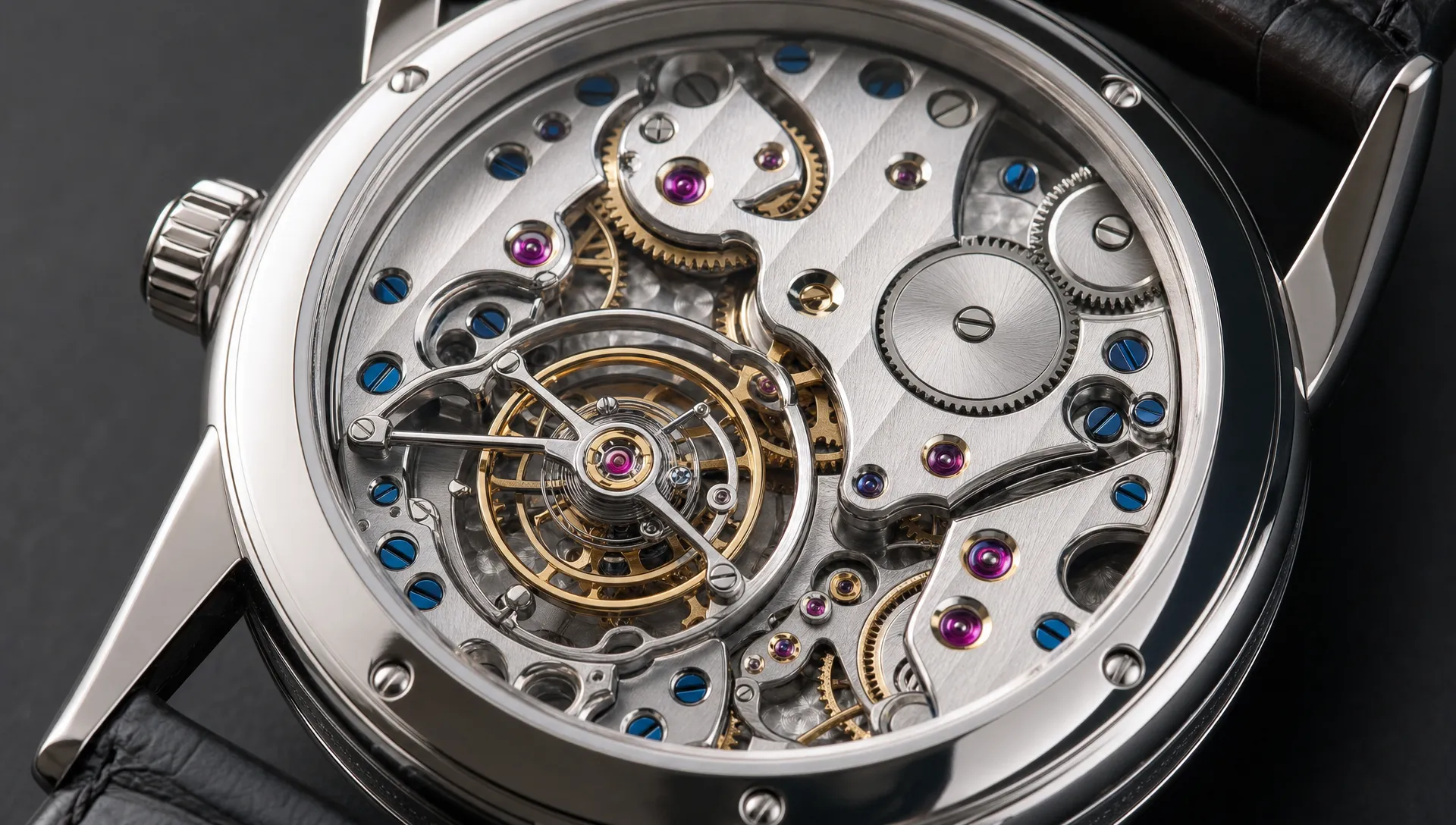 ## When a tourbillon does not matter enough A tourbillon may be the wrong answer for a first serious Swiss watch. If your budget is focused on a first $2,000 to $8,000 purchase, you will usually get more practical value from condition, authenticity, case fit, service status and brand strength than from chasing a high complication. It may also be the wrong answer for a gift unless the recipient specifically wants one. Many milestone buyers are better served by a watch that is elegant, legible and easy to wear. If the attraction is refined case design rather than exposed mechanical theater, a shaped dress watch can be a better fit. For example, the [Cartier Tank Amricaine (W26015K2)](https://lumewrist.com/product/cartier-tank-americaine-w26015k2) offers a rectangular Cartier profile, while the [Jaeger-LeCoultre Reverso Grande Taille (270.8.62)](https://lumewrist.com/product/jaeger-lecoultre-reverso-grande-taille-270-8-62) speaks to another classic shaped-watch tradition. Those watches do not replace a tourbillon mechanically. They solve a different collector brief: proportion, heritage, wrist presence and daily elegance. ## What to check before buying a tourbillon A tourbillon should be bought with more diligence than a simple automatic. Small issues can become expensive. The seller should be able to identify the exact reference, movement caliber, case material, condition, service status and included accessories. | Question to ask | Why it matters | What a good answer includes | |---|---|---| | What is the exact reference number? | Similar-looking watches can differ materially | Full reference, metal, dial and production context when available | | What caliber is inside? | The movement is the reason for the watch | Caliber name, complication type and service status | | Has it been serviced? | Tourbillons require specialist work | Recent service documentation or clear disclosure | | Are box and papers included? | Helps support originality and ownership history | Original warranty card or papers, box and accessories if present | | Is the cage rotation smooth? | Irregular motion can signal mechanical issues | Steady rotation and clean visual operation | | Who authenticates the watch? | High-value pieces require serious checks | Named authentication process and condition review | Service support deserves special attention. A tourbillon is not a movement you hand to a casual repair counter. It should be serviced by the brand or by a watchmaker with high-complication experience, access to correct parts and the ability to test the watch properly after reassembly. The same principle applies across precision goods: choose a specialist for the platform, whether that means a qualified watchmaker for a tourbillon or an [independent iPhone repair specialist](https://iphone-werkstatt-marktredwitz.de/) for device repairs. ## Condition, originality and resale context A polished case, replaced dial or incomplete service history can affect a tourbillon more sharply than a simpler watch because the buyer pool is narrower and more detail-oriented. Collectors want confidence. They look for honest condition notes, clear photography and no ambiguity around originality. Resale is not guaranteed. No watch should be bought on the promise of appreciation. In the pre-owned market, demand depends on brand, reference, metal, condition, provenance, service history and the broader appetite for that category at the time of sale. Tourbillons from important maisons, respected independents or historically meaningful lines may draw stronger collector attention, but the details still decide the outcome. This is where a transparent seller matters. Lume Wrist Watches is an independent luxury watch retailer in New York City. We are not an authorized dealer for the brands named, and brand names are used for identification only. Inventory is authenticated pre-owned, listed in Excellent condition, certified authentic by Watch CSA, inspected in-house and serviced before shipping. Buyers also receive free insured shipping within the United States, with international shipping available by request and quote. ## Practical collector takeaways A tourbillon is worth pursuing when the entire watch supports the complication. The best examples feel resolved. The movement, finishing, case and dial work together. The worst examples use the word “tourbillon” as the selling point and leave everything else underdeveloped. For a first luxury watch, prioritize authenticity, condition, fit and service. For an established collection, evaluate the tourbillon as a reference-level purchase. Ask who made the movement, how it is finished, whether the case is wearable, what documentation exists and who will service it in the future. If you cannot answer those questions clearly, keep looking. ## Frequently Asked Questions **Does a tourbillon make a watch more accurate?** Not automatically. A tourbillon can help average certain positional errors, but modern wristwatch accuracy depends heavily on regulation, movement design, materials and service condition. **Is an open-heart watch the same as a tourbillon?** No. An open-heart watch exposes the balance wheel. A tourbillon rotates the balance and escapement inside a cage. **Is a tourbillon a good first luxury watch?** Usually not. First-time buyers are often better served by a simpler watch with strong authenticity, condition, size and service support. **What makes one tourbillon more collectible than another?** Brand importance, caliber architecture, finishing quality, reference rarity, originality, condition and documentation all matter. **Should I buy a tourbillon as an investment?** Buy it because you value the watch. Resale outcomes vary and should not be treated as guaranteed. ## A calm next step If you are considering a tourbillon, start with the fundamentals: exact reference, movement, condition, service history and seller transparency. If you are still refining the brief, compare current authenticated pre-owned watches in the [Lume Wrist Watches shop](https://lumewrist.com/shop) and focus on the pieces that fit your wrist, budget and collecting purpose.