Why the Vacheron Constantin 222 Matters to Modern Collectors
Published August 31, 2026 · Last updated October 17, 2026 · By Lume Wrist Watches Editorial Team
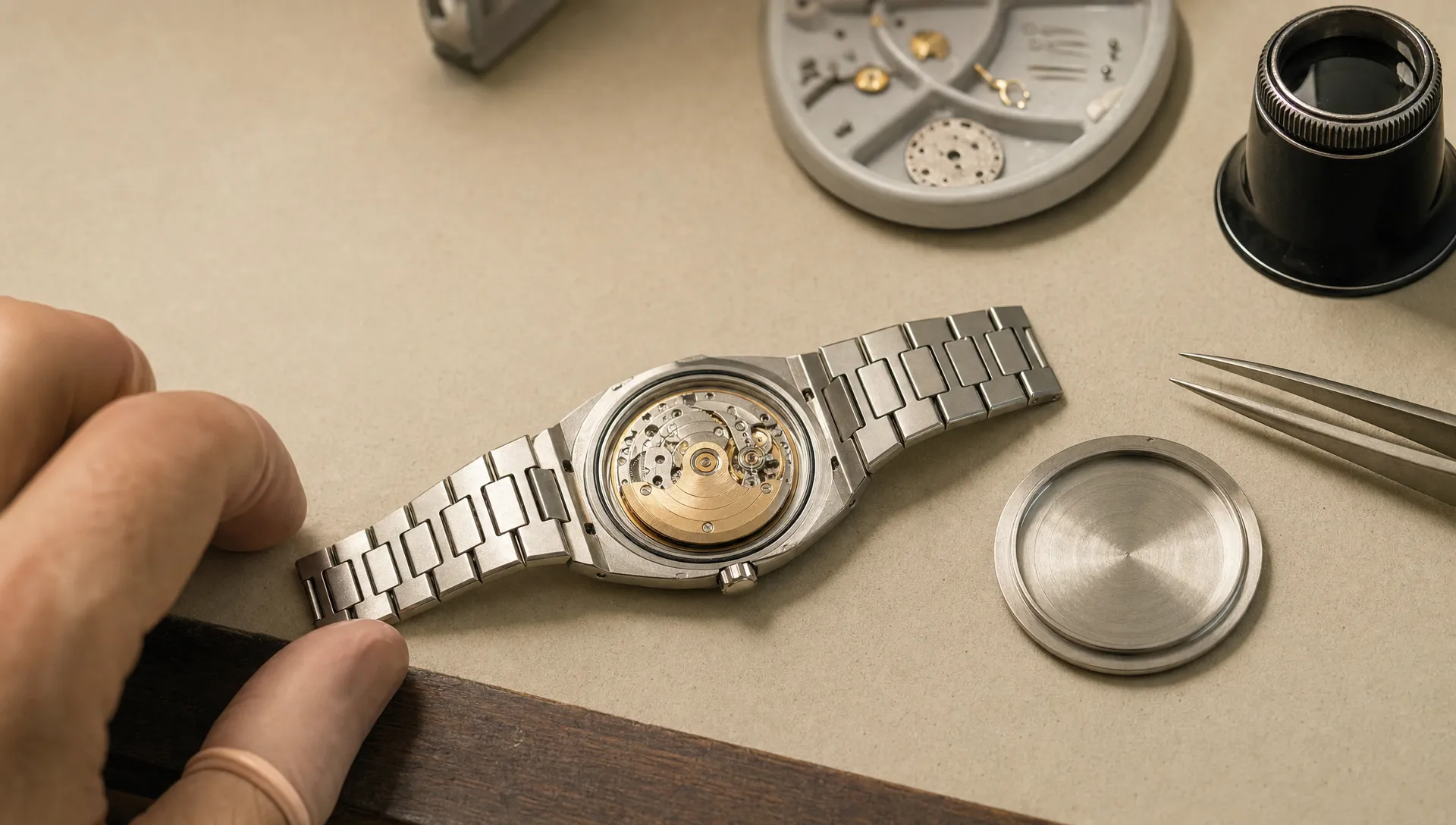
The Vacheron Constantin 222 matters because it is the cleanest link between 1970s integrated-bracelet watch design and Vacheron Constantin’s modern sports-watch identity. For collectors, it offers real design authorship, important movement lineage and a quieter alternative to the Royal Oak and Nautilus.
It is not just an old watch that became fashionable again. The 222 sits at a specific intersection: late 1970s luxury steel, ultra-thin automatic watchmaking, restrained case architecture and the early DNA that later informed the Vacheron Constantin Overseas.
What the Vacheron Constantin 222 Is
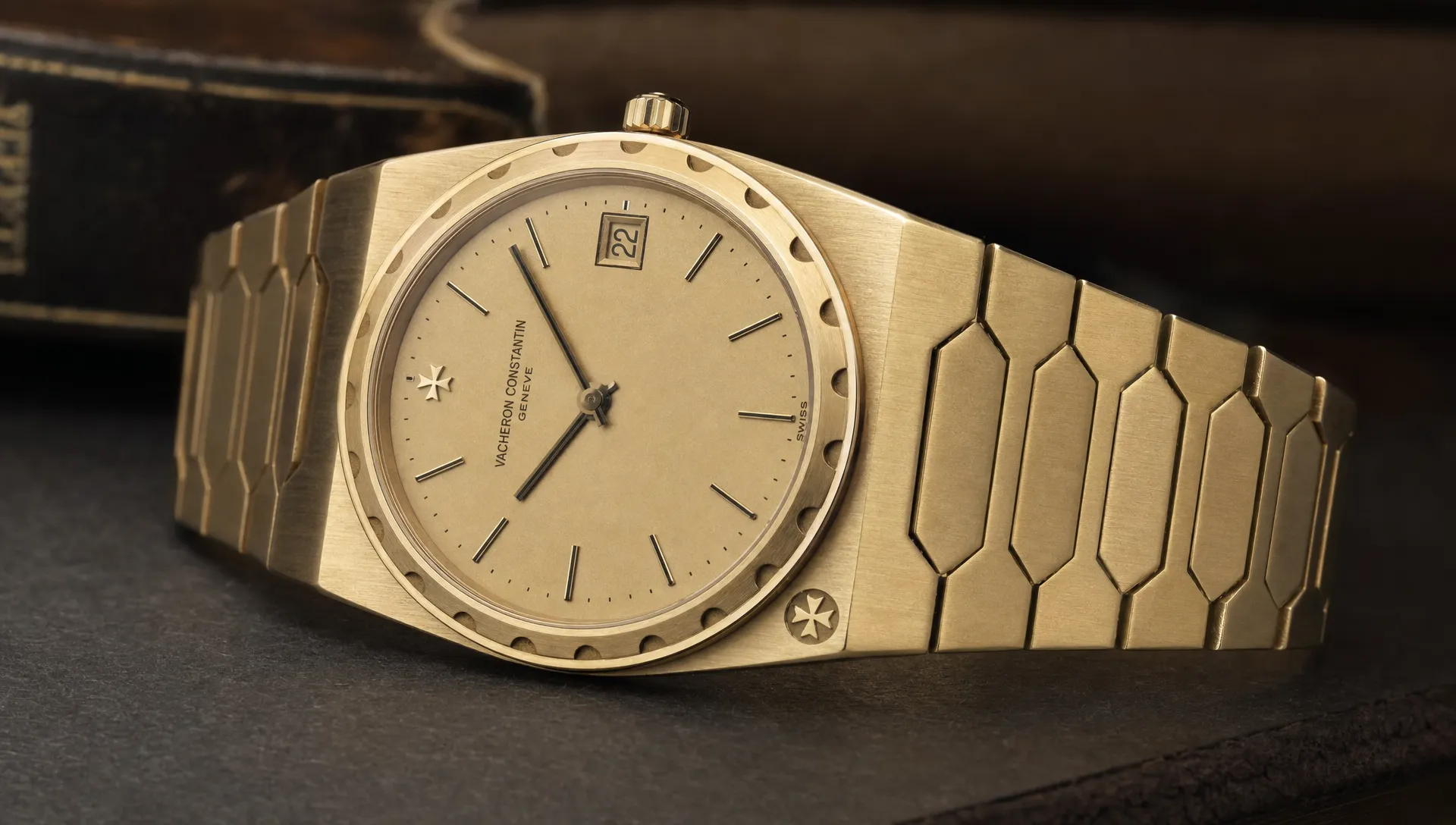
Vacheron Constantin introduced the 222 in 1977 to mark the brand’s 222nd anniversary. The design is credited to Jorg Hysek, not Gerald Genta. That distinction matters. The 222 belongs to the same era as the Audemars Piguet Royal Oak and Patek Philippe Nautilus, but it is not a copy of either.
The core formula was simple and very period-correct: a thin tonneau-shaped case, an integrated bracelet, a notched bezel, a small Maltese cross near 5 o’clock and an automatic movement inside. The most discussed vintage version is the 37mm “Jumbo,” reference 44018, powered by Vacheron Constantin caliber 1121.
The 222 also existed in smaller sizes and different metals, including stainless steel, yellow gold and two-tone configurations. That variety gives the model breadth, but the collector conversation still tends to center on the Jumbo because of its proportions, movement and scarcity.
Vacheron Constantin revived the design through the Historiques 222 line, first in yellow gold in 2022 and later with a stainless steel interpretation. That revival did more than create a modern watch. It forced the market to reassess the original.
The 222 Is Not the “Third Genta Watch”
Collectors often group the 222 with the Royal Oak and Nautilus because all three came from the same decade and share the integrated-bracelet format. That grouping is useful, but it can also blur the facts.
The Royal Oak was designed by Gerald Genta and launched in 1972. The Nautilus was also designed by Genta and launched in 1976. The 222 arrived in 1977 and was designed by Jorg Hysek, whose approach was sharper, flatter and more architectural.
| ------------- | ------------- | ------------- | ------------- | ------------- |
|---|---|---|---|---|
| Audemars Piguet Royal Oak 5402 | 1972 | Gerald Genta | Octagonal bezel with exposed screws | The original luxury steel sports watch |
| Patek Philippe Nautilus 3700 | 1976 | Gerald Genta | Rounded porthole case | The refined integrated-bracelet icon |
| Vacheron Constantin 222 44018 | 1977 | Jorg Hysek | Tonneau case with notched bezel | The understated Vacheron alternative |
That difference is why the 222 matters. It gives collectors a separate design language within the same historical category. The watch has the period credibility of the 1970s integrated-bracelet movement without relying on the same visual vocabulary as its better-known peers.
If you want to understand the 222’s closest modern descendant, Lume’s Vacheron Constantin Overseas review traces the line from the 222 through later Vacheron sports-watch design.
The Design Holds Up Because It Was Never Loud
The 222 is a study in restraint. The bezel has texture, but it is not decorative for its own sake. The case is shaped, but not exaggerated. The bracelet is integrated, but the watch still wears like a thin dress-sports hybrid rather than a bulky modern sports watch.
That balance gives the 222 unusual staying power. Many 1970s watches look locked to the decade that produced them. The 222 still looks period-correct, but not dated. It has enough geometry to feel designed, yet enough simplicity to stay wearable.
The Maltese cross at 5 o’clock is one of the best small details in vintage Vacheron collecting. On paper, it sounds decorative. In the metal, it breaks the symmetry just enough to make the watch recognizable from across a table.
Modern collectors respond to that kind of detail. They have seen enough hyped steel sports watches. They are looking for design choices that reward close inspection.
Key Specs and Reference Context
The vintage 222 family is not a single-watch story. The 37mm Jumbo is the headline reference, but smaller automatic and quartz models also exist. Condition, originality and metal all matter.
| ------------- | ------------- | ------------- | ------------- |
|---|---|---|---|
| 222 Jumbo, reference 44018 | 37mm | Automatic, caliber 1121 | Most important vintage collector reference |
| Mid-size 222 | About 34mm | Automatic, depending on reference | Often more wearable on smaller wrists, less central to the Jumbo narrative |
| Smaller 222 models | About 24mm to 25mm | Often quartz | Requires careful reference and parts verification |
| Modern Historiques 222 | 37mm | Modern automatic caliber 2455/2 | Contemporary interpretation with vintage proportions |
The 37mm size is part of the appeal. It sounds modest next to many modern sports watches, but the integrated bracelet and broad case shape give it more presence than the number suggests. On many wrists, the Jumbo reads closer to a compact 39mm watch because there are no conventional lugs.
That is also why sizing should never be judged by diameter alone. Bracelet fit is central. A 222 that cannot be sized properly for your wrist can be frustrating, especially on vintage examples where bracelet parts may not be easy to source.
The Movement Story Is Serious
The vintage Jumbo 222 uses Vacheron Constantin caliber 1121. This movement belongs to the same ultra-thin automatic family associated with Jaeger-LeCoultre’s famous caliber 920 ébauche architecture, which also appeared in important watches from Audemars Piguet and Patek Philippe.
That does not make the 222 interchangeable with those watches. It does place the watch inside a significant movement lineage. Thinness was not a styling trick in the 1970s. It was a technical and design constraint. A thinner movement allowed these watches to keep elegant profiles despite integrated cases and bracelets.
For collectors, caliber 1121 gives the 222 substance. It is not only a case design. It is a Vacheron expression of the ultra-thin luxury sports watch at a high level.
The modern Historiques 222 uses a different movement, Vacheron Constantin caliber 2455/2. That makes the revival easier to own from a modern servicing perspective, but it also separates it from the original movement narrative. Neither approach is automatically better. Vintage brings historical purity. Modern brings convenience, warranty support through the seller or maker depending on the example and fewer age-related ownership variables.
Why the Revival Changed the Conversation
Before the Historiques revival, the 222 was mostly a collector’s watch. It was known by vintage Vacheron buyers, integrated-bracelet specialists and serious students of 1970s design. It was not a mainstream luxury sports-watch reference in the way the Nautilus 5711 or Royal Oak 15202 became.
The 2022 yellow-gold Historiques 222 changed that. It brought the silhouette back into the current catalog conversation and introduced the design to buyers who had never handled a vintage example. The later stainless steel version added another layer because steel is the metal most associated with the original integrated-bracelet category.
The revival also clarified how good the original design was. Vacheron Constantin did not need to overcorrect the proportions. The modern watch stayed close to the vintage language because the old design still worked.
That is a strong test for any archival revival. If the brand can bring it back without major visual surgery, the original had integrity.
The 222 and the Overseas Connection
The Vacheron Constantin Overseas is not a direct copy of the 222, but it carries forward several core ideas: integrated bracelet design, sporty Vacheron positioning, high finishing and a more discreet personality than some competitors.
The Overseas became a larger, more modern and more practical platform. It evolved into a travel-ready collection with multiple complications, bracelet systems and contemporary case construction. The 222 remains more focused. It is thinner, quieter and more historically specific.
That distinction matters if you are deciding between them. The Overseas is generally the more practical daily watch. The 222 is more about design history and collector specificity.
| Buying priority | 222 | Overseas |
|---|---|---|
| ------------- | ------------- | ------------- |
For buyers comparing the broader integrated-bracelet category, Lume’s guide to Patek Philippe Nautilus history gives useful context on the Genta side of the same 1970s design conversation.
What to Inspect Before Buying a Vintage 222
A vintage 222 should be bought slowly. The model rewards expertise and punishes assumptions. The watch is simple at a glance, but small condition differences can mean a great deal.
Focus on the following areas before committing:
- Case geometry: Over-polishing can soften the lines of the tonneau case and bezel. The 222 needs crisp transitions to look right.
- Bracelet condition: Stretch, missing links and uneven wear matter. Integrated bracelets are not as easy to solve as strap watches.
- Dial and hands: Check for refinishing, incorrect service parts, uneven aging and lume consistency.
- Movement correctness: A Jumbo should be evaluated for the correct caliber and proper service condition.
- Crown, clasp and small details: Original hardware supports the overall integrity of the watch.
- Documentation: Box and papers are helpful, but the physical watch still has to stand on its own.
This is where an experienced seller matters. A vintage 222 with a polished case, stretched bracelet and questionable dial may still be authentic, but it is not the same buying proposition as a strong example with clean geometry and coherent parts.
The same thinking applies across collectible watches. The reason mechanical watches remain compelling over decades is not only brand name or scarcity. It is the combination of design, condition, provenance and emotional durability, a theme explored in Lume’s article on why luxury timepieces hold their appeal across generations.
Vintage 222 or Modern Historiques 222
The choice between vintage and modern depends on what you want the watch to do.
A vintage 222 is the purer collector object. It has the original case architecture, period bracelet construction and caliber 1121 lineage. It also brings vintage-watch realities: bracelet fit, parts availability, prior polishing, aging lume, service history and the need for careful authentication.
A modern Historiques 222 is the more straightforward ownership experience. It gives you the look, proportions and Vacheron design language with modern manufacturing. It does not replace the historical importance of the original, but it makes the design accessible to collectors who do not want the risk profile of a 1970s watch.
Neither is the “correct” choice in isolation. A collector with several vintage pieces may prefer the original. A buyer who wants to wear the watch often may prefer the modern version. The best answer is the one that matches wrist size, risk tolerance and collecting purpose.
Is the 222 a Good First Vacheron Constantin
For many first-time luxury watch buyers, the 222 may not be the most practical first Vacheron Constantin. Vintage examples require careful diligence. Modern examples can be difficult to obtain through normal retail channels and often attract strong collector attention.
As a first Vacheron, the Overseas may be easier to understand and easier to wear daily. As a collecting milestone, the 222 has more historical specificity. That is the real distinction.
If your goal is one versatile watch for office, travel and weekend wear, compare the Overseas first. If your goal is a design-led Vacheron with deep 1970s relevance, the 222 belongs on the shortlist.
For current availability across brands, you can review Lume’s certified pre-owned luxury watches and compare condition, sizing and warranty terms before narrowing your search.
Frequently Asked Questions
Who designed the Vacheron Constantin 222? The 222 was designed by Jorg Hysek. It is often discussed alongside Gerald Genta’s Royal Oak and Nautilus, but the 222 has its own authorship and design language.
What is the most collectible Vacheron Constantin 222 reference? The 37mm Jumbo reference 44018 is generally the central collector reference because of its proportions, caliber 1121 movement and place in the original 1970s lineup.
Is the modern Historiques 222 the same as the vintage 222? No. The modern Historiques 222 is a contemporary reinterpretation with updated construction and a modern automatic movement. It keeps the key visual codes, but it is not mechanically identical to the vintage Jumbo.
How does the 222 compare with the Vacheron Constantin Overseas? The 222 is thinner, more historically specific and more design-led. The Overseas is generally more practical as a modern daily sports watch, especially for buyers who want current construction and easier everyday wear.
Should I buy a vintage 222 without box and papers? Box and papers help, but they are not a substitute for condition and authenticity. Case geometry, dial originality, bracelet condition and movement correctness should be evaluated carefully.
A Calm Way to Approach the 222
The Vacheron Constantin 222 matters because it is not trying to be the loudest watch in the integrated-bracelet category. It is thin, disciplined and historically important. That makes it especially appealing to collectors who have moved past obvious choices.
Lume Wrist Watches is an independent luxury watch retailer in New York City. Our inventory is authenticated pre-owned, listed in Excellent condition, certified authentic by Watch CSA and serviced before shipping. We offer free insured shipping within the United States, international shipping on request, 30-day returns and 2-year warranty coverage.
If you are comparing a 222, an Overseas or another high-grade Swiss sports watch, start with Lume’s current curated luxury watch selection or contact our concierge team at sales@lumewrist.com for help reviewing fit, condition and ownership details.
## Part of the series This article belongs to our complete guide: Beyond the Big Four: Essential Luxury Watch Maisons to Know in 2026.\n
Related: Vacheron Constantin Overseas: An Expert's Definitive Review — references, calibres, sizing and buying checklist.