How Much Does It Cost to Authenticate a Watch?
Published August 12, 2026 · Last updated October 17, 2026 · By Lume Wrist Watches Editorial Team
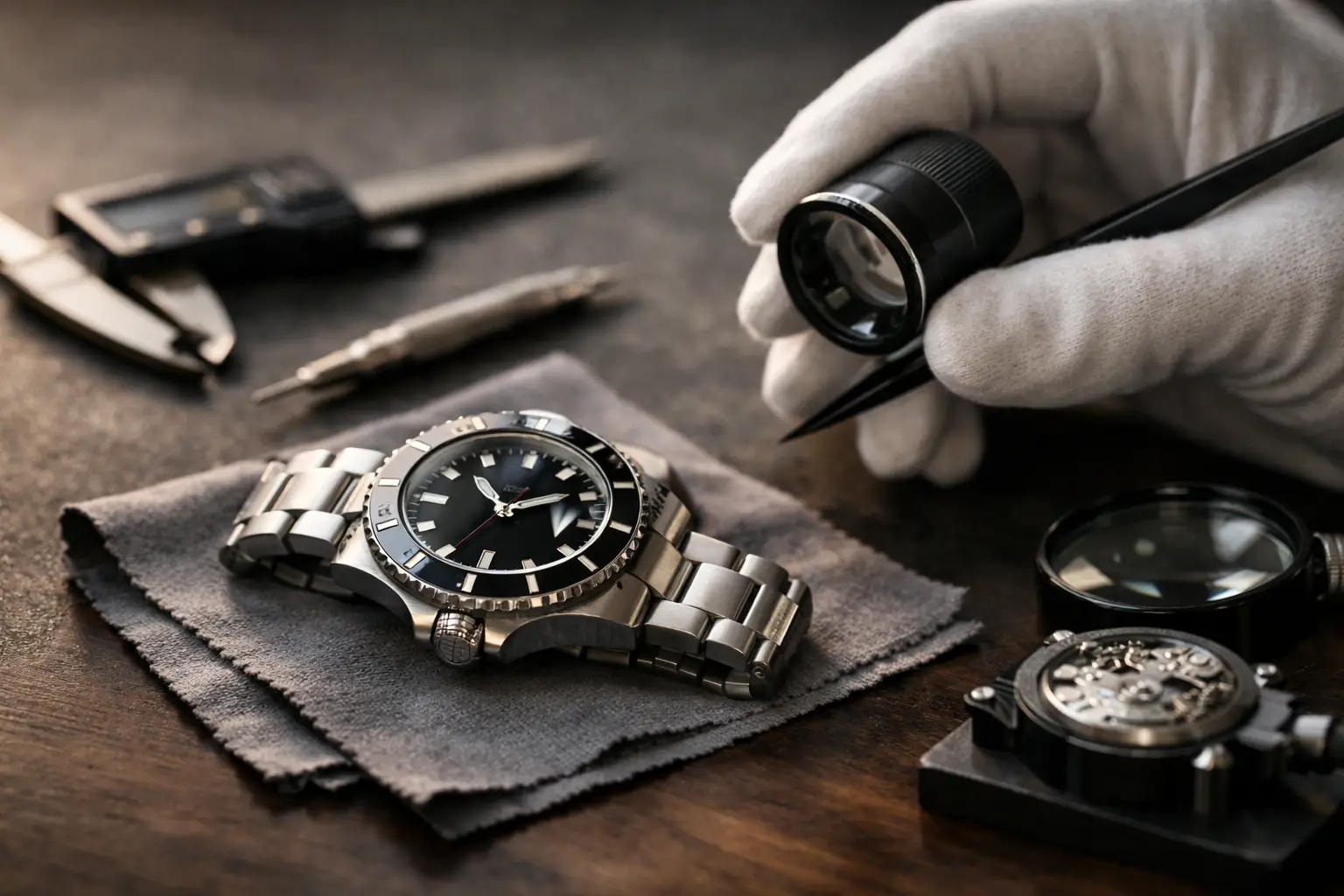
A luxury watch can look correct at first glance and still raise costly questions once it reaches the bench. When buyers ask how much does it cost to authenticate a watch, the useful answer is not a single number. The cost depends on the watch, the depth of inspection required, and whether you need a simple opinion or documented certification before a significant purchase or sale.
For a modern, straightforward reference with clear paperwork, authentication may be relatively efficient. A vintage Rolex with replaced service components, an uncommon Patek Philippe reference, or a complicated Audemars Piguet can require considerably more research and technical inspection. In those cases, paying for a credible review is less about a fee and more about reducing uncertainty around a high-value transaction.
What determines the cost to authenticate a watch?
Authentication providers generally price their work according to time, expertise, and the level of accountability attached to the result. A quick visual review is not the same service as a full inspection of the movement, case, dial, serial configuration, and supporting documentation.
The brand and reference matter first. Highly copied models from Rolex, Omega, and Audemars Piguet may require close comparison against known production details. Rare references, discontinued pieces, and watches with limited production runs can demand deeper archival research. A specialist needs to understand what is correct not only for the model, but for its approximate production period.
Condition also affects the scope of work. Heavy polishing can alter case geometry. A dial may be original but refinished. A bracelet may be period-correct but not original to the watch. These are not always authenticity failures, but they can materially affect collector value and should be disclosed clearly.
Finally, consider whether the watch must be opened. External checks can identify many concerns, but an in-house inspection may be necessary to verify movement caliber, component consistency, internal engravings, and signs of prior alteration. That additional work naturally carries a higher cost and should be performed by a qualified professional who understands the risks of handling fine mechanical watches.
A basic opinion versus documented authentication
Not every transaction requires the same level of verification. The right service depends on what is at stake and how much information the seller can provide.
A preliminary opinion may rely on high-resolution photographs, reference knowledge, and visible details such as the dial printing, bezel, case engravings, bracelet construction, clasp codes, and serial presentation. It can be useful as an early screening step, especially before arranging an in-person viewing. Its limitation is clear: photographs cannot always reveal what is inside the case or establish every aspect of condition and originality.
A formal authentication typically involves direct examination. The reviewer can inspect the case, movement, dial, hands, crystal, bracelet, and markings in person. Depending on the provider, the result may include written findings or a certificate. This level of review is usually more appropriate for a purchase where authenticity documentation may influence the buyer's confidence, future resale process, or insurance records.
The most comprehensive option combines authentication with a condition assessment. This does more than answer whether the watch is genuine. It identifies relevant service history, non-original components, wear, polishing, damage, and operational concerns. For collectors, this distinction matters. An authentic watch with a replacement dial or later bracelet can still be desirable, but it should be priced and represented accordingly.
What a proper watch authentication should examine
A credible evaluation is a methodical process, not a glance at a logo or serial number. The exact checklist changes by manufacturer and model, but the reviewer should assess the watch as a complete object.
The case should be evaluated for dimensions, finishing, engravings, reference markings, and evidence of modification. On a vintage piece, the shape of the lugs, bezel profile, and consistency of the finishing may be as meaningful as the visible reference number.
The dial, hands, and luminous material require equally careful attention. Typography, minute tracks, color, applied markers, and lume aging can help establish whether components are consistent with the reference and era. A correct-looking dial is not automatically original, and an original dial is not automatically untouched. A professional assessment should distinguish those points.
Movement inspection is often central to a complete review. The caliber, bridge layout, markings, finishing, and component configuration should align with the watch. A movement may be genuine to the brand but incorrect for the particular reference, which is why brand recognition alone is not enough.
The bracelet, clasp, crown, bezel insert, crystal, and papers should also be considered. Original box and papers can support provenance, but they do not replace inspection of the watch itself. Conversely, the absence of papers does not make a watch inauthentic. The important question is whether the timepiece and its components stand on their own technical merits.
When paying for authentication is worth it
Authentication is most valuable before money changes hands. If a watch is offered through a private transaction, arrives with limited documentation, or carries details that are difficult to verify from photos, an independent review can be a prudent condition of purchase.
It is also worth considering for watches with a meaningful vintage premium. Vintage pieces often have more variation due to servicing, replacement parts, restoration, and decades of wear. None of those factors automatically disqualifies a watch, but each can change its desirability and the price a knowledgeable buyer is willing to pay.
A formal inspection can also help when you already own a watch and plan to sell, insure, or pass it along. Clear documentation of authenticity and condition can make later conversations more efficient. It may also reveal maintenance needs before they become a larger issue.
There are situations where a separate authentication fee may be unnecessary. When purchasing from an established retailer that conducts its own in-house certification and stands behind the sale with defined return and warranty terms, authentication should be part of the purchase standard rather than an extra task handed to the buyer. The key is understanding exactly what protections are included and what the seller represents about the watch.
Questions to ask before you pay
Before commissioning an authentication, ask what the service actually covers. Will the watch be examined in person? Will the case be opened if needed? Does the assessment address authenticity only, or condition and component originality as well? Will you receive written documentation of the findings?
You should also ask whether the evaluator specializes in the brand and type of watch you are considering. The expertise needed for a modern Omega differs from the knowledge required to assess an early Rolex sports model or a complicated Patek Philippe. Broad experience is helpful, but reference-specific familiarity is often what identifies subtle inconsistencies.
Be wary of any process that promises certainty from a few low-quality images or treats a serial number lookup as conclusive proof. Serial numbers can be altered, duplicated, or paired with incorrect components. Strong authentication comes from evaluating the complete watch, not relying on one data point.
Authentication should come with accountability
The real cost of authentication is best measured against the risk it addresses. A low-effort opinion may be enough for an initial screen, while a high-value or historically significant watch deserves a deeper inspection. What matters is that the service matches the transaction.
At Lume Wrist Watches, timepieces are in-house certified before sale, with free insured US shipping, a 30-day return window, and a two-year warranty providing additional purchase safeguards. For any luxury watch purchase, look for that same discipline: a clear authentication process, accurate condition representation, and meaningful recourse after delivery.
A properly authenticated watch does more than confirm a name on the dial. It gives you a clearer understanding of exactly what you are buying, which is the confidence a serious purchase should provide.