What Does Full Set Mean for a Luxury Watch?
Published October 6, 2026 · Last updated October 17, 2026 · By Lume Wrist Watches Editorial Team
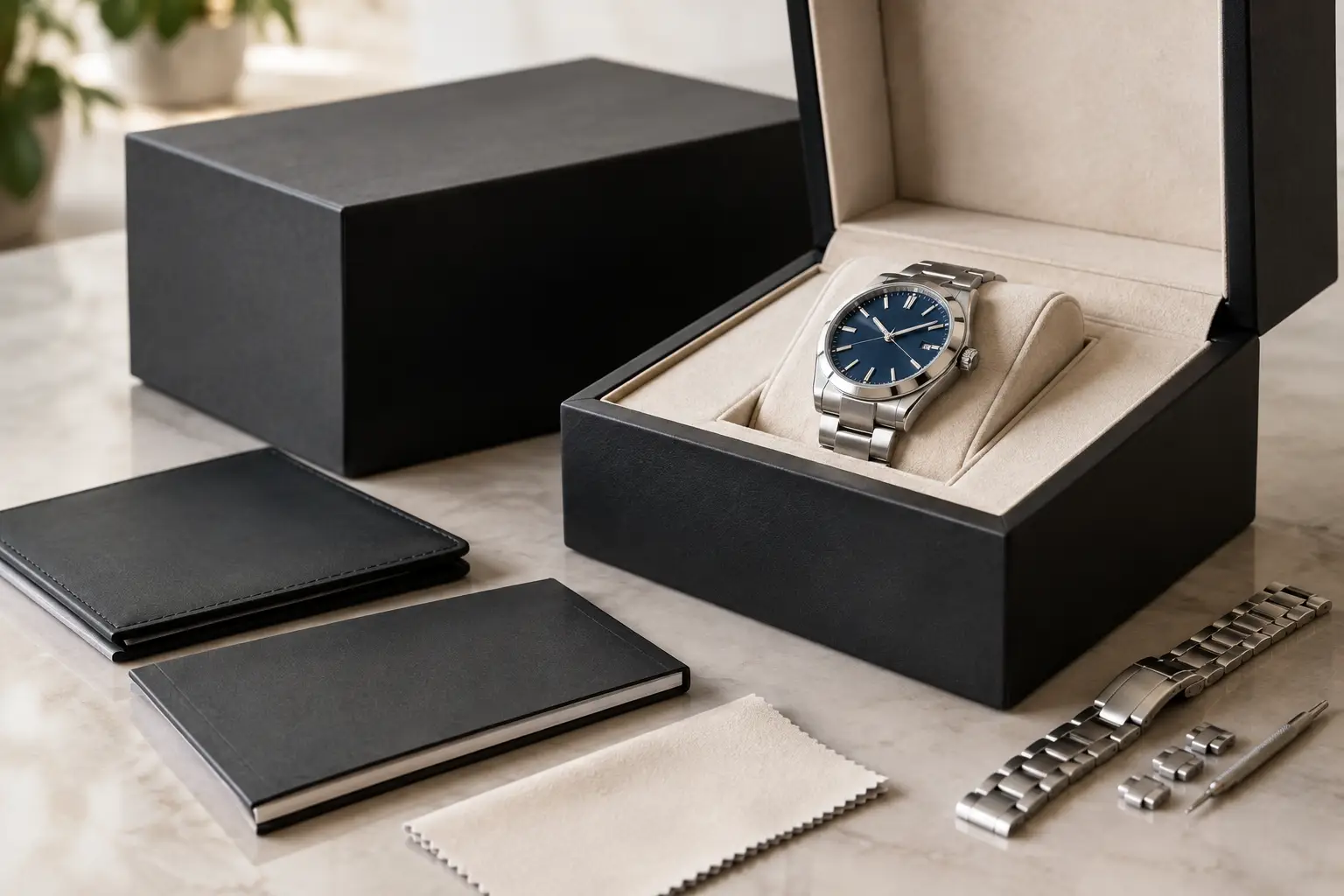
A watch listing described as a "full set" can appear to answer every question at once. For a high-value Rolex, Patek Philippe, Audemars Piguet, or Omega, however, understanding what does full set mean requires a closer look. The phrase generally signals that the watch is offered with its original presentation materials and documentation, but it is not a universal, regulated standard. The contents, their condition, and their relationship to the watch still need to be verified.
For collectors and first-time luxury buyers alike, a full set can strengthen a watch's provenance and make the ownership experience more complete. It should never replace authentication, an accurate condition assessment, or clear purchase protections.
What Does Full Set Mean in a Watch Listing?
In the luxury-watch market, a full set usually means the watch is accompanied by the items originally supplied when it was sold new. Most often, that includes the branded box, warranty card or papers, manuals, booklets, and hang tags. Depending on the brand, model, and year, it may also include an outer box, protective sleeve, serialized tag, chronometer certificate, setting pin, travel pouch, or accessory specific to that reference.
The key word is usually. Brands have changed their packaging, warranty formats, and supplied accessories many times over the decades. A contemporary Rolex may have a warranty card and presentation box, while an older Patek Philippe may have paper certificates, a leather wallet, and several printed documents. An Omega Speedmaster can include a larger presentation package with model-specific accessories that would not be expected with another Omega reference.
Because there is no single industry checklist, a careful listing should identify exactly what is included rather than relying only on the words "full set." If a particular item matters to your purchase decision, ask for confirmation before completing the transaction.
The Parts of a Full Set That Matter Most
Not every included item carries equal weight. The original warranty card or papers are often the most significant because they may show the reference number, serial number, date of sale, retailer information, or other details that connect the documentation to the watch.
A correct box is desirable, particularly for collectors who want a complete ownership package. Still, boxes are generally less conclusive than matching papers. A period-correct box can be difficult to assess without familiarity with the brand's packaging history, and an attractive box alone does not establish a watch's authenticity or originality.
The following items are commonly associated with a full set:
- Original inner and outer presentation boxes
- Warranty card, certificate, or original papers
- Instruction manual, booklet, or warranty booklet
- Hang tags, serial tags, and model-specific accessories
- Original sales receipt, service records, or related provenance documents
An original purchase receipt can be a useful addition, but it is not always present, especially with vintage watches or watches that have changed hands. Likewise, service paperwork is valuable context, yet it is not automatically part of a full set. It should be described separately, including the service provider and date where available.
Full Set Does Not Mean Unworn or Untouched
A full set description speaks to accompanying materials, not the physical condition of the watch. A watch can be full set and show polishing, wear to the bracelet, faded lume, or signs of prior service. Conversely, a watch without its original box and papers may be exceptionally well preserved.
That distinction matters because condition is evaluated through the watch itself: case proportions, dial and handset condition, bracelet stretch, crystal, bezel, movement performance, and the quality of any prior service work. Documentation supports the story of a watch, but it does not eliminate the need for a qualified inspection.
For buyers considering a pre-owned luxury watch, the most useful description separates these points clearly. It should state the watch's condition, disclose known service or replacement history when available, and identify every included item. Broad language may save space in a listing, but precise details better support a high-consideration purchase.
Why Full Sets Can Be More Desirable
A complete package can make a watch easier to understand, enjoy, and eventually transfer to another collector. The original materials provide context from the watch's first sale, helping create a more coherent ownership record. For many collectors, the box, papers, and accessories are part of the object, not merely packaging.
Full sets are especially relevant for modern references where original warranty documentation is expected to exist. They can also matter for limited-production pieces, highly collectible sports watches, and complicated watches whose supplied documents may contain important model details.
Still, desirability depends on the individual reference. With vintage watches, original papers may be genuinely scarce, and their absence may be entirely normal. A strong vintage example with a correct dial, case, movement, and well-documented service history can deserve serious consideration even without a box and papers. In that situation, condition, originality, and dealer verification may matter more than completeness of packaging.
How to Verify a Claimed Full Set
Treat "full set" as the beginning of a conversation, not the final answer. First, request a specific inventory of what is included. A seller should be able to identify the box type, warranty documents, booklets, and relevant accessories rather than offering a general assurance.
Next, determine whether the warranty card or papers correspond to the watch. Depending on the brand and production era, that may mean checking whether the reference and serial information are consistent with the watch being offered. Some manufacturers do not print every identifying detail on every document, so the appropriate review varies by brand and age.
Photographs also matter. Clear images of the documents, tags, and packaging allow you to assess completeness and consistency. They should be reviewed alongside detailed images of the dial, caseback, bracelet, clasp, and movement where applicable. If an item is described as original but its relationship to the watch cannot be established, ask how that conclusion was reached.
Finally, consider the seller's authentication process and post-purchase safeguards. For a valuable timepiece, documentation should support professional verification, not substitute for it. An in-house certified watch backed by a clear return policy and warranty gives the buyer a defined process if the watch does not meet the stated description.
Common Full Set Questions
Does full set always include the original receipt?
No. Original receipts are helpful but are not consistently retained, particularly after years of ownership or multiple transfers. Many listings use full set to mean box, warranty documentation, manuals, and tags without an original sales receipt. The included contents should always be specified.
Are box and papers more important than the watch itself?
No. The watch's authenticity, condition, originality, and mechanical health come first. Box and papers can add context and collector appeal, but they cannot correct an issue with the watch itself.
Can a watch with replacement parts still be called full set?
It can, because full set refers to what accompanies the watch, not necessarily every component within it. That is why disclosure matters. Any known replacement components, service changes, or condition concerns should be considered independently from the included box and documentation.
Is a full set necessary for a first luxury watch?
Not necessarily. Some buyers value a complete package, while others prioritize the right reference, condition, and buying protections. If you are choosing between two otherwise comparable watches, a complete set may be meaningful. If the watch itself is the stronger example, the absence of a box or papers may be an acceptable trade-off.
Buy the Watch, Then Confirm the Set
A full set is valuable when it is accurately described, appropriate to the watch's era, and consistent with the documentation presented. It can improve confidence in provenance and make ownership more satisfying, but it is only one part of a sound purchase decision.
At Lume Wrist Watches, in-house certification, clear condition information, free insured US shipping, 30-day returns, and a two-year warranty help place that documentation in a more secure buying process. Whether a watch includes every original accessory or only the essentials, the goal is the same: buy a timepiece whose authenticity, condition, and accompanying materials have been represented with care.