How to Verify Authentic Luxury Watches Before Purchase
Published September 5, 2026 · Last updated October 20, 2026 · By Lume Wrist Watches
Verify the seller, exact reference, condition, movement and written buyer protections before paying for any luxury watch. If any part cannot be documented clearly, pause, ask for more evidence or walk away.
Authenticity is not one single test. It is a chain of checks that should all point in the same direction: the watch, the papers, the seller record, the service history and the purchase terms.
Start With the Seller, Not the Watch
A good watch can become a bad purchase when the seller is vague. Before you study the dial, confirm who is taking your money, where the business is located and what happens if the watch is not as described.
For an independent retailer, transparency matters. The seller should state that it is independent, not an authorized dealer for the brands it sells. Brand names should be used for identification only. That distinction is normal in the pre-owned market, but it should never be hidden.
Ask for a real business address, direct contact information, written return terms, warranty coverage and insured shipping details. Lume Wrist Watches, for example, operates as a curated luxury watch retailer in New York City at 18 East 48th St, Suite 1503, New York, NY 10017. Clear identity reduces friction if you need service, documentation or a return.
Also ask who authenticates the watch. A serious seller should be able to describe the inspection process in plain English. If you want a deeper look at the role of third-party review, Lume has explained how authentication protects luxury watch buyers from common risks such as misrepresented parts and counterfeit components.
Confirm the Reference, Serial and Configuration
The reference number tells you what the watch is supposed to be. The serial number helps place it within a production period and should match the documentation when papers are present. The configuration tells you whether the dial, bezel, bracelet and movement belong together.
This step is where many mistakes happen. A buyer may recognize a famous model name but miss the exact reference. That can matter more than the logo on the dial.
| --- | --- | --- |
|---|---|---|
| Reference number | Clear listing title, case reference and invoice description | Confirms the exact model, not just the collection name |
| Serial number | Seller-held record, with public photos partially obscured | Helps match the watch to papers and service records |
| Dial variant | Close photos of printing, indices, lume and date window | Dial swaps can affect originality and buyer expectations |
| Case size | Listed diameter in millimeters, such as 39mm or 40mm | Prevents fit surprises, especially for gifts |
| Bracelet or strap | End links, clasp, bracelet code or strap condition when available | Helps confirm period fit and replacement history |
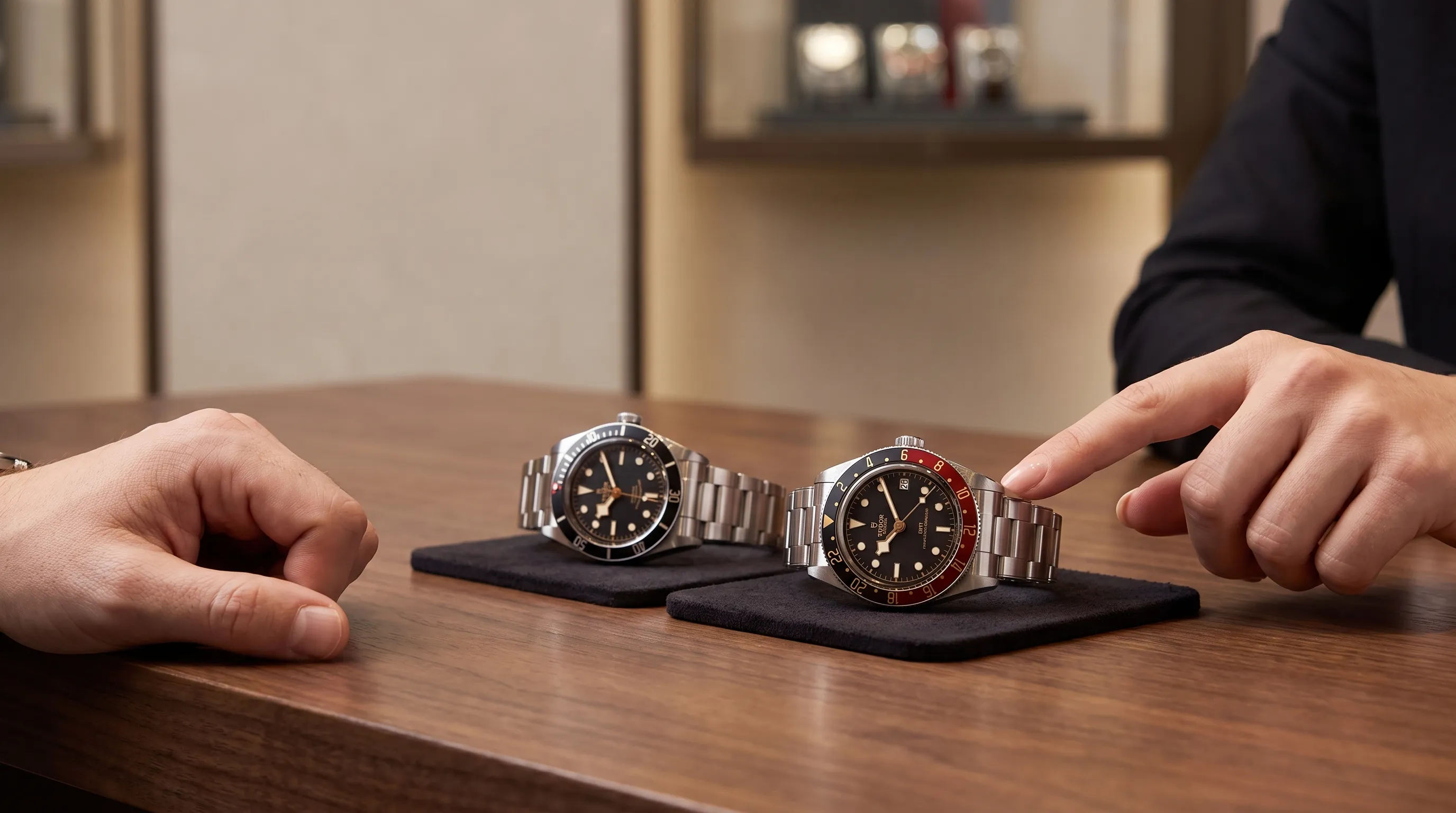
Tudor is a useful example because model names can sound similar. The Tudor Heritage Black Bay (79220N) and the Tudor Black Bay 58 GMT (7939G) both sit within the Black Bay family, but they are different references with different buyer use cases. One is a Heritage Black Bay, the other is a GMT and travel watch. The reference number prevents confusion.
For collectors, the same principle applies at a finer level. Dial text, bezel type, bracelet fit, clasp generation and movement caliber can separate two watches that look similar in casual photos.
Inspect Photos Like Evidence
Beauty shots are not enough. A pre-owned luxury watch should be shown from the front, both sides, caseback, clasp, bracelet, crown, bezel, crystal and lugs. The photos should be sharp enough to evaluate condition, not just attractive enough to sell the watch.
Look at the dial first. Printing should be crisp, aligned and appropriate for the reference. Lume plots should be consistent in shape and placement. Hands should match the dial in style, length and aging. On vintage watches, perfect-looking parts can be just as suspicious as damaged ones if they do not fit the production era.
Case condition needs the same care. Over-polishing can soften lugs, blur bevels and reduce the original shape of the case. Scratches are normal on pre-owned watches. Distortion is more important than small surface marks.
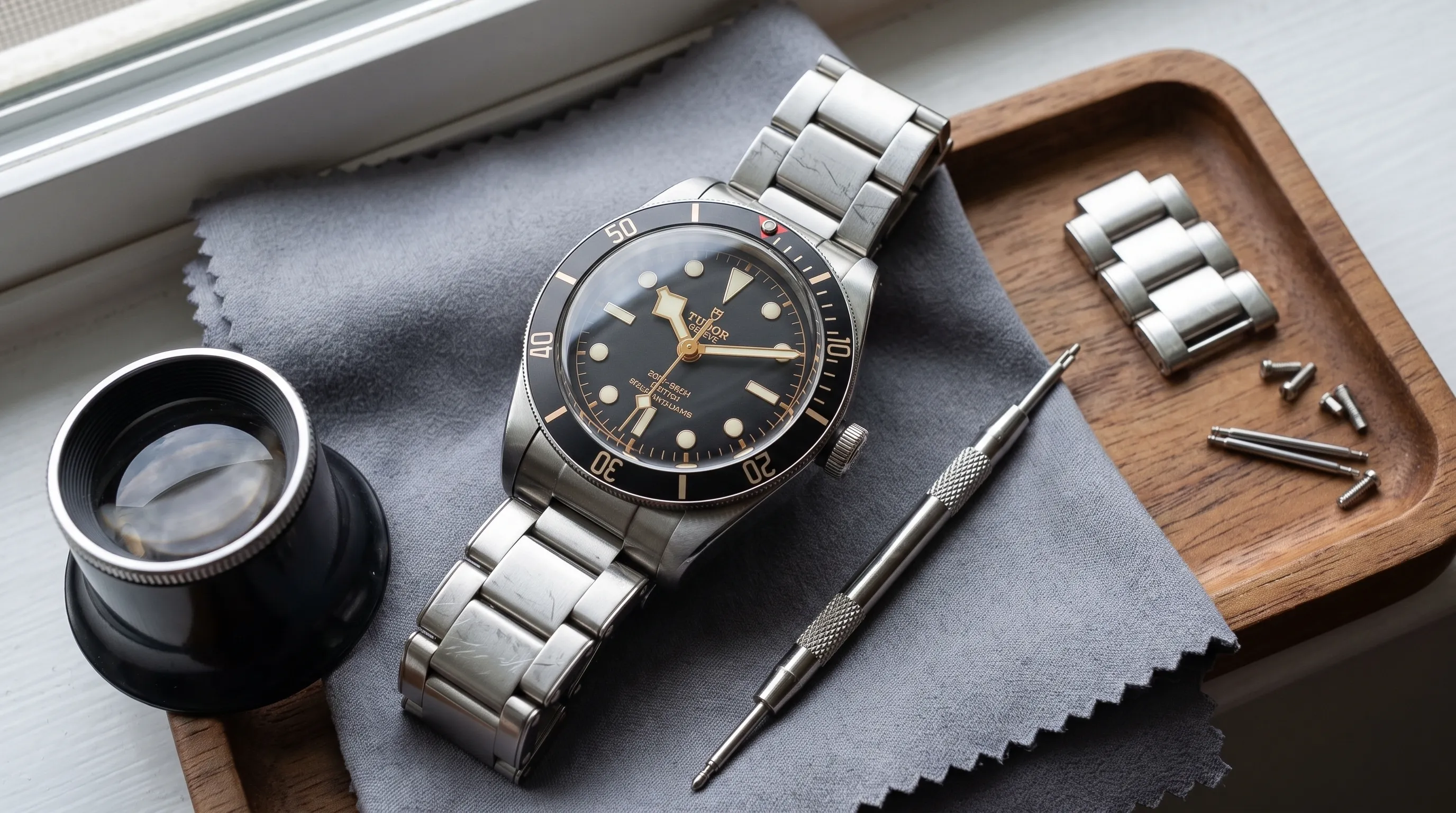
Bracelets deserve close inspection. Stretch, mismatched end links, damaged screws and worn clasps can all affect comfort and service cost. For gift buyers, also ask how many links are included. A watch that cannot be sized properly can be inconvenient even if it is authentic.
For Rolex buyers, model-specific checks can be especially useful. Lume’s guide to spotting a fake Rolex Datejust shows how small details in dial printing, Cyclops magnification and bracelet construction can expose problems before purchase.
Verify the Movement Without Taking Unsafe Risks
The movement is where authentication becomes more technical. It should match the reference, period and stated function of the watch. A GMT watch should have the correct travel-time behavior. A chronograph should reset cleanly. A date watch should advance properly.
Do not assume you need to open the case yourself. In most cases, you should not. Opening a caseback without the right tools can damage gaskets, scratch the case or compromise water resistance. Ask for confirmation from a qualified watchmaker, authentication service or dealer inspection instead.
A movement inspection should check the caliber, rotor, bridge finishing, engraving, screw condition and signs of moisture or corrosion. Service marks can be normal. Tool damage, missing screws or mismatched components need explanation.
Treat Box and Papers as Supporting Evidence
Box and papers help, but they do not authenticate a watch by themselves. Counterfeit accessories exist, and genuine accessories can be paired with the wrong watch. The strongest case is when the watch, card, serial, service record and seller invoice all align.
| --- | --- | --- |
|---|---|---|
| Authentication report | Gives current third-party or specialist review | Should still be tied to the exact watch purchased |
A watch without papers can still be authentic. A watch with papers can still have replaced parts. The right question is not whether papers exist. The right question is whether all evidence agrees.
Match Inspection Depth to the Purchase Level
The more expensive or collectible the watch, the more documentation you should expect. A first Swiss watch and a rare discontinued reference do not require the same level of research, but both deserve a written trail.
| --- | --- | --- |
|---|---|---|
| $2,000 to $8,000 | Authenticity, condition and fair terms | Clear photos, exact reference, seller warranty and return policy |
| $8,000 to $25,000 | Originality, service history and component match | Authentication report, movement confirmation and detailed condition notes |
| $25,000 and above | Reference nuance, production details and long-term ownership cost | Specialist review, provenance where available and careful originality analysis |
These ranges are not value forecasts. They are a practical way to decide how much evidence to require before funds move.
Check Service Status and Water Resistance Claims
Servicing affects ownership cost. A watch may be authentic but still need work. Ask when it was last serviced, whether it was pressure tested and whether any major parts were replaced.
Water resistance deserves caution. A vintage dive watch should not be treated like a new tool watch unless it has been tested recently and the seller is willing to state the result. Even then, gaskets age. Crowns, tubes and crystals can change the real-world risk.
Accuracy should be discussed in realistic terms. Mechanical watches are not quartz watches. A responsible seller should avoid vague claims and give you a practical condition description. For a broader maintenance overview, Lume’s guide to luxury watch servicing intervals and authentication insights explains how service history connects to condition and long-term care.
Read the Purchase Terms Before You Pay
Payment terms are part of authentication because they affect your recourse. A seller who offers no written invoice, no return policy and no insured shipping is asking you to accept unnecessary risk.
At Lume Wrist Watches, available payment methods include credit card and bank wire transfer. Every watch is inspected at our New York office before dispatch, and each listing shows its own condition grade. Shipping is free and insured within the United States. International shipping is available by request and quote. Buyer protections include 30-day returns (customer-paid return shipping, 15% restocking fee unless due to our error) and 2-year warranty coverage.
| --- | --- | --- |
|---|---|---|
| Invoice | Model, reference, serial handling, condition and seller identity | Creates a purchase record |
| Warranty | Length, coverage and exclusions | Clarifies future service support |
| Shipping | Insurance, signature requirement and destination | Reduces loss risk in transit |
| Payment | Accepted methods and timing | Prevents last-minute pressure tactics |
Red Flags That Should Stop the Purchase
Some warning signs are obvious. Others are subtle. Treat the following as reasons to slow down and verify again:
- The seller avoids giving the exact reference number.
- Photos are low resolution, cropped or mostly stock images.
- The price is justified only by urgency, not by condition or documentation.
- The watch has aftermarket or custom parts that are not clearly disclosed.
- The serial number, papers and invoice details do not align.
- The seller refuses a written return policy.
- You are pressured to pay immediately before completing your checks.
A legitimate seller may need time to answer technical questions. That is acceptable. Evasion is different.
How Lume Handles Authentication Before Shipment
Lume Wrist Watches is an independent retailer of curated pre-owned and collectible luxury watches. It is not an authorized dealer for Rolex, Patek Philippe, Audemars Piguet, Omega, Tudor or any other brand. The brands are used for identification only.
Each listed watch is inspected by our specialists, inspected before shipping. This does not replace your own review as a buyer. It gives you a documented starting point, with clear condition, shipping, return and warranty terms.
For first-time buyers, that structure reduces the anxiety around authenticity and overpaying for condition problems. For collectors, it creates a cleaner basis for evaluating reference details, service status and originality.
Frequently Asked Questions
Can box and papers prove a luxury watch is authentic? No. Box and papers are helpful supporting evidence, but they do not prove authenticity alone. The watch, serial, reference, movement, condition and documents should all align.
Should I ask the seller to open the caseback before purchase? Ask for movement verification, but do not ask an unqualified person to open the watch. A trained watchmaker, authentication provider or experienced dealer should handle caseback inspection.
Is a watch without papers always a bad purchase? No. Many authentic pre-owned watches no longer have original papers. The missing documents should be reflected in the overall evaluation, and the seller should provide stronger current authentication and condition documentation.
What matters more, authenticity or condition? Both matter. Authenticity confirms the watch is genuine. Condition tells you what you are actually buying, how it may wear and what service needs could follow.
Is buying from an independent retailer safe? It can be, if the retailer is transparent about being independent, provides authentication, gives written terms and stands behind shipping, returns and warranty coverage.
A Calm Next Step
If you are comparing authentic luxury watches before purchase, start with watches that already have clear reference details, condition notes and buyer protections. You can review current authenticated pre-owned inventory in the Lume Wrist Watches shop and ask the concierge team for reference-specific guidance before you buy.
## Part of the series This article belongs to our complete guide: Watch Authentication & Provenance: The Lume Wrist Watches Guide.\n