What to Inspect in a Rolex Offered for Sale
Published October 3, 2026 · Last updated October 20, 2026 · By Lume Wrist Watches
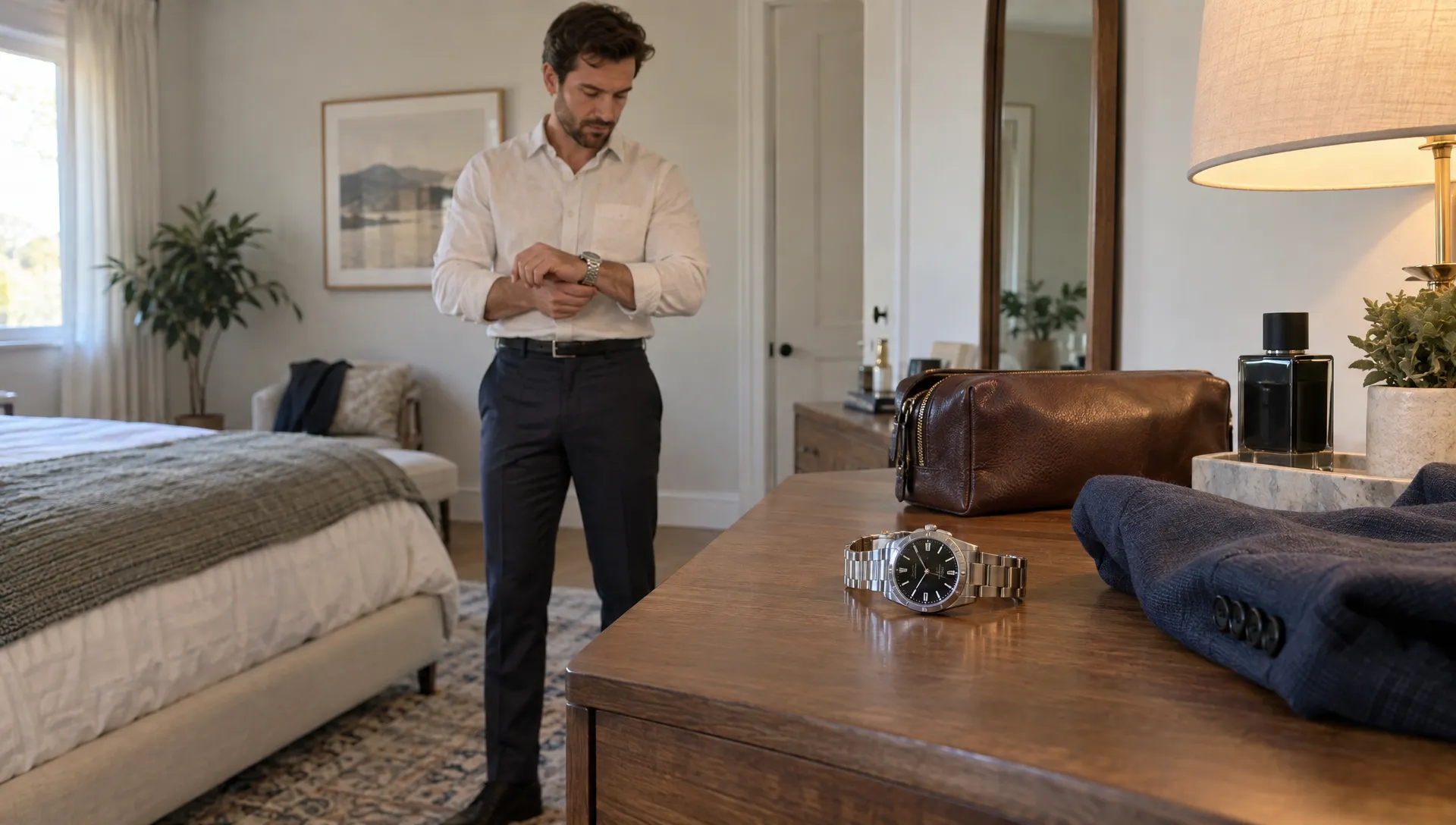
Before buying a Rolex for sale, verify the exact reference, the originality of its components, its physical condition and its documented mechanical inspection. Box and papers support the purchase, but they do not establish authenticity on their own.
Inspect the watch in layers. First confirm what it is, then assess what has changed and finally determine what ownership will require. A polished case, replacement dial or incomplete bracelet may be acceptable, provided the description is accurate and the asking price reflects the watch you are actually buying.
Identify the reference before comparing watches
The reference number identifies a model configuration, not the individual watch. The serial number identifies the individual piece. Both should be consistent with the watch and any accompanying documentation.
Start with the reference because similar-looking watches can differ substantially in size, movement and operation. The Rolex Explorer 124273, for example, is a 36mm two-tone watch without a date. It should not be evaluated against an Explorer II simply because both carry the Explorer name.
| Reference | Case diameter, approximately | Movement | Inspection focus |
|---|---|---|---|
| ------------- | ------------ | ------------ | ------------ |
| Explorer 124273 | 36mm (1.42 in) | Caliber 3230 | Two-tone case and bracelet condition, no-date operation |
| Explorer II 16570 | 40mm (1.57 in) | Caliber 3185 or 3186, depending on production | Movement identification, dial configuration and bracelet details |
| Explorer II 216570 | 42mm (1.65 in) | Caliber 3187 | Independent local-hour operation, bezel condition and bracelet fit |
When comparing a Rolex for sale, match the reference before comparing asking prices. Rolex’s current Explorer specifications provide a useful manufacturer baseline for current models, but discontinued references require period-specific verification.
For an older watch, ask how the seller established its production period. Serial-number charts are approximate dating tools, not proof of an exact manufacturing date.
Separate authenticity from originality
Authentic does not necessarily mean entirely original to the watch. A genuine Rolex can have a later Rolex service dial, replacement hands or a replacement bracelet. Those components differ from aftermarket parts, but their presence should still be disclosed.
Depending on the generation, identifying markings may appear between the lugs or on the inner flange beneath the crystal, known as the rehaut. Have a qualified watchmaker remove the bracelet when access is necessary. Do not attempt case opening yourself.
Ask the seller to explain how the case, dial, bracelet and movement were checked together. A matching serial number or sharply printed dial cannot authenticate the complete watch. Counterfeit components can reproduce visible details, while genuine components can be assembled into an incorrectly described watch.
A Rolex for sale deserves more than a claim that it “looks right.” Request written authentication findings and disclosure of known replacement or aftermarket components.
For the Rolex Explorer II 16570, movement identification matters because the reference spans both caliber 3185 and caliber 3186 examples. The reference alone does not settle which movement is inside a particular watch.
Inspect the case and bracelet of a Rolex for sale
Case shape matters more than surface shine
Inspect the lugs from above, below and both sides. Look for uneven thickness, softened edges or inconsistent contours. These can indicate refinishing, although factory shapes differ across references and production periods.
Ask for photographs in diffuse light, not only tightly lit images that make polished surfaces appear flawless. Inspect the crown guards where fitted, the bezel edge and the areas around spring-bar holes. Deep dents and corrosion deserve separate attention from ordinary scratches.
“Excellent” is a condition description. It does not establish that a case is unpolished or that every component is original. Ask those questions separately.
Check bracelet completeness and wear
Confirm the included link count and whether the bracelet fits your wrist with adjustment room remaining. A watch that fits tightly at its maximum length may require additional links.
Inspect articulation, clasp security and wear around connecting points. Some lateral movement is normal, especially on older bracelet constructions. Excessive looseness needs assessment rather than a vague description of “stretch.”
Before accepting a Rolex for sale, confirm whether the bracelet and clasp are correct for the reference, later genuine replacements or another configuration.
Examine the dial, hands, crystal and bezel
Dial inspection should establish condition and consistency, not rely on a single visual authentication trick.
Look for moisture staining, damaged printing, loose luminous material and corrosion on the hands. Ask whether the dial has been refinished, relumed or replaced. A later service dial may be entirely genuine while changing the watch’s historical configuration.
On vintage watches, different aging between hands and hour markers is a reason to investigate, not automatic proof of replacement. Matching color is not proof of originality either. Photographs can also distort the appearance of luminous material.
Inspect the crystal edge for chips and the surface for scratches. Where a date magnifier is fitted, assess alignment and clarity, but do not treat apparent magnification as a standalone authenticity test.
Bezel checks depend on the model. An Explorer II has a fixed 24-hour bezel; a Submariner has a rotating timing bezel. Examine the appropriate mechanism and component rather than applying one checklist indiscriminately.
An unusually clean Rolex for sale should still receive the same scrutiny as a visibly worn example. Ask what work produced its present appearance and which parts were retained.
Request evidence of mechanical condition
Ask what “serviced” actually covers
A running watch is not necessarily a recently serviced watch. Ask who performed the work, when it was completed and what it included.
Useful documentation distinguishes movement servicing from regulation, exterior cleaning or polishing. Ask whether worn parts were replaced and whether the completed watch underwent functional testing.
A timing-machine report can provide rate, amplitude and beat-error measurements. Those readings require interpretation for the specific caliber, test settings and state of wind. One attractive reading in one position is not a complete mechanical assessment.
When evaluating a Rolex for sale, request the inspection findings rather than accepting “keeps good time” as the entire mechanical description.
Test functions and confirm water-resistance testing
Have the seller demonstrate winding, crown engagement and the functions appropriate to the reference. Depending on the movement, those may include date adjustment or an independently adjustable local-hour hand. Controls should operate correctly without forcing them.
Ask for the date and scope of the latest pressure test. A model’s original water-resistance specification does not establish the present condition of an older watch’s seals. Until suitability is confirmed, keep the watch out of water.
Rolex’s watch care and service guidance is a useful starting point, but the condition of the individual watch determines the immediate maintenance questions.
Check documentation and buyer protections
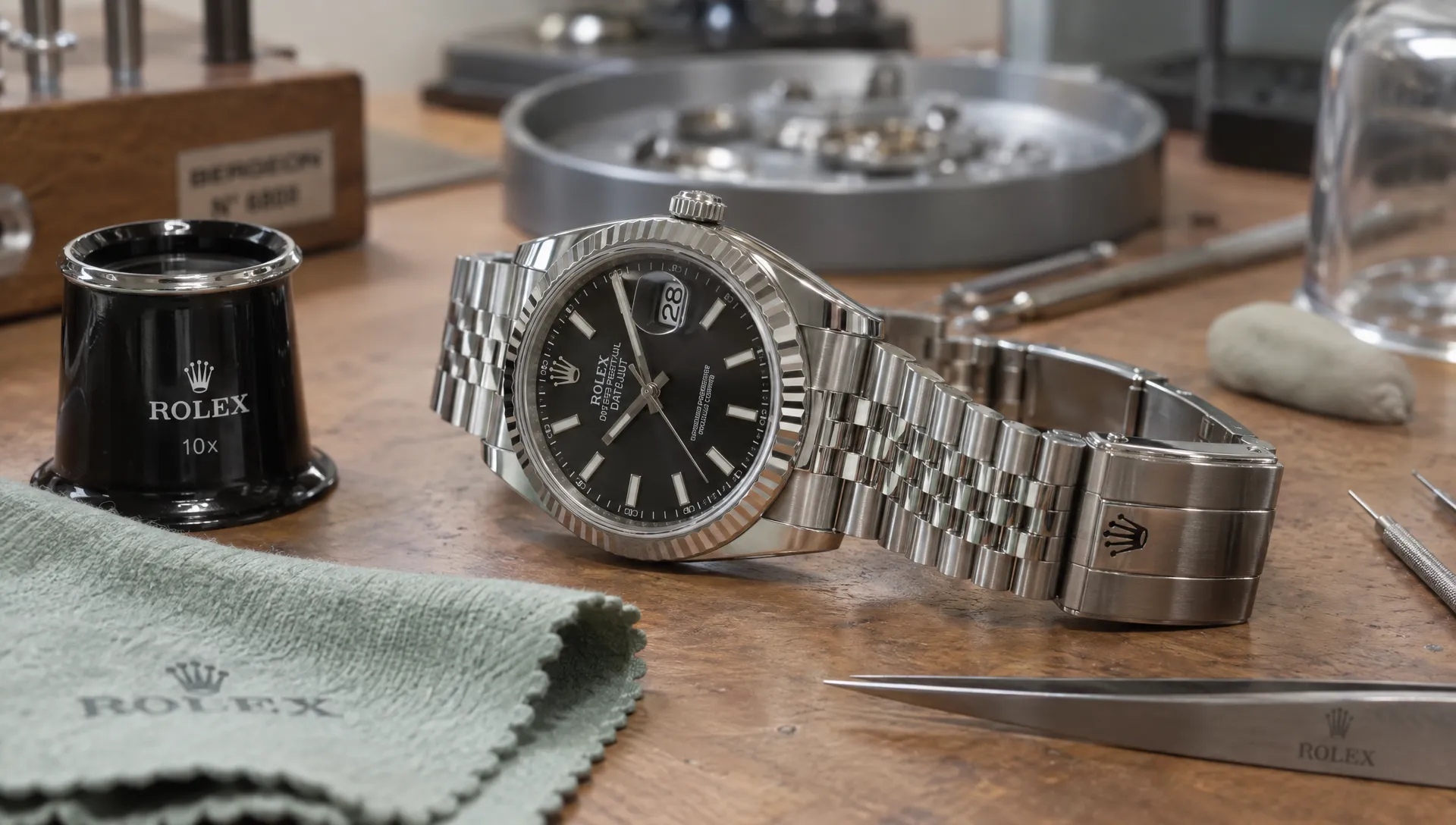
Compare the reference and serial details on any warranty card or papers with the watch. Have the seller explain discrepancies, missing information or documents that accompany the watch without identifying it individually.
A presentation box is an accessory. A warranty card is supporting documentation. Neither substitutes for examining the watch itself, and a full set does not prove that its current components remain original.
The invoice should identify the watch and record material disclosures. Confirm the return window, return procedure and warranty coverage before payment. A retailer warranty is distinct from any remaining manufacturer warranty.
For a Rolex for sale, written terms should also establish shipping insurance and what happens if the delivered watch differs from its description. Our guide to choosing a local Rolex seller you can trust addresses the separate task of evaluating the seller.
Lume Wrist Watches is an independent retailer in New York City, not an authorized Rolex dealer. Every watch is inspected at our New York office before dispatch, and each listing shows its own condition grade. Buyer protections include free insured US shipping, 30-day returns (customer-paid return shipping, 15% restocking fee unless due to our error) and two-year warranty coverage. International shipping is available by request and quote. Confirm the applicable terms for the specific purchase.
Apply the same standards when considering alternatives
An inspection may reveal that a particular Rolex does not meet your requirements for fit, condition or ownership costs. That is a reason to compare another watch, not to relax your standards.
The Grand Seiko Heritage Collection SBGA375 Blue Dial and Oris Aquis Date Caliber 400 (01 400 7790 4135) provide alternatives to examine under the same framework: identity, component disclosure, condition, servicing and fit.
Whether choosing an alternative or another Rolex for sale, evaluate the individual example. Brand recognition does not replace a complete inspection record.
Frequently asked questions
Are box and papers enough to authenticate a Rolex? No. They provide supporting evidence, but the watch’s case, movement and other components still require inspection. Documents and accessories can also be mismatched.
Does Excellent condition mean the watch is unpolished? No. Condition grading describes the seller’s assessment of its present state. Ask separately about polishing, replacement components and visible wear.
Can I swim with a pre-owned Rolex immediately? Do not assume so. Obtain current pressure-test information and confirmation that the watch is suitable for the intended use. Original specifications do not establish present seal condition.
Should I reject a watch without its original service records? Not automatically. Current inspection findings and documented recent work can help establish mechanical condition. Missing historical records do leave gaps, particularly when assessing a collectible Rolex for sale.
Choose the watch with the clearest record
The strongest purchase is the example whose identity, condition and service history you can understand before paying. Unanswered questions about originality or mechanical work should be resolved first.
Browse Lume Wrist Watches’ authenticated pre-owned watch collection, then request the photographs, fit information and inspection details needed to assess a specific watch.
## Part of the series This article belongs to our complete guide: Rolex Watches: Complete 2026 Buying Guide.\n