Movement Inspection: What a Watchmaker Looks For in 2026
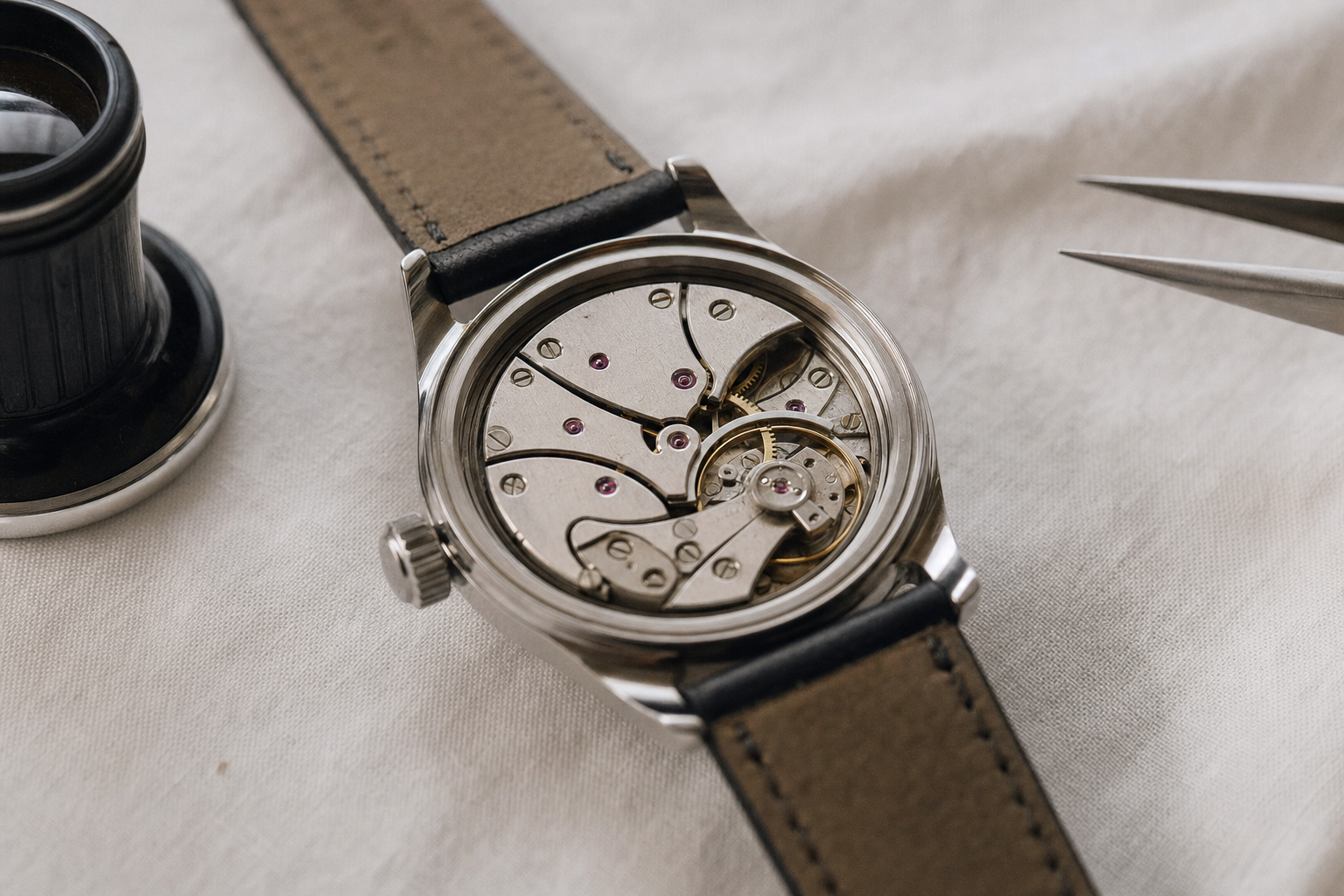
A deep dive into the meticulous process of luxury watch movement inspection, revealing what expert watchmakers scrutinize for authentication, performance, and value in 2026.
# Movement Inspection: What a Watchmaker Looks For When authenticating a luxury timepiece, the movement—its intricate mechanical heart—is often the most revealing component, offering indisputable evidence of authenticity, condition, and quality. An expert watchmaker meticulously inspects every gear, bridge, and jewel to confirm the watch's provenance, assess its health, and ensure it meets the demanding standards of a genuine luxury watch. This deep dive explores the precise elements a seasoned horologist scrutinizes during a comprehensive movement inspection. ## The Movement Inspection at a Glance: Key Areas of Scrutiny Movement inspection is a multi-faceted process that goes far beyond a cursory glance. It’s a forensic examination of a watch's inner workings, evaluating both its authenticity and its functional integrity. Watchmakers look for consistency with known manufacturing standards, signs of tampering or replacement, and indicators of wear or damage that could impact performance or value. This includes examining the finishing, material quality, and operational nuances unique to specific calibers from brands like [Patek Philippe timepieces](/shop?brand=Patek%20Philippe) or [Rolex collection](/shop?brand=Rolex). ### Production Years & Caliber Identification First, the watchmaker identifies the specific movement caliber. This involves cross-referencing serial numbers, unique markings, and design characteristics against manufacturer records and databases. For instance, a vintage [Jaeger-LeCoultre Jaeger‑LeCoultre Reverso Classic (Q3858522)](/product/jaeger-lecoultre-reverso-classic-q3858522) would have a distinct caliber (e.g., Caliber 822) that needs to match its production era. Any discrepancy immediately raises a red flag regarding authenticity or originality. ### Case, Movement & Dial Variants (Internal Consistency) Beyond just the movement, a watchmaker assesses the **internal consistency** between the movement, case, and dial. A genuine watch will feature components that are historically and dimensionally correct for its purported reference and production year. For example, specific caseback markings should align with the observed caliber, and the dial's feet should correspond to the movement's mounting points. Anomalies here can indicate a "frankenwatch" – a timepiece assembled from various parts, often including non-original or counterfeit components. This rigorous cross-verification is a cornerstone of [our in-house team independent authentication](/policies/authenticity) process. ### General Condition and Integrity General condition is paramount. The watchmaker checks for any signs of water damage, rust, corrosion, or significant impacts. Scratches, nicks, or deformation on plates, bridges, or screws can indicate previous shoddy repairs or mishandling. The presence of proper lubrication, or lack thereof, is also a key indicator of prior service history and current operational health. A well-maintained movement will show minimal wear and proper, clean lubrication where needed. ## Full Specification Table: Watchmaker's Checklist This table outlines key areas and specific elements a watchmaker examines during a detailed movement inspection. | Inspection Category | Specific Elements & Observations | Authenticity Implications | Performance Implications | |---------------------------|----------------------------------------------------------------------------------------------------------|-----------------------------------------------------------------------------------------------------------------------|--------------------------------------------------------------------------------------------| | **Caliber Identification**| Serial numbers, reference numbers, unique markings, branding, specific design traits. | Verifies authenticity, matches period-correct data. Mismatch indicates potential counterfeit/frankenwatch. | Ensures correct parts for intended function; wrong caliber affects repairability. | | **Material & Finishing** | Bridge plating (rhodium, gold), côtes de Genève, perlage, anglage, heat-blued screws, jewel quality. | Indicates genuine craftsmanship vs. crude imitation. Poor finishing is a strong counterfeit indicator. | High-quality finishing reduces friction/wear; poor finishing leads to premature failure. | | **Component Integrity** | Gears (tooth profile, play), springs (mainspring, balance spring), pivots, balance wheel. | Presence of correct, original components. Signs of replacement with incorrect or low-quality parts. | Affects accuracy, power reserve, and overall reliability. Damaged parts cause timing issues. | | **Lubrication** | Correct type and quantity of lubricants on pivots, escapement, mainspring barrel. | Improper lubrication suggests poor servicing or neglect. Absence is a major red flag for vintage pieces. | Critical for friction reduction, longevity, and accuracy. Dryness leads to rapid wear. | | **Regulation & Timing** | Beat error, amplitude, rate variation in multiple positions. | Consistency with manufacturer specs. Extreme deviation may indicate underlying issues or counterfeit regulating parts. | Directly impacts accuracy and chronometric performance. | | **Signs of Tampering** | Stripped screw heads, mismatched screws, tool marks on plates/bridges, incorrect parts. | Indicates past unauthorized repair, potential parts swap, or fraudulent assembly. | Can lead to further damage, instability, and reliability problems. | | **Water Resistance** | Gasket condition (caseback, crown, crystal), winding stem integrity. | Critical for modern watches; compromised seals mean higher risk of internal damage. | Protects movement from environmental ingress; failure leads to corrosion. | ## Production Timeline and Caliber Variations Luxury watch manufacturers often evolve their movements over time, introducing subtle or significant improvements. A watchmaker is intimately familiar with these **production timelines and caliber variations**. For example, knowing when a specific brand transitioned from a particular escapement design to a more modern one, or when they began using silicon components, is crucial. If a timepiece claims to be from a certain era but contains anachronistic movement features, it's a clear sign of either a replacement movement, a counterfeit, or a "marriage" of mismatched components. Understanding these nuances is part of the deep knowledge required for [watch authentication and provenance](/blog/watch-authentication-provenance-guide-lume-wrist-watches). ### The Art of Finishing: A Signature of Authenticity One of the most telling aspects of a high-end movement is its **finishing**. This isn't just aesthetic; it's a testament to the brand's commitment to quality and often serves a functional purpose (e.g., blued screws for rust resistance). A watchmaker scrutinizes: * **Côtes de Genève (Geneva Stripes):** These parallel waves must be consistent, deep, and perfectly aligned. Counterfeit movements often have shallow, uneven, or laser-etched patterns. * **Perlage (Pearlage):** Circular graining found on baseplates or hidden surfaces. It should be uniform and tightly packed. * **Anglage (Chamfering):** The polished bevels on the edges of bridges and plates. True anglage is hand-applied, perfectly symmetrical, and free of tool marks. Fakes often have machine-stamped or rough edges. * **Heat-blued Screws:** Genuine blued screws achieve their vibrant blue hue through careful heat treatment, not paint. The color should be iridescent and consistent. * **Jewels:** Synthetic rubies (or sapphires) should be evenly set, free of chips, and consistent in color and clarity. Their proper function is to reduce friction at pivot points. The absence of these detailed finishings, or their poor execution, immediately raises suspicions about the movement's authenticity. This craftsmanship is a hallmark of [all featured maisons](/brands) at Lume Wrist Watches. ## Performance and Sizing on the Bench While "wearing experience and sizing on the wrist" usually pertains to case dimensions, for movement inspection, this translates to the watch's **performance on a timegrapher and its mechanical integrity within the case**. A watchmaker places the uncased movement (or cased movement in various positions) on a timegrapher to measure: * **Rate:** How fast or slow the watch is running, expressed in seconds per day (SPD). * **Amplitude:** The maximum angle of rotation of the balance wheel. A healthy amplitude (typically 270-310 degrees for a fully wound watch) indicates a clean, properly lubricated, and well-regulated movement. Low amplitude can signal friction, worn parts, or a weak mainspring. * **Beat Error:** The difference in time between the two swings of the balance wheel. A low beat error (ideally 0.0 to 0.5 ms) indicates proper adjustment and a healthy escapement. High beat error suggests an imbalanced or improperly adjusted balance wheel. Consistency across multiple positions is also vital. A significant variation in rate or amplitude when the watch is tested dial up, dial down, or crown up, suggests underlying issues requiring service. While not directly about sizing, the correct fit of the movement within its case is critical. Any play or improper mounting can lead to shock damage or affect accuracy. ## Market Pricing and Which Variants Command a Premium (Authenticity Impact) In the luxury watch market, **authenticity and originality directly influence pricing**. A watch with a fully authentic, original, and well-maintained movement commands a significant premium over one with a replacement movement, non-original parts, or signs of extensive, unrecorded repairs. Even a watch with an otherwise perfect exterior but a compromised or non-original movement will see its value drastically reduced. For example, a [Patek Philippe Patek Philippe Complications 18k Rose Gold](/product/patek-philippe-complications-18k-rose-gold) with its original, perfectly finished Caliber 324 S QA LU 24H movement will be exponentially more valuable than one where the movement has been swapped for a generic or lesser-quality caliber, even if visually similar. Documented service history by authorized workshops, using genuine parts, can also add value. ### Impact on Investment Value For collectors considering a luxury watch as an investment, the movement's integrity is paramount. While external aesthetics are important, the internal mechanism defines the watch's true horological value. A watchmaker's detailed inspection report, confirming authenticity and excellent mechanical health, can significantly bolster the confidence of buyers, particularly for rare or [vintage luxury watches in New York](/watches/new-york). ## Authentication Checklist Specific to Movement Inspection This comprehensive checklist guides our watchmakers through every critical aspect of movement authentication: * **Open Caseback:** Carefully remove the caseback to access the movement. Note any resistance, signs of previous opening (e.g., tool marks), or incorrect gaskets. * **Caliber Reference:** Verify the inscribed caliber number against official documentation for the watch's reference. This is critical for authentication and ensuring period correctness. * **Serial Numbers:** Locate and verify movement serial numbers. These should often correspond with case numbers and official papers. Discrepancies are a major warning sign. * **Manufacturer Markings:** Confirm the presence and correct style of brand logos, hallmarks, and other engravings on bridges, rotors, or plates. Fonts, depth, and placement must be precise. * **Material Analysis:** Observe the material composition of plates, bridges, and screws. High-end movements use specific alloys (e.g., brass, nickel silver, gold), which fakes often fail to replicate. * **Finishing Examination:** Using a loupe, meticulously inspect for Côtes de Genève, perlage, anglage, heat-blued screws, and polished surfaces. Look for uniformity, sharpness, and depth indicative of hand-finishing or high-quality machine finishing. * **Jewel Count and Setting:** Confirm the correct number of jewels for the caliber and ensure they are properly seated, secure, and free from damage. Watch for low-quality or painted 'jewels'. * **Hairspring:** Inspect the hairspring for deformation, rust, or magnetic influence. Its delicate coils must be perfectly concentric. * **Balance Wheel:** Check for trueness (absence of wobble), proper weighting, and healthy oscillation. * **Escapement:** Examine the pallet fork, escape wheel, and impulse jewel for wear, damage, or improper geometry. This is the heart of the timekeeping mechanism. * **Gear Train:** Inspect gears for proper meshing, straight teeth, and absence of excessive play or wear. * **Mainspring Barrel:** Assess condition of the mainspring and barrel arbor. While often sealed, visual cues and power reserve testing can indicate its health. * **Rotor (for automatics):** Check for proper weight, balance, and freedom of movement. Ensure correct engravings and attachment. * **Screws:** Verify all screws are original, correctly tightened, free of stripped heads, and consistent in type and finish. * **Signs of Repair/Tampering:** Look for non-original parts, mismatched screws, tool marks, or evidence of unskilled repair attempts. * **Timing Machine Analysis:** Conduct a full timegrapher test in multiple positions (e.g., dial up, dial down, crown up, crown down) to assess rate, amplitude, and beat error. Compare results against manufacturer specifications. * **Power Reserve Check:** Verify the watch achieves its stated power reserve when fully wound. This checklist forms a critical part of how Lume Wrist Watches ensures the authenticity and quality of every timepiece in [our authenticated collection](/shop), serving customers across the nation from [luxury watches delivered to all 50 states](/watches) to specific markets like [luxury watches in California](/watches/california). ## Frequently Asked Questions ### Q: Why is movement inspection more important than external appearance for authentication? A: While external appearance is important, a movement inspection reveals the true identity and mechanical integrity of a watch. Counterfeiters can replicate external aesthetics well, but replicating a complex, finely finished mechanical movement with correct materials and precise tolerances is exceedingly difficult, making the movement the ultimate arbiter of authenticity and quality. ### Q: Can a watchmaker detect if a movement has non-original parts? A: Yes, an experienced watchmaker can often detect non-original parts. They look for inconsistencies in finishing, material, engravings, and dimensions compared to known genuine components for that specific caliber. They also check for tool marks or signs of improper fitting that would occur during a non-factory repair using incorrect parts. ### Q: How often should a watch movement be serviced? A: Generally, mechanical watch movements should be serviced every 3 to 7 years, depending on the watch, its use, and manufacturer recommendations. Regular servicing involves cleaning, lubricating, and replacing worn components, which is crucial for maintaining accuracy, longevity, and preventing major damage. This ensures its performance on par with something like a [Hamilton Hamilton American Classic PSR (H52414130)](/product/hamilton-american-classic-psr-h52414130) or any other high-end piece. ### Q: What are common signs of a counterfeit movement? A: Common signs include poor finishing (lack of Geneva stripes, rough anglage), incorrect or missing branding/serial numbers, cheap materials (plastic components), inconsistent jewel count, inaccurate movement dimensions, and extremely poor timekeeping results on a timegrapher. These are often dead giveaways to a trained eye. ### Q: Does a serviced movement affect the watch's value? A: A properly serviced movement by an authorized service center or a highly reputable independent watchmaker, using genuine parts, generally maintains or enhances a watch's value. It demonstrates the watch has been cared for. However, a movement serviced improperly or with non-original parts can significantly detract from its value. ### Q: Is it possible for a watch to have an authentic case and dial but a counterfeit movement? A: Yes, this scenario, sometimes called a "frankenwatch" or "marriage