How Much Does a Factory-Set Diamond Watch Cost in 2026?
Published October 28, 2026 · Last updated October 28, 2026 · By Lume Wrist Watches
Short Answer: The Price Range Up Front
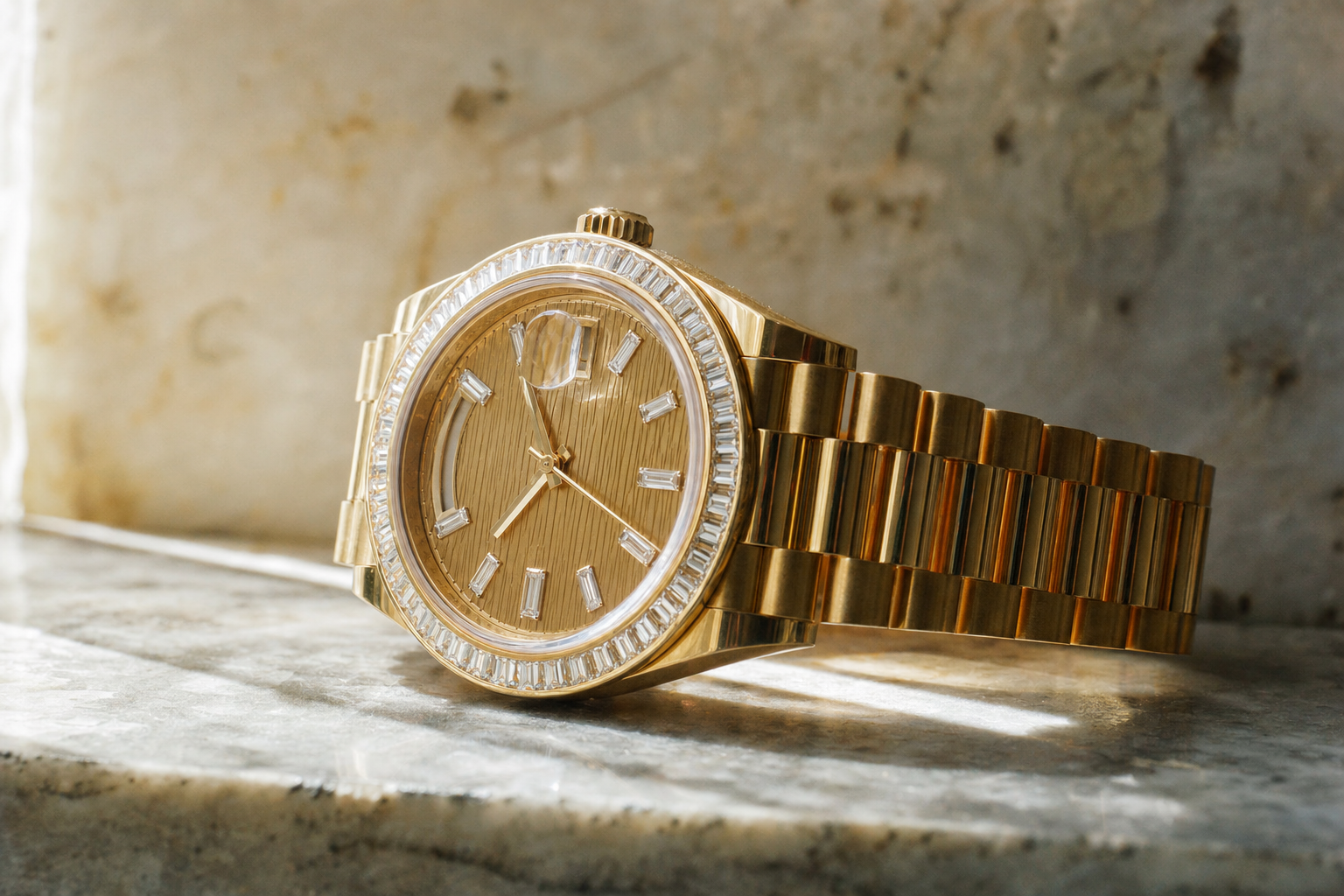
In the 2026 secondary market, an authentic factory-set diamond luxury watch typically commands between $14,000 and $450,000+, depending on the brand, precious metal composition, and gem coverage. A steel Datejust with factory diamond hour markers trades near $12,500 to $16,000, while fully paved "off-catalog" masterpieces from Rolex, Patek Philippe, or Audemars Piguet easily clear $150,000 to $600,000.
Conversely, an aftermarket customized watch—often called an "iced-out" watch—suffers catastrophic depreciation. A watch fitted with non-factory diamonds usually trades between $7,000 and $22,000, frequently losing 30% to 70% of the base watch's intrinsic value. Modifying a factory case with non-original stone settings voids manufacture servicing, compromises structural water resistance, and permanently alters the metal.
---
Price Breakdown: Factory-Set vs. Aftermarket Customizations
To understand the monetary division between original manufacture gem-setting and third-party modifications, examine how specific references trade in the current secondary market. The figures below reflect approximate market observations across authenticated pre-owned channels.
| Model & Reference | Gem Specification | Factory-Set Pre-Owned Range (2026) | Aftermarket Custom Pre-Owned Range (2026) | Value Variance | Key Identifier |
|---|---|---|---|---|---|
| :--- | :--- | :--- | :--- | :--- | :--- |
| Rolex Datejust 36 (Ref. 126234) | Diamond Markers (Dial Only) | $12,500 – $14,500 | $7,500 – $9,200 | -36% to -40% | Reference dial code on guarantee card |
| Rolex Day-Date 40 (Ref. 228348RBR) | Factory Diamond Bezel & Dial (Yellow Gold) | $58,000 – $66,000 | $32,000 – $38,000 | -42% to -48% | "RBR" suffix on paperwork; crisp four-bead settings |
| Rolex Submariner Date (Ref. 116610LN altered) | Full Case, Bezel & Bracelet Pave | N/A (Never produced factory) | $11,000 – $14,500 | -15% to -35% vs. clean 116610LN | Drilled lug walls, uneven stone alignment |
| Audemars Piguet Royal Oak 37mm (Ref. 15451ST) | Factory Brilliant-Cut Diamond Bezel | $36,000 – $44,000 | $18,000 – $24,000 | -45% to -50% | Integrated bezel screws sit flush with metal channels |
| Cartier Santos de Cartier (Large, Ref. WSSA0018 altered) | Full Aftermarket Pave | N/A (Factory diamonds only on precious metals) | $6,500 – $8,500 | -20% to -35% vs. mint stock | Visible adhesive or irregular bead prongs under 10x loupe |
| Patek Philippe Nautilus (Ref. 5719/10G) | Factory Full Pavé (White Gold) | $480,000 – $580,000 | $85,000 – $115,000 (Built on base 5711G) | -75% to -80% | Flawless D-F IF/VVS calibration; factory archive excerpt |
As the data shows, adding non-original diamonds does not add value; it actively cannibalizes the equity of the base timepiece. When clients browse our authenticated collection, our horological team always highlights whether a gem-set reference left the atelier in that exact configuration.
---
What Drives the Price: Gem Quality, Setting Precision, and Provenance
The price gap between genuine manufacture gem-setting and aftermarket work boils down to five rigorous criteria: gemological grading, metal integrity, manufacturing tolerances, movement health, and historical provenance.
``` FACTORY GEM-SETTING AFTERMARKET CUSTOMIZATION ┌────────────────────────────────────────┐ ┌────────────────────────────────────────┐ │ • Top-tier D–G color, IF–VVS clarity │ │ • Commercial I1–I3 or SI stones │ │ • Precision CNC micro-pavé seats │ │ • Hand-drilled, uneven metal seats │ │ • Uncompromised case metallurgy │ │ • Weakened lugs & shaved bezels │ │ • Intact factory warranty & service │ │ • Manufacture refuses future service │ │ • Documented reference suffix codes │ │ • Loss of 30%–70% secondary value │ └────────────────────────────────────────┘ └────────────────────────────────────────┘ ```
1. Diamond Selection and Grading Standards
Elite watch houses such as Rolex, Cartier, and Patek Philippe employ in-house gemological departments with standards that rival high-jewelry houses. Rolex, for instance, accepts only stones in the D through G color range with clarity ratings strictly between Internally Flawless (IF) and VVS. Master gem-setters check every brilliant-, baguette-, or trapeze-cut stone for identical height, diameter, and table facet alignment.
Aftermarket jewelers frequently source commercial-grade melee diamonds (often I1 to I3 or low-tier SI clarity) displaying cloudy inclusions, poor cut geometry, and inconsistent tinting. These stones cost a fraction of high-jewelry stones, resulting in a dull, uneven reflection when viewed under natural lighting.
2. Metallurgical Integrity and Case Drilling
To set diamonds onto a watch that was born plain, a third-party setter must drill into the original steel or gold. Removing metal from the bezel, case flanks, and bracelet links weakens the structural framework of the case. When drilling into high-tensile 904L stainless steel or 18k gold:
- Lugs become structurally thin, risking deformation under pressure.
- Bezels lose their precise tension, undermining the crystal gasket seal.
- Water resistance drops from 100 meters to essentially zero.
For a deeper look into verifying case alloys without invasive techniques, consult our guide on Testing Precious Metal Weight & Hallmarks in Watches.
3. Setting Technique: Precision Beads vs. Irregular Prongs
Factory gem-setting utilizes Computer Numerical Control (CNC) milling paired with microscopic hand-finishing. Setting walls are carved directly out of the primary metal, creating uniform beads (grains) that hold each diamond with sub-millimeter precision. Every diamond sits at an exact height, completely flush with adjacent stones.
Aftermarket work often relies on hurried hand drilling. Under a 10x or 20x loupe, you will spot telltale defects: Stones overlapping each other or sitting tilted in their mountings. Rough, uneven prongs with tool chatter marks. Adhesives used to seat stones where prong spacing was cut too wide. Diamond tables protruding above the bezel perimeter.
Our specialists examine these micro-mechanical details through our in-house team independent authentication process on every gem-set piece.
4. Dial Substrates and Movement Clearances
Factory diamond dials are engineered from scratch on dedicated blanks. The mounts for baguette or brilliant hour markers are recessed into the dial base plate, ensuring that the hour, minute, and central sweep seconds hands clear the markers with microscopic tolerance.
When an aftermarket modifier glues or prongs stones onto a stock dial, the added height often interferes with the hands. Modifiers sometimes shave down the underside of the watch hands or push the cannon pinion upward, introducing friction that disrupts the escapement. This damage mimics the issues detailed in our guide on Spotting Redials: Full Reference Guide and Buyer's Checklist.
5. Reference Codes and Official Papers
Factory diamond models carry explicit reference identifiers. Rolex appends letters to the reference number indicating gem-setting: RBR (Rond Brilliant Rond): Brilliant-cut diamond bezel (e.g., Day-Date 128348RBR) TBR (Taille Baguette Rond): Baguette-cut diamond bezel TEM (Taille Emeraude): Emerald-cut gem bezel SANR (Saphirs Noirs): Black sapphire configuration
If a watch is presented as a factory diamond bezel, but the paperwork or case engraving lists the base smooth-bezel reference (such as an Audemars Piguet 15400ST or Rolex 126300), the modification is aftermarket. Trace the lineage of any prospective purchase using our analysis of Serial Number Lookups vs Registry Verification: 2026 Guide.
---
Retail vs Pre-Owned vs Auction Pricing Compared
Understanding market tiers helps buyers avoid paying factory-level premiums for modified wristwatches. Below is an overview of how pricing moves across primary boutiques, pre-owned channels, and public auctions.
``` MARKET PRICING TIERS: FACTORY VS. AFTERMARKET (2026)
Retail Boutique [Factory Only] ██████████████████████ $40k–$150k+ (Authorized) [Aftermarket] N/A (Not Sold at Retail)
Pre-Owned [Factory Certified] █████████████████ $35k–$130k+ (Secondary) [Aftermarket Mod] ████ $10k–$25k (Heavy Value Loss)
Auction [Factory Rare] ██████████████████████████ $50k–$500k+ (Major Houses) [Aftermarket] Rejected / No-Reserve Liquidation ```
### Retail Boutiques At an authorized retailer, factory gem-set pieces carry substantial MSRP premiums over non-gem counterparts. A standard 18k yellow gold Rolex Day-Date 40 commands an MSRP near $41,500, whereas specifying a factory diamond bezel and diamond-set baguette dial lifts the retail price beyond $55,000. Brands like Audemars Piguet and Patek Philippe allocate fully paved references strictly to top-tier clients via application.
### Pre-Owned Secondary Market Conversely, aftermarket watches flood secondary marketplaces at deep discounts. While the owner may have paid $15,000 for the watch and another $10,000 to an aftermarket jeweler, the resulting piece commonly trades for just $8,000 to $12,000 on the open secondary market.
### Auction Houses Tier-one auction houses like Christie's, Sotheby's, and Phillips generally refuse to catalog watches with aftermarket diamond modifications, except in rare instances of named historical provenance. Modified luxury watches that do reach smaller regional auctions routinely sell at or below the base scrap value of their precious metal and loose melee stones. Factory-set museum references, by contrast, frequently ignite bidding wars among elite collectors tracking the Luxury Watch Investment & Market Guide: Navigating 2026.
---
Hidden Costs: Servicing, Insurance, Shipping, and Verification
Purchasing a gem-set luxury watch introduces financial considerations that extend beyond the initial invoice.
- Refusal of Factory Servicing: The most expensive hidden cost of an aftermarket watch is service refusal. Rolex, Audemars Piguet, Patek Philippe, and Cartier will outright decline to service an aftermarket-altered watch unless the owner agrees to pay thousands of dollars to restore the case, bezel, dial, and hands to original factory specifications. A standard mechanical overhaul runs $800 to $1,500; replacing an aftermarket bezel with a factory original can easily add $4,000 to $12,000.
- Independent Authentication Fees: Before acquiring high-value gem-set models, professional validation using spectroscopic stone analysis and microscopic inspection is essential. Specialized authentication typically costs $250 to $750. For an overview of laboratory-grade testing methods, read Forensic Techniques: Detecting Fake Luxury Watches in 2026.
- Insurance Appraisals and Premiums: Insuring a factory-set timepiece requires an itemized appraisal confirming original factory reference codes. Annual premiums generally average 1% to 2% of the appraised value. Insuring an aftermarket watch is problematic: insurers often write policies based strictly on the unadorned base model value or reject customized jewelry watches due to disputes over replacement valuations.
- Fully Insured Shipping: Securing transit for a high-value gem-set watch demands specialized logistics. Secure overnight armored shipping within the United States ranges from $150 to $500 depending on total declared value, as outlined in our policies on shipping & delivery.
Whether you are acquiring a diamond-set icon from our Rolex collection or an understated classic from our Omega collection, keeping these maintenance and insurance parameters in view prevents costly surprises.
---
How to Pay: Card and Bank Wire at Lume Wrist Watches
At Lume Wrist Watches, we maintain a secure transaction process for all high-value acquisitions. We do not support fragmented financing, escrow intermediaries, or complicated installment plans; our clients complete acquisitions using straightforward, verified payment methods.
``` PAYMENT METHOD SPECIFICATIONS ┌───────────────────────────────┬───────────────────────────────┐ │ CREDIT & DEBIT CARD │ DOMESTIC & INTERNATIONAL WIRE │ ├───────────────────────────────┼───────────────────────────────┤ │ • Visa, MasterCard, Amex │ • Direct Bank-to-Bank Wire │ │ • Instant checkout clearance │ • Preferred for high balances │ │ • Anti-fraud identity check │ • Secure clearance via Treasury│ │ • Ships to billing address │ • Same-day dispatch upon settlement│ └───────────────────────────────┴───────────────────────────────┘ ```
- Credit and Debit Card: We accept major payment cards (Visa, MasterCard, American Express, and Discover). To protect our clients, credit card orders undergo strict anti-fraud address verification (AVS) and must ship directly to the confirmed billing address on file with the card issuer.
- Bank Wire Transfer: For transactions exceeding $10,000, bank wire transfer is the standard, preferred mechanism among seasoned collectors. Wire payments clear directly through domestic Fedwire or international SWIFT rails. Once our treasury team confirms the wire settlement, your watch is prepared for immediate armored dispatch.
Clients purchasing luxury watches in New York, ordering luxury watches in California, or securing luxury watches in Florida receive the same white-glove transaction support.
---
Is It Worth It? Value Retention and Market Outlook
Is a diamond-set watch worth the capital outlay? The answer depends entirely on the provenance of the gem-setting.
### Factory-Set Timepieces: Enduring Prestige Factory-set watches from blue-chip horological houses hold an enduring place in modern collections. While gem-set references historically experienced softer liquidity than minimalist stainless steel sports models, consumer preferences have shifted significantly over the past five years. Today, collectors actively pursue rare factory gems—from the rainbow-bezel Daytonas to stone-set Audemars Piguet Royal Oaks and high-jewelry Patek Philippe timepieces.
``` FIVE-YEAR VALUE TRAJECTORY (ILLUSTRATIVE 2021–2026)
Value % 120% ─────────────────────────── Factory Diamond Sports Reference 100% ─────────────────────────── Baseline Untouched Stainless Model 80% ─ ─ ─ ─ ─ ─ ─ ─ ─ ─ ─ ─ ─ ─ ─ 60% ─ ─ ─ ─ ─ ─ ─ ─ ─ ─ ─ ─ ─ ─ ─ 40% ─────────────────────────── Aftermarket "Iced-Out" Custom Watch 20% ─────────────────────────── Year 1 Year 2 Year 3 Year 4 Year 5 ```
Factory pieces from elite brands maintain strong value retention because their production volume is strictly constrained by the availability of master setters and top-grade stones. If you are comparing complex sports references, our Audemars Piguet Watches: Complete 2026 Buying Guide explores how precious stone variants perform across differing market cycles.
### Aftermarket Customizations: Capital Erosion Aftermarket customizations, by contrast, represent one of the steepest value traps in luxury retail. The money spent on third-party pavé drilling is almost entirely lost the moment the watch leaves the jeweler's bench. The alterations compromise the integrity of the original case, permanently void manufacturer warranty coverage, and remove the timepiece from eligibility for standard trade-in at reputable horological houses.
If your goal is daily aesthetic enjoyment without regard for capital recovery, aftermarket jewelry may satisfy personal tastes. However, from an asset and collector perspective, unmolested factory watches will always remain the superior choice. If you currently own a timepiece and wish to trade up toward an authentic gem-set piece, you can easily sell your watch to us for an honest, transparent market appraisal.
---
Frequently Asked Questions
### How can I verify if my Rolex diamond dial is factory-set? Check the official paperwork or guarantee card for the specific dial code suffix, which explicitly documents factory stone settings. Additionally, remove the caseback to confirm that the dial feet and substrate have not been soldered or glued, and examine the diamond settings under a 10x loupe: factory Rolex stones are strictly D–G color, VVS clarity, and secured with four uniform, mirror-polished beads.
### Will Rolex service a watch with aftermarket diamonds? Rolex will generally refuse to service any watch containing non-genuine or aftermarket parts, including third-party diamond bezels, dials, or drilled lugs. To receive service at an official service center, the owner must agree to pay for the removal of all aftermarket components and purchase authentic factory replacements at current service-part pricing.
### Why do aftermarket diamond watches lose so much value? Aftermarket watches lose value because drilling stone seats permanently weakens the case metal, ruins the factory finish, and compromises water resistance.
### Can you tell if diamonds are factory-set without opening the watch? Yes, trained horologists can frequently spot aftermarket work by inspecting the symmetry of the gem settings, prong smoothness, and stone color consistency under magnification. In addition, checking the model reference number between the lugs against the bezel type will reveal discrepancies, such as an aftermarket diamond bezel mounted to a smooth-bezel reference like 126300.
### Does adding diamonds to a steel watch make it worth more? No, adding aftermarket diamonds to a steel luxury watch almost always reduces its market value by 30% to 70%. The cost paid to the jeweler for stone setting is unrecoverable, and the watch can no longer be sold as an original, unmodified example.
---
Contact Lume Wrist Watches
Have questions about verifying factory diamond provenance, or seeking an authentic gem-set reference? Our concierge team is ready to assist you:
- Email: sales@lumewrist.com
- Phone: +1 (332) 285-2190
- Office: 18 East 48th Street, Suite 1503, New York, NY 10017
- Hours: Monday – Friday: 9:00 AM – 7:00 PM ET · Closed Saturday & Sunday
To schedule an appointment in Manhattan, reserve through our private viewing appointments page or send inquiries directly via our contact page.
---
Final Thoughts
Authenticating factory diamonds versus aftermarket customizations requires a keen eye for metallurgical integrity, gemological purity, and manufacture provenance. While an aftermarket "iced-out" timepiece may capture casual attention, it sacrifices mechanical reliability, manufacture service support, and long-term financial equity. Authentic factory-set timepieces, conversely, represent the absolute pinnacle of horological artistry and lapidary discipline.
Whether you are seeking a diamond-set masterpiece from our Cartier watches catalog, exploring horological history with an Enicar Enicar Sherpa Graph 07202-01 Black Dial Steel Chronograph, searching for sports versatility in a Panerai Panerai Luminor Due PAM01274 Blue Dial Stainless Steel, or admiring everyday elegance in an Oris Oris X Cervo Volante Pointer Date 01 754 7779 4063 Gray Dial, authenticity must always come first.
Explore our curated inventory across all featured maisons or submit a custom request through our dedicated concierge sourcing service to find your next authenticated timepiece.