Omega Seamaster Buyers Guide for Confident Buyers
Published November 5, 2026 · Last updated November 5, 2026 · By Lume Wrist Watches
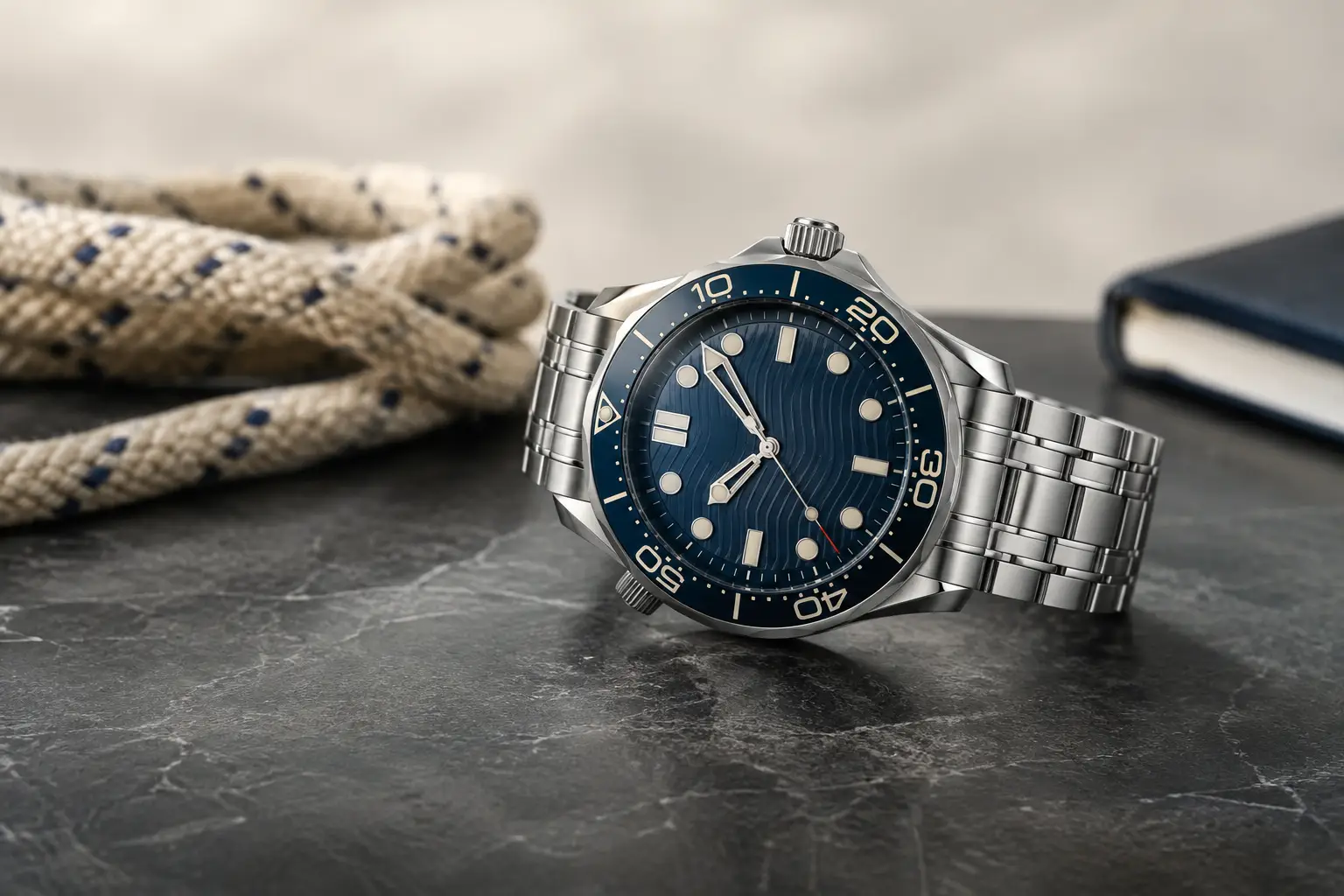
The Omega Seamaster is not one watch. It is a broad family that ranges from compact vintage-inspired divers to modern professional instruments, polished dress-sport references, and purpose-built chronographs. A useful Omega Seamaster buyers guide starts by separating the name on the dial from the watch you will actually wear. The right reference depends on wrist size, intended use, movement preference, and the level of originality and condition you expect.
For a high-value pre-owned purchase, the decision should extend beyond the model. Authentication, condition reporting, service history, and purchase protection are part of the watch itself from a buyer’s perspective. A respected Seamaster can remain a rewarding daily companion for decades, but only when its configuration and provenance are properly understood.
Start With the Seamaster Family That Fits Your Use
The Seamaster collection has changed substantially since its introduction. Before comparing individual references, decide whether you want a true dive watch, a versatile everyday sports watch, a heritage-styled piece, or a more formal design.
Seamaster Diver 300M
The Diver 300M is the model many buyers picture first: a rotating dive bezel, helium escape valve, wave-pattern dial on many generations, and a distinctly modern Omega profile. It is a capable water-resistant sports watch, but its appeal is equally visual. The combination of polished and brushed surfaces gives it more presence than a purely utilitarian tool watch.
This is a strong choice if you want one watch that can handle casual wear, travel, and business-casual settings. The trade-off is scale. Many Diver 300M references wear with substantial wrist presence, so buyers with smaller wrists should pay close attention to lug-to-lug length, bracelet fit, and case thickness rather than relying on diameter alone.
Seamaster Planet Ocean
The Planet Ocean takes the dive-watch brief further. It is typically thicker, more purposeful, and engineered for buyers who prefer a more technical look and stronger wrist weight. Many references use ceramic bezels and feature modern Omega co-axial calibers with strong magnetic-resistance specifications.
The Planet Ocean suits a collector who wants a serious sports watch and does not mind its mass. It may be less natural under a tailored cuff than a Diver 300M or Aqua Terra, particularly in larger case sizes. Try to distinguish between a watch that looks impressive in photos and one you will reach for several days a week.
Seamaster Aqua Terra
The Aqua Terra is the Seamaster line’s most adaptable option. Its clean dial layouts, water resistance, and polished sport case make it appropriate with denim, knitwear, and a suit. It is not a dive watch in appearance, which is precisely why some buyers consider it the most versatile modern Seamaster.
Dial color and case size matter greatly here. Darker or neutral dials are generally more restrained, while brighter colors make the watch more expressive. The Aqua Terra is an excellent starting point for a first luxury watch buyer who values mechanical substance without the visual language of a rotating bezel.
Seamaster Heritage and Vintage-Inspired Models
Heritage-focused references, including the Seamaster 300 and Railmaster-adjacent designs, appeal to buyers who want Omega history without accepting the fragility or uncertainty that can accompany an older vintage watch. They often pair cleaner dials and broad-arrow hands with contemporary materials and movements.
A genuinely vintage Seamaster offers a different experience. Original dial patina, period-correct hands, and case geometry can be highly appealing, but condition assessment becomes more nuanced. Vintage buyers should be especially cautious about replacement parts, refinished dials, over-polished cases, and incomplete service documentation.
Omega Seamaster Buyers Guide: Choose the Right Generation
Once you have chosen a model family, compare generations rather than shopping by photographs alone. A Seamaster’s reference number can reveal its case material, movement era, bracelet design, and technical specification, but the buying decision should remain practical.
Older mechanical Seamasters may offer slimmer cases and designs no longer produced. They can also have less advanced water resistance, different luminous materials, and movements that require more careful servicing. Modern models generally bring ceramic components, improved bracelet adjustment, stronger antimagnetic performance, and manufacturer-developed co-axial movements. Neither category is automatically better. The question is whether you value historic character or contemporary capability.
Movement choice deserves attention. Omega’s co-axial calibers are a significant part of the brand’s modern identity, designed to reduce friction within the escapement and support long-term performance when correctly maintained. Quartz Seamasters, meanwhile, can be an intelligent choice for a buyer who wants the design, accuracy, and convenience of a luxury sports watch without the rituals of mechanical ownership. Do not dismiss quartz simply because it is not mechanical; evaluate it against how you intend to wear the watch.
Condition Is More Than Cosmetic
With pre-owned Seamasters, condition can affect collectibility, wearability, and future service needs. A clear listing should make it possible to understand the watch without assumptions.
First, inspect the case. A well-preserved case retains defined edges, consistent brushing, and proportionate lugs. Polishing is not inherently a problem, particularly on a watch that has been worn and serviced, but excessive refinishing can soften the original shape. On dive models, check that the bezel action is secure and that the insert, pip, and bezel alignment appear correct.
Next, study the dial, hands, and crystal. Confirm that printing is crisp, luminous material is appropriate for the watch’s age, and the hands match the dial in color and period. Modern ceramic dials and bezels are durable, but they should still be examined for chips, cracks, or impact marks. A scratched crystal is often serviceable; a compromised dial or incorrect handset deserves closer scrutiny.
The bracelet is equally important. Original Omega bracelets contribute materially to both comfort and completeness. Look for excessive stretch on older bracelets, damaged screws, missing links, or a clasp that does not close positively. If a watch is offered on a strap, establish whether the original bracelet is included and whether that matters to you.
Verify Authenticity, Completeness, and Service Records
An authentic watch is the baseline, not a premium feature. For a Seamaster purchase, verification should cover the case, dial, hands, movement, bracelet, clasp, serial numbering, and reference-specific components. The details must agree with one another. A genuine movement inside an incorrectly configured watch is not the same as a correct, original example.
Box and papers can be valuable supporting documentation, especially for collectors, but their absence does not automatically make a watch unsuitable. Many older watches have been separated from their original sets over time. What matters is that the seller represents the package accurately and can stand behind the watch’s authenticity and condition.
Ask about service history when it is available. A documented recent service may provide useful context, but it is not a substitute for a warranty from the retailer. Conversely, a watch without a known service record may still be a sound purchase if its condition is clearly assessed and the seller provides meaningful post-purchase coverage.
Buy From a Seller Prepared to Be Accountable
A luxury-watch transaction should include more than a shipping label and a brief description. Look for detailed images of the actual watch, a precise reference identification, transparent condition language, and a stated process for authentication. Before purchasing, confirm what is included, whether the watch is eligible for return, and how warranty coverage applies.
For US buyers, insured shipping and a defined return period reduce unnecessary risk when a watch must be evaluated in person. Lume Wrist Watches offers in-house certified timepieces, free insured US shipping, 30-day returns, and a two-year warranty, giving buyers a clear framework after the purchase as well as before it.
A Seamaster should be chosen with enough care that you appreciate it after the first week, not just when it arrives. Prioritize the reference that fits your wrist and routine, then insist on authentication, honest condition reporting, and protections that match the significance of the purchase.