Watch Condition Guide for Confident Luxury Buyers
Published September 2, 2026 · Last updated October 17, 2026 · By Lume Wrist Watches Editorial Team
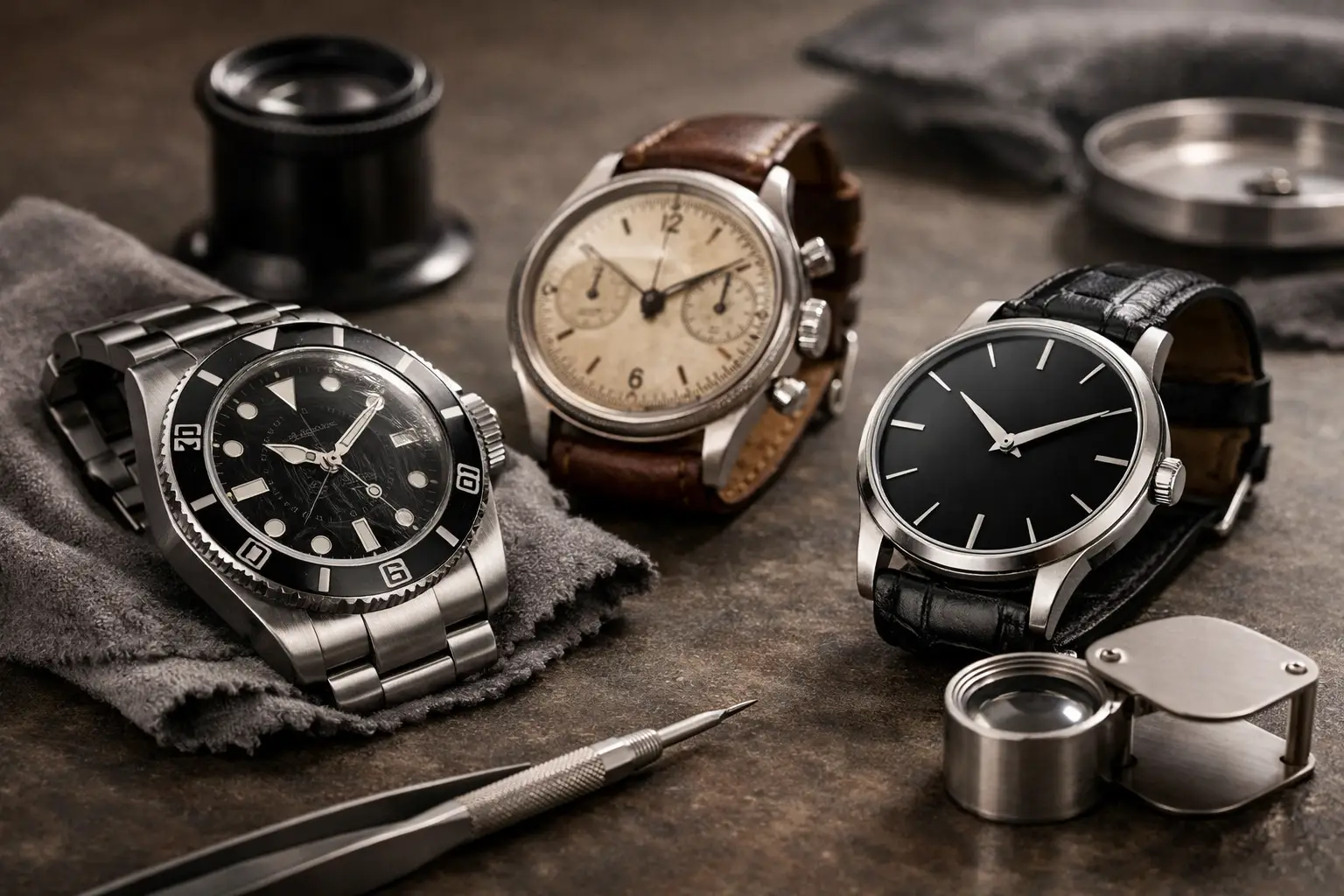
A luxury watch can be authentic, desirable, and mechanically sound while still carrying condition details that materially affect its appeal and long-term ownership. This watch condition guide helps buyers read those details correctly, whether considering a Rolex, Patek Philippe, Audemars Piguet, Omega, or another established reference.
Condition is not a single grade stamped on a listing. It is the combined result of how a watch has been worn, serviced, polished, stored, and preserved. For collectible watches, the distinction between honest wear and compromised originality can be significant. For a first-time buyer, understanding that distinction is one of the best ways to purchase with clarity.
What Watch Condition Actually Describes
A condition description should account for the case, bracelet or strap, crystal, dial, hands, bezel, movement, and included accessories. Each component tells a different part of the watch's history.
A watch described as excellent may show light marks from careful wear but retain crisp case lines, clear engravings, a clean dial, and a properly functioning movement. A watch in good condition may have more visible surface wear, while remaining attractive and mechanically reliable. Neither description is inherently better for every buyer. The right choice depends on whether you prioritize untouched character, a near-pristine presentation, daily wearability, or a complete collector set.
The key is specificity. General phrases such as “great condition” are less useful than clear disclosure of wear, polishing, replaced components, service history, and operational performance.
Case Condition: More Than Scratches
The case is usually the first area a buyer sees, but surface marks are only part of the assessment. Fine scratches and light scuffs are normal on a worn precious-metal or stainless-steel watch. They can often be visible only under direct light and may be acceptable on a watch intended for regular use.
More consequential are dents, deep gouges, corrosion, stretched metal around lug holes, or softened case geometry. On many references, the original shape of the lugs, bezel, crown guards, and case flanks is central to the design. Excessive polishing can round formerly sharp edges, reduce the depth of engravings, and remove metal from the case over time.
Polishing is not automatically a defect. A careful, restrained refinishing performed by a skilled professional can improve the appearance of a watch that will be worn frequently. The trade-off is originality. Collectors often place greater value on an unpolished or lightly polished case with honest signs of age than on one that has been repeatedly refinished. The appropriate standard depends on the particular model and the buyer's purpose.
How to Read Case Photos
Review photographs taken from multiple angles, not only straight-on images. Side profiles help reveal case thickness and lug definition. Close images of the bezel, crown guards, clasp, and caseback can show wear that is not apparent from a distance.
Look for symmetry. Lugs should appear proportionate, bezel edges should match the model's intended profile, and engravings should remain legible. Natural reflections can make a polished surface look cleaner or more marked than it is, so a complete condition description remains essential.
Bracelet, Strap, and Clasp Condition
A bracelet is a functional component and, on many luxury references, a meaningful part of the watch's value. Check for stretch, looseness between links, dents, incorrect screws or pins, and wear around the clasp. Some degree of play is normal in older bracelets, especially those worn for decades. Excessive looseness may require repair or replacement work.
Bracelet length also matters. Confirm that the watch includes enough links for your wrist or that additional original links are available. A fitted leather, rubber, or fabric strap should be evaluated differently. These are wear items, and replacement is common. What matters most is accurate disclosure of its remaining life and whether the buckle or deployant clasp is original to the watch.
Clasp engravings, hallmarks, and closing action deserve attention. A clasp should close securely without unusual resistance or looseness. On precious-metal watches, signs of metal loss at the clasp can be especially relevant.
Dial, Hands, and Bezel: Originality Matters
The dial is often the most important visual element of a collectible watch. A clean dial with consistent printing, correct markers, and appropriate aging may be far more desirable than one that appears cosmetically perfect but has been refinished or altered.
Patina is a matter of preference and model context. A vintage tritium dial may develop warm, even coloration over time. That can be attractive and appropriate. Moisture damage, spotting, flaking, or uneven discoloration are different issues and should be described plainly. On modern watches, buyers generally expect a cleaner dial and handset, though minor handling marks may occur.
Hands should match the dial in color, style, and aging. Luminous material that differs dramatically between hands and dial can indicate replacement parts or prior service, although there are legitimate explanations. A bezel should have correctly aligned markings, readable numerals or inserts, and an action consistent with the model, whether fixed, rotating, or fluted.
Originality does not mean every watch must remain entirely untouched. Factory service parts may be appropriate, especially when they support reliable use. The important question is whether changes are disclosed and whether they matter to the buyer's intended use.
Crystal, Crown, and Water Resistance
Crystals can show hairline scratches, chips, edge damage, or internal marks. Acrylic crystals can often be polished when lightly scratched, while sapphire crystals are more scratch-resistant but may require replacement if chipped or cracked. A replacement crystal is often a practical maintenance decision, but it should be identified when known.
The crown should operate smoothly and seat correctly. On screw-down models, it should engage the threads without cross-threading or excessive play. Chronograph pushers, helium escape valves, date correctors, and rotating bezels should also be tested according to the watch's design.
Do not assume a pre-owned watch is water-resistant simply because the model was designed for water use. Gaskets age, crowns wear, and case openings from prior service can affect sealing. If water resistance is important to your use, ask whether the watch has been pressure tested recently and follow the seller's guidance.
Movement Condition and Service History
A watch can look excellent externally and still need mechanical attention. Movement condition concerns timekeeping, winding, power reserve, calendar changes, chronograph operation, and signs of moisture or impact. For mechanical watches, routine service is part of ownership, not evidence that something is wrong.
Service history is helpful when available, but the absence of paperwork does not automatically indicate poor care. Many older watches were serviced by owners who no longer retained the records. More useful is a clear statement of the watch's current operation and any work performed during inspection.
In-house certification should include authentication and a professional evaluation of functionality. At Lume Wrist Watches, authenticated timepieces are in-house certified and supported by a two-year warranty, providing meaningful protection if an eligible mechanical issue arises after purchase. Buyers should still review the warranty terms and condition description for the specific watch.
Box, Papers, and Provenance
A watch can be genuine and desirable without its original box and papers. However, original accessories may add collector appeal, improve traceability, and make a reference more compelling for buyers who value completeness.
Papers should correspond to the watch where applicable, including the correct reference and serial information. A box alone is not proof of authenticity, and accessories should never substitute for professional authentication. Service records, sales receipts, and documented ownership history can also help establish provenance, particularly for vintage or limited-production pieces.
When comparing two otherwise similar watches, one with a complete set may justify stronger interest. But condition, originality, and verification should remain the foundation of the decision.
Questions to Ask Before You Commit
Before purchasing, ask for the specific condition details that affect your decision. Confirm whether the case has been polished, whether the dial and hands are original, whether the bracelet has sufficient links, and whether any components were replaced during service. Ask about timing performance, warranty coverage, and the return process.
For a high-value purchase, delivery protections matter as much as the listing itself. Free insured US shipping, a 30-day return window, and clearly stated warranty terms create a more accountable purchase process than a transaction based only on photographs and assurances.
Use This Watch Condition Guide With Perspective
The “best” condition is not always the shiniest example. A carefully preserved vintage watch may carry small marks that confirm its history, while a modern daily wearer may benefit from a professionally refreshed exterior and recent service. What should not be negotiable is accurate disclosure, verified authenticity, and enough information to understand exactly what you are buying.
A watch should earn confidence before it reaches your wrist. Ask precise questions, examine the details that matter to your reference, and choose a seller prepared to stand behind the timepiece after delivery.