Patek Philippe Nautilus: Full Reference Guide & Buyer's Checklist
Published September 9, 2026 · Last updated October 20, 2026 · By Lume Wrist Watches
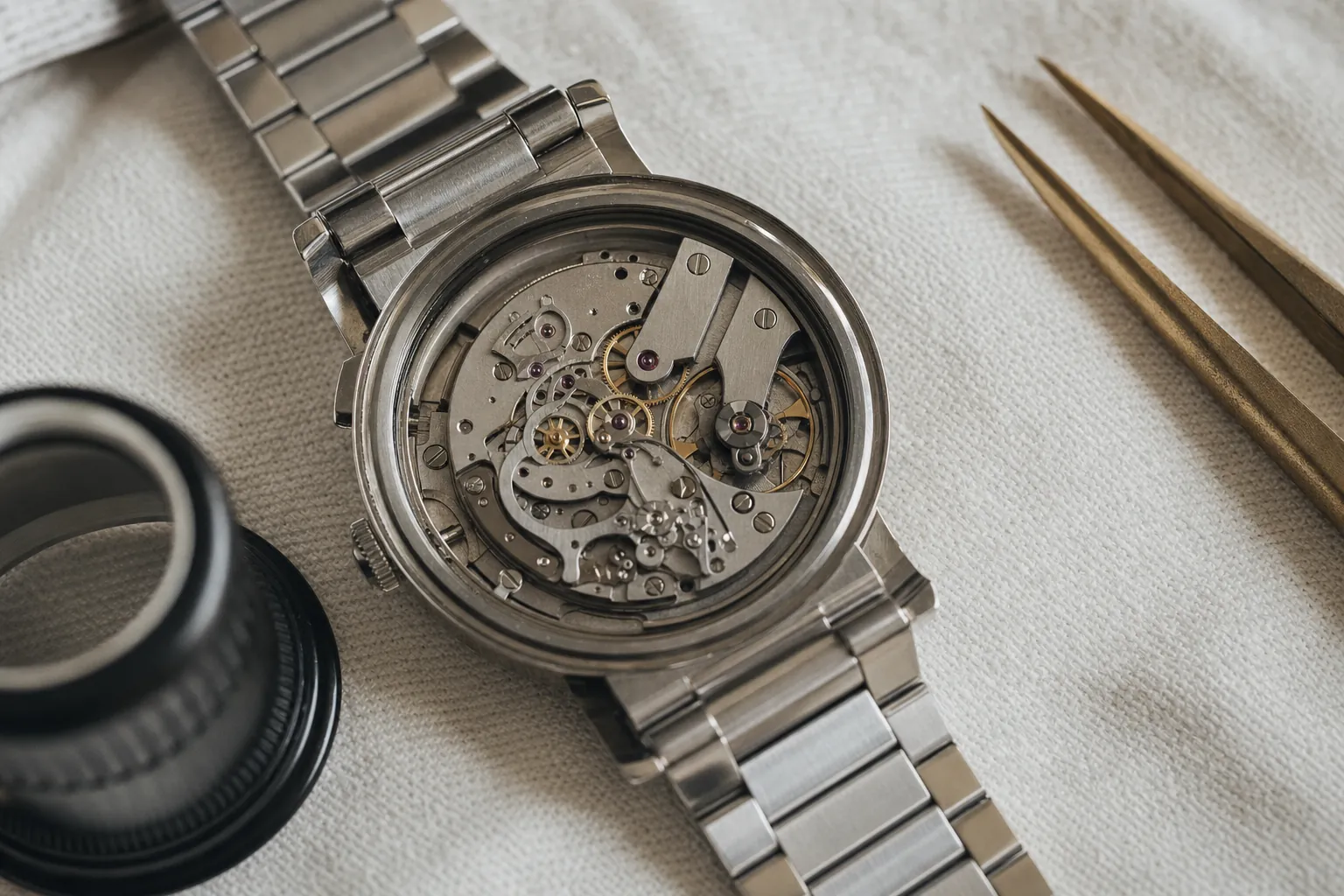
The Patek Philippe Nautilus, conceived by the legendary Gérald Genta, stands as one of horology's most iconic and sought-after luxury sports watches. This comprehensive guide delves into the Nautilus's storied history, explores its key references from the original 3700 to the highly coveted 5711 and subsequent models, and provides essential insights for collectors and prospective buyers navigating the complexities of its market and authentication in 2026. Understanding these nuances is crucial for any serious collector looking to acquire a piece of Patek Philippe history.
The Patek Philippe Nautilus at a glance: production years, case, movement, dial variants
The Patek Philippe Nautilus debuted in 1976 as reference 3700/1A, marking a seismic shift in luxury watchmaking with its distinctive porthole-inspired case, integrated bracelet, and steel construction. Initially met with skepticism due to its then-unconventional design and high price for a steel watch, it quickly became a symbol of discerning taste. Over nearly five decades, the Nautilus has evolved through various references, movements, and material iterations, yet always retaining its core design DNA. From its original "Jumbo" 3700 with a two-part monobloc case and the ultra-slim caliber 28-255 C based on a Jaeger-LeCoultre ebauche, to the modern 5711 with Patek's in-house caliber 324 SC and its successor, the 5811G, the Nautilus continues to define a genre.
Key distinguishing features include its signature octagonal bezel with rounded corners, the horizontal embossed dial, and the robust yet elegant integrated bracelet. Dial variants typically feature shades of blue, grey, and occasionally white or brown, with some special editions offering unique colors. Case materials have expanded from steel to include yellow gold, rose gold, white gold, and platinum, often paired with complications like chronographs, annual calendars, and moon phases, showcasing Patek Philippe's mastery beyond simple time-only models. These subtle distinctions are what make collecting Patek Philippe timepieces so engaging.
Full specification table
To appreciate the evolution of the Nautilus, a comparison of its most pivotal references is essential. This table outlines the core specifications for the original, its most famous successor, and a contemporary iteration.
| Feature | Ref. 3700/1A (1976-1990) | Ref. 5711/1A (2006-2021) | Ref. 5811/1G (2022-Present) |
|---|---|---|---|
| :---------------- | :------------------------------ | :-------------------------------- | :-------------------------------- |
| Case Material | Stainless Steel | Stainless Steel | White Gold |
| Case Diameter | 42mm (including 'ears') | 40mm (10-4 o'clock) | 41mm (10-4 o'clock) |
| Case Thickness | 7.6mm | 8.3mm | 8.2mm |
| Movement | Caliber 28-255 C (automatic) | Caliber 324 SC (automatic) | Caliber 26-330 S C (automatic) |
| Power Reserve | ~38 hours | ~35-45 hours | ~35-45 hours |
| Water Resistance | 120m (screw-down crown) | 120m (screw-down crown) | 120m (screw-down crown) |
| Crystal | Mineral glass (early), Sapphire (later) | Sapphire crystal and case back | Sapphire crystal and case back |
| Dial Colors | Blue-black gradient | Blue, white, green, brown | Blue-black gradient |
| Complications | Time & Date | Time & Date | Time & Date |
| Bracelet | Integrated steel bracelet | Integrated steel bracelet | Integrated white gold bracelet |
| Unique Features | Monobloc case, 'Jumbo' sizing | Transparent case back, iconic status | White gold, slight diameter increase |
Production timeline and dial/bezel variations
The Original Era: Ref. 3700 (1976-1990)
The journey of the Nautilus began with the reference 3700, famously dubbed the "Jumbo" due to its significant 42mm case size by 1970s standards. Initially released as the 3700/1A in stainless steel, it was a daring statement. Early models featured a two-piece case construction, a monobloc design where the movement was loaded through the dial side. The dial was typically a blue-black gradient with horizontal grooves and baton hour markers. Later iterations included the 3700/1J (yellow gold), 3700/1G (white gold), and the rare 3700/1JA (two-tone steel and yellow gold). The 3700 also spawned the slimmer 3700/11A (non-date) and mid-size variants like the 3800 and 3900, broadening its appeal beyond the initial large-watch enthusiasts. The presence of the "PP" signature on the bracelet clasp and original papers is crucial for these early references.
Evolution and Expansion: 3710, 3712, 5712 (1998-2006)
Patek Philippe introduced significant updates in the late 1990s and early 2000s. The Ref. 3710/1A (1998-2006) marked the return of the large Nautilus, featuring a power reserve indicator and Roman numerals. This was followed by the technically advanced Ref. 3712/1A (2005-2006), a short-lived reference introducing multiple complications: power reserve, moon phase, and an analog date. Its rarity makes it a significant collector's piece. The 5712/1A (2006-Present) is the direct successor to the 3712, featuring similar complications but with a slightly updated case and movement (Caliber 240 PS IRM C LU).
The Modern Icon: Ref. 5711 (2006-2021)
The Ref. 5711/1A launched in 2006 to celebrate the Nautilus's 30th anniversary, quickly becoming the most coveted sports watch globally. While technically an evolution of the 3700, it featured a three-part case construction, allowing for a transparent sapphire case back to display the stunning Caliber 324 SC. Dial Variants: The classic blue-black gradient (initially more blue), white dial (5711/1A-011), and later the highly anticipated olive green dial (5711/1A-014) which marked its final steel production. Material Variants: Beyond steel, Patek offered the 5711/1R in rose gold with a brown gradient dial and the 5711/1P in platinum with a diamond-set bezel, often featuring unique blue or green dials. The steel versions, particularly the blue dial, reached unprecedented market premiums.
Complications and Contemporary References
The Nautilus line isn't just about time-only models. Patek Philippe expanded the collection with a range of sophisticated complications: 5980/1A (Chronograph): Launched alongside the 5711, featuring a monopusher flyback chronograph with a single sub-dial. Available in steel, rose gold, and two-tone. (Patek Philippe Nautilus Chronograph Date Rose Gold is an example) 5726/1A (Annual Calendar): Combines the annual calendar with moon phase and 24-hour indication in a slightly larger 40.5mm case. 5990/1A (Travel Time Chronograph): A dual-time zone function paired with a flyback chronograph, a highly practical travel watch. 5740/1G (Perpetual Calendar): The first grand complication Nautilus, housed in a white gold case, demonstrating the model's versatility.
The New Era: Ref. 5811 (2022-Present)
Following the discontinuation of the 5711 in 2021, Patek Philippe introduced the Ref. 5811/1G in white gold. While retaining the classic Nautilus aesthetic, it features a slightly larger 41mm case diameter, a redesigned date frame, and a new fold-over clasp with an adjustable locking system. It harks back to the two-part case construction of the original 3700, with a redesigned monobloc-style case that is loaded from the dial side. The dial is a vibrant blue-black gradient. This model aims to fill the void left by the 5711 while ushering in a new chapter for the time-only Nautilus.
Wearing experience and sizing on the wrist
The Nautilus's enduring appeal is not just in its design but also its exceptional wearing comfort. Gérald Genta's original vision prioritized ergonomics, resulting in a watch that hugs the wrist gracefully despite its dimensions. The integrated bracelet is a masterpiece of design and engineering, tapering elegantly and featuring highly polished center links that catch the light beautifully. The articulated links ensure a fluid fit, reducing snagging and providing a substantial yet unobtrusive presence.
- Ref. 3700 (42mm): The "Jumbo" wears surprisingly well for its size due to its slim profile (7.6mm) and integrated design. It has a commanding presence without feeling cumbersome, often perceived as closer to 40-41mm due to the lug-to-lug and case 'ears'.
- Ref. 5711 (40mm): The 5711 hit the sweet spot for many, offering a modern size (40mm between 10 and 4 o'clock, 43mm including 'ears') combined with a slim 8.3mm thickness. Its proportions are widely considered perfect for a broad range of wrist sizes.
- Ref. 5811 (41mm): The slightly larger 41mm (10-4 o'clock measurement) of the 5811G is a subtle increase, retaining the comfortable wearability while offering a marginally bolder contemporary feel. Its white gold construction naturally adds more weight, providing a sense of luxurious density.
Regardless of the reference, the low center of gravity and the way the bracelet integrates seamlessly with the case ensure that the Nautilus sits flat and balanced on the wrist. This makes it suitable for both casual and formal occasions, epitomizing the luxury sports watch concept.
Market pricing and which variants command a premium
The Patek Philippe Nautilus market has seen unprecedented appreciation, particularly in recent years. Its scarcity, iconic status, and strong brand heritage contribute to its premium pricing on the secondary market. It's important to remember that prices are approximate and subject to market fluctuations. Consult Lume Wrist Watches for the most current valuations.
| Reference | Production Years | Approx. Secondary Market Price Range (2026) | Premium Factor |
|---|---|---|---|
| :---------------- | :---------------- | :------------------------------------------ | :----------------------------- |
| 3700/1A | 1976-1990 | $150,000 - $350,000+ | Originality, rarity, condition, 'sigma' dials |
| 5711/1A-001 (Blue) | 2006-2021 | $80,000 - $180,000+ | Iconic status, discontinuation, steel scarcity |
| 5711/1A-011 (White) | 2012-2021 | $90,000 - $160,000+ | Rarity compared to blue, unique aesthetic |
| 5711/1A-014 (Green) | 2021 | $250,000 - $500,000+ | Final steel 5711, extreme rarity, hype |
| 5811/1G | 2022-Present | $120,000 - $180,000+ | New generation, white gold, brand new reference |
| 5980/1A | 2006-Present | $100,000 - $150,000+ | Chronograph complication, steel sports watch |
| 5726/1A | 2010-Present | $80,000 - $120,000+ | Annual calendar, less demand than time-only/chrono |
| 5740/1G | 2018-Present | $200,000 - $350,000+ | Grand complication, perpetual calendar in steel |
Variants that command a premium:
- Discontinued Steel Models: The 5711/1A in blue and especially the green dial 5711/1A-014 command astronomical premiums due to their discontinuation and limited production. The white dial 5711/1A-011 also fetches strong prices.
- Original 3700/1A: Well-preserved examples of the "Jumbo" with original papers and boxes are highly prized by collectors, particularly those with early 'sigma' dials or desirable patina.
- Rare Complications: The 5740/1G perpetual calendar and the 5990/1A Travel Time Chronograph represent the pinnacle of Nautilus functionality and often hold strong values.
- Full Sets: Watches with their original box, papers (Certificate of Origin), and full bracelet links always command a significant premium. The provenance is critical for high-value transactions.
- Condition: Unpolished or lightly polished cases, sharp bevels, and original dial condition are paramount. Any signs of heavy polishing, water damage, or replacement parts can drastically reduce value. This is why due diligence and our inspection are crucial. For more on navigating the market, see our Luxury Watch Investment & Market Guide: Navigating 2026.
Authentication checklist specific to this reference
Authenticating a Patek Philippe Nautilus requires expert knowledge, given the prevalence of sophisticated counterfeits. While a professional inspection is indispensable, here's a checklist for preliminary assessment:
1. Case & Bezel Finish: Examine the distinct brushed and polished finishes. Patek's polishing is legendary; edges should be razor-sharp, transitions between finishes precise. The octagonal bezel's rounded corners should be perfectly symmetrical and uniform. The 'ears' on either side of the case should flow seamlessly into the bracelet. 2. Dial Details: Horizontal Embossing: The embossed pattern (often called "teak deck" or "ribbed") should be crisp and consistent. Fake dials often have a less defined or irregular pattern. Text & Font: All text ("PATEK PHILIPPE GENEVE," "AUTOMATIC," "SWISS MADE") must be perfectly printed, sharp, and consistent in font style and size. Minor discrepancies are red flags. Hour Markers & Hands: Luminous material should be precisely applied, not bleeding or uneven. The hands should be perfectly shaped with sharp edges. On a blue dial, the gradient should be smooth, transitioning from lighter in the center to darker at the edges. 3. Movement (for references with sapphire case backs): Geneva Seal/Patek Philippe Seal: All modern Patek Philippe movements bear either the prestigious Geneva Seal (pre-2009) or the Patek Philippe Seal (post-2009). These seals guarantee exceptional finishing and accuracy. Familiarize yourself with their appearance. Finishing: Observe the Côtes de Genève, perlage, polished screw heads, and anglage. Patek's finishing is immaculate; no tool marks or rough edges should be visible. Caliber Number: Verify the correct caliber number (e.g., 324 SC for 5711, 26-330 S C for 5811) engraved on the movement. 4. Bracelet & Clasp: Integration & Flexibility: The integrated bracelet should flow smoothly from the case. Each link should articulate perfectly without stiffness or excessive play. Finishing: The bracelet should exhibit the same meticulous brushed and polished finishes as the case. The inner surfaces of the links are also beautifully finished, which fakes often neglect. * Clasp: The deployant clasp should operate smoothly and securely, snapping firmly into place. Look for crisp Patek Philippe engravings and logos. 5. Serial & Reference Numbers: These are typically engraved on the case back or between the lugs (though less common for Nautilus). Cross-reference these with Patek Philippe archives or authorized dealers, if possible. 6. Box & Papers: While not absolute proof of authenticity (fakes can come with fake papers), a complete set of original box, certificate of origin, and manuals adds significant value and a layer of confidence. The Certificate of Origin should match the watch's serial number and production details. For a deeper dive into vetting pre-owned pieces, see A Collector’s Checklist for Buying Pre-Owned Watches.
When considering a purchase, especially of such a high-value asset, always utilize a reputable dealer with our inspection process services. Lume Wrist Watches offers a comprehensive authentication process to ensure peace of mind for every Patek Philippe at Lume Wrist Watches purchase, whether you're in luxury watches in California or luxury watches in New York.
Frequently Asked Questions
What makes the Patek Philippe Nautilus so expensive?
The Nautilus's high price stems from its iconic Gérald Genta design, extreme scarcity, Patek Philippe's unrivaled brand prestige and meticulous craftsmanship, and its status as a highly desirable luxury item. Its discontinuation (for the 5711 steel) further amplified demand, driving secondary market values to unprecedented levels.
What is the difference between the Nautilus 3700 and 5711?
The 3700 is the original "Jumbo" Nautilus from 1976, featuring a monobloc two-part case and an ultra-thin Jaeger-LeCoultre based movement. The 5711, launched in 2006, is its spiritual successor with a three-part case, transparent case back revealing Patek's in-house Caliber 324 SC, and a slightly smaller (40mm vs. 42mm overall) yet more contemporary diameter.
Why was the Patek Philippe 5711 discontinued?
Patek Philippe cited the need to manage exclusivity, maintain brand image, and ensure diversified demand across its collections as reasons for discontinuing the steel 5711. Its overwhelming popularity created an imbalance in market dynamics, which the brand sought to address.
Are there any complications available in the Nautilus line?
Yes, the Nautilus line includes several complications beyond the basic time-and-date. Notable examples include the Ref. 5712 (moon phase, power reserve, date), Ref. 5980 (flyback chronograph), Ref. 5726 (annual calendar), and the Ref. 5740 (perpetual calendar), showcasing the collection's technical depth.
Contact Lume Wrist Watches
For assistance with your Patek Philippe acquisition or any luxury watch needs, our expert team is ready to assist you. Contact us:
- Email: sales@lumewrist.com
- Phone: +1 (332) 285-2190
- Office (by appointment): 18 East 48th Street, Suite 1503, New York, NY 10017
- Hours: Mon–Fri 9:00 AM – 7:00 PM EST · Closed Saturday & Sunday
Visit our contact page for more details or explore our authenticated collection.
Final Thoughts
The Patek Philippe Nautilus is more than just a watch; it's a horological legend, a testament to enduring design, and a symbol of status and refined taste. Its rich history, diverse references, and a compelling market narrative make it a fascinating subject for any collector. Whether you're drawn to the original 3700, the iconic 5711, or the contemporary 5811, acquiring a Nautilus is a significant milestone. Ensure your journey is guided by expertise and authenticity.
Related: Vacheron Constantin Overseas: An Expert's Definitive Review — references, calibres, sizing and buying checklist.