How to Authenticate a Rolex Submariner
Published August 3, 2026 · Last updated October 21, 2026 · By Lume Wrist Watches
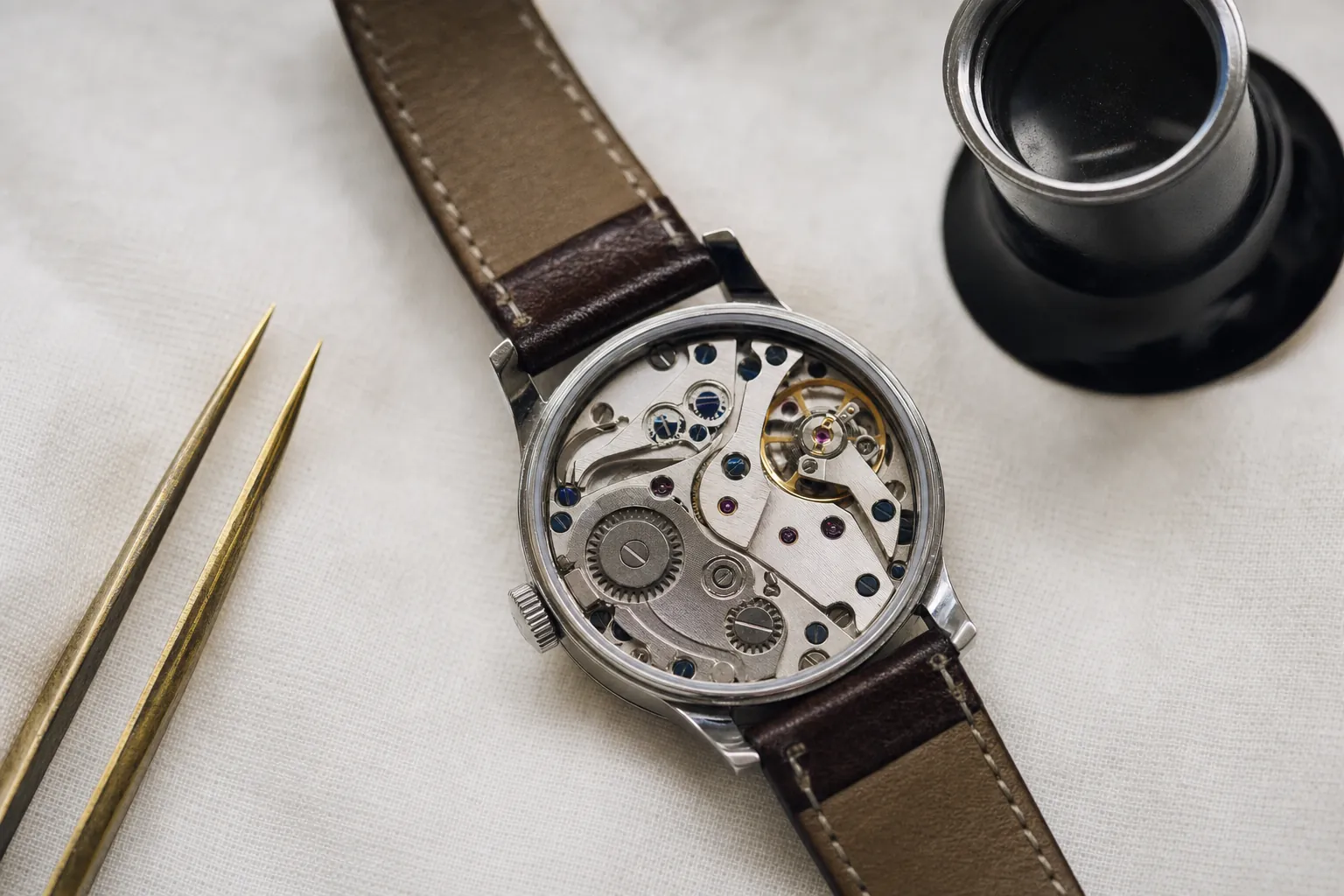
Authenticating a luxury dive watch requires a rigorous, microscopic approach that evaluates precision engineering rather than superficial cosmetics. Counterfeits have evolved from obvious novelty fakes to sophisticated clones that mimic external proportions with astonishing fidelity. To conclusively authenticate rolex submariner references across vintage, neo-vintage, and modern eras, a collector or watchmaker must scrutinize case metallurgy, machining signatures, optical traits, and caliber mechanics under magnification.
Case Engravings and Serial Number Inspection
### Lug Engravings and Transitional Changes On pre-rehaut Submariners (produced prior to the late 2000s), case engravings provide the first baseline verification point. Removing the bracelet reveals the reference number engraved between the lugs at the 12 o’clock position and the serial number at the 6 o’clock position. Authentic Rolex factory engravings from the mechanical pantograph era are cut cleanly into the 904L or 316L steel. The incisions show vertical tool marks within the channels and feature sharp, crisp corners.
Counterfeit engravings often reveal acid-etched or light chemical-etched treatments. These mimic the layout but lack depth, displaying a frosted, sandy, or shallow trough under a 10x loupe. Furthermore, authentic reference designations display consistent spacing. For instance, on a reference 16610, the "ORIG ROLEX DESIGN" script above the reference number displays razor-sharp serifs, whereas fraudulent cases routinely display uneven baseline kerning and rounded interior letter angles.
### Rehaut Engraving and Laser Alignment Beginning around 2005 on select models and standardizing across the Submariner lineup by 2007–2008 (starting with late D and Z serials), Rolex integrated an engraved inner bezel ring, or rehaut. This feature acts as an immediate tell when examining modern timepieces.
On a genuine rehaut, the phrase "ROLEX ROLEX ROLEX" repeats seamlessly around the perimeter: From the 1 o’clock position to the 5 o’clock position, each letter "X" in "ROLEX" aligns precisely with the corresponding minute hash marks. At the 12 o’clock position, the Rolex coronet sits dead-center, aligned with the 60-minute index. From the 7 o’clock position to the 11 o’clock position, each letter "R" aligns dead-center with the minute hash marks. At the 6 o’clock position, modern references feature the unique serial number clearly visible beneath the crystal.
Early rehaut executions were mechanically engraved and show subtle tool paths; modern executions are crisply laser-etched with sharp, mirror-finished letters flanked by subtle trench borders. Counterfeits frequently suffer from lateral drift, where the letters drift out of alignment with the dial’s minute track.
| Era / Reference Type | Case Material | Serial Number Location | Engraving Technique |
|---|---|---|---|
| :--- | :--- | :--- | :--- |
| Vintage & Neo-Vintage (e.g., 5513, 16800, 16610) | 316L (pre-1988) / 904L Stainless Steel | Between lugs at 6 o'clock | Mechanical pantograph (deep, sharp V-shaped cuts) |
| Transitional Late Neo-Vintage (late M, Z serials) | 904L Stainless Steel | Between lugs at 6 o'clock and on inner rehaut | Mechanical engraving on rehaut; pantograph on case |
| Ceramic "Super Case" (e.g., 116610LN, 114060) | 904L / Oystersteel | Inner rehaut at 6 o'clock only | Ultra-fine laser etching with mirror-polished letter beds |
| Modern 41mm Series (e.g., 126610LN, 124060) | Oystersteel | Inner rehaut at 6 o'clock only | High-definition laser cut with micro-beveled rehaut profile |
Dial Typography, Hand Stack, and Lume Application
### Pad Printing and Font Crispness Authentic dials undergo multiple pad-printing strikes using high-viscosity typographic ink. Under high magnification, the lettering on a genuine dial stands slightly proud of the dial plate, exhibiting clean three-dimensional volume with zero ink splatter, bleed, or ragged edges.
Examine the lower text block (the depth rating and the "SUPERLATIVE CHRONOMETER OFFICIALLY CERTIFIED" script). On authentic dials, the crossbars on the "E"s are uniform, and the "S" curves maintain proportional weight. Counterfeits often exhibit flat, single-strike printing that reveals fuzzy borders under 20x magnification, or incorrect font weights where the "1000ft = 300m" text appears either excessively thin or smudged.
### Hand Stack and Cannon Pinion The hand stack on an authentic Submariner Date displays exacting vertical clearances. The hour hand sits closest to the dial surface, followed by the minute hand, and finally the seconds hand on top.
The center post—or cannon pinion—is an area where replicas consistently fail. On an authentic caliber (whether a 3135 or a 3235), the center arbor is neatly finished, showing either a smoothly polished dome or a cleanly machine-beveled tube. Replicas typically feature a rough, hollow, or uneven tube hole at the pivot point, sometimes showing jagged burrs from low-budget stamping operations.
``` Authentic Hand Stack Assembly (Top to Bottom): [Cap / Pivot] -> Polished, clean center pinion cap [Seconds Hand] -> Sits level, uniform distance above minute hand [Minute Hand] -> Perfectly straight; clears hour indices precisely [Hour Hand] -> Positioned above dial markers without tilt [Dial Plate] -> High-gloss, lacquered, or sunburst surface finish ```
### Luminescent Materials Across Eras Evaluating the luminescence provides chronological verification for any pre-owned piece featured in our buying-guide: Tritium (used up to ~1998): Labeled "T<25" or "SWISS-T<25" at 6 o’clock. Tritium degrades over time, developing an off-white, cream, or pumpkin patina, and no longer glows under UV stimulation unless briefly charged, dying out within seconds. LumiNova (1998–2000): Labeled simply "SWISS". Utilizes photo-luminescent strontium aluminate with a green glow. Super-LumiNova (2000–2008): Labeled "SWISS MADE". Glows bright green under UV activation with zero self-patination. Chromalight (2008–Present): Labeled "SWISS MADE". Emits an unmistakable blue luminescence with a sustained wavelength of 480nm. Counterfeiters often apply an inexpensive blue dye over traditional green-glowing compound, which glows with an incorrect turquoise hue and fades rapidly within minutes.
Bezel Assembly, Click Springs, and Cerachrom Details
### Bezel Rotation and Kinematics The tactile feel of an authentic Submariner bezel is mathematically tuned. On modern ceramic models, Rolex employs a patented 120-click unidirectional mechanism driven by four spring-loaded ball bearings set into dedicated recesses on the case upper surface. Three bearings provide stability and smooth axial rotation, while the fourth houses the ratchet spring pin.
Turning an authentic bezel requires consistent force without sticky resistance or loose lateral play. It produces a distinct, high-frequency mechanical click. Replica assemblies frequently employ stamped sheet-metal click springs that produce a hollow, metallic scraping sound, along with noticeable backward "backlash" or lateral wobble when rocking the bezel ring from north to south.
### Cerachrom Insert and Deposition Details Introduced to the Submariner line on the 116618 / 116610 references, the Cerachrom bezel insert is crafted from an extremely hard, sintered zirconium dioxide ceramic that resists scratches and environmental degradation. The numerals and graduations are molded directly into the ceramic before firing, creating deep indentations.
Following the sintering process, Rolex coats the entire insert with a micron-thin layer of platinum (or yellow/Everose gold on two-tone and precious metal variants) via Physical Vapor Deposition (PVD). The metal is then diamond-polished away from the high ceramic surface, leaving the precious metal trapped within the recessed numerals. 1. The depth of the numerals is uniform across all 60 minutes. 2. The interior corners of the numerals display matte, micro-granular platinum texture. 3. Fake ceramic inserts generally use silver paint or basic electroplating. This results in dull grey, reflective, or uneven coatings that rub away over time, often featuring shallow fonts with rounded interior corners.
Sapphire Crystal, Cyclops Magnification, and the Laser Coronet
### The Cyclops and Anti-Reflective Coating On a Submariner Date, the Cyclops lens sits directly above the date window at the 3 o’clock position, providing a true 2.5x magnification. An authentic Cyclops enlarges the date numeral so that it virtually fills the aperture window when viewed perpendicular to the dial.
Modern references (beginning in the late 2000s) feature a double anti-reflective (AR) coating applied specifically to the Cyclops assembly: one layer between the flat sapphire crystal and the underside of the Cyclops, and one on the top face. This eliminates surface glare, allowing the date to appear jet-black and crisply defined. Replicas often settle for 1.5x to 2.0x magnification, lack authentic AR treatment, or apply a blue-tinted coating that distorts the optic under natural lighting.
### The Laser-Etched Coronet (LEC) Around 2001, Rolex phased in a micro-etched coronet at the 6 o'clock position on its sapphire crystals. This feature is not a superficial surface stamp; it is laser-etched into the interior structure of the synthetic sapphire at varying depths to avoid compromising the structural integrity of the crystal.
Under 10x or 20x magnification: The genuine coronet is composed of minute carbon bubbles produced by focused laser bursts. The coronet consists of an oval ring, five distinct prongs, and seven points inside the lower ring. The coronet is completely invisible to the naked eye under direct, ambient daylight. It requires oblique, low-angle raking light to illuminate. On service replacement crystals, Rolex etches a small horizontal letter "S" sideways inside the lower oval of the coronet. * Replicas consistently make this marking too visible, often rendering it as a solid, opaque surface acid-etch that stands out under normal room lighting.
Caliber Architecture: Free-Sprung Balances and Rotor Finishing
### Movement Generation Signatures A decisive step to fully authenticate rolex submariner watches is inspecting the uncased mechanical engine. The classic neo-vintage Submariners house Caliber 3130 (No-Date) or 3135 (Date), while the contemporary 41mm generation (references 124060 and 126610) utilizes Caliber 3230 or 3235.
Authentic Rolex calibers feature unmistakable design characteristics: Balance Assembly: Rolex utilizes a free-sprung variable-inertia balance wheel regulated by two pairs of gold Microstella nuts located on the inner rim of the balance. There is no index regulator or curb pins on the balance bridge. If you observe an index regulator arm (a lever with two curb pins used to adjust rate), the movement is not an authentic modern Rolex caliber. Hairspring: Caliber 3135/3130 movements feature a blue Parachrom hairspring (on later iterations) or a traditional Nivarox hairspring (on earlier variants), configured with a genuine Breguet overcoil. Calibers 3230/3235 always incorporate the blue Parachrom hairspring with an optimized Breguet overcoil. * Reversing Wheels: The automatic winding system relies on dual reversing wheels coated in a distinctive, slick synthetic red material (PTFE, commonly known as Teflon). This deep, matte-plum finish is a hallmark of genuine Rolex engineering.
``` Movement Visual Verification Matrix: - Balance Wheel Architecture: Free-sprung, Microstella adjustment screws inside rim - Regulator System: No index regulator arm present on balance bridge - Hairspring Contour: True Breguet overcoil elevated above the balance plane - Reversing Wheels: Matte plum-red PTFE (Teflon) coated teeth - Mainplate & Bridge Finishing: Circular perlage, rhodium plating, clean micro-chamfering - Rotor Text: Deeply engraved text filled with gold leaf lettering ```
Clones built using Asian movements or modified ETA bases routinely incorporate faux balance bridges with non-functional decorative screws glued to the surface, while the real regulating is handled by a standard ETA-style regulator lever tucked underneath.
Clasp Codes, Solid End Links, and Glidelock Mechanics
### Solid End Links (SEL) and Case Interfacing The transition from hollow end links to Solid End Links (SEL) occurred around 2000 for the Submariner lineup. On an authentic modern reference, the end links are machined from solid blocks of 904L Oystersteel, fitting against the case lugs with virtually imperceptible tolerances.
When inspecting the back of an authentic SEL assembly, notice the precise, uniform machining channels milled out for the spring bars. The spring bars themselves measure a substantial 2.0mm in diameter, with distinct pivot shoulders. Counterfeits regularly feature loose tolerances, resulting in visible light gaps between the end link and the lug chamfers, or utilize generic 1.8mm or 1.5mm spring bars that rattle when manipulated.
### Glidelock Mechanism Verification The Rolex Glidelock clasp, introduced on the 6-digit references, is a masterclass in functional tool-watch design. It permits fine adjustments of the bracelet length in precise 2mm increments without tools.
Authenticating the Glidelock clasp involves checking three specific elements: 1. The Toothed Rack: The underside of the clasp houses a solid, milled steel rack with deeply cut teeth. These teeth display mirror-polished troughs and sharp, squared peaks. Clones frequently show rough stamping or casting textures inside the tooth gaps. 2. Gliding Action: Unclipping the adjustment link and sliding it along the track should be completely linear, smooth, and free of grinding friction. It should drop securely into position with an audible mechanical lock. 3. Clasp Markings: Inside the clasp blades, the Rolex coronet and "ROLEX" text are either mechanically embossed or fine-laser-blasted. Check our pre-owned shop models to see how authentic clasps have evolved from early sandblasted interior centers to contemporary all-polished blade finishes, always maintaining perfect edge consistency without rough flashing.
Frequently Asked Questions
### Where is the serial number located on vintage versus modern Submariners? On vintage and neo-vintage Submariners produced before roughly 2007, the serial number is mechanically engraved into the case side between the lugs at the 6 o'clock position, requiring bracelet removal to view. On modern references produced from approximately 2008 onward, the serial number is laser-etched onto the inner bezel ring (rehaut) beneath the crystal at the 6 o'clock position. Transitional models from roughly 2005 to 2008 often feature the serial number engraved in both locations simultaneously.
### Does every genuine Rolex Submariner feature a laser-etched coronet? No, the laser-etched coronet (LEC) was only phased into the Submariner line starting around 2001 and was fully implemented across all sapphire variations by 2003–2004. Vintage Submariners equipped with acrylic crystals (such as references 5513 or 1680) and early sapphire references from the 1980s and 1990s (like early 168000 and 16610 models) do not have an etched coronet unless a service replacement crystal was installed by an authorized center later in the watch's lifecycle.
### How should the date cyclops appear on an authentic Submariner Date? An authentic Cyclops lens must magnify the date window by exactly 2.5x, causing the numeral to cleanly fill the rectangular aperture beneath it without distortion around the edges. Modern references also feature dedicated anti-reflective coatings on both the underside and top face of the Cyclops, making the date crisply legible without reflections. If the magnification appears weak (near 1.5x) or displays a strong, cloudy blue glare across the glass, the crystal is likely aftermarket or counterfeit.
### What balance wheel architecture identifies a genuine Rolex caliber? A genuine Rolex caliber (such as the 3135 or modern 3235) utilizes a free-sprung balance wheel regulated exclusively by Microstella nuts located along the inner circumference of the rim. It will never have a standard regulator lever or curb pins extending over the balance spring. Furthermore, the balance spring itself is a true Breguet overcoil (often blue Parachrom), suspended beneath a rigid, two-point mounting balance bridge that permits precise vertical clearance adjustment via threaded star wheels.
### How can you verify an authentic Rolex Glidelock extension mechanism? An authentic Glidelock mechanism features an evenly milled, toothed internal rack along the underside of the clasp cover, allowing micro-adjustments in exact 2mm increments. The adjustment link must disengage with a positive click, glide effortlessly along the channel without catching, and lock back down flush into the clasp frame. Counterfeits commonly display rough cast indentations on the teeth, experience stiff or gritty sliding action, and show noticeable lateral play between the sliding links.