UV Light & Microscopic Analysis: Hidden Watch Authentication Clues
Published October 17, 2026 · Last updated October 17, 2026 · By Lume Wrist Watches Editorial Team
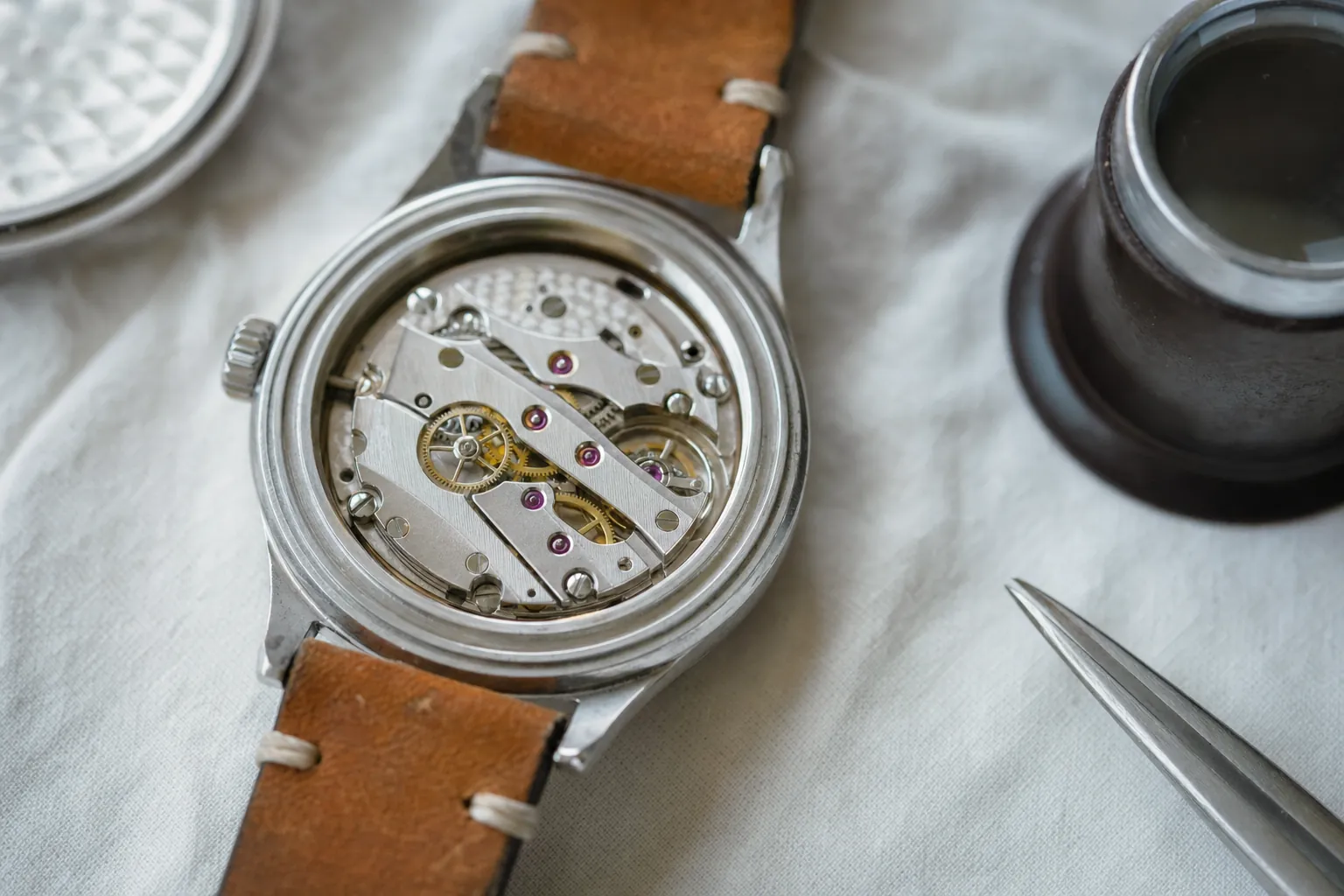
Advanced authentication of luxury watches goes far beyond a cursory glance, delving into the unseen world of microscopic details and material responses. UV light and microscopic analysis are indispensable forensic tools for discerning the authenticity of a luxury timepiece, revealing hidden signatures, inconsistencies, and material anomalies that escape the naked eye and are critical in identifying sophisticated counterfeits. At Lume Wrist Watches, these techniques are integral to our rigorous in-house team independent authentication process, ensuring every watch in our collection is verifiably genuine.
Why these techniques matter in authentication
In the high-stakes world of luxury watches, where counterfeiters employ increasingly sophisticated methods, traditional authentication relying solely on visual inspection or documentation is no longer sufficient. UV light and microscopic analysis provide a crucial layer of scrutiny, allowing experts to uncover manufacturing nuances, material compositions, and hidden markings that are virtually impossible to replicate perfectly. These methods are essential for protecting the integrity of the market and ensuring collectors receive genuine articles, whether they are buying a Rolex Submariner Date 16800 Black Dial Stainless Steel (LW-F1CC5D3B) or a Grand Seiko Heritage SBGJ259 Hi-Beat GMT Green Dial Steel.
The limitations of visual inspection alone
Modern super-clones can mimic external aesthetics with astonishing accuracy. Dials, hands, cases, and even movement decorations are often reproduced to a high standard, making it challenging for even experienced collectors to differentiate genuine pieces from fakes based purely on superficial examination. This is especially true for models from highly sought-after brands like Patek Philippe timepieces or Audemars Piguet Royal Oaks. Without specialized tools, critical details like the texture of a Côtes de Genève finish, the application of lume, or the precision of engraving might appear correct, yet harbor subtle deviations that betray their fraudulent origin.
How advanced tools provide definitive answers
By employing UV light and high-magnification microscopy, authenticators can peer beneath the surface, examining elements invisible to the human eye. UV light reveals the chemical composition and aging characteristics of luminous materials, inks, and protective coatings, often highlighting inconsistencies in counterfeits. Microscopic analysis, on the other hand, allows for meticulous inspection of manufacturing tolerances, engraving quality, graining patterns, and the presence of minute tool marks or unique factory defects. These micro-level forensic indicators provide irrefutable evidence of a watch's authenticity or lack thereof, forming the bedrock of modern luxury watch authentication practices. This detailed approach is central to our comprehensive Watch Authentication & Provenance: The Lume Wrist Watches Guide.
UV Light: Unveiling the Invisible Signatures
Ultraviolet (UV) light, specifically in the long-wave UVA spectrum (around 365nm), causes certain materials to fluoresce or phosphoresce, emitting visible light. This phenomenon is a powerful tool in watch authentication because the materials used in watchmaking—especially luminous compounds, certain pigments, and glues—react distinctively under UV light. These reactions can be a definitive tell for authenticity, aging, and even past repairs.
Luminous Materials: Tritium vs. LumiNova vs. Super-LumiNova
The luminous material used on a watch dial and hands is one of the most significant indicators under UV light. Over the decades, watchmakers have transitioned from radioactive substances to safer alternatives, each with a unique UV signature:
- Tritium (until late 1990s): Early tritium-based lume (marked 'T Swiss T', 'Swiss T < 25', or 'T<25') glows faintly and continuously without UV exposure due to its radioactivity. Under UV light, it will typically show minimal to no strong luminescence, or a dull, short-lived glow if activated after significant light exposure, often appearing faded or 'dead'. Its characteristic yellow or orange patina will remain. A tritium dial that glows brightly and persistently under UV is highly suspicious.
- LumiNova (mid-1990s to early 2000s): Developed by Nemoto & Co., LumiNova is a strontium aluminate-based pigment. Under UV light, LumiNova will glow intensely and brightly, typically in shades of green or blue-green, and retain its luminescence for several minutes after the UV source is removed (phosphorescence). This bright, sustained glow is its key characteristic.
- Super-LumiNova (early 2000s to present): An improved version of LumiNova, Super-LumiNova offers even brighter and longer-lasting luminescence. Under UV, it behaves similarly to LumiNova, exhibiting a very strong, vibrant glow—often green, blue, or sometimes purple, depending on the specific pigment variant. Counterfeits often use inferior luminous paints that glow weakly, unevenly, or for an unnaturally short duration compared to genuine Super-LumiNova.
TABLE: Luminous Material UV Reactions
| Luminous Material | Production Era | UV Light Reaction | After UV Removal (Phosphorescence) | Key Indicators |
|---|---|---|---|---|
| :---------------- | :----------------------- | :-------------------------------------------- | :---------------------------------- | :------------------------------------------------ |
| Tritium | ~1960s – late 1990s | Faint to no glow, or dull/short-lived flash | None to very short/faint afterglow | Distinct patina; strong glow under UV is a red flag. |
| LumiNova | mid-1990s – early 2000s | Strong, bright green/blue-green glow | Sustained glow for several minutes | Bright, even, lasting luminescence. |
| Super-LumiNova | early 2000s – present | Very strong, vibrant green/blue/purple glow | Long-lasting, intense glow | Exceptionally bright and long-lasting; specific color. |
Dial Markings, Patina, and Coatings
UV light can also reveal discrepancies in dial printing and coatings. Genuine dials often have specific lacquers or coatings that react predictably under UV, sometimes appearing matte, iridescent, or showing specific hues. Counterfeit dials might use different materials that appear flat, dull, or exhibit an unusual sheen under UV. Repainted dials or "relumed" dials (where original lume has been replaced) are often exposed by irregular glowing patterns, inconsistent color shifts, or traces of paint/glue that fluoresce differently from the surrounding dial material. Even the subtle patina on vintage pieces can have a distinct UV signature, revealing if it's natural aging or an artificial application. For example, a vintage Patek Philippe World Time Chronograph 5930G White Gold Blue Dial would have a distinct UV signature on its dial.
Invisible Security Marks
Some brands incorporate invisible security markings that are only visible under UV light. These might be micro-printed serial numbers, brand logos, or specific patterns applied with UV-reactive ink. While rarer, discovering such a mark (or its absence when expected) is a strong indicator of authenticity. For instance, some modern Rolex dials have a barely perceptible coronet etched into the crystal, while others might have UV-sensitive inks for certain text elements. These are the kinds of details our authenticators look for when checking Rolex collection pieces.
Microscopic Analysis: Unmasking the Flaws of Forgery
High-magnification microscopy (typically 30x to 100x or more) provides an unparalleled view into the minute details of a watch, revealing critical manufacturing characteristics that define a genuine luxury timepiece. This level of scrutiny allows experts to assess the precision, finishing, and material quality in ways impossible with the naked eye.
Dial Printing and Application Quality
Under a microscope, the quality of dial printing becomes immediately apparent. Genuine luxury watches feature crisp, sharp, and consistent printing, often with multi-layered applications. Markers, logos, and text will show clean edges, even ink distribution, and precise alignment. Counterfeit dials, in contrast, frequently exhibit:
- Fuzzy or blurred edges around text and markers.
- Uneven ink application, with pooling or bleeding.
- Misaligned elements or incorrect spacing.
- Grainy texture in the print due to inferior printing methods.
- Dust or debris trapped under the lacquer layer.
Hand Finishing and Details
Watch hands are another critical area for microscopic examination. Genuine hands, particularly on high-end pieces, will display impeccable finishing, such as perfectly chamfered edges, finely brushed or polished surfaces, and precise contours. The application of lume on hands will be even and flawless. Counterfeit hands often reveal:
- Rough or uneven edges, indicative of crude stamping.
- Poor polishing with visible scratches or tool marks.
- Blobby or inconsistent lume application.
- Incorrect proportions or shapes when compared to authentic examples.
Case & Bracelet Machining, Engraving, and Finishes
The machining and finishing of the watch case and bracelet are hallmarks of luxury. Under magnification, authentic cases display precise tolerances, sharp transitions between polished and brushed surfaces, and consistent graining patterns. Engravings, such as serial numbers or reference numbers, will be deep, clean, and perfectly formed, reflecting the use of high-quality CNC machinery or expert hand-engraving.
Fake cases and bracelets often show:
- Soft or rounded edges where sharp lines should be.
- Inconsistent brushing or polishing patterns.
- Rough tool marks or imperfections in metalwork.
- Shallow, uneven, or laser-etched engravings that lack the depth and precision of genuine stamping or milling.
- Incorrect metallurgy (e.g., cheaper stainless steel instead of 904L, or incorrect precious metal alloys) that can sometimes be inferred from surface finish inconsistencies.
Movement Components and Finishing
Even if a watch has a display case back, the intricate details of the movement require microscopic inspection. Authentic in-house movements, particularly from esteemed maisons, showcase exemplary finishing on bridges, plates, and rotors. This includes Côtes de Genève, perlage, anglage (beveling), and blued screws. Each finish must be executed with flawless precision and consistency.
Counterfeit movements often feature:
- Poorly executed or machine-stamped decorations that lack depth and definition.
- Rough edges on components.
- Visible burrs or debris.
- Incorrect screw types or finishes.
- Subpar jewels (e.g., plastic instead of synthetic rubies).
- Evidence of generic movements that have been poorly modified or decorated to resemble a specific caliber. Learn more about detecting these issues in our sibling article: Movement Inspection: What a Watchmaker Looks For in 2026.
The Authentication Process at Lume Wrist Watches
Our commitment to authenticity is unwavering. Every timepiece that enters our inventory undergoes a multi-point inspection, where UV light and microscopic analysis play a pivotal role. Our expert authenticators, deeply versed in the nuances of various brands, use these techniques to ensure the integrity of every watch we offer.
Our multi-point inspection workflow
- Initial Visual Assessment: A thorough external check for obvious discrepancies in dimensions, weight, and general aesthetics.
- Documentation Review: Verification of accompanying papers, boxes, and provenance, as discussed in Papers, Boxes, & Provenance: What Matters in Luxury Watch Authentication.
- UV Light Examination: The watch is placed under specialized UV lamps to analyze the luminescence of hands, markers, and any hidden security features. Discrepancies in glow duration, color, or intensity are flagged.
- Microscopic Analysis: Using powerful stereomicroscopes, our experts scrutinize the dial printing, hand finishing, case engravings, bezel details, and, if accessible, movement components. They look for the tell-tale signs of precision machining and expert craftsmanship, or the flaws of forgery.
- Movement Inspection: The watch is opened (by a certified watchmaker if necessary) to inspect the caliber, comparing it against known authentic examples for finishing, component originality, and correct function. This helps identify Service Parts, Franken-Watches & Disclosure in Luxury Watch Authentication.
- Functionality Testing: Power reserve, accuracy, and water resistance are tested.
- Final Authentication Report: A comprehensive report detailing the findings and confirming authenticity is generated.
The importance of expert knowledge
While tools are crucial, they are only as effective as the experts wielding them. Our authentication team possesses years of specialized training and hands-on experience with thousands of luxury watches. They understand the specific manufacturing signatures of each maison, from the subtle bevels of a Cartier watches case to the unique dial textures of an Omega collection timepiece. This deep institutional knowledge allows them to correctly interpret the data gleaned from UV and microscopic analysis, discerning genuine age and wear from deliberate counterfeiting efforts. This expertise helps us How to Verify Authentic Luxury Watches Before Purchase.
Choosing an Authenticated Retailer
When investing in a luxury watch, particularly in the pre-owned market, partnering with an authenticated retailer like Lume Wrist Watches is paramount. The sophisticated nature of modern counterfeits makes it exceptionally difficult for an untrained eye to distinguish a fake, even with access to some basic tools. Our stringent authentication protocols, including advanced UV and microscopic analysis, offer peace of mind that your investment is secure and genuine. We serve collectors across the nation, whether they're looking for luxury watches in California, seeking luxury watches in New York, or browsing luxury watches delivered to all 50 states.
TABLE: Key Differences: Authenticated Retailer vs. Unverified Seller
| Feature | Authenticated Retailer (e.g., Lume Wrist Watches) | Unverified Seller (e.g., auction sites, private sellers) |
|---|---|---|
| :----------------------- | :---------------------------------------------------- | :------------------------------------------------------- |
| Authentication Process | Multi-point, expert-led, advanced tools (UV, microscopic) | Often absent, limited, or self-declared |
| Provenance | Vetted, documented, sometimes traceable | Often unclear, fragmented, or fabricated |
| Guarantees | Explicit authenticity guarantees, return policies | Seldom, 'as-is' sales, high risk |
| Expertise | In-house watchmakers and authentication specialists | Varies widely, often lacking deep expertise |
| Risk of Counterfeit | Extremely low | High, especially with tempting 'deals' |
| Post-Purchase Support | Available for service, trade, or consignment | Limited to non-existent |
Frequently Asked Questions
Q: Can UV light damage a watch?
A: When used by trained professionals, brief exposure to long-wave UV light (UVA, typically 365nm) is generally harmless to watch components. It does not cause material degradation or color fading. However, prolonged exposure or the use of short-wave UVC light could potentially be damaging, which is why professional equipment and expertise are crucial.
Q: What specific magnifications are used for microscopic analysis in watch authentication?
A: Authenticators typically use stereomicroscopes offering magnifications ranging from 10x to 100x, and sometimes even higher for specific details. Common working magnifications are often around 30x to 60x, providing a clear and detailed view of surface finishes, printing, and micro-engravings without excessive distortion.
Q: Can microscopic analysis identify if a watch has been refinished or had parts replaced?
A: Absolutely. Microscopic analysis is highly effective at detecting refinishing, such as re-polishing that alters original case lines, or surface inconsistencies on dials indicating a repaint. It can also reveal tool marks from amateur repairs or the presence of non-factory parts due to differences in machining, finishing, and material characteristics, helping identify Counterfeit Tells Across Major Luxury Watch Brands: An Expert Guide.
Q: Are there any specific brands that are particularly susceptible to UV or microscopic tells in counterfeits?
A: Brands with extremely high production volumes and precise manufacturing standards, such as Rolex, Omega, and Patek Philippe, are frequently targeted by counterfeiters. Their genuine pieces often have very specific UV signatures for lume and highly refined microscopic details that are exceedingly difficult for fakes to replicate, making these brands prime candidates for such analysis.
Q: Does every luxury watch have a unique UV signature?
A: While not every individual watch has a completely unique UV signature like a fingerprint, models within specific production eras and brands will exhibit consistent UV reactions for their luminous materials, dial coatings, and potential security marks. Variations can indicate age, past repairs, or inauthenticity rather than a truly unique individual signature.
Contact Lume Wrist Watches
Our team is dedicated to providing unparalleled service and authenticated luxury timepieces. If you have questions about our authentication process, a specific watch, or require assistance with buying or selling, please reach out to us.
Email: sales@lumewrist.com Phone: +1 (332) 285-2190 Boutique: 18 East 48th Street, Suite 1503, New York, NY 10017 Hours: Mon–Fri 9:00 AM – 7:00 PM EST · Closed Saturday & Sunday
Visit our contact page or browse our entire shop.
Final Thoughts
The intricate world of luxury watch authentication demands an expert eye and sophisticated tools. UV light and microscopic analysis are not merely supplementary checks; they are fundamental pillars of a robust authentication process. They empower authenticators to peer beyond superficial aesthetics and uncover the genuine craftsmanship or the telling flaws that distinguish an authentic masterpiece from a clever forgery. At Lume Wrist Watches, we champion these advanced techniques to protect our clients and uphold the integrity of the luxury watch market. Explore our our authenticated collection with confidence, knowing every timepiece has undergone the most rigorous scrutiny.